Type 2+ letters to search all countries, cities, and places
/Ctrl KEsc
travel_explore
Type 2+ letters to search all countries, cities, and places
Press Enter to open the top result
Museum Island
Berlin·Germany·52° N · 13° E·Updated Jul 2026
Berlin built an Acropolis for the public on a river island: five museums, a UNESCO-listed civic idea, and enough collections to fill two full days easily.
Half day to 3 days, depending on how many museums you enter
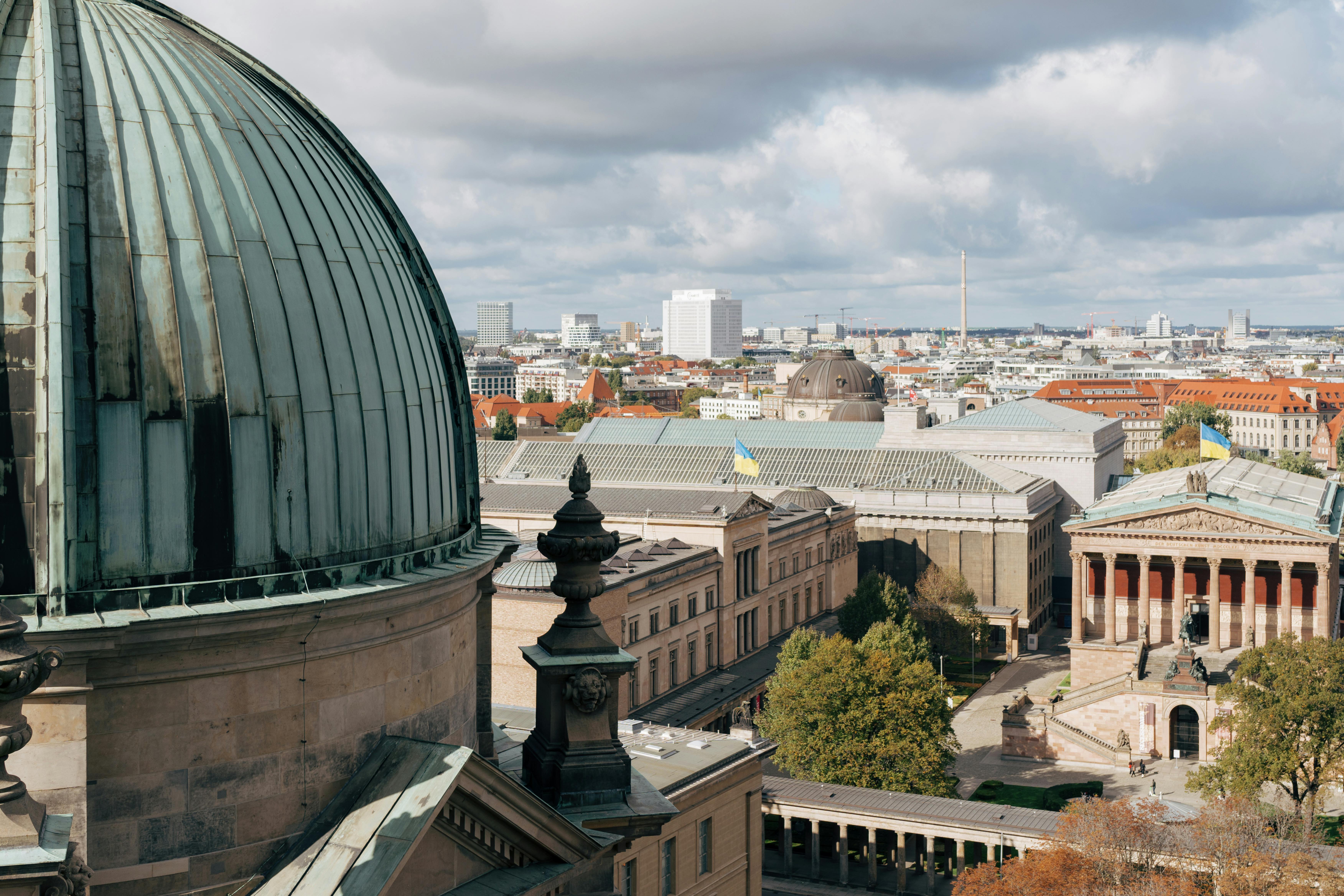
How did a muddy working island in the middle of Berlin become Germany's grandest argument about who culture belongs to? Museum Island in Berlin, Germany, still feels slightly improbable: five monumental museums line the Spree, the dome of the cathedral rises across the water, and pale stone colonnades catch the light above slow river traffic. Visit because nowhere else in the city turns art, power, war, and repair into one walk so clearly.
Stand in the Lustgarten and the place reads as imperial confidence made solid. Schinkel's colonnade stretches beside the Berlin Palace, the Bode-Museum pins the island's northern tip like the prow of a ship, and the whole ensemble seems planned in one breath. It wasn't.
Records show King Friedrich Wilhelm III ordered a public art collection for Berlin in 1810, and the first foundation stone went down on 9 July 1825 for the Altes Museum. What followed took more than a century, multiple rulers, rival architects, and a lot of wet engineering on waterlogged soil that still complicates every repair.
The island rewards slow looking. You hear footsteps sharpen under stone arcades, catch the damp mineral smell of the Spree near evening, and notice that some walls refuse polish because war hit here and the restorers left the scars in view.
Researched by the Audiala editorial team from historical records, architectural archives, and local expertise.
What to see
Neues Museum
The island’s most moving building is the one that still shows its wounds. Friedrich August Stuler opened the Neues Museum in 1859, World War II bombers tore it apart, and David Chipperfield’s 2009 restoration refused to sand the story smooth, so you walk through patched plaster, exposed brick, faded murals, and stair halls where absence has texture; the air feels cool and slightly dusty, like stone still remembering the blast.
Most people come for Nefertiti, and fair enough. But the secret is how she is staged: in the North Dome Room, isolated in a pool of quiet, with a sightline that runs the length of the building toward Helios in the South Dome Room, turning one famous bust into part of a much larger argument about beauty, empire, loss, and what Berlin chooses to repair rather than hide.
Altes Museum
Karl Friedrich Schinkel built this place to make entering a museum feel like entering a republic of ideas, which is a grand ambition for a ticketed building on a river island. The 18 Ionic columns stretch across the facade like a stone forest, the staircase rises from Lustgarten with the slow ceremony of a civic ritual, and then the rotunda opens under a dome inspired by the Pantheon, swapping traffic noise for footsteps and a hush that makes even distracted visitors lower their voices.
Read the inscription above the portico before you go in. Dated 1828, it states plainly that Friedrich Wilhelm III dedicated the museum to the study of antiquities and the fine arts, and that sentence matters because Museum Island was never just a storehouse of objects; it was Berlin trying to place art beside power, within sight of Berlin Palace, and claim that the public belonged in the conversation.
James-Simon-Galerie to Bode-Museum Walk
If you only collect interiors, you miss the island’s best trick. Start at the James-Simon-Galerie, where Chipperfield’s pale colonnades and long terrace turn arrival into a pause above the Kupfergraben, then drift through the Kolonnadenhof under plane trees and clipped hedges across 12,900 square meters, about the size of two football pitches, until the domes and staircases stop feeling like separate monuments and start reading as one composed sentence.
End at the Bode-Museum on the northern tip, where the building sits at the water like a baroque ship with a stone prow. On the way, glance toward the shuttered Pergamon Museum and remember that Museum Island still lives with interruption as much as glory; Berlin builds, loses, rebuilds, and leaves the seams visible.
Plan your visit
Getting There
U5 stops at Museumsinsel with direct underground access to the James-Simon-Galerie, the island's main entry point. S-Bahn lines S1, S2, S25, S26, S5, S7, and S75 reach Hackescher Markt or Friedrichstraße, both about 5 minutes on foot; from Alexanderplatz, walk south along Karl-Liebknecht-Straße for roughly 10 minutes, or come east from Brandenburg Gate on Unter den Linden in about 15. Cars make little sense here because parking is scarce around Am Lustgarten, Bodestraße, and Am Kupfergraben.
Opening Hours
As of 2026, the standard rhythm is Tuesday to Sunday, 10:00-18:00, with Monday closures across the island. Pergamonmuseum stays shut for renovation until 4 July 2027, though Pergamonmuseum. Das Panorama remains open; Altes Museum and Bode-Museum sometimes run shorter midweek hours, so check the official SMB calendar the day before you go.
Time Needed
One museum takes a real 90 minutes to 2 hours if you want more than a rushed glance; the Neues Museum alone can swallow that easily once you reach the Egyptian rooms and the hush around Nefertiti. Plan 4 to 5 hours for two or three museums with a break, or 6 to 8 hours for a full island day including Das Panorama, unless you enjoy the specific headache that comes from trying to absorb five centuries of marble, paint, and empire before dinner.
Accessibility
All five museums and the James-Simon-Galerie offer step-free access, elevators, and accessible toilets, and the island itself is mostly flat. The only mild friction comes from cobbles in the Kolonnadenhof and on some bridges, but standard manual and electric wheelchairs can usually cross them without trouble; audio guides often run through a web app, so bring your own headphones.
Cost & Tickets
As of 2026, a single museum ticket costs €14 adult or €7 reduced, while the Museum Island day ticket costs €24 adult or €12 reduced and makes financial sense the moment you enter two museums. Under-18s get in free but still need a €0 reservation, and timed entry for the Neues Museum or Alte Nationalgalerie is the difference between walking in and standing outside watching the queue creep forward.
History
A Museum Quarter Built by Ambition, Broken by War, Left Honest on Purpose
Museum Island likes to present itself as a calm pantheon of civilization. Records show something messier and more interesting: a century-long construction site where Prussian kings, museum directors, engineers, laborers, and later conservators kept redefining what a public museum should be.
That civic idea matters as much as the buildings. UNESCO inscribed the island in 1999 because this was not just a row of galleries, but a deliberate claim that art and scholarship belonged in the center of the capital, beside crown, church, and arsenal rather than behind a palace door.
The turning point
The Island Was Never Meant to Look This Seamless
At first glance, Museum Island looks like a single imperial composition, Berlin's answer to an acropolis. Tourists often accept that version because the facades line up so persuasively, and because Wilhelm von Bode spent years arguing that the museums should read as one cultural whole, not a pile of separate departments.
Then the details start misbehaving. Schinkel's Altes Museum opens in 1830 with cool neoclassical restraint, Stuler's Neues Museum experiments with iron construction and painted archaeology, the Bode-Museum arrives in 1904 with baroque swagger, and the Pergamon Museum does not open until 1930. Even the name 'Museum Island' comes late, which tells you the harmony was partly a story told after the fact.
The hidden truth is that the island grew by accumulation, rivalry, and political theater. Bode had a lot at stake personally: he wanted Berlin to rival Paris and London, and he wanted his own idea of cultural history to shape how the city saw itself. The turning point came when he secured support for the museum at the island's northern tip, giving the ensemble a dramatic full stop and helping the public imagine a master plan that had never really existed. Once you know that, the island stops looking neat. You see arguments in stone, then the later damage of 1945, then the postwar repairs that refuse to pretend those arguments ever ended.
War Did Not Spare the Gods
Between 1943 and 1945, bombing and street fighting tore through the island. The Neues Museum lost its roof and great stair, curators scrambled to protect collections as blast waves shook vitrines, and Soviet troops left graffiti that some walls still carry. That damage still shapes the visit now, especially if you pair this walk with the harder military memory at the Berliner Mauer.
A Public Ideal, Still Being Rewritten
After reunification, Berlin did not simply rebuild the island as a polished imperial postcard. The 2003 masterplan treated it as a living civic quarter, and David Chipperfield's restoration of the Neues Museum, reopened in 2009, made the bold choice to keep ruptures visible. Also, the James-Simon-Galerie, opened in 2019, restores public honor to James Simon, the Jewish patron whose name Nazi authorities pushed aside after 1938.
Tips for visitors
Bag Rules
Anything larger than A4 has to go into the cloakroom or lockers, and many lockers still want a €1 or €2 coin. Staff also stop people carrying coats over an arm in the galleries, so check the lot and move freely instead of wrestling with wool in overheated rooms.
Shoot Carefully
Personal photography is usually allowed in permanent collections, but flash, tripods, and selfie sticks are generally banned, and special exhibitions can tighten the rules without apology. Watch the room signs before you raise your phone; the guards notice faster than you think.
Buy Tickets Officially
Use the SMB shop or visitBerlin for timed tickets and ignore anyone offering entry near the queues at Lustgarten or the station exits. Pickpockets also work the crowded approach from Friedrichstraße and Hackescher Markt, so zip bags before you hit the line.
Eat Off-Island
Museum cafes do the job, but better value sits just beyond the postcard zone: Lebenswelten Bistro at the Humboldt Forum is a solid budget-to-mid-range stop, Bandy's Currywurst works for a quick cheap Berlin lunch, and Domcafé in the Berlin Palace area suits a slower mid-range pause. Cafes right beside Berliner Dom often charge like the view itself is on the bill.
Best Visit Window
Weekday mornings right at 10:00 and late afternoons are the calmest, especially outside school holidays; July and August weekends feel louder, slower, and more compressed. Start early if you want the pale river light on the colonnades and fewer footsteps echoing through the stair halls.
Pair Nearby Stops
Museum Island works best as the center of a tight Mitte walk, not a stand-alone box to tick. Add the Berlin Palace across the water, then finish at Alexanderplatz or swing west toward Brandenburg Gate; the contrasts explain Berlin better than any single gallery label can.
Where to Eat
local_dining
Don't Leave Without Trying
CurrywurstDöner kebabPfannkuchen (in Berlin, a jam-filled doughnut)BulettenEisbeinFalafelShawarmaBerliner Luft
Ephraims
local favorite
Traditional German with a polished Berlin-Mitte touch€€star4.7(1395)
Order: Go for the classic German plates and a German wine or a Köstritzer dark beer; reviews single out the traditional cooking for being full of flavor without turning heavy.
This is the one for a proper Berlin meal near Museum Island. The terrace by the river and the old-house setting give it real character, and regulars praise how it balances old-school German comfort with a lighter hand than many traditional dining rooms.
Berlin and Brandenburg classics in a historic tavern€€star4.5(5042)
Order: Order the beef goulash or the braised veal cheeks, and if you want dessert, the Berliner Luft zum Löffeln comes up in reviews for good reason.
You come here for the vaulted rooms, the beer-garden mood, and a menu that leans straight into regional comfort food. It is central and well known, yes, but the best reports mention generous portions, professional service, and dishes that actually taste like Berlin rather than a generic tourist menu.
All-day cafe for breakfast, salads, cakes, and Mediterranean-style light lunches€€star4.7(2945)
Order: The salad plate with eight salads, hummus, and tzatziki gets named in reviews, and the orange cake sounds like the right finish after a museum morning.
This is the practical favorite when you want breakfast or lunch without wasting time on a bad museum-zone cafe. People keep mentioning the warmth of the owner, fresh food, and the kind of easy hospitality that makes you want to stay for one more coffee.
Creative cafe with international breakfasts, homemade cakes, and cocktail flair€€star4.7(1676)
Order: Come for breakfast, then add the carrot cake with coconut topping; if you are there later, reviewers also rave about the Japanese-fusion cocktails and the limoncello sour.
YUNA feels like modern Berlin in miniature: plants, brick walls, a short menu, and ideas borrowed from more than one food culture. It works because the room is relaxed and the cooking has personality instead of trying to be fashionable for its own sake.
checkNear Museum Island in Mitte, expect both traditional German dining and a broader Berlin mix shaped by Turkish, Arab, Vietnamese, and other immigrant food cultures.
checkHackescher Markt, a short walk from Museum Island, has a food and art market on Thursday from 09:00-18:00 and Saturday from 10:00-18:00.
checkMaybachufer market in Neukölln runs Tuesday and Friday from 11:00-18:30 and is a strong pick for produce, spices, Turkish and Mediterranean ingredients, and street food.
checkKollwitzplatz organic market in Prenzlauer Berg runs Thursday from 12:00-19:00 for regional produce, bread, cheese, and prepared lunch dishes.
checkWinterfeldtplatz market in Schöneberg runs Wednesday 08:00-13:00 and Saturday 08:00-16:00, with a broad mix of produce and international food stalls.
checkKarl-August-Platz market in Charlottenburg runs Wednesday 08:00-13:00 and Saturday 08:00-14:00, with flowers, wine, antipasti, crafts, and snack stalls.
checkSunday can be useful for market browsing at Mauerpark's flea-market and street-food area, but the exact hours were not confirmed in the research.
Food districts:Mitte around Museum Island and Hackescher Markt for traditional German meals, cafes, and easy market browsing.Neukölln around Maybachufer for produce, spices, and Turkish-Mediterranean market food.Prenzlauer Berg around Kollwitzplatz for organic market lunch stops and around Mauerpark for Sunday street-food energy.Schöneberg around Winterfeldtplatz for one of the city's best-known weekly food markets.Charlottenburg around Karl-August-Platz if you are heading west and want market stalls, antipasti, and snack stops.
Restaurant data powered by Google
Watch & Explore Museum Island.
Explore Berlin
200 Jahre Museumsinsel Berlin – Guide für Besucher | DW Nachrichten
DW Deutsch9 min28K
Explore Berlin
Wunderschönes Berlin - Top 10 Sehenswürdigkeiten
Alex travels10 min147K
Frequently asked
Is Museum Island worth visiting?
Yes, even with the Pergamonmuseum closed for renovation, Museum Island is one of Berlin's richest half-days. Five museums sit on the Spree like a civic stage set, and the best part is the contrast: Schinkel's 18-column Altes Museum feels ceremonial, while the Neues Museum still carries visible war scars that make the whole place feel less polished and far more human.
How long do you need at Museum Island?
Most people need at least 4 to 5 hours to do Museum Island justice, and a full day is better if you want more than a rushed skim. One museum can take 90 minutes on its own, while a serious circuit through the Neues Museum, Alte Nationalgalerie, and the courtyards easily stretches to 6 hours, especially once you stop for the canal terrace at the James-Simon-Galerie.
How do I get to Museum Island from Berlin Central Station?
The easiest route from Berlin Central Station is public transport, usually by S-Bahn to Friedrichstraße or Hackescher Markt and then a short walk of about 5 minutes. You can also take the U5 straight to Museumsinsel, which drops you near the James-Simon-Galerie, the island's main visitor hub.
What is the best time to visit Museum Island?
Weekday mornings are best if you want lighter crowds and quieter galleries. Spring and early autumn also suit the island well, because the light on the water and in the Kolonnadenhof is softer, and you can actually hear your footsteps under the colonnades instead of the full summer churn of school groups and weekend queues.
Can you visit Museum Island for free?
Partly: the outdoor spaces are free to enter, but adults usually need a paid ticket for the museums. Visitors under 18 get free admission with a reservation ticket, and adults should not count on a regular blanket free-entry day in current official guidance.
What should I not miss at Museum Island?
Don't miss the Neues Museum's scarred walls, the Nefertiti presentation, the Altes Museum's portico and rotunda, and the Kolonnadenhof sculpture garden. One small detail changes the whole visit: after Nefertiti, look along her sightline through the building toward Helios, then step outside to the James-Simon-Galerie terrace and let the Spree air clear your head.
Sources & attribution12
Researched and written by the Audiala editorial team from historical records, architectural archives, and local expertise. Last updated July 2026.
UNESCO World Heritage Centre — UNESCO inscription, significance of the museum ensemble, and its status as a civic and architectural whole.
Berlin State Heritage Office — Historical framing of Museum Island within Berlin's urban plan and its role as a public forum for art and scholarship.
visitBerlin Museum Island — Current visitor overview, museum ensemble summary, and general orientation for what the island includes.
SMB Opening Hours — Official opening-hours guidance used for practical timing advice and visit planning.
SMB Pergamonmuseum Plan Your Visit — Official confirmation that Pergamonmuseum is closed for renovation and guidance on current visitor access.
SMB Neues Museum Profile — Background on the Neues Museum, its collections, restoration approach, and preserved wartime damage.
Strictly necessary cookies keep the site working. Analytics (PostHog, Google Analytics) measures how each visitor uses our pages. Marketing loads YouTube videos and walking-route maps without a tap and lets Google Analytics set advertising cookies. We never sell your data. You can change this any time from the footer.
Analytics and marketing cookies are optional and only load if you agree. Details under Customize.
Privacy
Cookie preferences
Pick what you're okay with. You can change this any time from the footer.
Strictly necessary
Always on
Sign-in, language, navigation. Always on.
Product analytics
PostHog (EU) and Google Analytics record which pages you view and how you use them, under a random identifier stored in your browser. Helps us see which pages work and which need fixing. Google's ad personalisation stays off. No selling.
Marketing
Loads YouTube videos and the walking-route maps (OpenFreeMap) without a tap; without it, they load only when you tap them. If analytics is also on, Google Analytics may set advertising cookies. Ad personalisation stays off.