Type 2+ letters to search all countries, cities, and places
/Ctrl KEsc
travel_explore
Type 2+ letters to search all countries, cities, and places
Press Enter to open the top result
Checkpoint Charlie
Berlin·Germany·52° N · 13° E·Updated Jul 2026
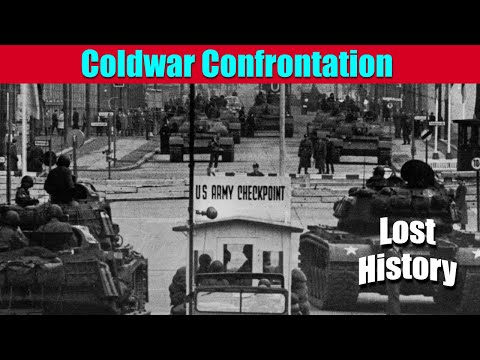
US and Soviet tanks faced off here in October 1961; today Checkpoint Charlie stands as a world-famous border crossing with an awkward tourist-trap shell.
Why does a place famous around the world look so oddly staged, almost theatrical, when the danger here once felt real enough to start a war? Checkpoint Charlie in Berlin, Germany, earns a visit because this patch of Friedrichstrasse turns Cold War history into something physical: a border line you can still read in the width of the street, the exposed firewalls, and the nervous emptiness around the replica hut.
Stand here today and you see tour groups, traffic, souvenir stalls, the white guardhouse copy, and Frank Thiel's oversized soldier portraits staring across Zimmerstrasse. The air smells of exhaust rather than gunpowder now, but the space still feels wrong for an ordinary city corner. Too open. Too watched.
That unease is the point. Checkpoint Charlie was never the whole Berliner Mauer; it was a legal fault line where one request for identification could become a superpower test, and where a short walk from Brandenburg Gate leads you into the raw mechanics of division.
Come for the photographs if you like, but stay for the correction. Most visitors arrive expecting an original Cold War relic and leave with something more interesting: the realization that the street itself mattered more than the objects placed on it.
Researched by the Audiala editorial team from historical records, architectural archives, and local expertise.
What to see
The Crossing on Friedrichstrasse
Checkpoint Charlie surprises people because the famous border crossing is almost gone. What stands at Friedrichstrasse and Zimmerstrasse today is a reconstructed wooden guardhouse, a sector sign, and a scatter of stubborn traces: cobblestones, cable ducts, a surviving wall edge, all sitting in traffic noise and hot reflected light where American and Soviet tanks faced each other in October 1961 at a distance shorter than a tennis court is long. Stay longer than the photo crowd does. The place changes once you stop hunting for a monument and start reading the absences; Berlin turns a Cold War symbol into an ordinary intersection, and that normality is the unsettling part.
Mauermuseum Haus am Checkpoint Charlie
The Mauermuseum works because it refuses to tidy history up. Inside, the rooms feel cramped and almost overfull, with escape cars, a mini-submarine, homemade devices, dense documents, and the faint museum mix of old paper, warm air, and too many stories pressed close together; records and collected objects show what people built when a wall cut streets, families, and futures in half. Go when your patience is intact. The displays can feel chaotic, but that clutter carries its own truth: escape was rarely heroic in the clean cinematic sense, more often improvised, risky, and powered by nerve.
Follow the Real Fragments: Mauerstrasse 93 to the Asisi Panorama
Skip the souvenir rhythm and walk two blocks deeper into the site’s leftovers. Start at Mauerstrasse 93, the only surviving building from the old border complex, and look for the Stasi observation window cut into the firewall in the late 1960s; then continue to the open-air displays and on to the Asisi panorama, where a 900-square-meter image and shifting soundscape rebuild the pressure of a divided city more honestly than the replica booth ever can. This is the better way to understand Checkpoint Charlie, and also the right companion to a longer visit at the Berliner Mauer: fewer icons, more evidence, and a sharper sense of how Berlin still lives with lines others drew through it.
Plan your visit
Getting There
Checkpoint Charlie sits at Friedrichstraße and Zimmerstraße, with the outdoor site on the street and the Mauermuseum at Friedrichstraße 43-45. Take U6 to Kochstr./Checkpoint Charlie and walk 1 to 2 minutes, or use buses M29 or N6; from Topography of Terror it is a 500-meter walk east along Zimmerstraße, about 6 minutes, and from Brandenburg Gate it is about 1.6 to 1.7 kilometers on foot, roughly 18 to 20 minutes.
Opening Hours
As of 2026, the outdoor checkpoint is a public street-level memorial site, so practical access is continuous. The Mauermuseum is open daily 10:00-20:00 every day of the year, with no official seasonal timetable or current closure notice published.
Time Needed
Give the outdoor site 10 to 20 minutes if you want the replica booth, the famous sign, and a quick read of the panels. Allow 30 to 45 minutes if you add the nearby memorial context, 90 to 120 minutes for the museum alone, and 2 to 3 hours for the full stop with a coffee break.
Accessibility
The outdoor site is flat city pavement at a normal intersection, so the ground itself is easy; crowds are the real obstacle, especially when tour groups bunch up around the booth. As of 2026, BVG lists elevator access at Kochstr./Checkpoint Charlie for at least the platform toward Alt Tegel, but check live status before you go, and contact the Mauermuseum ahead of time if you need full step-free access because the museum is spread across connected buildings and only partly accessible.
Cost & Tickets
As of 2026, the outdoor checkpoint is free. Mauermuseum admission is €18.50 for adults, €14.50 for college students, €12.50 for ages 7-18, disability card holders, and social-ticket visitors, free for children up to 6 and registered carers; the audio guide is €5, a photo permit is €5, and Berlin WelcomeCard holders get 25% off, so online booking pays twice by cutting both the queue and the ticket price if you already have the card.
History
A Street Corner That Nearly Lit the Fuse
Checkpoint Charlie began as part of Friedrichstadt, the planned baroque expansion laid out from 1688 under Elector Friedrich III, with Johann Arnold Nering helping give the district its strict urban grid. War wrecked much of that older city fabric in the 20th century, and then border guards, engineers, and political planners turned one ordinary intersection into a fortified crossing two blocks wide and two blocks deep.
Records show the checkpoint took shape after the Wall went up on 13 August 1961. The GDR opened the border crossing at Friedrichstrasse and Zimmerstrasse for Allied military personnel, diplomats, and foreigners; the Western Allies answered with their own checkpoint on the American-sector side, and the NATO phonetic alphabet supplied the name: Charlie.
The turning point
The Night an Opera Trip Brought Tanks
At first glance, Checkpoint Charlie looks like the neat front door between East and West Berlin, a place of rules, stamps, and official routine. That surface story flatters everyone. It suggests the crossing worked because both sides accepted the same script.
Then Edwin A. Lightner arrived on 22 October 1961, heading into East Berlin with his wife for an evening at the opera, and the script broke. East German border police demanded identification; Lightner refused because showing papers to GDR officials would imply that Washington accepted East German authority over Allied movement in Berlin, and for him that was no small procedural quarrel but a personal test of his country's legal position in a divided city.
The turning point came five days later, on 27 October 1961, when American and Soviet tanks rolled up within a few dozen meters of each other, close enough that a shell fired here could have changed Europe. The surface story of orderly border control survives because the later checkpoint became a symbol, but the documented truth is messier and more frightening: one street corner mattered because the four-power status of Berlin still hung over it, and both sides knew a minor humiliation could become a major surrender.
Knowing that changes your gaze. The replica hut stops looking like the main event, and the open ground, blank walls, and overwide roadway start to read as the real monument: a scar left by lawyers, soldiers, masons, border police, and politicians who turned city space into a loaded argument.
What Tourists Think They See
Most tourists photograph the guardhouse, the sector sign, and the soldier portraits as if they had survived intact from 1961. They have not. The current hut is a replica installed on 13 August 2000, the famous "You are leaving the American sector" sign on site is a copy, and the original Allied booth stands in the Allied Museum. Even the giant portraits complicate the story: Frank Thiel made them from 1994 photographs, and the west-facing figure wears Russian Federation uniform rather than Soviet dress from the standoff years.
A Border That Killed in Public
Checkpoint Charlie's history does not end with tanks. On 17 August 1962, 18-year-old Peter Fechter tried to flee near Zimmerstrasse, border guards shot him, and he bled to death in public view close to the crossing while witnesses shouted from the western side. His death made the border's violence impossible to tidy up into Cold War theater, and the annual 13 August commemorations nearby still keep that wound open in Berlin's civic memory.
Tips for visitors
Go Early
Arrive before 9:00 if you want photos that show more than elbows and selfie sticks. The morning light is cleaner too, and the checkpoint’s small replica booth looks even smaller once the noon crowds gather around it like a bus stop.
Ignore Pitches
This corner has a long history of tourist-targeted nonsense: fake donation requests, shell games, and photo hustles. Keep walking, keep your bag zipped in crowds, and do not pay anyone in costume for a picture unless you enjoy funding Berlin’s least subtle performance art.
Pair It Properly
Checkpoint Charlie works best as one chapter, not the whole book. Walk 6 minutes west to Topography of Terror or fold it into a longer Berlin Wall route with Berliner Mauer; the site gains weight once you place it beside the machinery that made the border real.
Eat Nearby, Not Here
The immediate strip is heavy on souvenir energy and light on good meals. For something easy, Little Green Rabbit at Friedrichstraße 200 is a budget lunch; Viet Checkpoint on Zimmerstraße 23 is a solid mid-range stop; if dinner matters, Nobelhart & Schmutzig is the splurge move and far more memorable than anything beside the checkpoint itself.
Skip The Queue
Buy Mauermuseum tickets online if you know you are going inside; the museum explicitly sells them as queue-skipping tickets, and they stay valid for one year from purchase. If you have a Berlin WelcomeCard, the 25% discount is better than the €5 audio guide saving you might be hunting elsewhere.
Mind The Tone
No dress code applies here, but the Peter Fechter memorial nearby is not a backdrop for jokes and staged poses. Checkpoint Charlie can feel oddly theatrical today; that is exactly why a little restraint matters when you stand in a place where people once risked everything to cross.
Where to Eat
local_dining
Don't Leave Without Trying
CurrywurstDoner kebabPfannkuchen
bite.
quick bite
Berlin-style doner kebab and batura wraps€€star4.9(735)
Order: Order the batura with chicken. Reviewers keep coming back for the soft bread, juicy meat, and the way the sauce, vegetables, and filling stay balanced from first bite to last.
This is the kind of fast, deeply satisfying Berlin meal that makes sense the moment you taste it. The family-run warmth matters too: people mention the generous service almost as often as the kebab itself.
Order: Go for the Sis Tavuk or the doner, with the fresh salad and a glass of Turkish tea. Reviews point again and again to flavorful grilled meat and generous portions.
Right by Checkpoint Charlie, this one feels like a proper neighborhood grill rather than a place trading on the address. The charcoal-cooked food, late hours, and upbeat room give it real staying power.
Order: Order the Punjab Naan Pocket or the Tamarind Prawn Bowl, and add a chai. The mango pickle gets singled out in reviews for good reason.
MAATI reads like a smart lunch stop built for people who actually work nearby, not just pass through. The food sounds thoughtful rather than heavy, and the cafe atmosphere gets almost as much praise as the cooking.
Order: The Penne Gino Special and Tagliatelle al Tartufo get the strongest praise, and multiple reviews mention the bread as a sleeper hit.
This is the fallback you want nearby when everyone wants something familiar and you need it fast. Big portions, quick service, and a broad menu make it useful without feeling phoned-in.
checkAround Checkpoint Charlie, you are in central Berlin with easy reach of Mitte and Kreuzberg food culture, so the area is strongest for street food, Turkish-influenced cooking, bakeries, market halls, and international restaurants.
checkBerlin does not have one universal restaurant closing day across the city.
checkA common pattern, especially among smaller or higher-end restaurants, is to close on Monday.
checkSome smaller or higher-end restaurants also close on both Sunday and Monday.
checkMarkthalle Neun in Kreuzberg runs Street Food Thursday every Thursday.
checkHackescher Markt runs on Thursday and Saturday.
checkMaybachufer market runs on Tuesday and Friday.
checkWinterfeldtplatz market's key day is Saturday.
Food districts:Checkpoint Charlie sits within easy reach of Mitte and Kreuzberg.Kreuzberg is a strong area for Turkish-influenced food culture and market halls.Mitte offers quick access to street food, bakeries, and international dining districts.Neukolln and Kreuzkolln are known for markets such as Maybachufer.Prenzlauer Berg has weekly market culture around Kollwitzplatz.Schoneberg is known for the Winterfeldtplatz market.Charlottenburg has the Karl-August-Platz market.
Restaurant data powered by Google
Watch & Explore Checkpoint Charlie.
Checkpoint Charlie 1961: US Panzer vs Sowjet T55 – 16h bis Atomkrieg? | DDR-Docu
Verlorene Zeit27 min16K
Berliner Mauer US-Panzer am Checkpoint Charlie Oktober 1961 | Alltag im West-Berlin
footage berlin - rbb media2 min21K
On the brink of War! Standoff at Checkpoint Charlie
Anything History6 min78K
Frequently asked
Is Checkpoint Charlie worth visiting?
Yes, but only if you go for the history rather than the replica hut. The surprise is how little survives at street level: a busy junction at Friedrichstraße and Zimmerstraße carries the memory of the October 27-28, 1961 tank standoff, when American and Soviet tanks faced each other only meters apart, close enough to hear engines idle. Pair it with the Mauermuseum or the Berlin Wall Foundation's on-site material, or the stop can feel thinner than the story deserves.
How long do you need at Checkpoint Charlie?
You need 15 to 20 minutes for the outdoor site, and 2 to 3 hours if you add the museum. The open-air stop is quick: the replica booth, the sector sign, the exposed street scar, and a few fragments such as cobblestones and the surviving building at Mauerstraße 93. Mauermuseum takes longer because it is dense, object-heavy, and packed with escape stories that pull you well past a casual glance.
How do I get to Checkpoint Charlie from Berlin?
The easiest way is the U6 to Kochstraße/Checkpoint Charlie, then a walk of about 100 to 200 meters, roughly the length of a city block. The site sits at Friedrichstraße and Zimmerstraße in central Berlin, and Stadtmitte station is also close at about 300 to 400 meters. Buses M29 and N6 stop nearby, so public transport usually beats driving in this traffic-heavy part of Mitte.
What is the best time to visit Checkpoint Charlie?
Early morning is the best time if you want fewer crowds and cleaner photos. Midday brings bus groups, traffic noise, and hard light bouncing off the paving, which makes the place feel more like a hot crossroads than a memorial. Autumn and winter often suit the site better emotionally: thinner crowds, sharper light, and blank walls that read more like a border wound than a photo backdrop.
Can you visit Checkpoint Charlie for free?
Yes, the outdoor historic site is free. You can stand at the crossing, read the street-level interpretation, and trace the old border line without paying anything. Mauermuseum next door is separate and paid, with adult tickets at 18.50 euros, while children up to age 6 enter free.
What should I not miss at Checkpoint Charlie?
Do not miss Mauerstraße 93, the only surviving building from the border complex, because it tells the truth more clearly than the replica booth does. The late-1960s Stasi observation window still marks a real instrument of control, and the low cobblestones and cable traces on the ground reward anyone who looks down instead of only photographing the sign. Frank Thiel's giant soldier portraits also deserve a second look: they are memory art from 1994 and 1998, not literal Cold War guards frozen in place.
Sources & attribution10
Researched and written by the Audiala editorial team from historical records, architectural archives, and local expertise. Last updated July 2026.
Berlin Wall Foundation — Historical background on the border crossing at Friedrichstraße/Zimmerstraße, the checkpoint's purpose, and why the site mattered under four-power status.
Berlin Wall Foundation — Details on the October 1961 confrontation, including the tank standoff and Checkpoint Charlie's role as a Cold War flashpoint.
visitBerlin — Visitor-facing overview of the site, the checkpoint replica, nearby interpretation, and practical orientation in central Berlin.
Berlin.de — Confirmed that the outdoor site is free and provided general sight information for the historic location.
Berlin Wall Foundation — On-site interpretation details, surviving traces such as cobblestones and cable ducts, and the importance of Mauerstraße 93.
Mauermuseum — Current ticket prices, audio guide details, and practical museum visit information.
Mauermuseum — Museum visiting basics and confirmation that the museum forms a separate paid visit from the free outdoor site.
BVG — Nearest U-Bahn station information and local transport connections around Kochstraße/Checkpoint Charlie.
Chronik der Mauer — Background on Frank Thiel's soldier portraits, including their post-1990 artistic origin and why they are often misunderstood.
Berlin Senate Department for Urban Development — Current planning context, the site's incomplete memorial form, and why the present streetscape does not yet match the weight of the history.
Strictly necessary cookies keep the site working. Analytics (PostHog, Google Analytics) measures how each visitor uses our pages. Marketing loads YouTube videos and walking-route maps without a tap and lets Google Analytics set advertising cookies. We never sell your data. You can change this any time from the footer.
Analytics and marketing cookies are optional and only load if you agree. Details under Customize.
Privacy
Cookie preferences
Pick what you're okay with. You can change this any time from the footer.
Strictly necessary
Always on
Sign-in, language, navigation. Always on.
Product analytics
PostHog (EU) and Google Analytics record which pages you view and how you use them, under a random identifier stored in your browser. Helps us see which pages work and which need fixing. Google's ad personalisation stays off. No selling.
Marketing
Loads YouTube videos and the walking-route maps (OpenFreeMap) without a tap; without it, they load only when you tap them. If analytics is also on, Google Analytics may set advertising cookies. Ad personalisation stays off.