An introduction.
Researched by the Audiala editorial team from historical records, architectural archives, and local expertise.
TThe goddess atop the Brandenburg Gate has switched identities at least twice — and nobody in Berlin can quite agree on who she is now. Standing at the western end of Unter den Linden in Berlin, Germany, this 26-metre-high sandstone gate is the single most loaded monument in a city that collects loaded monuments the way other cities collect statues of mayors. You come here not for architecture alone, but to stand at the exact point where Prussia, Napoleon, the Third Reich, the Cold War, and reunification all left their fingerprints on the same stone.
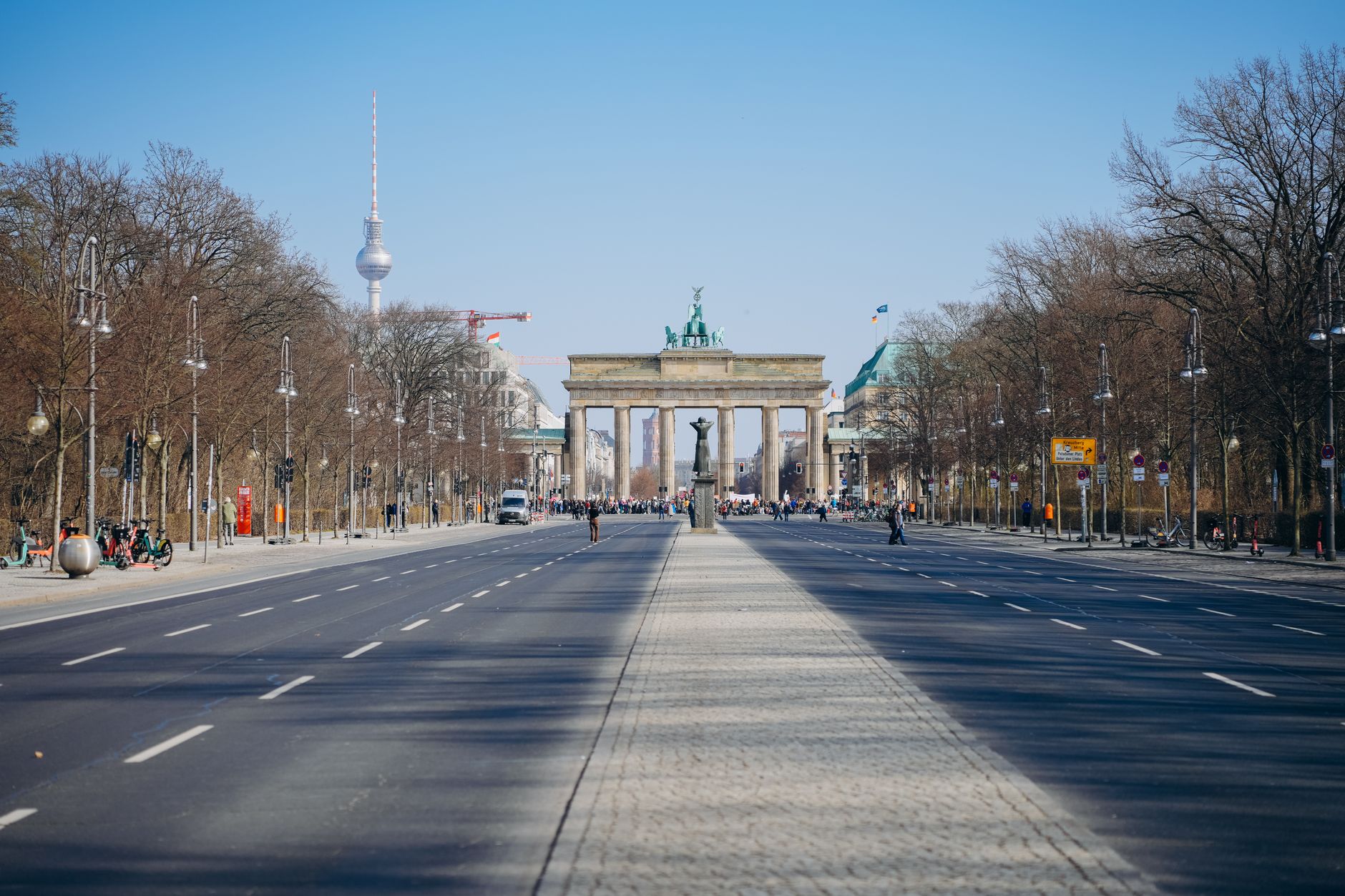
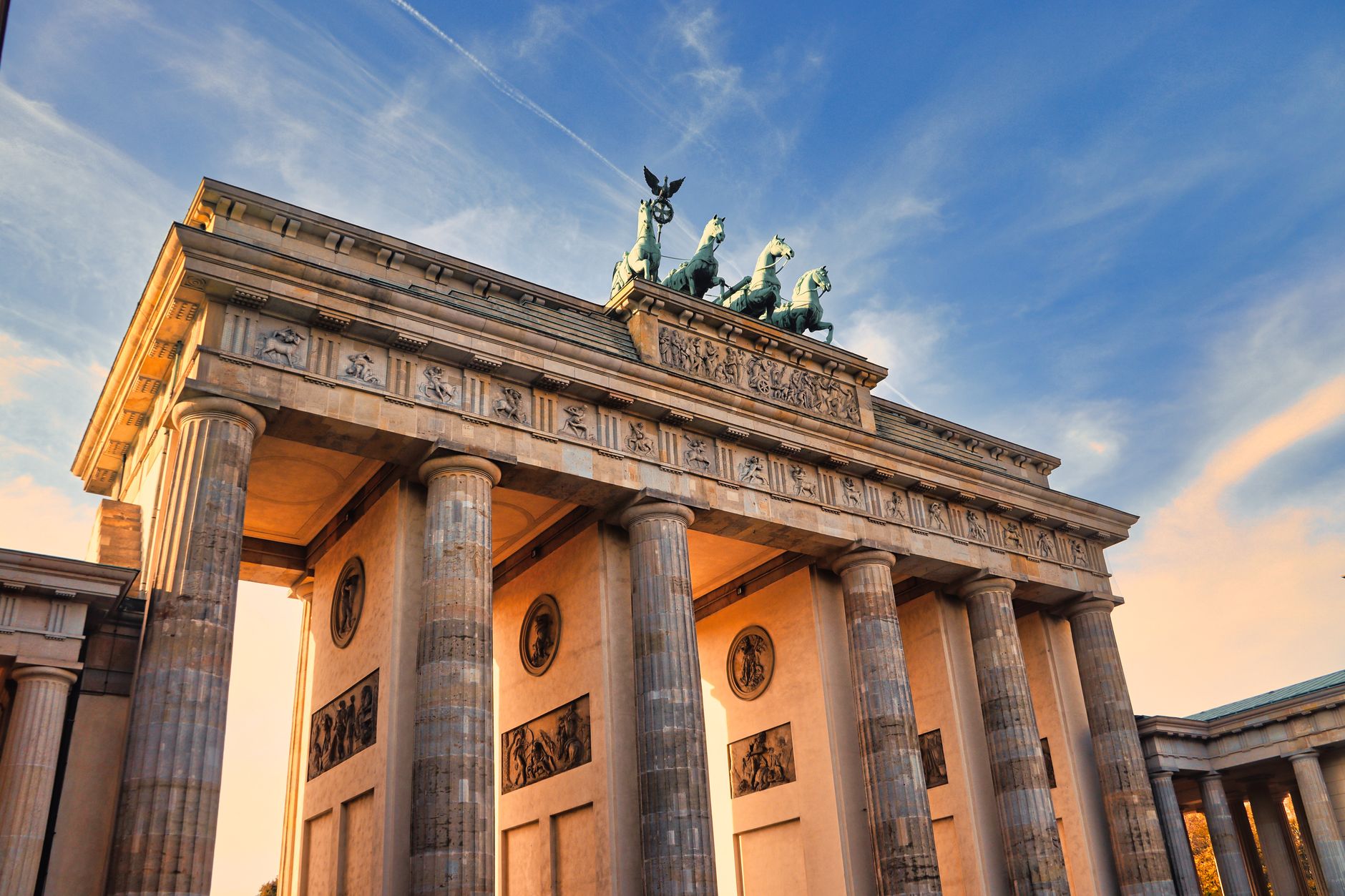
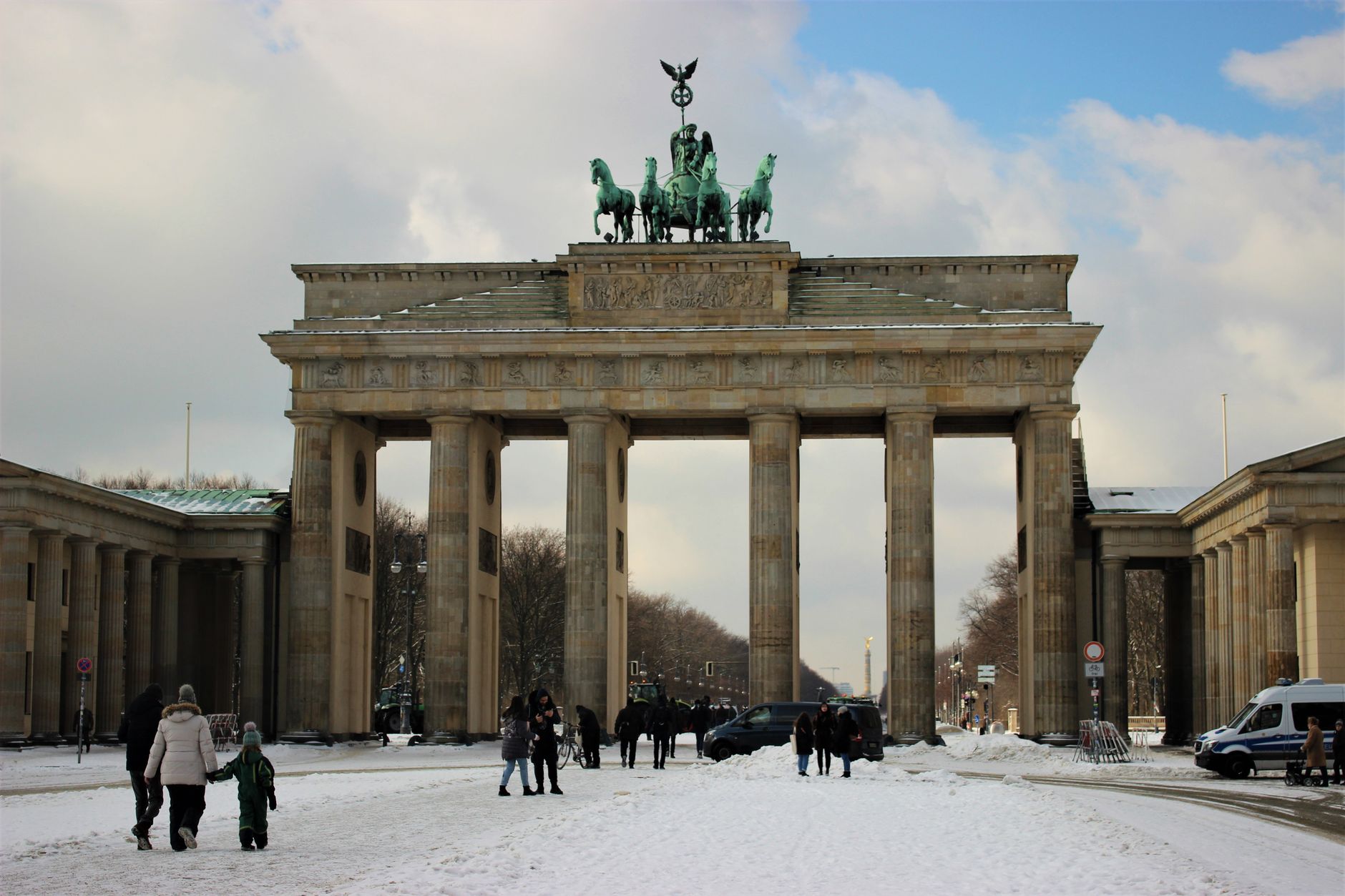
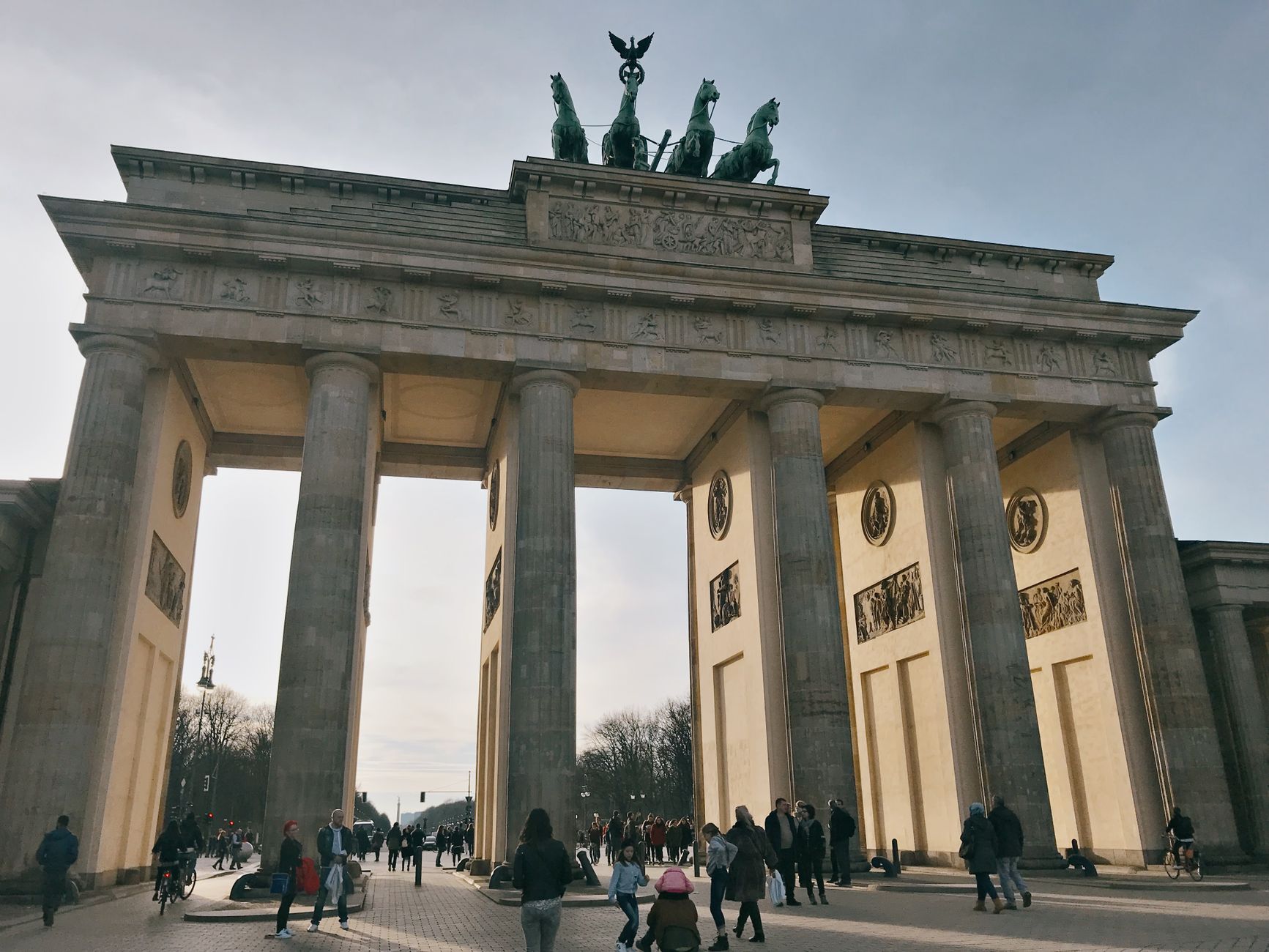
What you see today is deceptively calm. Five passageways cut through a row of twelve Doric columns — each column over 15 metres tall, thick enough that two people linking arms couldn't wrap around one. Pariser Platz spreads out on the eastern side, a clean rectangle of embassies and hotels rebuilt after reunification. Tourists pose. Street performers play saxophone. The four bronze horses of the Quadriga catch the afternoon light overhead, frozen mid-gallop toward the Tiergarten.
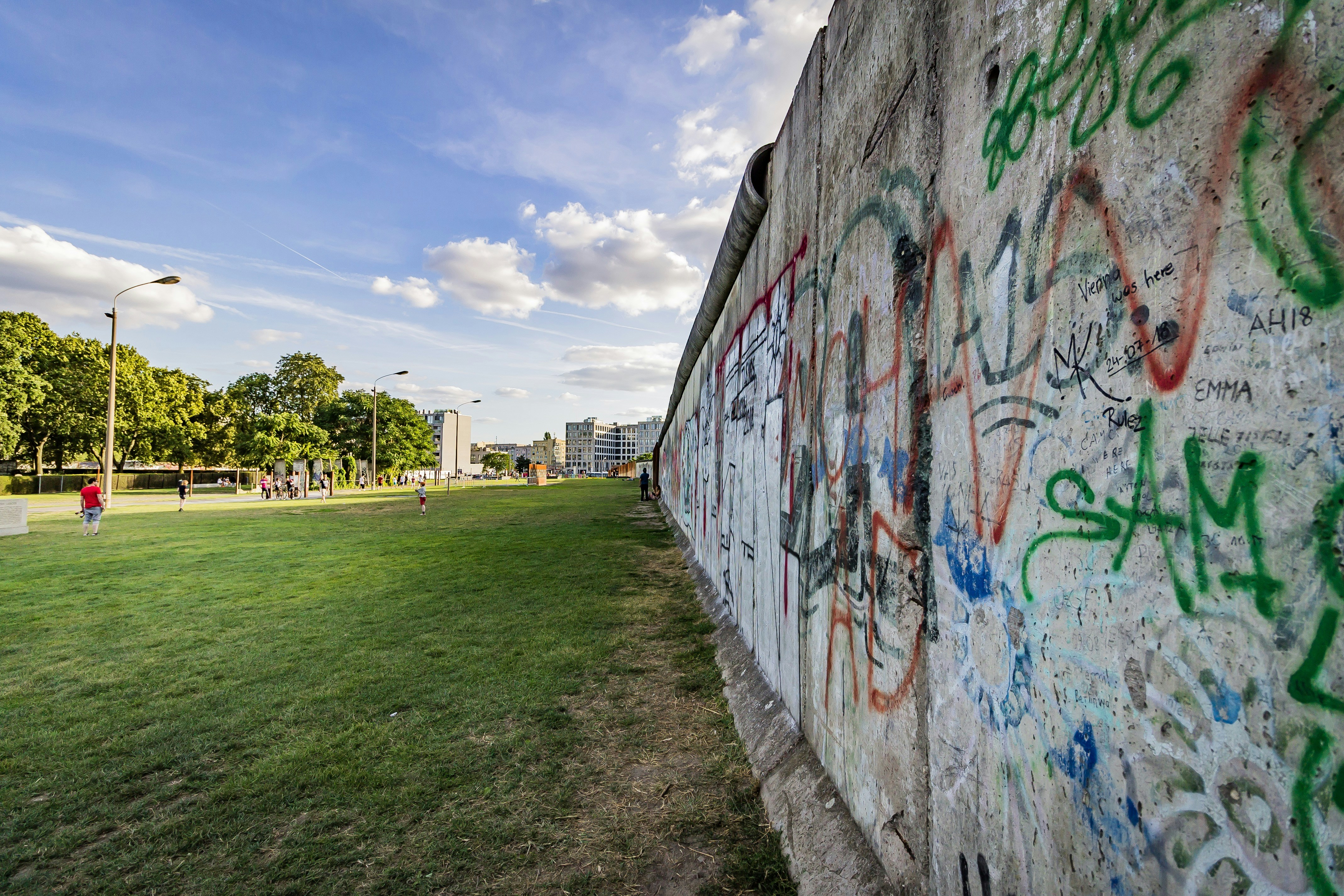
But the stillness is recent. For 28 years, the Berlin Wall curved in an arc directly behind this gate, sealing it inside a no-man's-land that neither East nor West Berliners could enter. The gate was visible from both sides and reachable from neither — a ghost monument in a ghost zone. That memory still hangs in the air here, even on the sunniest afternoon.
The gate is also, quietly, a place for silence. In the north wing, a small, rarely visited Room of Silence offers a few minutes of stillness away from the crowds. No religious affiliation, no programme — just a chair and the weight of the building around you. Most visitors walk straight past it.
01 What to see.
The Five Passageways and Doric Columns
Most people photograph the gate from fifty metres back and move on. Walk into it instead. Twelve fluted Doric columns — six on each side — divide the structure into five passageways, and the central arch, 65 metres wide in total and 26 metres tall (roughly the height of an eight-storey building), was once reserved exclusively for Prussian royalty. Today you can stroll straight through it, and you should, because the acoustics shift the moment you step under the sandstone ceiling: the crowd noise drops to a muffled hum, your footsteps sharpen against the cobbles, and for a few seconds Berlin feels almost quiet.
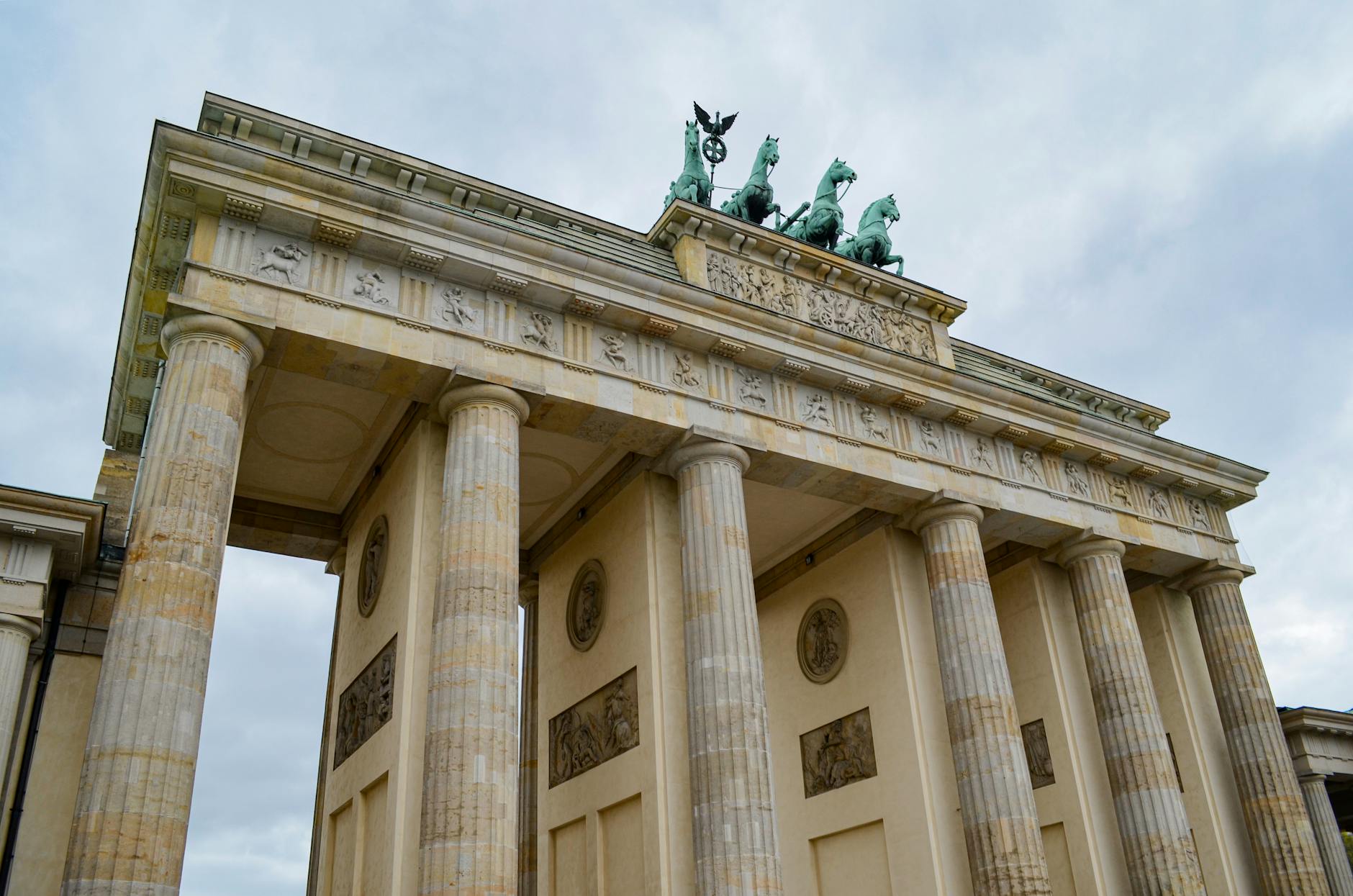
Carl Gotthard Langhans, the Prussian court architect, modelled the gate on the Propylaea at the Acropolis when he designed it between 1788 and 1791. But look closely at the columns and you'll catch his quiet rebellion against strict Greek Doric form. The flutes don't end in sharp ridges — they're separated by flat fillets and taper into smooth, spoon-shaped curves at top and bottom, a technique borrowed from later Hellenistic practice. The corner metopes use a half-panel solution that's Roman, not Greek. Langhans built a monument to Athens and then smuggled in centuries of architectural evolution. Run your hand along the cool sandstone grain and you're touching that argument.
The Quadriga
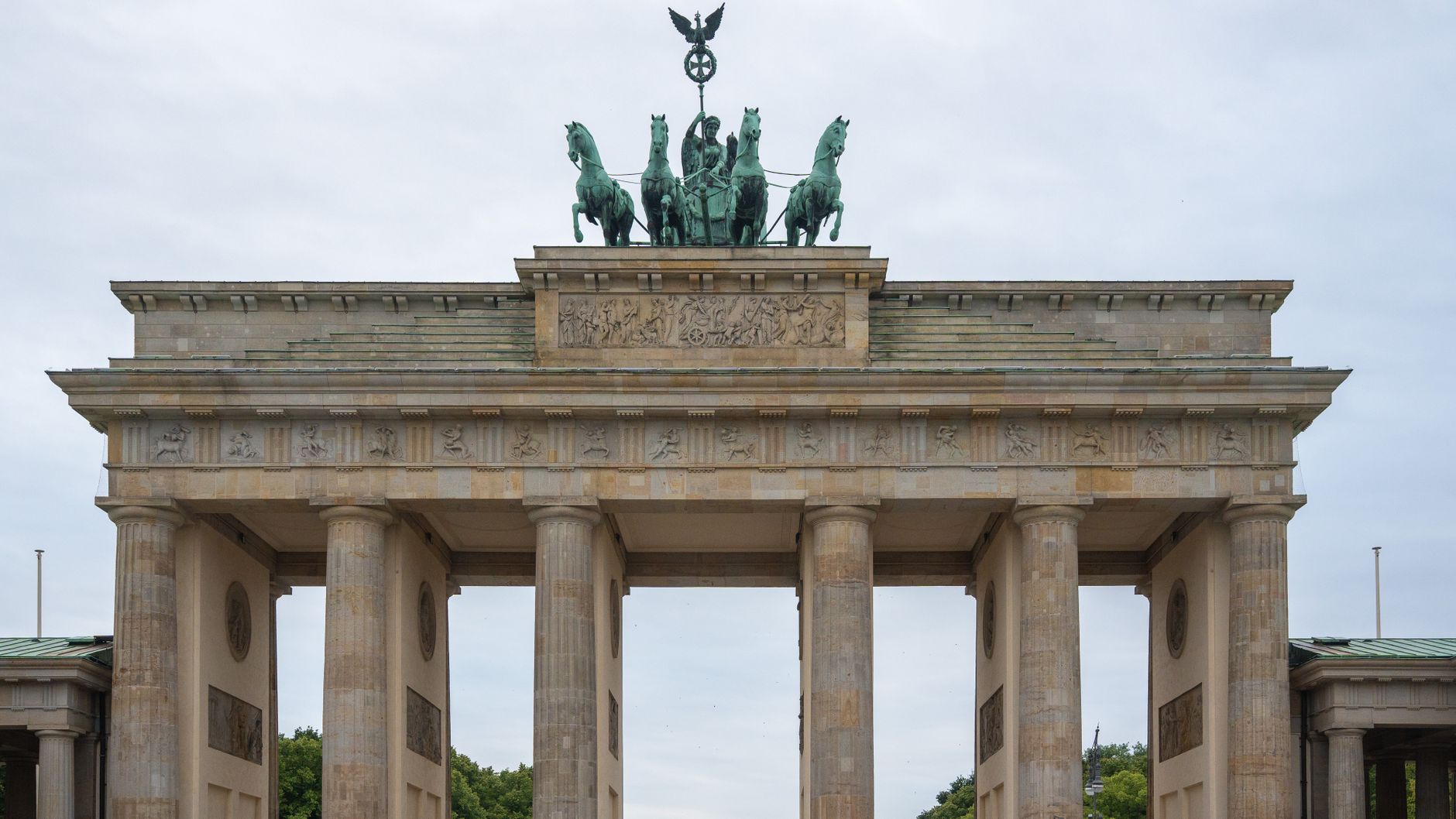
The bronze chariot group crowning the gate has been stolen, destroyed, rebuilt, and politically rebranded more times than any sculpture deserves. Johann Gottfried Schadow designed it in 1793 as Eirene, the goddess of peace, holding an olive wreath and riding four horses into the city. Then Napoleon's troops seized Berlin in 1806 and carted the entire thing to Paris as war plunder. When Prussian forces brought it back in 1814, the olive wreath was gone — replaced by an Iron Cross standard topped with a crowned Black Eagle. Peace became Victory overnight.
Allied bombing during World War II destroyed most of the original copper-sheet sculpture, and East German authorities reconstructed it in the 1950s but stripped out the Iron Cross and eagle, finding them too militaristic. After reunification, Berlin restored both symbols. Today the goddess faces east, toward Unter den Linden and the Alexanderplatz TV Tower, though you'll need binoculars or a decent telephoto lens to read the details from the ground. At sunset, when the western light catches the bronze from behind, the whole group turns into a black silhouette against gold sky — the single best moment to see it.
A Walk Through Both Sides: Pariser Platz to the Tiergarten
The Brandenburg Gate is really two experiences divided by a wall of columns — and understanding that division matters, because for 28 years a real wall made the same split. Stand on Pariser Platz, the eastern square, where the sandstone warms to honey-beige in afternoon light and the paving stones echo with a dozen languages. From 1961 to 1989, the Berlin Wall curved in an arc directly in front of the gate, sealing it inside a no-man's-land that neither East nor West Berliners could enter. On 22 December 1989, some 100,000 people flooded this square for the reopening ceremony.
Now walk west through the central arch. The soundscape changes — traffic from Straße des 17. Juni replaces the pedestrian hum, and the green edge of the Tiergarten opens up on your right. Before you cross into the park, pause at Platz des 18. März and look back east through the gate: the TV Tower pins the horizon, framed perfectly by the columns. Then duck into the side stoas — the low colonnaded wings flanking the main structure. Even on the busiest summer Saturday, almost nobody lingers here. You'll find shade, quiet, and a completely different angle on the gate's rhythm of stone and shadow. If you want true solitude, come before 8 a.m., when the only sounds are cleaning trucks and pigeons, and the passageways belong to you alone.
02 In pictures.





Videos
Watch & Explore Brandenburg Gate
What Really Happened at the Brandenburg Gate?
Berlin's Most Visited Sights – Which of These Do You Already Know?
BRANDENBURG GATE: Enduring Symbol of Berlin
Plan and listen to Brandenburg Gate with Audiala.
Audio guide in your pocket, itinerary in your browser. Built for the way you actually visit.
03 Visitor logistics.
The practical scaffolding for a good visit — kept short.
Getting There
Take the U5 or S1/S2/S25/S26 to S+U Brandenburger Tor station — you'll surface about 200 meters from the gate. Bus routes 100 and 200 pass directly by and connect to Alexanderplatz, the Reichstag, and Potsdamer Platz. From Berlin Hauptbahnhof, it's a flat 15-minute walk south across the Spree, past the Reichstag.
Opening Hours
As of 2026, the Brandenburg Gate stands on a fully pedestrianised square and is accessible 24 hours a day, 365 days a year — no tickets, no barriers, no closing time. Occasional closures happen during large events like the FIFA World Cup Fanmeile on Straße des 17. Juni or political demonstrations, which are frequent on weekends.
Time Needed
The honest answer: 15–20 minutes for the gate itself. Walk through, admire the Quadriga from both sides, take your photos. If you combine it with the Holocaust Memorial (5 minutes south), Reichstag dome (pre-book online, free), and a Tiergarten stroll, budget 2–3 hours for the cluster.
Accessibility
Pariser Platz is flat and fully pedestrianised with no steps or barriers to pass through the gate's arches. The surface is cobblestone — slightly uneven but manageable for wheelchairs and pushchairs. The S+U Brandenburger Tor station has elevator access to street level.
Cost
Completely free. No entry fee, no ticket office, no queue. The gate is a public monument on an open square — you simply walk up to it. Guided walking tours that include the gate as a stop typically cost €15–30 through third-party operators.
05 Tips for visitors.
Small things that change the day.
Watch Your Pockets
Pariser Platz is Berlin's number-one pickpocketing hotspot. Keep phones and wallets in front pockets or zipped bags, especially in summer crowds and during events.
Morning Light Wins
The gate faces east-west. For the classic shot from Pariser Platz looking westward, arrive before 10am when soft morning light hits the columns directly. Afternoon sun sits behind the gate and turns it into a silhouette.
Currywurst at the Gate
Curry Wolf am Brandenburger Tor (Unter den Linden 77) serves Berlin-style currywurst without casing, with their signature 'OPIUM' sauce — budget €3–8. For a proper Döner, walk 5 minutes south to Wilhelmstraße rather than eating at the overpriced tourist stands on the square.
Night Beats Noon
The gate is dramatically illuminated after dark and during October's Festival of Lights receives full 3D video projections. Evening visits offer better photos, cooler temperatures, and noticeably thinner crowds than the midday crush.
Combine the Cluster
The Holocaust Memorial sits 400 meters south, the Reichstag 500 meters north, and Tiergarten begins immediately west. Walk all three in a single morning loop — the distances between them are shorter than most airport terminals.
Skip the Beer Bikes
Locals actively avoid the area because of loud multi-person beer bikes and party vehicles circling the western approach. If you want a contemplative moment with the gate's history, early morning or a weekday evening delivers that silence.
Where to Eat
Don't Leave Without Trying
Dining Tips
- check Always check for a restaurant's 'Ruhetag' (rest day), often Sunday or Monday — never assume a place is open without checking.
- check Lunch is traditionally the main hot meal, with many restaurants offering a daily special ('Mittagstisch') between 12:00 PM and 2:00 PM.
- check Dinner is typically eaten early by German standards, between 7:00 PM and 8:00 PM, though Berlin's international restaurants often serve much later.
- check Tipping is a voluntary 'thank you' for good service, not a mandatory wage subsidy — round up the bill or add 5-10% for great service.
Restaurant data powered by Google
04 A history of reinvention.
A Peace Gate That Kept Changing Its Mind
King Friedrich Wilhelm II of Prussia commissioned architect Carl Gotthard Langhans to build a grand new entrance to Berlin in 1788. Langhans modelled his design on the Propylaea — the monumental gateway to the Acropolis in Athens — and Prussian stonemasons and labourers raised the structure from Elbsandstein over three years. When it opened in 1791, it was called the Friedenstor: the Peace Gate. It was Berlin's first Greek Revival building and the opening statement of Neoclassicism as the official architectural language of the Prussian state.
That original name didn't last. Over the next two centuries, the gate would serve as a triumphal arch, a propaganda backdrop, a prison wall, and finally a symbol of unity. No single building in Europe has been forced to mean so many contradictory things.
The Goddess Who Went to Paris and Came Back Someone Else
Most visitors glance up at the Quadriga — the chariot and four horses crowning the gate — and assume it's always been there, always looked like that. The standard story: sculptor Johann Gottfried Schadow designed it in 1793 as a symbol of peace. A goddess drives four horses into the city. Simple enough.
But here's what doesn't add up. The figure Schadow originally created was Eirene, the Greek goddess of peace, holding an olive wreath. In 1806, Napoleon's army defeated Prussia and marched into Berlin. Napoleon personally ordered his soldiers to dismantle the Quadriga, crate it up, and ship it to Paris as war loot — a deliberate humiliation aimed at Friedrich Wilhelm III. For eight years, the gate stood decapitated, its skyline broken. The empty pedestal became a daily reminder of Prussian shame.
When Napoleon fell in 1814, Prussian forces recovered the Quadriga and hauled it back to Berlin. But the figure they reinstalled was no longer Eirene. The architect Karl Friedrich Schinkel redesigned her staff: the olive wreath became an oak wreath surrounding an Iron Cross, topped by a Prussian eagle. Peace became Victory. The goddess's meaning flipped entirely — not because of theology or art, but because a king needed revenge to feel like triumph. The Quadriga that Schadow made and the Quadriga you see today tell two incompatible stories from the same bronze.
Stand below and look up now, knowing this. The horses still charge eastward, into the city, as they have since 1814. The Iron Cross still gleams. But the original intent — a gate named for peace, crowned by a goddess of peace — survives only in documents. What you're looking at is a monument to how thoroughly war can rewrite even the symbols meant to oppose it.
The Night of the Torches
Twenty-Eight Years in No-Man's-Land
Listen to the full story in the app
The whole Brandenburg Gate,
told well.
Audio guides for 1,100+ cities across 96 countries. History, stories, and local insight — offline ready.

06 Frequently asked.
The questions travellers send us most about Brandenburg Gate.
Is the Brandenburg Gate worth visiting?
Yes, but manage your expectations — it's a 26-metre-tall outdoor monument, not a museum, and you'll absorb its power in about 15 minutes. The gate's weight comes from what happened here: Napoleon stole the Quadriga in 1806, the Nazis marched torchlit parades through it in 1933, the Berlin Wall sealed it off from 1961 to 1989, and 100,000 people flooded through it on 22 December 1989 when it reopened. If you understand that layered history, standing beneath those twelve Doric columns genuinely moves you. If you just want a photo, you'll get one fast and wonder what the fuss was about.
How long do you need at the Brandenburg Gate?
For the gate itself, 15 to 20 minutes is honest — walk through the five passageways, look up at the Quadriga, photograph the metopes showing centaurs fighting men above your head. If you combine it with the Reichstag dome (500 metres north, free but requires advance online booking), the Holocaust Memorial (400 metres south), and a stroll into the Tiergarten, budget 2 to 3 hours for the whole cluster.
How do I get to the Brandenburg Gate from Berlin?
Take the U5 or S-Bahn lines S1, S2, S25, or S26 to the S+U Brandenburger Tor station — it's a 200-metre walk from the platform to the gate. Bus routes 100 and 200 also pass directly through the area and are worth riding for the sightseeing alone, connecting Alexanderplatz to the Tiergarten via Unter den Linden. From Berlin Hauptbahnhof, it's a flat 1.2-kilometre walk south past the Reichstag and across the Spree — about 15 minutes on foot.
What is the best time to visit the Brandenburg Gate?
Before 8 a.m. on any day — the square is nearly empty, the light is soft, and you can hear your own footsteps echo through the sandstone passageways without competition. The gate faces east-west, so the classic shot from Pariser Platz (east side, looking west) works best in morning light or at sunset. Winter mornings are particularly atmospheric: fewer tourists, colder air sharpening the stone's edges, and sometimes snow dusting the Quadriga.
Can you visit the Brandenburg Gate for free?
Completely free, always. The gate stands on pedestrianised Pariser Platz and is accessible 24 hours a day, 365 days a year — no tickets, no barriers, no opening hours. Even the Room of Silence, a small meditation space inside the north gatehouse, costs nothing to enter.
What should I not miss at the Brandenburg Gate?
Most visitors photograph the Quadriga and leave, missing three things worth pausing for. First, the 16 metopes carved into the entablature — they depict Lapiths battling centaurs, directly echoing the Parthenon, and you can see them clearly from inside any passageway if you look up. Second, the Room of Silence in the north gatehouse: a bare, quiet meditation room that almost nobody enters. Third, the column fluting itself — run your hand along it and notice the flat fillets between grooves and the rounded terminations, a deliberate hybrid of Greek Doric mass and Ionic refinement that architect Carl Gotthard Langhans chose in 1788.
What events happen at the Brandenburg Gate?
Berlin's biggest New Year's Eve party draws tens of thousands to the Straße des 17. Juni, with live music and fireworks broadcast on national television. Each October, the Festival of Lights projects 3D video art onto the gate's sandstone facade for about ten days — free to watch. The Berlin Marathon finishes here every September, and during major football tournaments the avenue becomes a massive public viewing fan zone. Political demonstrations happen almost every weekend; they're generally peaceful but can temporarily block access and photography.
What do locals think of the Brandenburg Gate?
Berliners respect it symbolically but actively avoid the area — a 2024 survey of 3,002 residents found 9% specifically named Pariser Platz as a spot where tourist crowds bother them. The running local joke: walk through, say 'Ah, das Brandenburger Tor,' and keep moving. One German reviewer captured the mood perfectly: 'The historical significance is undeniable. But today it's dominated by masses of tourists. And beggars of all kinds.' Still, 73% of Berliners say they're proud the world visits their city — they just prefer you enjoy the gate while they drink coffee in Kreuzberg.
Verified, and shown.
Researched and written by the Audiala editorial team from historical records, architectural archives, and local expertise.
Official Berlin tourism site providing practical visitor tips, safety info, dress code, public transport details, and Berlin WelcomeCard information.
Official city government page with transport connections (S-Bahn, U-Bahn lines), basic historical facts, and location details.
Detailed architectural description including column fluting, metopes, Doric corner conflict, dimensions, Quadriga history, and construction materials.
German-language article confirming construction dates (1788–1791), national symbol status, and architectural classification as early Prussian Neoclassicism.
Federal government cultural site covering the gate's symbolic role, euro coin depiction, reunification ceremony, and New Year's Eve traditions.
Visitor access information confirming 24/7 pedestrian access on Pariser Platz.
Practical visitor guide with photography timing advice, time-needed estimates, nearby restaurant recommendations, and event information.
Walking route descriptions from Hauptbahnhof to Brandenburg Gate, luggage storage at central station, and self-guided tour timing.
Public transport ticket prices, cycling lane warnings, Reichstag dome booking requirements, and Berlin food recommendations.
Luggage storage pricing (from €1.49/hour), nearest storage location distance (~250m), and pedestrian zone description.
Bus routes 100 and 200 corridor description passing Brandenburg Gate, Reichstag, and Alexanderplatz.
Confirms walking distances between Brandenburg Gate, Reichstag, and central Berlin locations.
Official city page confirming free public viewing fan zone at Straße des 17. Juni during FIFA World Cup 2026.
Official organiser page for the annual NYE celebration, confirming 2025/2026 event details and approximate attendance.
Official city event listing for the annual New Year's Eve party at Brandenburg Gate.
Annual light festival programme details including 3D projection artists and awareness campaign illuminations.
Annual Umweltfestival details including 2026 date (7 June) and motto.
German public broadcasting educational resource on the gate's Cold War history and contested symbolism.
First-person account of the Room of Silence, neo-pagan spiritual practices at the gate, and sensory descriptions of the site.
German-language federal cultural page on the gate's transformation narrative from division to unity.
Educational history resource covering the gate's role across different political eras in Germany.
Simplified German-language description confirming sandstone construction and status as sole surviving Berlin city gate.
Deutsche Welle video referenced for information about 'The Gate' museum at the site.
Last reviewed