2-3 hours (Bernauer Strasse memorial) to full day (Mauerweg trail)
Entry
Free
Access
Bernauer Strasse memorial fully accessible; East Side Gallery is flat riverside path
Best season
Spring (April-May) or autumn (September-October)
The official name was Antifaschistischer Schutzwall — Anti-Fascist Protection Rampart. But the guns faced inward, the searchlights swept east, and the state killed at least 140 people here for trying to leave. The Berliner Mauer in Berlin, Germany, is the 20th century's clearest monument to a government that had to imprison its own citizens to survive. Come to trace 155 kilometres of concrete logic — and to watch Berliners still argue, loudly, about what any of it meant.
Stand at Bernauer Strasse on a cold morning and the memorial resolves into something unnerving. Rusted steel rods mark where the outer wall ran. A strip of raked sand runs behind them — the death strip, kept bare so footprints would betray escape. At noon on weekdays, the bell in the Chapel of Reconciliation rings and a volunteer reads the biography of one person shot here. Fifteen minutes. One name. Then the street resumes.
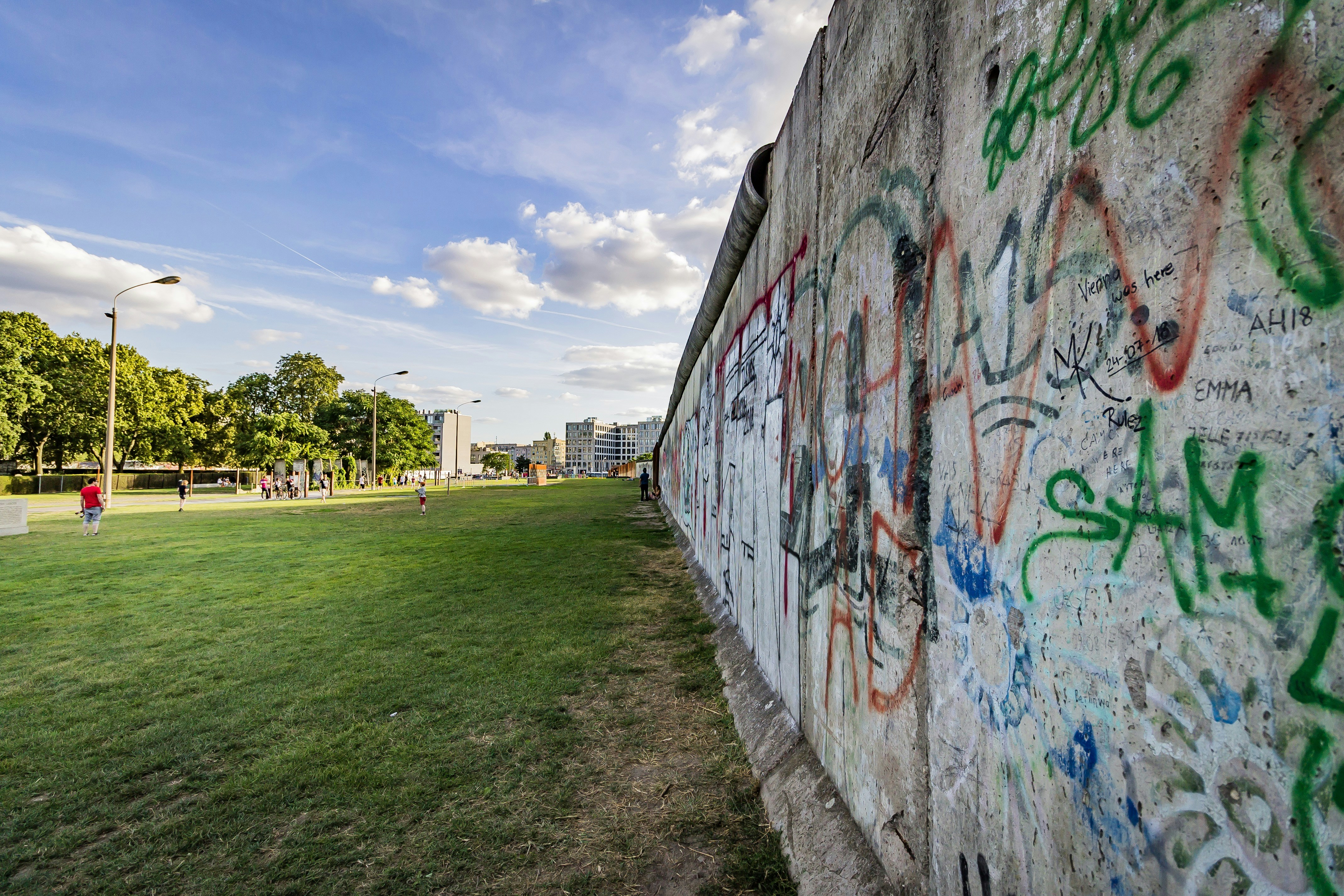
Less than 10% of the original wall survives. Within weeks of 9 November 1989, Mauerspechte — wall-peckers — hammered most of it into souvenir rubble. What you see today is fragments: 1.3 kilometres at the East Side Gallery in Friedrichshain, roughly 80 metres at Bernauer Strasse, another 80 metres at Topography of Terror. The rest is sidewalks, a double row of cobblestones, and the 160-kilometre Mauerweg cycling trail that retraces the full perimeter.
None of this is settled. The death toll is contested (86 to 483 depending on methodology). The East Side Gallery artists are suing over who owns repainted murals. Every 9 November, the city holds joyful commemorations of the fall alongside the reading of 56,696 names of Berlin Jews murdered on the same date in 1938. The Wall isn't a finished story with a nice arc. It's an argument Berlin is still having with itself.
Researched by the Audiala editorial team from historical records, architectural archives, and local expertise.
What to see
Gedenkstätte Berliner Mauer — Bernauer Straße
Most Wall sites show you a fragment. This one shows you the whole killing machine, 1.4 km of preserved border strip between Garten- and Ackerstraße, stacked west to east exactly as it stood in 1989: the 3.6-metre Grenzmauer 75 panel with its rounded anti-grip cap, the raked sand that betrayed footprints, the lit patrol road, the signal fence, the hinterland wall, the tower.
You won't grasp the width at street level. Climb the Documentation Center viewing platform and look straight down — the death strip only makes dimensional sense from above, a corridor roughly as wide as a six-lane motorway carved through a residential neighborhood.
Then find the Cor-Ten steel steles marking where the Wall no longer stands. Walk parallel and they read as sparse rust-orange rods. Step to the correct spatial axis and they collapse into a solid barrier — an optical illusion most visitors never trigger because nobody tells them to stand still and look sideways. Kneel for the 140+ ground markers embedded flush in the path; each names an escape, a shooting, a tunnel. Tunnel 57, October 3, 1964, fifty-seven people out in one night, is right under your feet.
Kapelle der Versöhnung
The GDR blew up the Versöhnungskirche in 1985 to clear sightlines across the border. The chapel that replaced it in 2000, on the exact footprint, is the first load-bearing rammed earth building built in Germany in over a century — 400 tons of clay, straw, crushed brick, and rubble salvaged from the demolished original, compacted by hand layer by layer inside a 7.2-metre oval.
The interior smells like wet stone after rain, faintly mineral. Each horizontal band in the wall is one pass of compaction — you're reading the record of human labor the way a geologist reads strata. Fragments of glass from the 1894 church still glint in the earth face if you look close.
The cross sits in an alcove cut directly into the load-bearing wall, not mounted on it — structurally strange, theologically pointed. Outside, a timber louver screen filters light into horizontal stripes that migrate across the clay through the day. Sound drops. Voices go to whisper without anyone asking. In summer the thermal mass keeps it cool; in winter it holds warmth longer than the air outside has any right to.
East Side Gallery — and its ignored reverse
1,316 metres of Wall along Mühlenstraße, painted in spring 1990 by 118 artists from 21 countries on the side that used to face East Berlin. Vrubel's Brezhnev-Honecker kiss is halfway down. Kinder's Trabant crashes through with a license plate reading Nov 9-89. Go early — the murals face east, morning light hits them direct, by afternoon they're backlit and harder to photograph.
What almost nobody does: cross to the Spree side. The river-facing back is raw, unauthorized graffiti, constantly rewritten, with a clear view to Oberbaumbrücke and far fewer people. At one of the gaps cut through for construction you can touch the exposed concrete edge — the Wall is roughly 12 cm thick, thinner than most visitors expect. What held a country in was barely wider than a hardcover book.
A half-day route: Bernauer → Topographie → East Side Gallery
Start at Berlin's Nordbahnhof S-Bahn (itself a preserved ghost station from the divided years) and walk the full 1.4 km of Bernauer Straße — Documentation Center first for the top-down view, then the preserved border strip, the Window of Remembrance with its chronologically arranged portraits and deliberately empty niches for unidentified victims, finishing at the Kapelle der Versöhnung.
Take the U8 south to Potsdamer Platz and walk to Topographie des Terrors on Niederkirchnerstraße. Two hundred metres of unrestored 1980s Wall stand beside the excavated Gestapo foundations — Nazi terror and Cold War concrete in one sightline, no murals, no paint, just weathered grey aggregate.
Finish at the East Side Gallery via S-Bahn to Ostbahnhof. Walk the mural side toward Oberbaumbrücke, then loop back along the quieter Spree path. Three sites, three registers: preserved system, raw relic, reclaimed canvas. Roughly five hours with coffee stops. All free.
Plan your visit
Getting There
Take tram M10 directly to 'Gedenkstätte Berliner Mauer' — it stops at the memorial entrance on Bernauer Straße. S-Bahn S1, S2, S25 or S26 to Nordbahnhof works equally well, with a 5-minute walk to the Visitor Centre at Bernauer Str. 119. From Alexanderplatz, the M10 tram gets you there in about 20 minutes without changes.
Opening Hours
As of 2026, the outdoor 1.4 km memorial grounds stay open daily 08:00–22:00, year-round, no closures for holidays. The Documentation Centre and Visitor Centre run Tue–Sun 10:00–18:00 and close Mondays — last tower ascent at 17:45. Arrive Monday or before 10:00 and you can still walk the outdoor stretch, just no indoor exhibits.
Time Needed
Budget 90 minutes to 2 hours for the standard visit: outdoor stretch plus the Documentation Centre tower and the Visitor Centre intro film. History readers easily spend 3 hours reading the multimedia steles along the route. A 30-minute speed-walk of the outdoor section alone misses the point — this site rewards slow looking.
Accessibility
The 1.4 km outdoor path is flat, paved, and wheelchair-accessible end to end. The Visitor Centre at Bernauer Str. 119 lends wheelchairs and seat-sticks free at the front desk; the Documentation Centre has an elevator to the viewing tower (borrow the Euro-key against ID). Verify the Visitor Centre elevator status on arrival — it has been intermittently out of service for maintenance.
Cost & Tickets
As of 2026, all exhibitions are free — outdoor grounds, both buildings, and the permanent '1961 | 1989' exhibition. No tickets, no booking, no skip-the-line product needed. Public guided tours run €3.50–5.00 (reduced €2.50–3.00); private 90-minute group tours cost €120 standard / €75 reduced and must be booked via stiftung-berliner-mauer.de.
Tickets & tours.
These are guided options from our partners — same price as booking direct.
Prices are indicative — final pricing and availability are confirmed at checkout. Audiala may earn a commission from bookings made through these links.
Photo Gallery
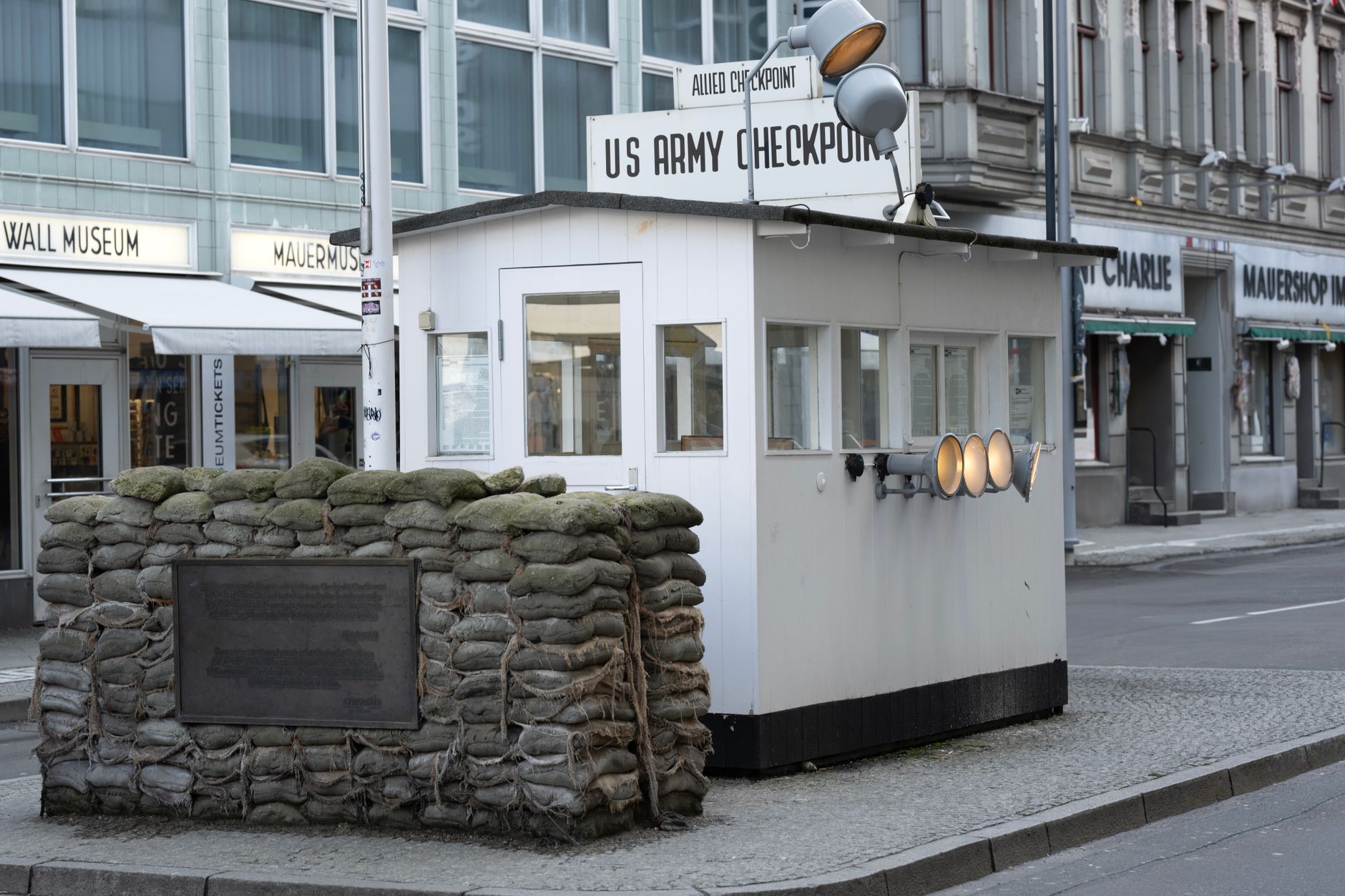
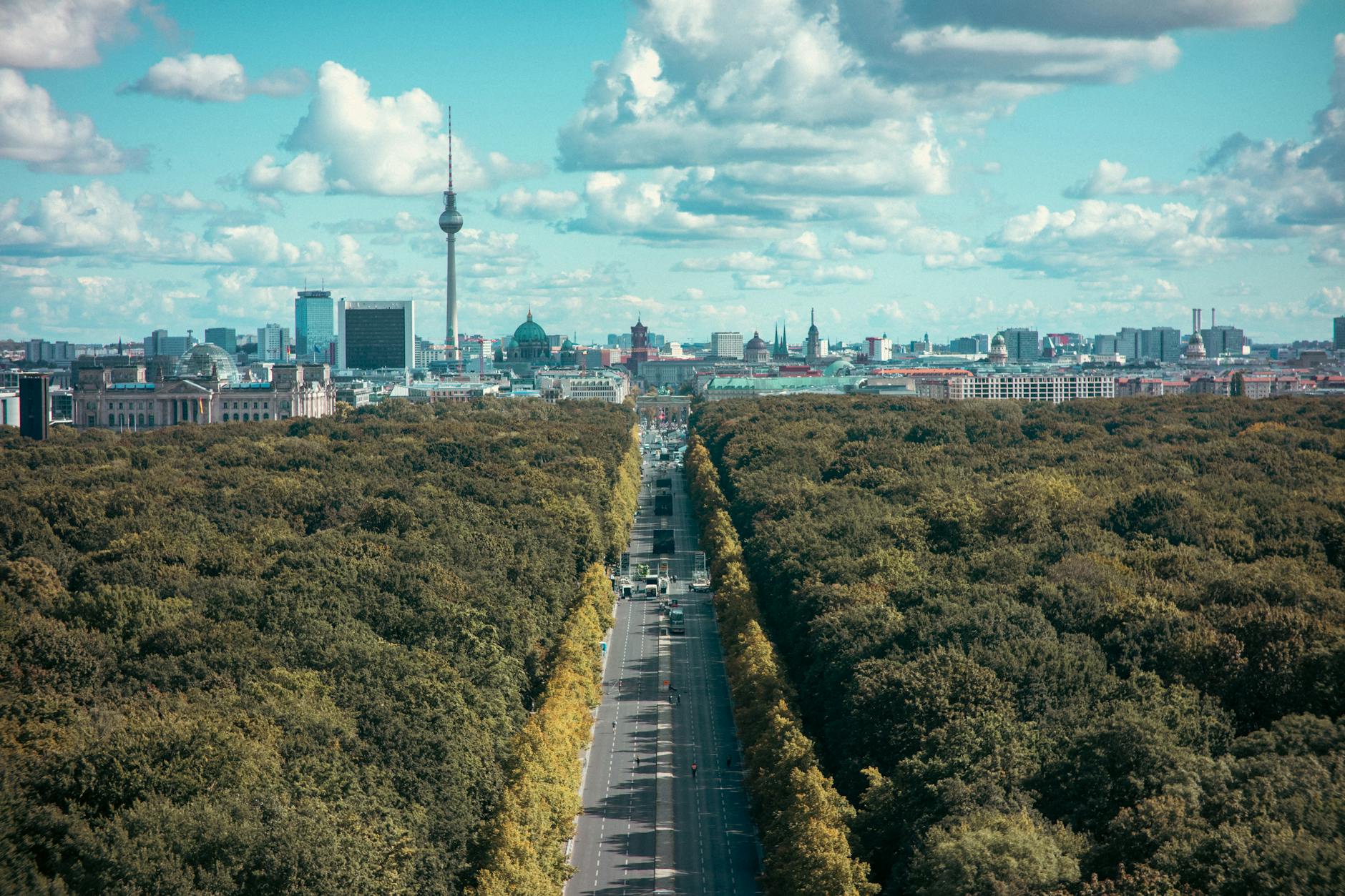
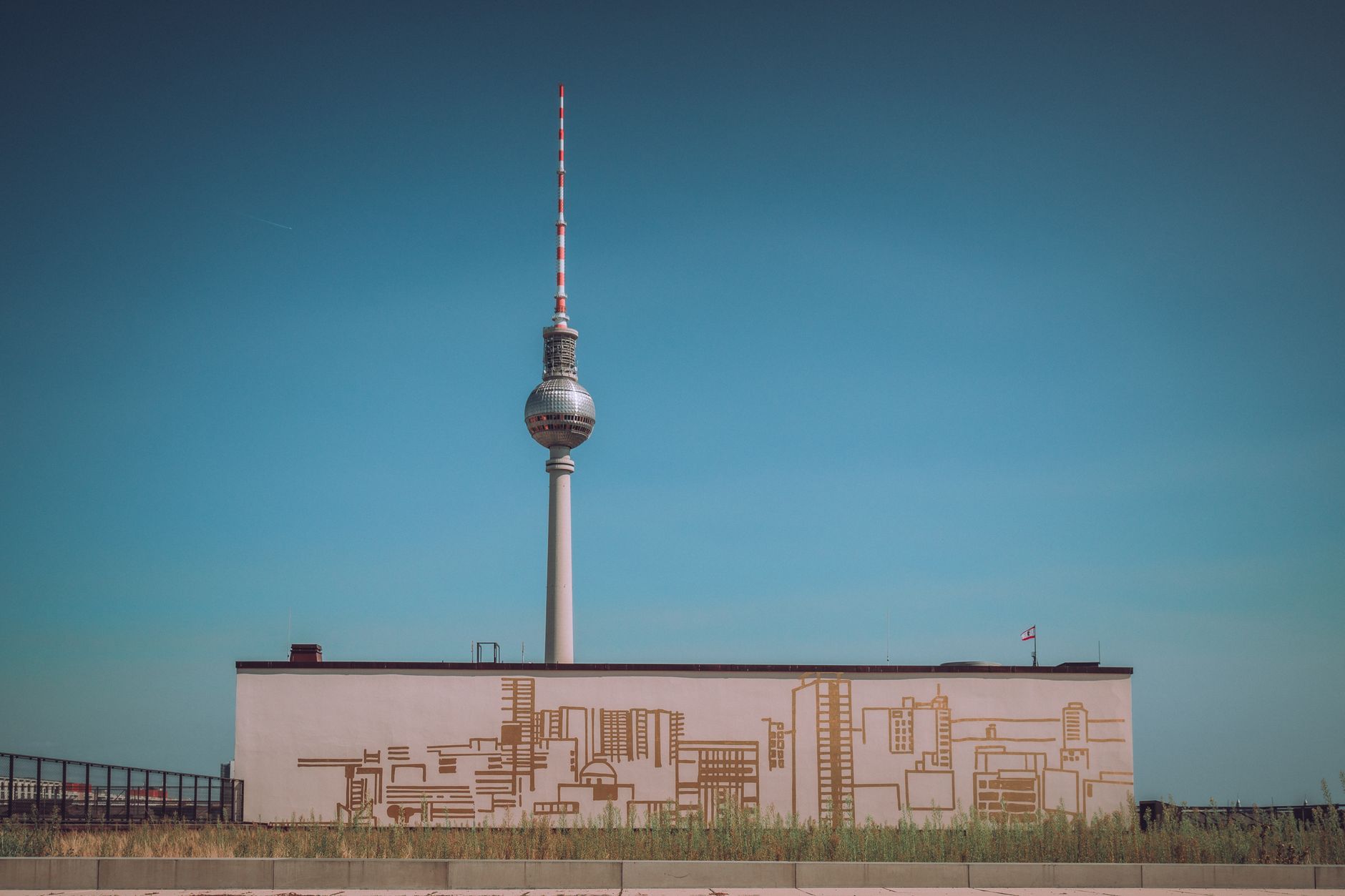
Gray concrete blocks stretch across the foreground near the Berliner Mauer area in Berlin, with modern and historic facades behind them. Soft overcast light gives the scene a stark, reflective mood. · Randolph Carter on PexelsA reconstructed checkpoint booth stands beside the Berliner Mauer site in Berlin, framed by sandbags and postwar street architecture. Soft daylight and an empty street give the scene a quiet, reflective mood. · Miguel Cuenca on PexelsBerlin's Brandenburg Gate stands in warm evening light, its neoclassical columns framing a broad plaza with a few pedestrians below. The clear sky and golden glow give the scene a calm, monumental feel. · Emre Ozyemisci on PexelsAn elevated view across Berlin shows a long tree-lined boulevard leading toward the city skyline under bright midday light. The scene captures the broad urban landscape around Berliner Mauer in Germany. · Ilkauri Scheer on PexelsSoft evening light falls across a cobbled Berlin street near Berliner Mauer, where modern lines meet historic architecture. A few pedestrians animate the calm city scene beneath the skyline. · Marina Endzhirgli on PexelsA preserved section of the Berliner Mauer stretches beside modern institutional buildings at the Berlin Wall Memorial in Germany. Under a pale blue, cloud-filled sky, a few visitors walk through the open-air exhibition. · Pham Ngoc Anh on PexelsA minimalist cityscape frames a mural of the Berliner Mauer with the Berlin TV Tower soaring behind it. Clear daylight and an empty foreground give the scene a stark, architectural feel. · Katja L. on Pexels
History
The Rampart That Faced Inward
Between 1949 and 1961, 3.454 million East Germans walked west — roughly one in five citizens of the young GDR. The state was hemorrhaging doctors, engineers, young workers. Walter Ulbricht signed the construction order on 12 August 1961 at a government guesthouse called Döllnsee, a Sunday chosen because summer holidays would muffle the shock. At dawn the next day, East German soldiers and construction brigades rolled out barbed wire across 156 kilometres of city and countryside.
Barbed wire became cinder blocks. Cinder blocks became the Grenzmauer 75 — L-shaped reinforced concrete panels 3.6 metres high and 1.2 metres wide, a design borrowed from agricultural silos. Over 28 years the wall thickened, the death strip widened, the watchtower count climbed past 300. Then, on the evening of 9 November 1989, a party spokesman misread his notes on live television and the whole apparatus dissolved in a single night.
The turning point
The Icon Who Never Made It Home
On 15 August 1961, two days after construction began, 19-year-old border guard Hans Konrad Schumann stood watch over barbed wire he had helped uncoil at Bernauer Strasse. West Berlin photographer Peter Leibing waited across the line, camera raised. Schumann ran, jumped, and flung his Kalashnikov mid-air. The photograph — Leap into Freedom — went around the world within days. For 28 years the West used it as proof of what the Wall was for.
Schumann killed himself in a Bavarian orchard on 20 June 1998, aged 56. No note. His family in Saxony had refused contact after reunification; they considered the leap a betrayal. Depression followed him west through three decades of factory work. In a 1990s interview he said, according to his biographers, "I only felt free after 1989" — meaning the 28 years between his physical escape and his psychological one. The Wall did not end at the concrete. It ran through him.
Stand at the Bernauer Strasse memorial today and the Leibing photograph is everywhere — on postcards, in guidebooks, on documentary title cards. Look again. The boy suspended over the wire has 37 more years of loneliness ahead of him before the orchard and the rope. Physical escape is not the same as freedom. The Wall understood that distinction better than we do.
Anatomy of the Death Strip
The Todesstreifen ran roughly 150 metres wide behind the outer wall. East German engineers added a second parallel fence in June 1962 and cleared everything between — residents evicted, buildings demolished, windows bricked up. Guards raked the sand each shift so footprints would betray escape attempts and, quietly, their own negligence. Anti-tank ditches, signal fencing, dogs on long runners, floodlights, and spiked steel beds nicknamed Stalin's Carpet filled the gap. Over 300 watchtowers ringed the perimeter. Only three survive: at Kieler Eck, Schlesischer Busch, and Potsdamer Platz.
The Night the Notes Were Wrong
On 9 November 1989, party spokesman Günter Schabowski held a televised press conference and read from notes he had not been briefed on. Asked when new travel rules would take effect, he checked his papers and answered, "As far as I know… effective immediately, without delay." ARD broadcast it at 20:00. Crowds massed at Bornholmer Strasse by nightfall. Guard commander Harald Jäger, phone pressed to his ear with no answer from headquarters, finally ordered his men to raise the barriers. Journalist Riccardo Ehrmann admitted in 2009 he had received a mysterious phone call encouraging him to ask that exact question. He never named the caller.
Tips for visitors
Skip Checkpoint Charlie
Berliners avoid Checkpoint Charlie — the booth is a replica, the sector signs are replicas, and Italian actors in fake US uniforms charge €5–10 for photos. Bernauer Straße is where the actual death-strip system survives: watchtower, second wall, raked sand, demolished cellar foundations.
Photography Rules
Outdoor grounds and the Topography of Terror wall section: photograph freely. Inside the Chapel of Reconciliation, no flash and no tripods — it's an active memorial. Drones are banned across this entire zone; Berlin's 5.6 km government-district no-fly radius covers it.
Don't Buy 'Wall' Souvenirs
Vendors at Checkpoint Charlie sell painted concrete chunks with 'authenticity certificates' — most are fakes. Real Wall is dull grey concrete, and the inner east-facing side never had graffiti. Pickpockets work the Checkpoint Charlie crowd hard; secure your bag if you go.
Eat Where Locals Eat
Ost-West-Café on the Brunnenstraße corner is the closest spot for coffee and bowls (~€8). For the proper post-visit move, walk 15 minutes south to Konnopke's Imbiß under the Schönhauser Allee U-Bahn viaduct — East Berlin currywurst since 1930, ~€3, cash only.
Go Early
Arrive 08:00–10:00 on a weekday and you'll have the outdoor stretch nearly to yourself — quiet, photogenic, and the Documentation Centre opens at 10:00 with no queue. Midday onwards brings school groups and tour buses.
Avoid November 9
The Wall-fall anniversary draws major state ceremonies and the citywide Berlin Freedom Week (Nov 8–15) — expect crowds, road closures, and limited quiet for reflection. August 13 (the Mauerbau anniversary) is far quieter and politically attended rather than tourist-focused.
Combine With Mauerpark
Mauerpark sits a 10-minute walk east of the memorial — Sunday afternoons bring the open-air karaoke and flea market that locals actually use. Do the memorial in the morning, lunch in Prenzlauer Berg, then end at Mauerpark.
Drop Bags First
No luggage storage on-site. Hauptbahnhof has a full locker bank (~€4/day medium) and is one S-Bahn stop from Nordbahnhof — stash bags there before the visit rather than dragging them along the 1.4 km path.
Where to Eat
local_dining
Don't Leave Without Trying
Currywurst — grilled sausage with curry ketchup, Berlin's definitive street food since 1949Döner Kebab — the modern handheld version was invented in Berlin in 1971; ubiquitous and cheapEisbein — cured pork knuckle with sauerkraut and mushy peas, classic pub fareKönigsberger Klopse — veal and beef meatballs in caper cream sauce, served with boiled potatoes and beetrootBerliner Pfannkuchen — jam-filled doughnut; every bakery sells themVegetarian and vegan options — Berlin is a European leader in plant-based dining
La Via del Muro
local favorite
Italian€€star4.8(3871)
Order: The pizza is exceptional—crispy crust that rivals Rome, light inside, full of flavor, topped with high-quality ingredients. The scampi pasta is equally precise.
3,800+ reviews speak for themselves. Packed every night despite the crowds, chandeliers & mirrors create that lavish Italian-via-Berlin vibe, and the staff move with genuine warmth even when slammed.
Order: The chicken with mole sauce—each bite balanced with care and technical precision. The cucumber dish surprises. Finish with the brownie.
New kitchen, highest rating (4.9), and you can feel it. Chefs explain every plate and genuinely care. Soft-opening energy that comes around once a decade—book now before word spreads.
Order: The egg coffee—people literally drive an hour for this. It tastes like Hanoi. Crispy tofu is excellent, and the lava cake hits just right.
Genuine Vietnamese food from someone who knows what authentic tastes like. The egg coffee alone justifies the trip; everything else exceeds expectations.
Order: Eggs Benedict—rich, deep, every layer distinguished. The Krone Sandwich is the house pride. Blueberry Hill pancakes are fluffy and well-balanced.
Berlin's brunch institution. Beautiful execution, warm terrace, friendly service. Prices reflect quality—not cheap, but every plate shows the care.
checkTipping: 5–10% is the norm. Hand the tip directly to the server and state the total aloud (e.g., 'Dreiundzwanzig Euro, bitte')—don't leave cash on the table.
checkPayment: Carry €20–30 cash as backup. Cards are widely accepted in restaurants, but many small venues are still cash-only.
checkReservations: For dinner, book 1–3 days ahead, especially Friday and Saturday. Casual lunch spots: walk-in fine.
checkLate dining: Many kitchens stay open until midnight or later—Berlin eats later than the rest of Germany.
checkMeal times: Locals eat lunch 12–14h (traditionally the main meal) and dinner 18:30–21h.
Food districts:Mitte — Historic center where the Wall runs. Mix of tourist spots and serious restaurants; more upscale and international with higher prices.Kreuzberg — Multicultural heartland with Turkish, Vietnamese, and Middle Eastern food. Markthalle Neun for street food. Best value density.Prenzlauer Berg — Gentrified, young-family area with organic cafés and strong brunch culture. Kollwitzplatz market. More expensive than Kreuzberg.Friedrichshain — Student and youth energy. Cheap eats, lots of vegan options, food trucks. East Side Gallery and Wall memorial nearby.Neukölln — Edgy and cheaper. Arab and Turkish mix. Maybachufer market for day eats. Late-night food scene.
Restaurant data powered by Google
Frequently asked
Is the Berlin Wall Memorial worth visiting?
Yes — it's the only site in Berlin where you can see the full border system preserved in its 1980s depth, not just a painted slab. Skip Checkpoint Charlie's replicas and come here instead. Free entry, 1.4 km of outdoor grounds along Bernauer Straße, plus a documentation center with a viewing tower that shows the death strip from above.
How long do you need at the Berlin Wall Memorial?
Plan 1.5 to 2 hours for the full experience. A quick outdoor walk along the 1.4 km stretch takes 30 to 45 minutes; adding the Visitor Centre, Documentation Centre, viewing tower, and Chapel of Reconciliation pushes it to 2 to 3 hours. History enthusiasts easily spend a half day.
How do I get to the Berlin Wall Memorial from central Berlin?
Take S-Bahn S1, S2, S25, or S26 to Nordbahnhof, then walk 5 to 7 minutes to Bernauer Straße 119. The M10 tram stops directly at "Gedenkstätte Berliner Mauer" and runs straight from Alexanderplatz in about 20 minutes. U-Bahn U8 to Bernauer Straße also works.
Can you visit the Berlin Wall for free?
Yes — all exhibitions at the Berlin Wall Memorial are free, including the outdoor grounds, Visitor Centre, Documentation Centre, and the permanent "1961 | 1989" exhibition. The East Side Gallery and the Wall section at Topography of Terror are also free and open 24/7 outdoors. Only private guided tours cost money (€120 for groups).
What is the best time to visit the Berlin Wall Memorial?
Weekday mornings between 08:00 and 10:00 — outdoor grounds are quiet and the light is good for photography. Indoor buildings open Tuesday to Sunday 10:00 to 18:00 (closed Mondays), so avoid Monday if you want the documentation center. November 9 draws large commemorative crowds; skip that date unless you specifically want the ceremony.
What should I not miss at the Berlin Wall Memorial?
Three things most visitors walk past. The Cor-Ten steel rods that only collapse into a solid wall when viewed along their spatial axis — step sideways until they close. The Window of Remembrance, arranged chronologically so you read the 28-year arc of killing in order. And the Chapel of Reconciliation, built from rammed earth mixed with rubble of the church East Germany dynamited in 1985.
Is Checkpoint Charlie or Bernauer Straße better?
Bernauer Straße, without question. Checkpoint Charlie's guardhouse, signs, and soldiers are all replicas, and the plaza is a commercial tourist trap with fake US soldiers charging €5 for photos and a privately-run museum historians consider chaotic. Bernauer Straße preserves the actual border system — two walls, death strip, patrol road, watchtower — the way it stood in 1989.
How much of the original Berlin Wall still stands?
Less than 10 to 15% of the original 155 km perimeter. "Mauerspechte" (wall-peckers) destroyed roughly 90% within months of November 1989. Main surviving stretches: 1.3 km at the East Side Gallery (heavily repainted in 1990 and again in 2009), about 80 m at Bernauer Straße, and 200 m along Niederkirchnerstraße at Topography of Terror.
Sources & attribution71
Researched and written by the Audiala editorial team from historical records, architectural archives, and local expertise. Last updated April 2026.
Strictly necessary cookies keep the site working. Analytics (PostHog, Google Analytics) measures how each visitor uses our pages. Marketing loads YouTube videos and walking-route maps without a tap and lets Google Analytics set advertising cookies. We never sell your data. You can change this any time from the footer.
Analytics and marketing cookies are optional and only load if you agree. Details under Customize.
Privacy
Cookie preferences
Pick what you're okay with. You can change this any time from the footer.
Strictly necessary
Always on
Sign-in, language, navigation. Always on.
Product analytics
PostHog (EU) and Google Analytics record which pages you view and how you use them, under a random identifier stored in your browser. Helps us see which pages work and which need fixing. Google's ad personalisation stays off. No selling.
Marketing
Loads YouTube videos and the walking-route maps (OpenFreeMap) without a tap; without it, they load only when you tap them. If analytics is also on, Google Analytics may set advertising cookies. Ad personalisation stays off.