Plan and listen to Baudenkmal with Audiala.
Audio guide in your pocket, itinerary in your browser. Built for the way you actually visit.
Introduction: Bamberg’s Heritage and Cultural Significance
Located in Bavaria, Bamberg is a city renowned for its exceptional collection of Baudenkmäler—heritage monuments that span over a millennium. As a UNESCO World Heritage Site since 1993, Bamberg preserves an urban fabric that reflects Romanesque, Gothic, Renaissance, Baroque, and Rococo styles, all harmoniously set atop seven hills crowned by churches and castles. The city’s well-preserved medieval and baroque architecture, winding cobblestone streets, and riverfront quarters have earned it the reputation of a “second Rome” (UNESCO World Heritage Centre; ADAC).
Founded by Emperor Heinrich II in the early 11th century, Bamberg’s historic ensemble invites visitors to experience more than 1,300 listed monuments, each narrating the city’s storied past. Highlights such as the Bamberg Cathedral, Old Town Hall, Alte Hofhaltung, and the picturesque Klein-Venedig (Little Venice) offer immersive journeys into Europe's architectural and cultural heritage (PlanetWare; Nomads Travel Guide).
This guide is designed to provide essential information on visiting hours, ticketing, accessibility, and insider tips, ensuring that every traveler—whether a first-time visitor or a seasoned explorer—can experience Bamberg’s treasures to the fullest.
Contents:
- Historical Background and Development
- UNESCO World Heritage Status
- Notable Monuments and Sites
- Bamberg Cathedral
- Alte Hofhaltung (Old Court)
- Altes Rathaus (Old Town Hall)
- Michaelsberg Abbey
- Klein-Venedig (Little Venice)
- Additional Architectural Highlights
- Visiting Hours and Ticket Information
- Accessibility and Travel Tips
- Conservation and Visitor Experience
- Frequently Asked Questions
- Planning Your Visit: Practical Information
- Enhanced Experiences: Events, Tours, and Local Culture
Bamberg’s Baudenkmäler: Origins and Architectural Development
Bamberg’s architectural identity was established in the 10th and 11th centuries, catalyzed by the founding of the Bishopric in 1007. The city’s rise to prominence brought forth monumental constructions, including the original Kaiserdom (Cathedral), which remains the cornerstone of Bamberg’s heritage (ADAC). Built across seven hills, Bamberg emulates Rome’s topography, while its well-preserved medieval streets, half-timbered houses, and stone bridges demonstrate the city’s historical and religious significance (PlanetWare).
UNESCO World Heritage Designation
In 1993, Bamberg’s Old Town was inscribed as a UNESCO World Heritage Site based on its exceptional preservation and architectural integrity. The city comprises three main districts:
- Bergstadt (Hill Town)
- Inselstadt (Island Town)
- Gärtnerstadt (Gardeners’ Town)
Each district showcases unique aspects of Bamberg’s urban and cultural evolution, from ecclesiastical power centers to vibrant riverside communities. UNESCO recognition has strengthened conservation practices while promoting sustainable tourism (UNESCO World Heritage Centre).
Key Monuments and Historical Sites
Bamberg Cathedral (Kaiserdom St. Peter und St. Georg)
Dominating the city skyline, the Bamberg Cathedral exemplifies late Romanesque and early Gothic design. Its four towers, imperial tombs (Henry II and Kunigunde), and the famed Bamberg Horseman statue make it a central cultural site (ADAC; Rick Steves Forum).
Visiting Hours: Daily 9:00–18:00; entry is free (donations welcomed).
The Old Court (Alte Hofhaltung)
Adjacent to the cathedral, this Renaissance-era residence features a romantic courtyard and the “Beautiful Gateway.” It now houses the Historical Museum of Bamberg (PlanetWare).
Visiting Hours: Typically 10:00–17:00; check for seasonal changes.
Old Town Hall (Altes Rathaus)
Straddling the Regnitz River, the Altes Rathaus is famed for its half-timbered architecture and Baroque frescoes. The Ludwig Collection and Rococo Hall are open to visitors (ADAC).
Visiting Hours: 10:00–16:00; closed on certain holidays.
Michaelsberg Abbey (Kloster Michaelsberg)
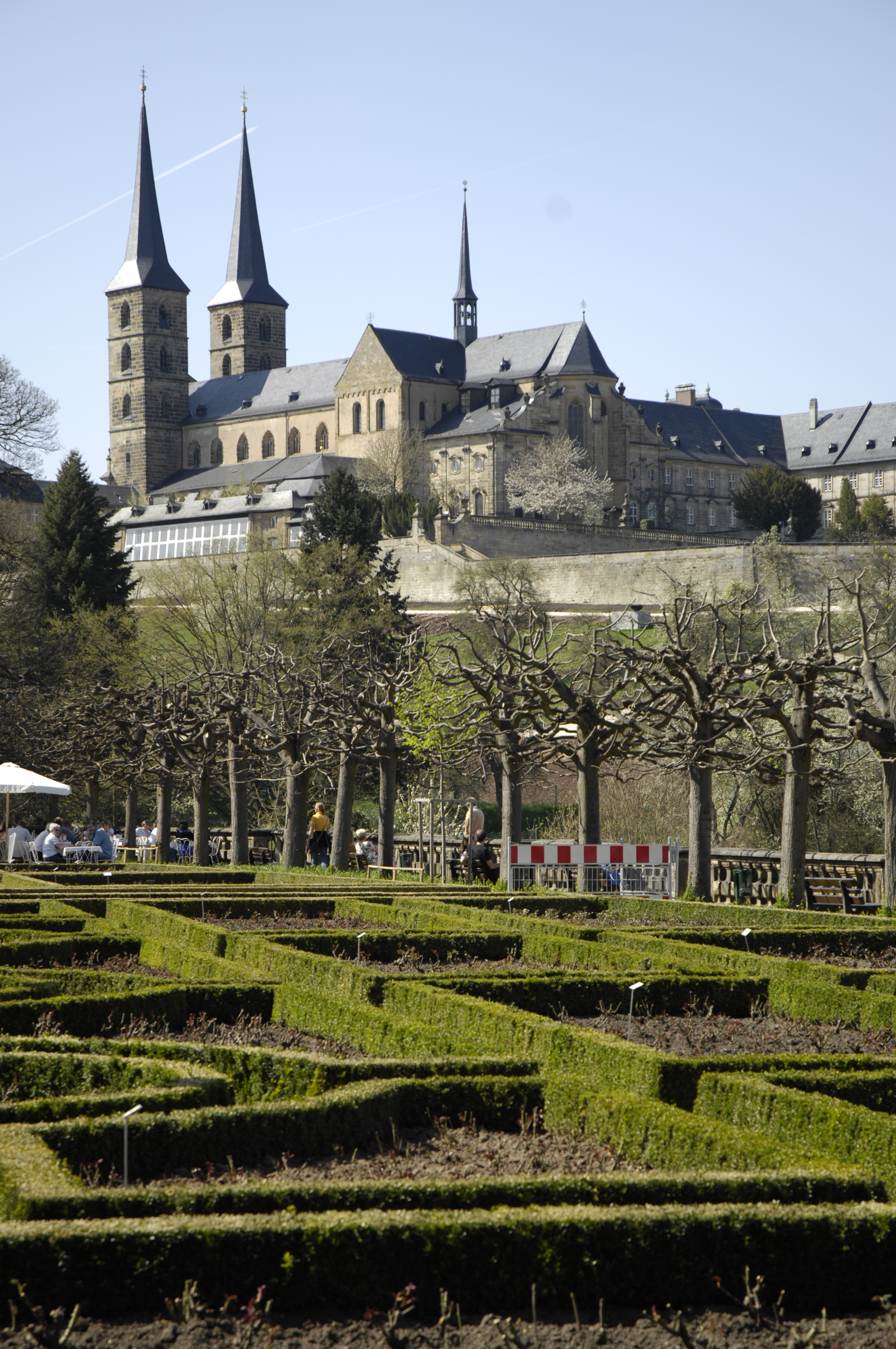
This 12th-century abbey, perched on a hill, combines Romanesque and Baroque styles. Its gardens and panoramic terrace remain open, though the church is under restoration until 2026 (ADAC).
Klein-Venedig (Little Venice)
A picturesque riverside quarter of fishermen’s houses, best seen on boat tours (ADAC).
Other Architectural Highlights
- Böttingerhaus: Early 18th-century Baroque palace; now an art gallery.
- Villa Concordia: Artists’ residence from the Baroque era.
- Schloss Geyerswörth: City palace on a river island.
- Altenburg Castle: 12th-century fortress with panoramic city views (PlanetWare).
Visiting Hours and Ticket Information
- Cathedral: 9:00–18:00, free entry.
- Alte Hofhaltung Museum: 10:00–17:00, €5–€10.
- Old Town Hall/Ludwig Collection: 10:00–16:00, ~€4.
- Michaelsberg Abbey Grounds: Year-round access; church reopens in 2026.
- Altenburg Castle Tower: Grounds free, tower ~€2.
- Rose Garden (Neue Residenz): Free; palace tours ~€6.
Tickets: Purchase on-site or online; consider the BambergCard for discounts and public transit. Guided tours (English and German) are available for major sites—book ahead, especially in peak seasons (Wander in Germany).
Accessibility and Travel Tips
- Getting There: Bamberg is accessible by train (40–45 min from Nuremberg). The Old Town is a 15-minute walk from the station.
- Mobility: The historic center is pedestrian-friendly, but cobblestones and hills may challenge those with limited mobility. Major sites generally offer wheelchair access—verify details in advance (Bamberg Tourism).
- Parking: Use garages outside the Old Town; limited on-street parking.
- Local Etiquette: Respect quiet in religious sites; cash (Euros) is preferred at many smaller venues.
Conservation Efforts and Visitor Experience
Bamberg’s preservation balances authenticity with modern visitor needs. Restoration efforts follow UNESCO standards, and local policies encourage the protection of historic skylines and streetscapes. The World Heritage Visitor Centre provides interactive exhibits and route suggestions for exploring the city’s heritage (ADAC). Traditional beer gardens and local festivals, like Sandkerwa, add vibrant cultural dimensions to your visit.
Frequently Asked Questions (FAQs)
Q: Are English-language tours available?
A: Yes; most major sites have English tours. Advance booking is recommended.
Q: Do all sites require tickets?
A: Many churches are free; museums and special exhibitions charge €4–€10. The BambergCard offers discounts.
Q: Is Bamberg accessible for visitors with disabilities?
A: Main routes are accessible, but cobblestones and steps may pose challenges. Contact the Tourism Office for details.
Q: When is the best time to visit?
A: Spring and early autumn offer mild weather and fewer crowds. Festivals like Sandkerwa in August highlight local culture.
Q: Can I take photos inside monuments?
A: Usually yes, but flash/tripods may be restricted.
Plan Your Visit: Practical Information
- BambergCard: Save on entry fees and public transport.
- Tourist Information: Geyerswörthstraße 5, 96047 Bamberg.
- Opening Hours: Most sites open 10:00–17:00; check seasonal variations.
- Accommodation: Book early during festivals and peak seasons.
- Dining: Enjoy local specialties such as Rauchbier (smoked beer) and Schäuferla (pork shoulder).
Enhance Your Experience
- Audio Guides: Download the Audiala app for guided tours.
- Events: Attend festivals like Sandkerwa (August) or Rooftop Thursdays (May–September).
- Self-Guided Walks: Explore at your own pace with audio or printed guides.
- Photography: Best light is early morning or late afternoon; top spots include Altenburg Castle and the Old Town Hall.
Discover More
Bamberg’s Baudenkmäler represent a living tapestry of history, architecture, and culture, making it a must-see destination in Germany. With this guide, you have all the information you need: visiting hours, ticketing, accessibility, and insider tips for a memorable visit.
Plan your journey today:
- Download the Audiala app for audio tours and self-guided routes.
- Follow official Bamberg channels and Audiala on social media for updates and travel inspiration.
- Explore related articles to deepen your understanding of European heritage.
Bamberg’s unique blend of medieval charm, vibrant events, and rich traditions promises an unforgettable cultural experience.
Listen to the full story in the app
The whole Baudenkmal,
told well.
Audio guides for 1,100+ cities across 96 countries. History, stories, and local insight — offline ready.

Verified, and shown.
Researched and written by the Audiala editorial team from historical records, architectural archives, and local expertise.
Last reviewed
Researched from Wikidata, Wikipedia & official sources · fact-checked · How we make our guides →