Plan and listen to Stolperstein Dedicated To Leopold Götzel with Audiala.
Audio guide in your pocket, itinerary in your browser. Built for the way you actually visit.
Introduction
Visiting the Stolperstein for Leopold Götzel in Baden-Baden offers a powerful opportunity to connect with the memory of Holocaust victims and engage with the city’s ongoing culture of remembrance. Stolpersteine, or "stumbling stones," are small brass plaques set into pavements throughout Europe to commemorate those persecuted by the Nazis. This guide details the history and significance of the Stolpersteine, offers practical visitor information, and highlights how these memorials are integrated into the cultural and historical fabric of Baden-Baden.

What Are Stolpersteine?
Stolpersteine (German for "stumbling stones") are 10 x 10 cm brass-plated cobblestones installed in front of the last freely chosen residences or workplaces of victims of the Nazi regime. Each stone is inscribed with the name, birth year, fate, and, if known, the date and place of death of a victim, making the act of remembrance part of everyday life (Stolpersteine.eu; Wikipedia: Stolperstein).
The Stolpersteine Project: Origins and Symbolism
The Stolpersteine project was initiated in 1992 by German artist Gunter Demnig. It is now the largest decentralized memorial in the world, with over 100,000 stones installed across Europe as of 2025. The project’s decentralized approach allows remembrance to occur in the very places where victims lived and worked, confronting passersby with the memory of individuals rather than abstract statistics (Stolpersteine Berlin; SWR Kultur).
Symbolically, the stones’ ground-level placement references both the desecration of Jewish gravestones and the concept of “stumbling” across history in daily life. The polished brass catches the light, inviting reflection and remembrance (Prague Views; Germany.info).
Stolpersteine in Baden-Baden
Baden-Baden, a renowned spa town at the edge of the Black Forest, has been active in the Stolpersteine project since 2008. As of March 2023, 213 stones have been installed, honoring Jewish citizens, Sinti and Roma, political dissidents, and other victims of Nazi persecution (Goodnews4; Stadtwiki Baden-Baden). The city’s dedication to remembrance is seen in the collaboration between local remembrance groups, schools, and the artist Gunter Demnig.
Ceremonies for new stone installations are often accompanied by speeches, music, and participation from local community members and students, making remembrance a living, communal act (Gedenkbuch Baden-Baden).
The Stolperstein for Leopold Götzel: Historical Background
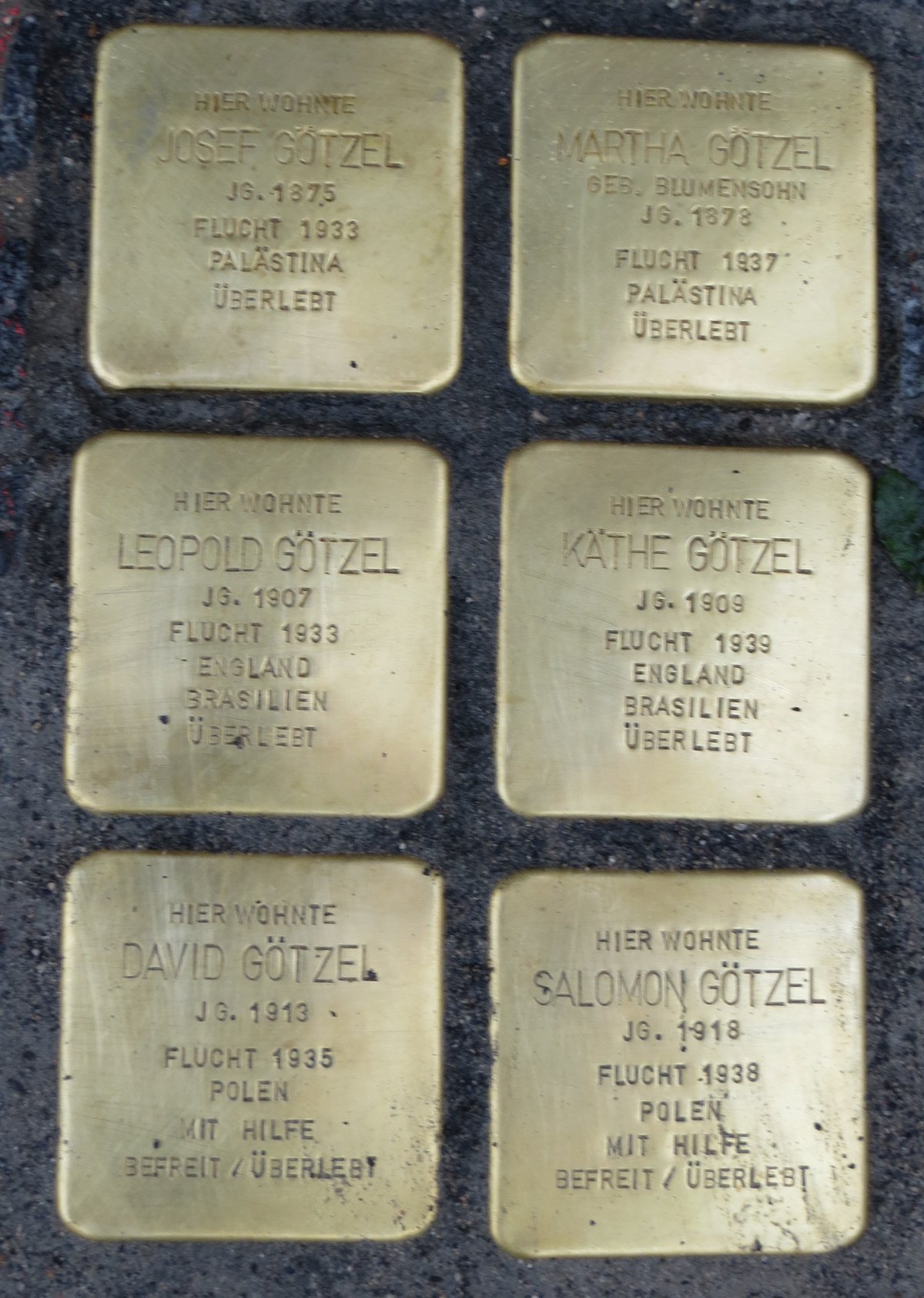
Leopold Götzel was one of several members of the Götzel family persecuted during the Holocaust. The family, who originally fled pogroms in Russia, settled in Baden-Baden and became integral to the city’s Jewish community. Despite their success—including the ownership of the “Kaiserhof” hotel and a thriving furniture business—they suffered social exclusion and increasing persecution under National Socialism.
Leopold’s Stolperstein, along with those of his relatives, is located at Sophienstraße 22, marking their last freely chosen residence before the Nazi regime destroyed their lives (Traces of War; SWR2 Stolpersteine Manuscript). The inscriptions preserve their names and stories, ensuring they are not forgotten.
Location, Access, and Visiting Information
Address: Sophienstraße 22, 76530 Baden-Baden, Germany (Mapcarta)
Getting There:
- By Train: Arrive at Baden-Baden Bahnhof, then take bus 201 or any bus to “Leopoldsplatz.”
- By Foot: The city center is compact and walkable.
- By Car: Public parking garages are available nearby.
Accessibility:
- The Stolpersteine are embedded in public pavements and accessible 24/7, year-round, at no charge.
- The sidewalks are generally well-maintained, though some may be uneven.
- The site is close to major attractions, including the Fabergé Museum and Rathaus (Claudia Travels).
Visitor Resources:
- Multilingual assistance and maps are available at the Baden-Baden Tourist Information.
- Interactive digital resources, including the Stolpersteine Guide app, provide locations and biographies.
- Guided walking tours can be arranged through local tourism offices.
Visitor Etiquette and Remembrance Practices
- Pause and Reflect: Approach the Stolpersteine with respect and take a moment to read the inscription.
- Remembrance Traditions: Placing a small stone or white rose by the plaque is a traditional sign of remembrance (Arts & Culture).
- Photography: Allowed, but should be discreet and respectful.
- Cleaning Practices: Local groups often gently polish the stones to keep the names visible.
- Best Times to Visit: Early mornings or late afternoons are quieter, allowing for more contemplative visits.
Community Engagement and Educational Initiatives
Baden-Baden’s remembrance culture is shaped by grassroots engagement. Local schools research biographies and “adopt” Stolpersteine, while community groups organize cleaning, educational events, and commemorative ceremonies—especially around Holocaust Remembrance Day and Kristallnacht (Gedenkbuch Baden-Baden; Goodnews4).
The city’s approach to remembrance is guided by a Talmudic teaching: “A person is only forgotten when their name is forgotten.” These efforts ensure the Stolpersteine serve as living, interactive memorials woven into daily life.
Nearby Attractions and Travel Tips
Combine your visit to the Stolperstein for Leopold Götzel with other Baden-Baden highlights:
- Kurhaus and Casino: Opulent interiors and guided tours (Casino Baden-Baden)
- Lichtentaler Allee: Scenic, tree-lined park for reflective walks
- Museum Frieder Burda: Modern art in a striking contemporary building (Museum Frieder Burda)
- Altstadt: Baroque old town with boutiques, cafes, and historic churches
- Friedrichsbad: Historic Roman-Irish bathhouse (Friedrichsbad)
- Hohenbaden Castle: Ruins with panoramic views (Wander in Germany)
- Schloss Favorite: Baroque palace with porcelain collections (Schloss Favorite)
Frequently Asked Questions (FAQ)
Is the Stolperstein for Leopold Götzel accessible year-round?
Yes, it is freely accessible at all times.
Are tickets or fees required?
No, the site is public and free to visit.
Are guided tours available?
Yes, through the Baden-Baden tourism office.
Can I take photographs?
Yes, but please remain respectful.
Is the site wheelchair accessible?
Most locations are accessible, but some pavements in the Altstadt may be uneven.
Final Reflections and Practical Tips
The Stolperstein for Leopold Götzel is a moving tribute to the victims of Nazi persecution and a testament to Baden-Baden’s commitment to remembrance and education. To make the most of your visit:
- Obtain maps or use digital guides to locate Stolpersteine.
- Visit during quieter times for reflection.
- Engage with local events or guided tours for deeper context.
- Respect the memorial’s solemnity and traditions.
For enhanced experiences, download the Audiala app for guided audio tours and explore related articles on local heritage.
Listen to the full story in the app
The whole Stolperstein Dedicated To Leopold Götzel,
told well.
Audio guides for 1,100+ cities across 96 countries. History, stories, and local insight — offline ready.
Verified, and shown.
Researched and written by the Audiala editorial team from historical records, architectural archives, and local expertise.
Researched from Wikidata, Wikipedia & official sources · fact-checked · How we make our guides →