Plan and listen to Stolperstein Dedicated To Ernst Mainzer with Audiala.
Audio guide in your pocket, itinerary in your browser. Built for the way you actually visit.
Introduction to the Stolperstein Dedicated to Ernst Mainzer in Baden-Baden
The Stolperstein for Ernst Mainzer in Baden-Baden, Germany, represents a deeply moving memorial and educational experience. Stolpersteine, or "stumbling stones," are small brass plaques embedded in sidewalks across Europe, marking the last freely chosen residences of individuals persecuted by the Nazis. Conceived by artist Gunter Demnig in the early 1990s, the Stolpersteine project has become the largest decentralized Holocaust memorial worldwide, with over 100,000 stones placed across Europe, including more than 200 in Baden-Baden (germany.info; stolpersteine.eu).
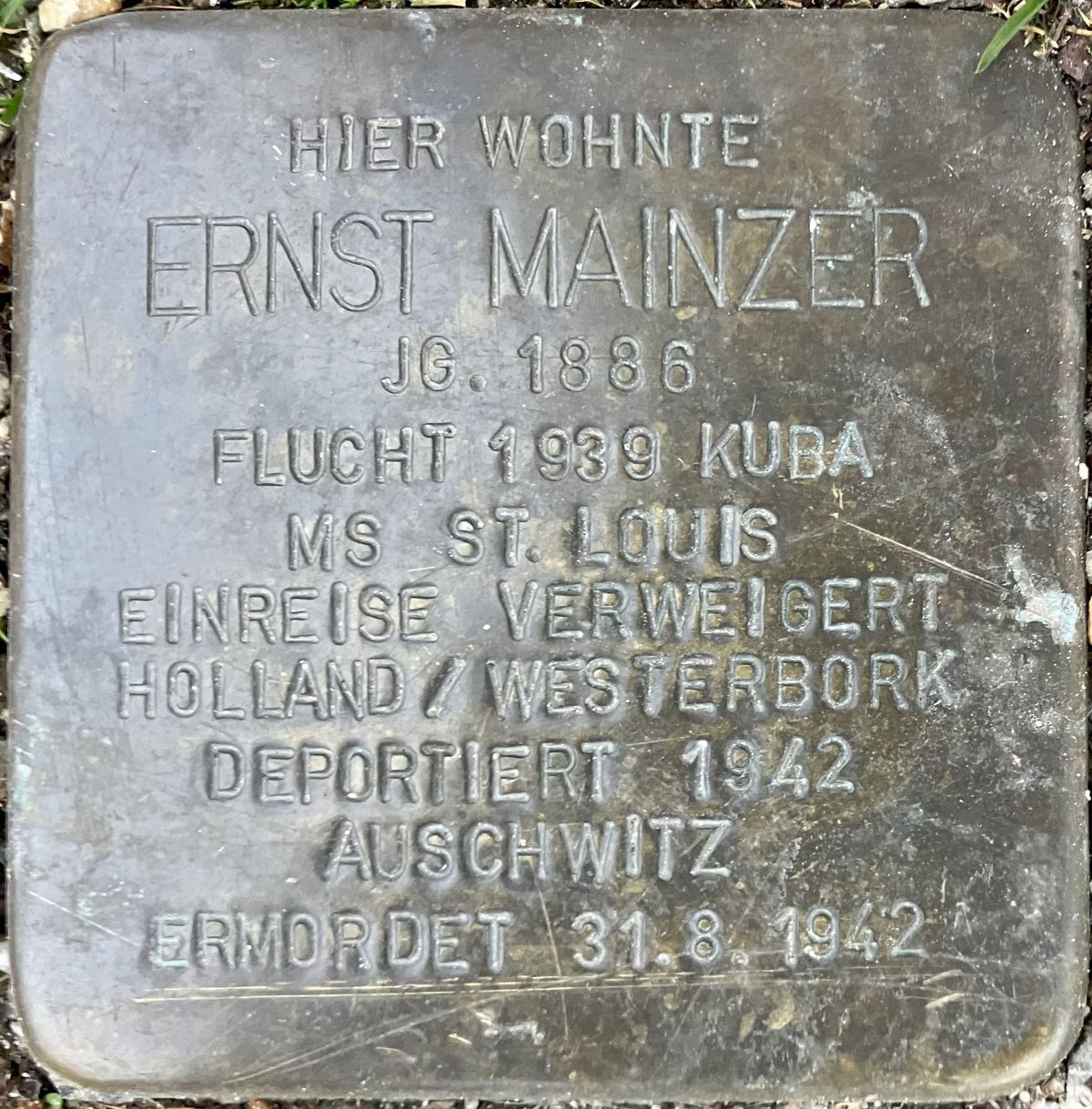
The Stolperstein at Ooser Hauptstraße 18 commemorates Ernst Mainzer, a Jewish merchant and integral member of Baden-Baden’s Jewish community, as well as his family, who suffered persecution and forced displacement under National Socialism (gedenkbuch.baden-baden.de).
This guide explores the history and cultural significance of the Stolpersteine in Baden-Baden, with practical information for visitors, ethical guidelines for respectful engagement, and details on educational initiatives. Whether you are a history enthusiast, student, or traveler, this resource equips you with all the knowledge needed to honor the memory of Ernst Mainzer and others commemorated in Baden-Baden (gedenkbuch.baden-baden.de; pragueviews.com).

Origins and Concept of the Stolpersteine Project
Initiated by German artist Gunter Demnig in 1992, the Stolpersteine project creates decentralized memorials to victims of the Holocaust and Nazi persecution. Rather than a single monument, these small brass plaques are embedded in the pavement outside victims’ last freely chosen residences, restoring the names and stories of individuals who were erased from their communities (pragueviews.com; germany.info).
Each Stolperstein is a 10 x 10 cm concrete block with a hand-engraved brass plate, typically inscribed with "Here lived," the victim’s name, birth date, deportation date, and fate. The intent is to prompt everyday reflection and remembrance, inspired by the Talmudic saying, “A person is only forgotten when their name is forgotten.”
Scale and Expansion
As of June 2024, more than 107,000 Stolpersteine have been installed in nearly 1,900 communities across 26 countries, including Germany, Austria, the Czech Republic, Poland, and Hungary (en.wikipedia.org). Berlin alone hosts over 5,000 stones. The project's decentralized approach integrates Holocaust memory into public space, making remembrance a part of daily life (germany.info).
Stolpersteine in Baden-Baden: The Mainzer Family
Baden-Baden, with its rich Jewish history, has 213 Stolpersteine as of March 2023 (goodnews4.de). The Stolperstein for Ernst Mainzer, located at Ooser Hauptstraße 18, honors his family and their fate during the Nazi era (gedenkbuch.baden-baden.de). The Mainzer family’s story—marked by resilience, tragedy, and forced displacement—reflects the broader experiences of many Jewish families in Baden-Baden (gedenkbuch.baden-baden.de).
Visitor Information
Location and Accessibility
Stolpersteine in Baden-Baden are found throughout the city, especially in historic Jewish neighborhoods like Ooser Hauptstraße. The stones are embedded in the sidewalks and are easily accessible on foot. The city center is well-served by public transportation, and many Stolpersteine are near major attractions.
Visiting Hours and Admission
Stolpersteine are public memorials outdoors, accessible free of charge at any time. No tickets or reservations are required.
Guided Tours and Events
Local organizations and historical societies offer guided tours focusing on Stolpersteine and Jewish history. These tours provide deeper context and personal stories. Check the Baden-Baden tourist office or local websites for current schedules.
Special events are held on Holocaust Remembrance Day and other commemorative dates, often including cleaning ceremonies and moments of collective remembrance.
Photography and Visitor Etiquette
Photography is permitted and encouraged for educational and commemorative purposes. Visitors should be respectful—avoid standing on stones and maintain a quiet, reflective demeanor.
Cultural and Educational Significance
Stolpersteine offer a powerful, decentralized approach to Holocaust remembrance. By embedding memory in public spaces, these memorials confront communities with the local reality of Nazi persecution and foster awareness and vigilance against antisemitism and racism (goodnews4.de).
Controversies and Community Responses
Some communities have expressed concerns about Stolpersteine being stepped on, considering it disrespectful. For example, Munich has opted for alternative memorials (lbi.org). In Baden-Baden, Stolpersteine play an important role in ongoing engagement with the city’s history, though there are calls for more respectful treatment of related historic sites (goodnews4.de).
The Mainzer Family Memorial: History and Visitor Guide
Historical Background
Ernst Mainzer (b. 1886, Wysoka) settled in Baden-Baden in 1920 with his wife Olga and twin sons Alfred and Herbert, likely prompted by the post-WWI cession of West Prussia (gedenkbuch.baden-baden.de). The family established a textile and clothing business at Ooser Hauptstraße 18, becoming respected members of the Oos district.
Persecution and Forced Emigration
In 1933, the rise of the Nazi regime led to the "Aryanization" of Jewish businesses, including the Mainzer shop. Nazi authorities forced the sale of their property, and the November Pogrom (Kristallnacht) in 1938 threatened the family's safety, compelling some to flee (gedenkbuch.baden-baden.de).
Visiting the Mainzer Memorial
- Location: Ooser Hauptstraße 18, Baden-Baden
- Hours: Daily, 9:00 AM to 6:00 PM (check local sources for updates)
- Admission: Free
- Accessibility: Wheelchair accessible, with information in German and English
- Guided Tours: Bookable via the Baden-Baden historical society; special events held on Kristallnacht and other key dates
Cultural Significance
This memorial is a vital landmark for preserving Jewish memory in Baden-Baden and educating visitors about the consequences of intolerance.
Nearby Attractions
Other sites of interest include Lichtentaler Allee, the Fabergé Museum, and the Roman Baths.
Visiting Stolpersteine: History, Education, and Community Engagement
Local Initiative
Baden-Baden’s Stolpersteine project is coordinated by the Arbeitskreis Stolpersteine Baden-Baden, a volunteer group that researches biographies, organizes installations, and maintains contact with victims’ descendants (gedenkbuch.baden-baden.de). Historian Angelika Schindler's work is central to documenting the city’s Jewish history.
Educational Initiatives
Local schools collaborate with the Arbeitskreis, involving students in research and presentation during installation ceremonies, fostering personal connections to history (stolpersteine.eu).
Public Ceremonies
Installations are marked by public ceremonies featuring biography readings, music, and moments of silence. The digital memorial book provides biographies and historical context (gedenkbuch.baden-baden.de).
Practical Visitor Information
- Location: Stolpersteine are in front of victims’ last freely chosen residences throughout the city.
- Accessibility: Most locations are wheelchair accessible, though sidewalks may be uneven in historic districts.
- Guided Tours: Organized periodically; contact [email protected] for details.
- Etiquette: Avoid standing on stones; cleaning by volunteers is a tradition of remembrance; photography is allowed, but be discreet.
Ernst Mainzer Stolperstein: Visitor Guide, Memorial Significance, and Ethical Tips
Historical Background
Ernst Mainzer was born in Dortmund in 1886 and, after relocating, operated a fabric and clothing business in Baden-Baden. With the advent of the Nazi regime, the Mainzer family suffered persecution and eventual deportation; Ernst Mainzer was murdered in Auschwitz in 1942 (gedenkbuch.baden-baden.de).
Visiting Information
- Address: Ooser Hauptstraße 18, Baden-Baden (gedenkbuch.baden-baden.de)
- Accessibility: Open 24/7, free of charge
- Best Times: Early morning or late afternoon for reflection; commemorative dates offer communal remembrance
- What to Bring: A small stone or flower for the memorial; notebook for personal reflection
Ethical Guidelines
- Maintain silence; avoid standing or sitting on the stones
- Discreet photography only; avoid selfies or commercial use (VBN AAU Thesis)
- Do not clean or alter Stolpersteine except during organized events
- Respect local residents and support remembrance initiatives (Claudia Travels)
Frequently Asked Questions (FAQ)
Where can I find Stolpersteine in Baden-Baden?
Installed throughout the city, especially in historic Jewish neighborhoods; see the digital memorial book.
Are Stolpersteine free to visit?
Yes, they are public and accessible at all times.
Are guided tours available?
Yes, organized by the Arbeitskreis and local historical societies.
How should I behave when visiting?
Maintain respect; do not stand on the stones; be quiet and reflective.
Can I photograph the Stolpersteine?
Yes, but do so discreetly and avoid trivializing the memorial.
Listen to the full story in the app
The whole Stolperstein Dedicated To Ernst Mainzer,
told well.
Audio guides for 1,100+ cities across 96 countries. History, stories, and local insight — offline ready.
Verified, and shown.
Researched and written by the Audiala editorial team from historical records, architectural archives, and local expertise.
Researched from Wikidata, Wikipedia & official sources · fact-checked · How we make our guides →