Plan and listen to Stolperstein Dedicated To Arthur Ullmann with Audiala.
Audio guide in your pocket, itinerary in your browser. Built for the way you actually visit.
Introduction
The Stolperstein dedicated to Arthur Ullmann in Baden-Baden is a powerful part of Germany’s decentralized memorial landscape, commemorating the victims of Nazi persecution directly at the sites where they last lived freely. This guide will equip you with essential historical context, practical visiting tips, and deep insights into the cultural significance of Arthur Ullmann’s Stolperstein—ensuring your visit is both meaningful and respectful (Stolpersteine.eu; Gedenkbuch Baden-Baden).

Historical Background: Arthur Ullmann and the Jewish Community of Baden-Baden
Arthur Ullmann was born in 1914 in Buchau (Kreis Saulgau) and later lived and worked in Baden-Baden. The Ullmann family, like many Jewish families in the area, contributed to the region’s vibrant cultural and economic life. In the 19th and early 20th centuries, Baden-Baden’s Jewish community flourished, establishing synagogues, schools, and charitable organizations.
The rise of the Nazi regime in 1933 marked the beginning of persecution, exclusion, and eventual deportation for the city’s Jews. Arthur Ullmann was deported from Baden-Baden to the Gurs internment camp in France in 1940 and, subsequently, to Auschwitz, where he was murdered in 1942 (Gedenkbuch Baden-Baden). His fate represents the tragedy faced by countless individuals, while his Stolperstein ensures that his name and story endure.
The Stolpersteine Project: Origins and Cultural Significance
Initiated by artist Gunter Demnig in 1992, the Stolpersteine (“stumbling stones”) project is the world’s largest decentralized Holocaust memorial (Stolpersteine.eu; Wikipedia). Each Stolperstein is a small, 10 x 10 cm brass-plated concrete block, hand-inscribed with the name, birth year, fate, and, where known, the date and place of death or emigration of a victim of Nazi persecution.
The stones are embedded in the pavement in front of the victim’s last freely chosen residence, transforming everyday public spaces into sites of remembrance. The intent is to provoke reflection and restore the individuality and dignity of those the Nazis sought to erase (Prague Views; iamexpat.de).
As of 2023, over 100,000 Stolpersteine have been installed across more than 1,000 cities and towns in Europe, making the project a cornerstone of contemporary memory culture (Wikipedia).
Arthur Ullmann’s Stolperstein: Location and Description
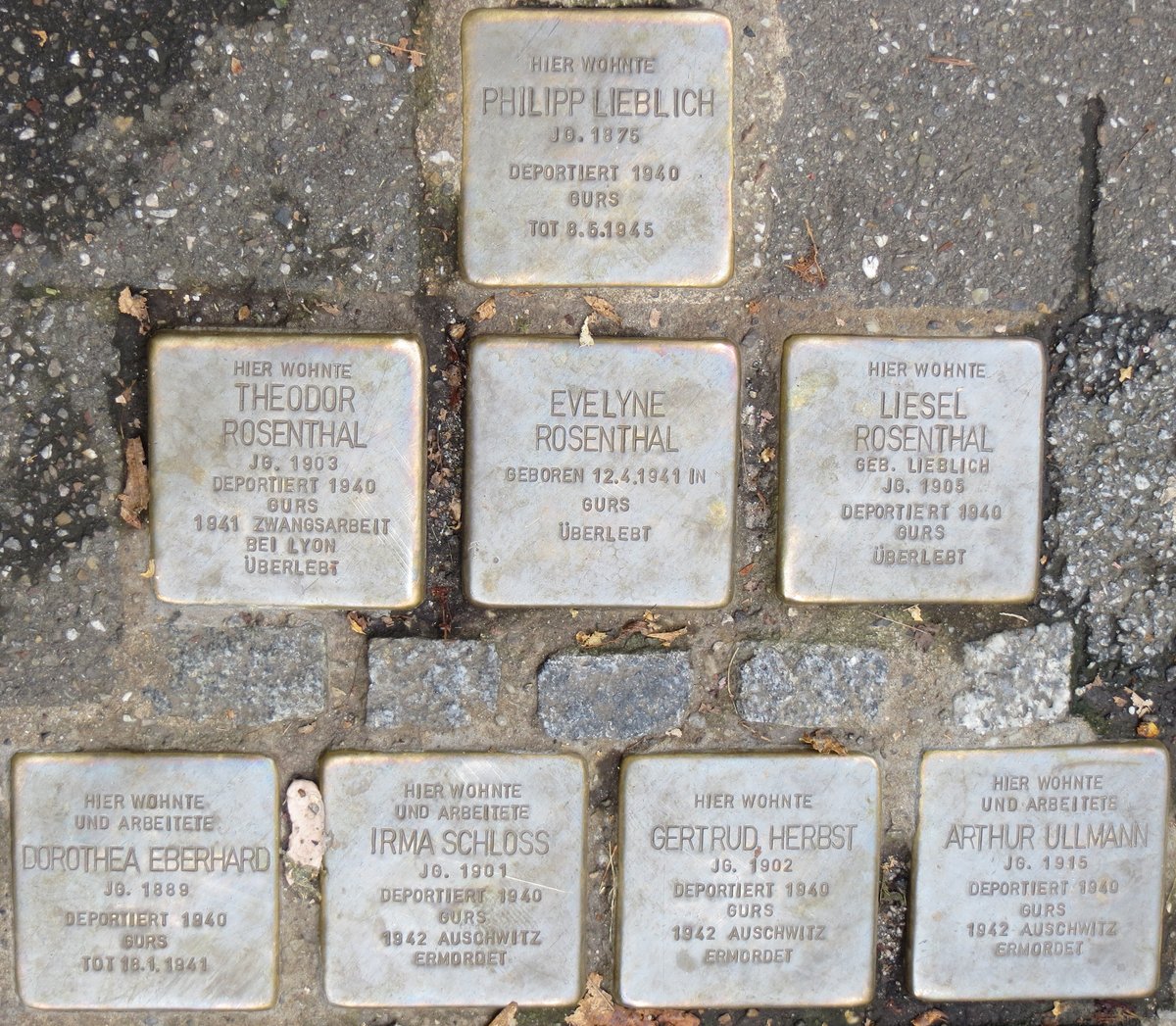
Arthur Ullmann’s Stolperstein is located at Stephanienstraße 2, in front of the former Hotel Central—his last freely chosen residence (Gedenkbuch Baden-Baden). The brass plaque is inscribed:
HIER WOHNTE
ARTHUR ULLMANN
JG. 1914
DEPORTIERT 1940
GURS 1942 AUSCHWITZ
ERMORDET
This site-specific memorial personalizes history, inviting passersby to pause, reflect, and honor Arthur Ullmann’s memory.
Visual suggestion:

Visiting Information
Accessibility and Hours
- Accessibility: The Stolperstein is embedded in a public sidewalk and is wheelchair accessible.
- Visiting Hours: The site is accessible 24/7, with no restricted visiting hours or admission fees (Claudia Travels).
- Visitor Etiquette: Pause to read the inscription, and, if you wish, gently polish the stone with a soft cloth or leave a small stone as a mark of respect.
Tickets, Tours, and Visitor Tips
- Tickets: No ticket or reservation is required; visiting is always free.
- Guided Tours: The Baden-Baden Tourist Information Office offers guided tours focusing on Jewish heritage and Stolpersteine (baden-baden.com).
- Best Visiting Times: Early morning and late afternoon offer optimal lighting for photography.
- Travel Tips: Download the Stolpersteine Guide app for interactive maps and detailed biographies.
Cultural and Memorial Context
The Stolpersteine project’s decentralized approach brings memory into the flow of everyday life. Each stone, including Arthur Ullmann’s, transforms the city’s urban landscape into a living memorial. The personal inscriptions challenge onlookers to reflect on the humanity behind the statistics of genocide—restoring names, stories, and dignity to the victims (iamexpat.de; Germany.info).
Community involvement is central to the project. In Baden-Baden, volunteers, schools, and local organizations research biographies, participate in installation ceremonies, and maintain the stones. This work fosters education, dialogue, and a commitment to combating antisemitism and racism (gedenkbuch.baden-baden.de; goodnews4.de).
Community Involvement and Ongoing Legacy
The Arbeitskreis Stolpersteine (Working Group) in Baden-Baden, consisting of dedicated volunteers, collaborates with the city archive, schools, and local organizations to research victims’ histories and organize ceremonies (gedenkbuch.baden-baden.de). Sponsorship opportunities enable individuals and organizations to support new installations and ongoing maintenance.
Despite the project’s success, challenges remain—such as how best to commemorate the destroyed synagogue site. Dialogue continues between memory advocates and city authorities to ensure respectful treatment of all heritage sites (goodnews4.de).
Nearby Historical and Cultural Sites
- Jewish Museum Baden-Baden: Exhibits on Jewish life and Holocaust remembrance.
- Lichtental Cemetery: Final resting place for many Jewish residents.
- Site of the former synagogue on Stephanienstraße: Accessible, with ongoing efforts to enhance its memorialization.
- UNESCO World Heritage spa facilities: Insight into the city’s broader cultural history (baden-baden.com).
Combine your visit to the Arthur Ullmann Stolperstein with these sites for a deeper understanding of Baden-Baden’s multi-layered past.
Frequently Asked Questions (FAQ)
Q: Where exactly is Arthur Ullmann’s Stolperstein located?
A: In front of Stephanienstraße 2, Baden-Baden, at his last freely chosen residence (Gedenkbuch Baden-Baden).
Q: Is the site accessible for wheelchair users?
A: Yes, as it is on a public sidewalk.
Q: Are guided tours available?
A: Yes, guided tours focusing on Jewish heritage and Stolpersteine are offered by the city tourism office (baden-baden.com).
Q: Are photographs permitted?
A: Yes, respectful photography is encouraged.
Q: How can I support the Stolpersteine project?
A: By sponsoring new stones or donating to local initiatives (gedenkbuch.baden-baden.de).
Listen to the full story in the app
The whole Stolperstein Dedicated To Arthur Ullmann,
told well.
Audio guides for 1,100+ cities across 96 countries. History, stories, and local insight — offline ready.
Verified, and shown.
Researched and written by the Audiala editorial team from historical records, architectural archives, and local expertise.
Researched from Wikidata, Wikipedia & official sources · fact-checked · How we make our guides →