Plan and listen to Stolperstein Dedicated To Alfred Mainzer with Audiala.
Audio guide in your pocket, itinerary in your browser. Built for the way you actually visit.
Introduction
The Stolperstein (stumbling stone) dedicated to Alfred Mainzer in Baden-Baden offers a moving opportunity to engage with the city’s history and the memory of those persecuted under the Nazi regime. As part of Europe’s largest decentralized memorial project, the Stolpersteine transform the urban landscape into a living site of remembrance, inviting residents and visitors alike to reflect on the stories of individual victims. This guide provides comprehensive, non-duplicative information on the background of the Stolperstein project, Alfred Mainzer’s personal history, practical details for visiting, and the broader context of remembrance in Baden-Baden.

What is the Stolperstein Project?
Initiated by German artist Gunter Demnig in the early 1990s, the Stolpersteine (“stumbling stones”) project is a decentralized memorial dedicated to the victims of Nazi persecution. Each stone is a small brass plaque, 10 x 10 cm, embedded in the pavement in front of the victim’s last freely chosen residence. The inscription includes the person’s name, birth year, fate, and, if known, date and place of death (Stolpersteine.eu; Germany.info).
The Stolpersteine project is now recognized as the world’s largest decentralized Holocaust memorial, with more than 100,000 stones placed in over 1,900 municipalities across Europe (Wikipedia: Stolperstein; Folklife Magazine). The goal is to bring the memory of individual victims back into daily life, making remembrance a communal, ongoing act.
The Stolpersteine in Baden-Baden
Baden-Baden has actively embraced the Stolpersteine project as part of its commitment to historical remembrance. The city has more than 200 Stolpersteine, each representing a local victim of the Nazi regime, whether Jewish, Sinti and Roma, political dissident, or another persecuted group (Baden-Baden Gedenkbuch; claudiatravels.com).
The local Arbeitskreis Stolpersteine (Stolpersteine Working Group) and other organizations research biographical details, sponsor stones, and organize installation ceremonies. Students and community members often participate, ensuring that the remembrance work is both accurate and intergenerational (Baden-Baden Aktionen).
Alfred Mainzer: Personal History and Memorial
Who Was Alfred Mainzer?
Alfred Mainzer was born on March 25, 1920, in Wysoka (Wissek), Poland, and settled with his family at Ooser Hauptstraße 18 in Baden-Baden. As Nazi persecution intensified, Alfred, then 19, managed to escape to England in 1939, evading the fate that befell so many others (gedenkbuch.baden-baden.de). The Mainzer family’s story is one of survival, loss, and the enduring importance of memory.
The Stolperstein for Alfred Mainzer
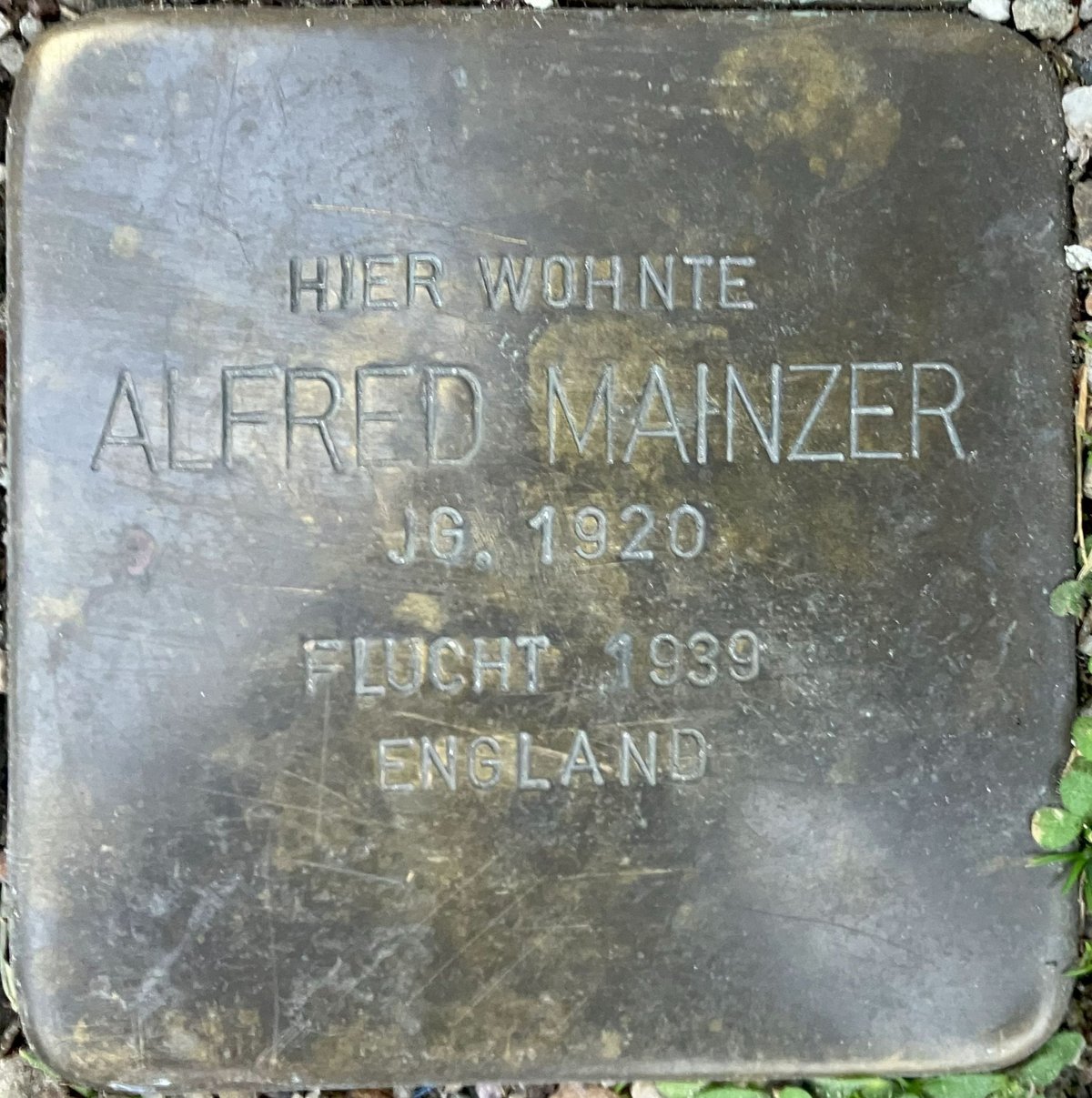
Installed on February 19, 2018, the Stolperstein for Alfred Mainzer sits at Ooser Hauptstraße 18, marking the family’s last freely chosen residence. Its inscription simply states:
HIER WOHNTE
ALFRED MAINZER
JG. 1920
FLUCHT 1939
ENGLAND
(“Here lived Alfred Mainzer, born 1920, fled 1939, England.”)
Nearby Stolpersteine commemorate other Mainzer family members, personalizing and localizing the impact of history (mapcarta.com; goodnews4.de).
Visiting the Alfred Mainzer Stolperstein: Hours, Accessibility, and Directions
Hours and Ticket Information
- Open Access: The Stolperstein is outdoors and accessible 24/7.
- Admission: Free of charge; no tickets or reservations are needed.
Location and Directions
- Address: Ooser Hauptstraße 18, 76532 Baden-Baden, Germany.
- Public Transport: Accessible via Baden-Baden’s public transport network; the Oos district is easily reached from the city center.
- Parking: Available nearby.
Accessibility
- The site features flat sidewalk paving and is generally wheelchair accessible. However, some areas in Baden-Baden’s historic quarters may have uneven surfaces.
Planning Your Visit: Tips and Nearby Attractions
Tips for a Respectful Visit:
- Approach the Stolperstein quietly and with respect.
- It is customary to gently clean or polish the brass plaque, especially on memorial days.
- Placing small stones or flowers atop the Stolperstein is a traditional sign of remembrance.
- Avoid standing directly on the plaque.
Photography:
- Discreet photography is permitted and encouraged to help spread awareness.
Best Times to Visit:
- Daylight hours for visibility.
- Spring and autumn for comfortable weather and fewer crowds.
- Memorial dates such as January 27 (Holocaust Remembrance Day) or November 9 (Kristallnacht anniversary) for special commemorations.
Nearby Attractions:
- Other Stolpersteine are located within walking distance, often forming clusters that tell the story of an entire family or neighborhood.
- Stadtmuseum Baden-Baden features exhibits on local Jewish history.
- The former synagogue site and other memorials in the Old Town.
- The Kurhaus, Roman bath ruins, and additional UNESCO World Heritage sites.
Educational and Cultural Impact
Stolpersteine in Baden-Baden are integrated into local school curricula, public ceremonies, and arts projects. These activities ensure that the stories behind each stone continue to resonate across generations (Baden-Baden Aktionen; claudiatravels.com).
By situating remembrance in daily spaces, the Stolpersteine provide an ongoing, participatory act of memory and tolerance.
Maintenance, Rituals, and Community Involvement
Ongoing care is part of the Stolpersteine project’s philosophy. Community groups and individuals clean and polish the stones, especially on significant dates like Holocaust Remembrance Day and the Kristallnacht anniversary (Folklife Magazine). These acts reinforce the link between remembrance and civic responsibility.
Controversies and Criticism
While widely embraced, the project is not without criticism. Some argue that placing names in the pavement, where they may be stepped on or dirtied, is disrespectful (LBI). As a result, some cities, such as Munich, have opted for alternative forms of memorialization. Nevertheless, Stolpersteine continue to expand across Europe with widespread community and educational support.
Frequently Asked Questions (FAQ)
Q: Where is the Stolperstein for Alfred Mainzer located?
A: In the sidewalk outside Ooser Hauptstraße 18, Baden-Baden.
Q: Are there visiting hours or entrance fees?
A: The Stolperstein is accessible at any time, free of charge.
Q: Is the site wheelchair accessible?
A: Yes, though some surrounding areas may have uneven surfaces.
Q: Are guided tours available?
A: Yes, local organizations and schools offer guided Stolperstein walks. Check with the Baden-Baden tourist office for details.
Q: Can I support the Stolperstein project?
A: Sponsoring new stones or supporting educational activities is possible through local initiatives (goodnews4.de).
Listen to the full story in the app
The whole Stolperstein Dedicated To Alfred Mainzer,
told well.
Audio guides for 1,100+ cities across 96 countries. History, stories, and local insight — offline ready.
Verified, and shown.
Researched and written by the Audiala editorial team from historical records, architectural archives, and local expertise.
Researched from Wikidata, Wikipedia & official sources · fact-checked · How we make our guides →