Ancient Foundations
science
c. 4000 BCE
First Footprints by the Springs
People settled the steep banks of the Mtkvari where hot sulfur water bubbled from the ground. The smell of rotten eggs still hangs in Abanotubani on damp mornings. That thermal gift shaped every later layer of the city.
castle
458 CE
Vakhtang Builds His Capital
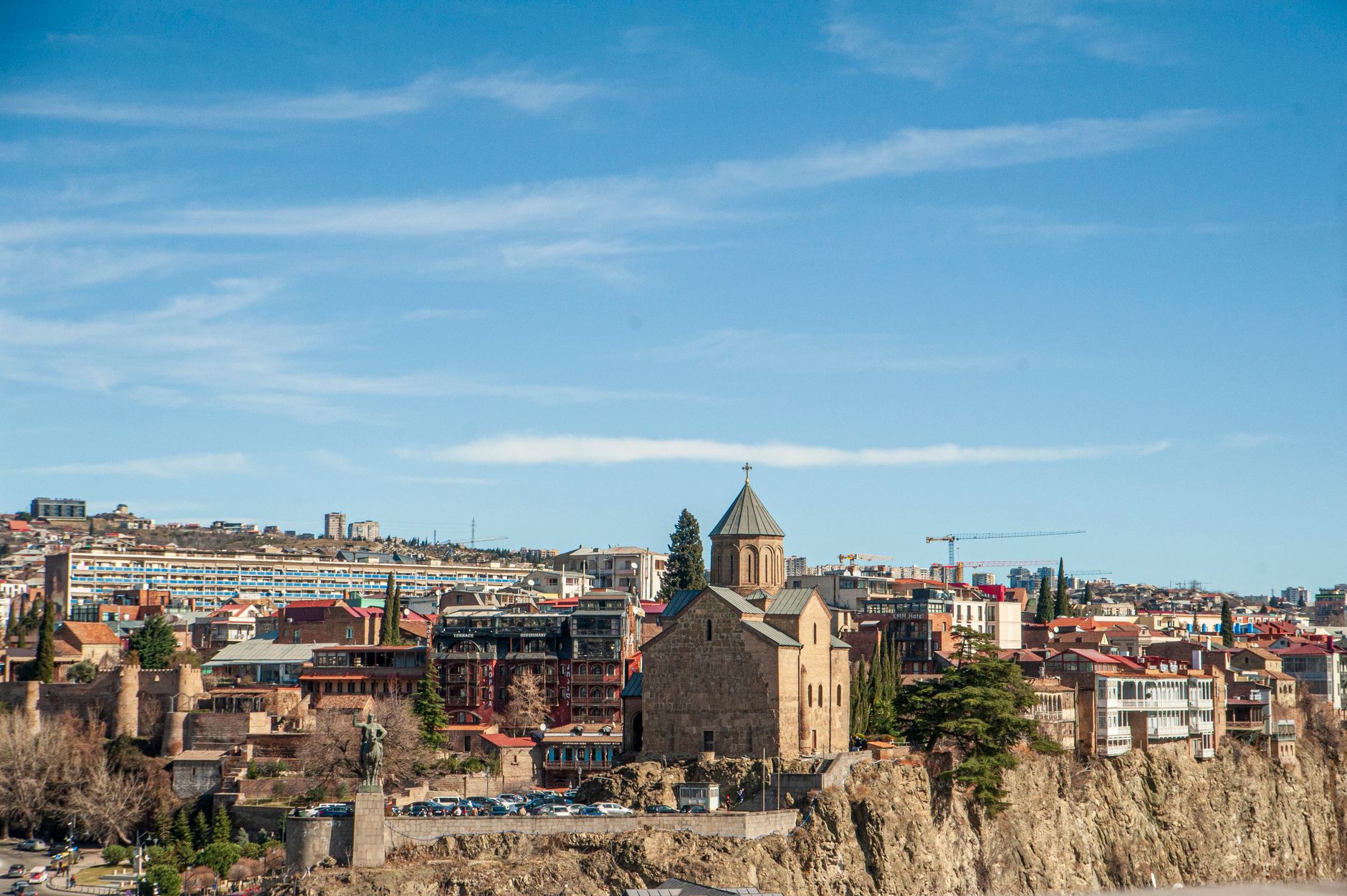
King Vakhtang Gorgasali raised the first fortress on the Narikala ridge. Legend says a pheasant he hunted fell into a hot spring and was instantly cooked. The smell convinced him this was the place. Tbilisi began as a royal hunting lodge that refused to remain small.
Medieval Crossroads
swords
627
Byzantine and Khazar Sack
The city burned under combined Byzantine and Khazar assault. Its position at the crossroads proved both blessing and curse. Every empire that passed through wanted to own the gates.
church
737
Arab Conquest and Emirate
Marwan ibn Muhammad stormed the city and established long Arab rule. Tbilisi became an emirate that answered to Damascus then Baghdad. The call to prayer mixed with church bells for three centuries.
Golden Age of Georgia
castle
1122
David the Builder Claims His City
King David IV seized Tbilisi from the Seljuks and made it capital of a unified Georgia. He moved his court here and began the Golden Age. The fortress on the hill still carries his vision of a Christian kingdom stretching from the Black Sea to the Caspian.
palette
c. 1186
Rustaveli Writes the Knight
Shota Rustaveli composed The Knight in the Panther's Skin at the Georgian court in Tbilisi. The poem's 1,600 quatrains celebrated a refined, tolerant world that would soon vanish. Copies still circulate in the city whose streets inspired it.
Mongol and Timurid Invasions
swords
1234
Mongols Take the City
The Mongol tide broke over Tbilisi's walls. The Golden Age ended in smoke. Yet the city survived, rebuilt, and absorbed yet another layer of conquerors into its stubborn character.
local_fire_department
1386
Tamerlane's Devastation
Timur's army reduced whole districts to rubble. The chronicles say the streets ran with blood. Tbilisi recovered, as it always had, but each sack left the stone darker and the memory sharper.
Persian and Russian Rule
swords
1795
Persian Holocaust
Agha Mohammad Khan's forces stormed the city on 11 September. They burned, killed, and carried off 15,000 captives into slavery. When the smoke cleared, barely 20,000 souls remained. The wound still echoes in Georgian poetry.
gavel
1801
Russia Absorbs Georgia
Tsarist troops marched in and abolished the Bagratid monarchy. Tbilisi became the administrative seat of the Caucasus viceroyalty. European neoclassical buildings began rising beside the old wooden balconies.
palette
1817
Baratashvili Born into Russian Tiflis
Nikoloz Baratashvili entered the world in a city caught between two empires. His romantic poetry mourned Georgia's lost independence while walking streets increasingly filled with Russian soldiers and European ideas.
music_note
1851
Imperial Opera Opens
The Tiflis Imperial Theatre opened its doors on Rustaveli Avenue. Italian architects, French stage machinery, and Georgian voices created something unexpected. The building still stands, now the Georgian National Opera, its balconies heavy with ghosts of both empire and resistance.
palette
1862
Pirosmani Enters the World
Niko Pirosmani was born poor in the village of Mirzaani but found his canvas in Tbilisi's taverns. He painted directly onto tablecloths and shop signs. His naïve, luminous scenes of feasts and animals still feel more truthful than most official portraits.
Soviet Century
gavel
1918
Independent Republic Declared
After 117 years of Russian rule, Georgia proclaimed independence on 26 May. Tbilisi became capital of the first modern Georgian state. For three brief years the city breathed freely before the next invasion.
swords
1921
Bolsheviks Storm In
The Red Army entered Tbilisi in February. The Democratic Republic fell. Soviet power would reshape the city with brutalist monuments, metro tunnels, and endless queues. Yet Georgian culture survived in kitchens, poetry readings, and stubborn jokes.
swords
1956
March Massacre
Students filled the streets protesting Khrushchev's denunciation of Stalin. Soviet troops opened fire on 9 March. Dozens died. The blood on Rustaveli Avenue proved even de-Stalinization would be paid for in Georgian lives.
factory
1966
Metro Opens
Tbilisi's underground railway began running on 11 January. Soviet engineering met local pride. Stations decorated with chandeliers and mosaics became underground palaces that still carry passengers beneath a city older than most countries.
swords
1989
April Tragedy
Soviet troops attacked peaceful demonstrators in front of Government House on 9 April. Poison gas and sharpened shovels killed at least 19, mostly women. The horror accelerated the end of Soviet rule in Georgia.
Independent Georgia
gavel
1991
Independence Restored
Georgia declared independence from the collapsing USSR. Tbilisi once again became capital of a sovereign state. The following decade brought civil war, electricity cuts, and gangster rule. The city learned survival all over again.
public
2003
Rose Revolution
Peaceful protesters carrying roses forced Eduard Shevardnadze from power in November. Mikheil Saakashvili swept into office promising reform. Tbilisi's streets filled with hope and Western flags. The results proved more complicated.
church
2004
Sameba Cathedral Consecrated
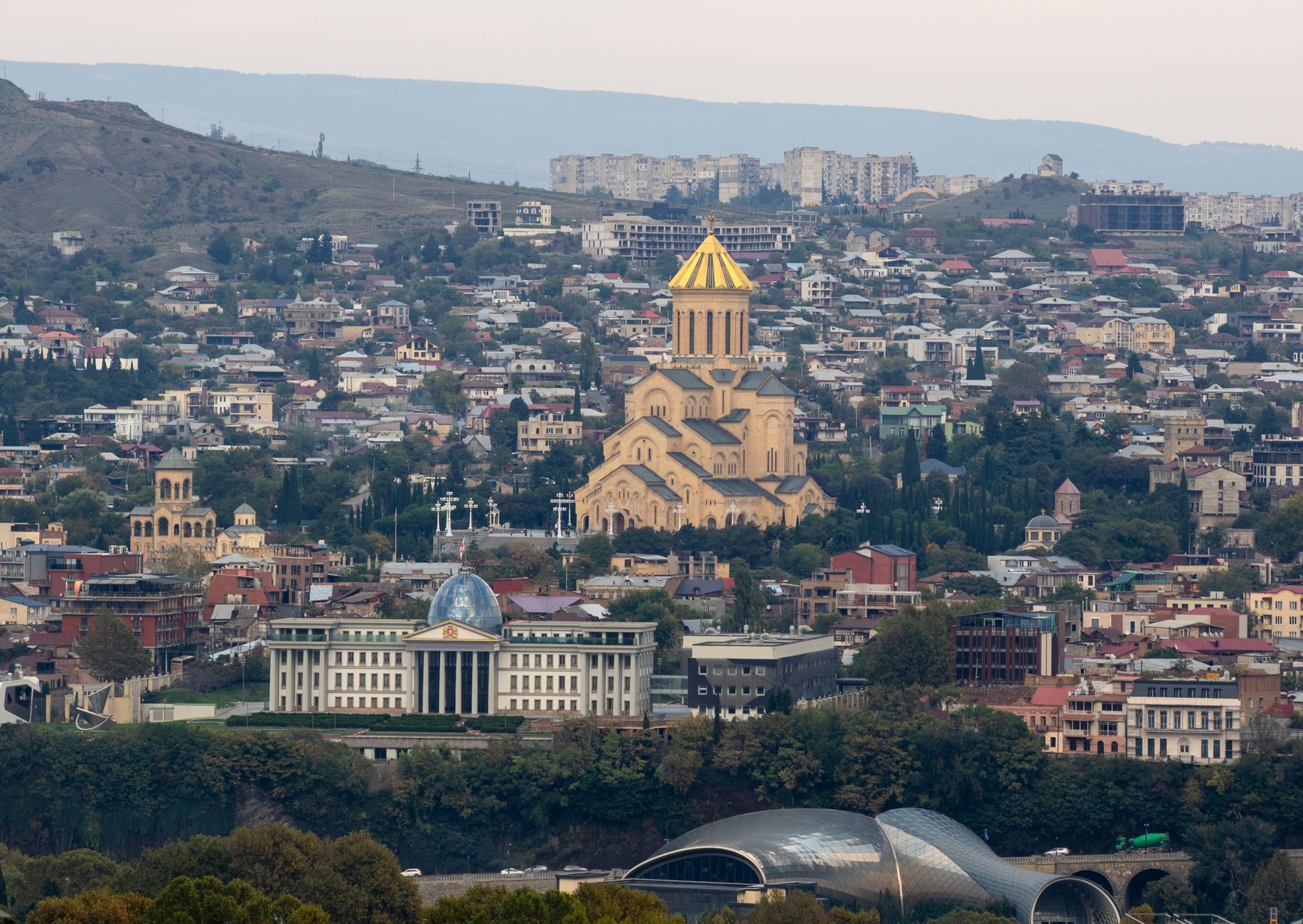
The gigantic Holy Trinity Cathedral rose on the left bank and was consecrated in 2004. Its golden dome dominates the skyline. Some call it a statement of national rebirth. Others see a reminder that power still flows from the church as much as the parliament.
castle
2010
Bridge of Peace Opens
The glass-and-steel Bridge of Peace crossed the Mtkvari on 6 May. Italian architect Michel de Lucchi's design sparked furious debate. Traditionalists hated it. Younger residents adopted it. The bridge still glows at night like a question mark between centuries.
local_fire_department
2015
The Night the River Took Twenty Lives
Torrential rain sent the Vere River raging through the city on 13 June. Flash floods destroyed homes, swept away cars, and killed twenty people. The zoo's animals escaped into the streets. A hippopotamus was shot in Vake. Nature reminded everyone who really owns these valleys.