The scent of hibiscus juice and hot iron drifts from the alleys behind Albert Market, where a man presses shirts in the open air. Banjul, the capital of The Gambia, is a city that refuses to be a museum piece, even as its colonial wooden houses lean into the tropical damp. It’s a place where a triumphal arch built to celebrate a coup now holds the quiet testimonies of its victims.
Researched from Wikidata, Wikipedia & official sources · fact-checked ·
How we make our guides →
BThe scent of hibiscus juice and hot iron drifts from the alleys behind Albert Market, where a man presses shirts in the open air. Banjul, the capital of The Gambia, is a city that refuses to be a museum piece, even as its colonial wooden houses lean into the tropical damp. It’s a place where a triumphal arch built to celebrate a coup now holds the quiet testimonies of its victims.
This is a city of layered memory. You can stand on the balconies of Arch 22, built in 1994, and look down on the Quadrangle, a blue-and-white clock tower that has marked time here for two hundred years. The National Museum’s dusty cases contain Mali Empire gold and stories of megalithic stone circles upriver, while the ferry to Barra carries today’s commuters, goats, and traders across the same brown water that carried slavers and explorers.
Banjul rewards the pedestrian. Its compact center means you can walk from the solemnity of King Fahad Mosque to the clatter of the blacksmiths’ quarter in twenty minutes. The light is sharp, the colors are bold—the crimson of Wanjo juice, the indigo of batik fabric piled in market stalls. History here isn't archived. It's lived in, argued over, and repurposed with a pragmatic grace.
Budget Friendly
Photography Hotspot
02
Why Banjul.
What makes this place worth slowing down for.
history
Architecture of Contested Memory
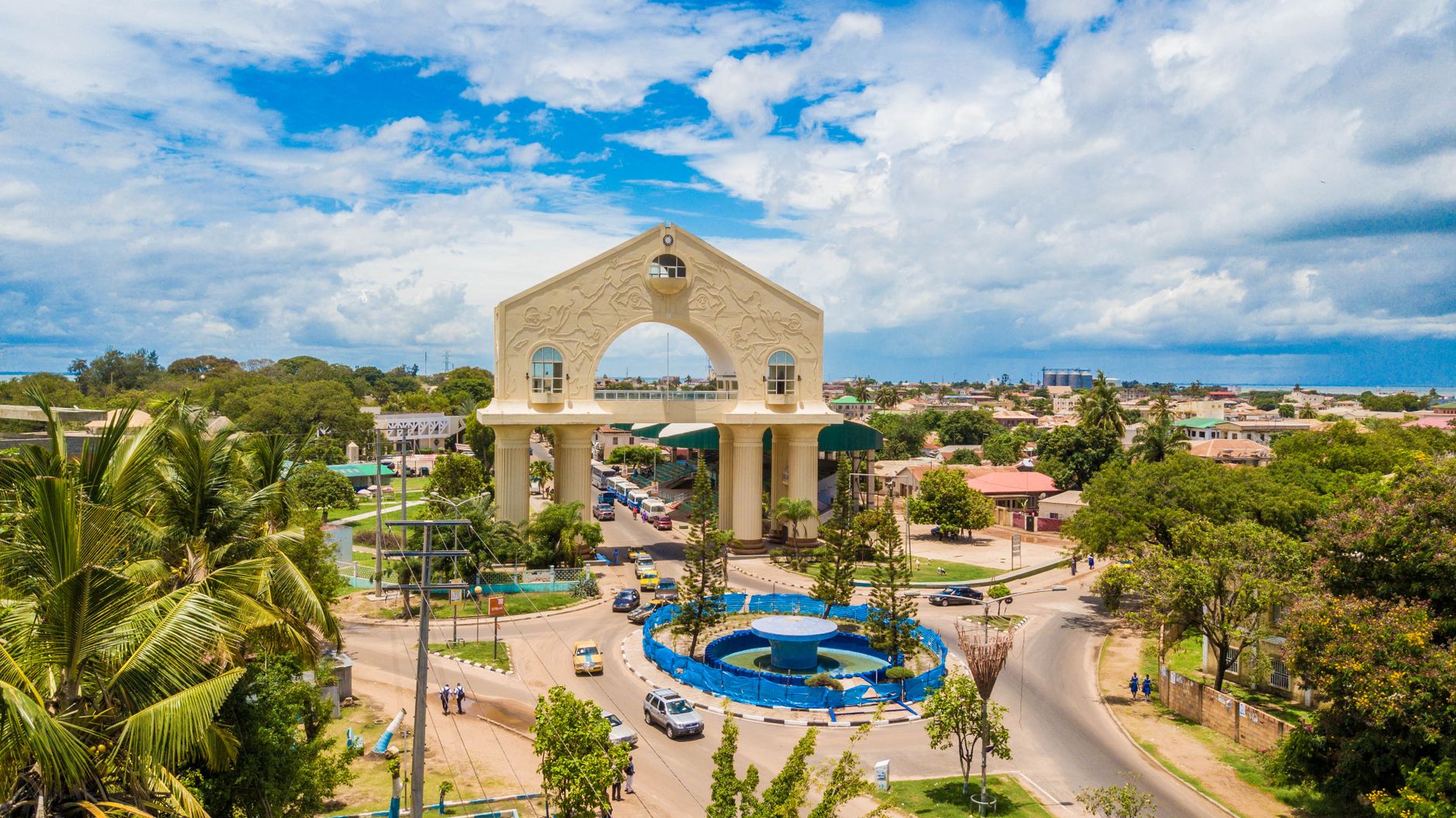
Arch 22 was built to celebrate a dictator's coup. Now its upper balconies offer river views while its basement holds styrofoam figures and a quiet memorial to his victims. The building's purpose has inverted completely.
local_shipping
A Ferry as Living Theater
The Banjul–Barra crossing isn't just transport. For 45 minutes you share a deck with vehicles, livestock, and traders. It's the city's most authentic cultural performance, staged twice daily on the Gambia River.
storefront
A Market's Natural Rhythm
Albert Market organizes itself by necessity. Walk from laundry alleys where men iron shirts over coals, past blacksmiths' hammers, into the sudden color of fabric stalls. It feels less like shopping and more like following a current.
04
Neighborhoods.
Where to wander, by quarter — each with its own rhythm.
01
Central Banjul (Independence Drive & MacCarthy Square)
The civic heart, centered on MacCarthy Square. Here you’ll find the Quadrangle, the oldest building in the city, and the unassuming square itself that erupts during Independence Day. It’s a district of administrative weight and colonial echoes, best seen on foot.
02
Albert Market Quarter
Follow the sound of hammers on metal. This isn’t just a market; it’s a sequenced ecosystem. Start in the laundry alleys, move past blacksmiths forging tools, then into the riot of produce and crafts. Called the city's heartbeat for a reason. Souvenirs are cheaper here than in the tourist zones.
03
Residential Quarters (West & South of MacCarthy Square)
A quieter Banjul of sandy streets and surviving architecture. Scattered here are the rare colonial-era wooden houses, like the one on Stanley Street, their fretwork battling the humid air. It’s a glimpse of the city’s domestic past, away from the main thoroughfares.
04
The Ferry Terminal & Waterfront
Less a neighborhood, more a portal. The Banjul–Barra ferry service is a 45-minute slice of Gambian life. The deck is shared with trucks, chickens, and families. The view back to Banjul’s port and the arch on the skyline is the view the city’s commuters see every day.
08
Where to Eat.
Where locals actually book dinner — not the tourist menus.
Wanjo Juice
Wanjo Juice
A sharp, crimson drink made from hibiscus flowers, served ice-cold. Find it at Attaya Café on Independence Drive. It cuts through the coastal heat better than anything bottled.
★ local pick
Bouye Juice
Bouye Juice
A creamy, tart beverage from the pulp of the baobab fruit. It has a faint vanilla note and a texture like thin smoothie. They sell it next to the Wanjo—try both.
★ local pick
09
Insider tips.
Small things that change how the city treats you.
currency_exchange
Carry Cash
Bring Gambian Dalasi in small denominations for market stalls and local cafes. Albert Market and smaller vendors don't typically accept cards.
directions_boat
Ride the Ferry
Take the Banjul–Barra ferry even if you don't need to cross. It's a 45-minute slice of Gambian life, with vehicles, livestock, and traders all sharing the deck.
local_drink
Try Wanjo Juice
Stop at Attaya Café on Independence Drive for Wanjo, a tart hibiscus juice, or creamy Bouye made from baobab fruit. It's a cheap, authentic refreshment.
timer
Visit Museums Early
Go to the National Museum or Arch 22 in the morning. The light is better for seeing exhibits, and it's cooler before the afternoon heat sets in.
payments
Bargain at Albert Market
Start at half the asking price for crafts at Albert Market. It's expected, and you'll find better prices here than in the tourist markets of Kololi.
11
Gallery.
The city, as it actually looks.
A striking example of historic colonial architecture found in the heart of Banjul, Gambia.
LekePOV on Pexels
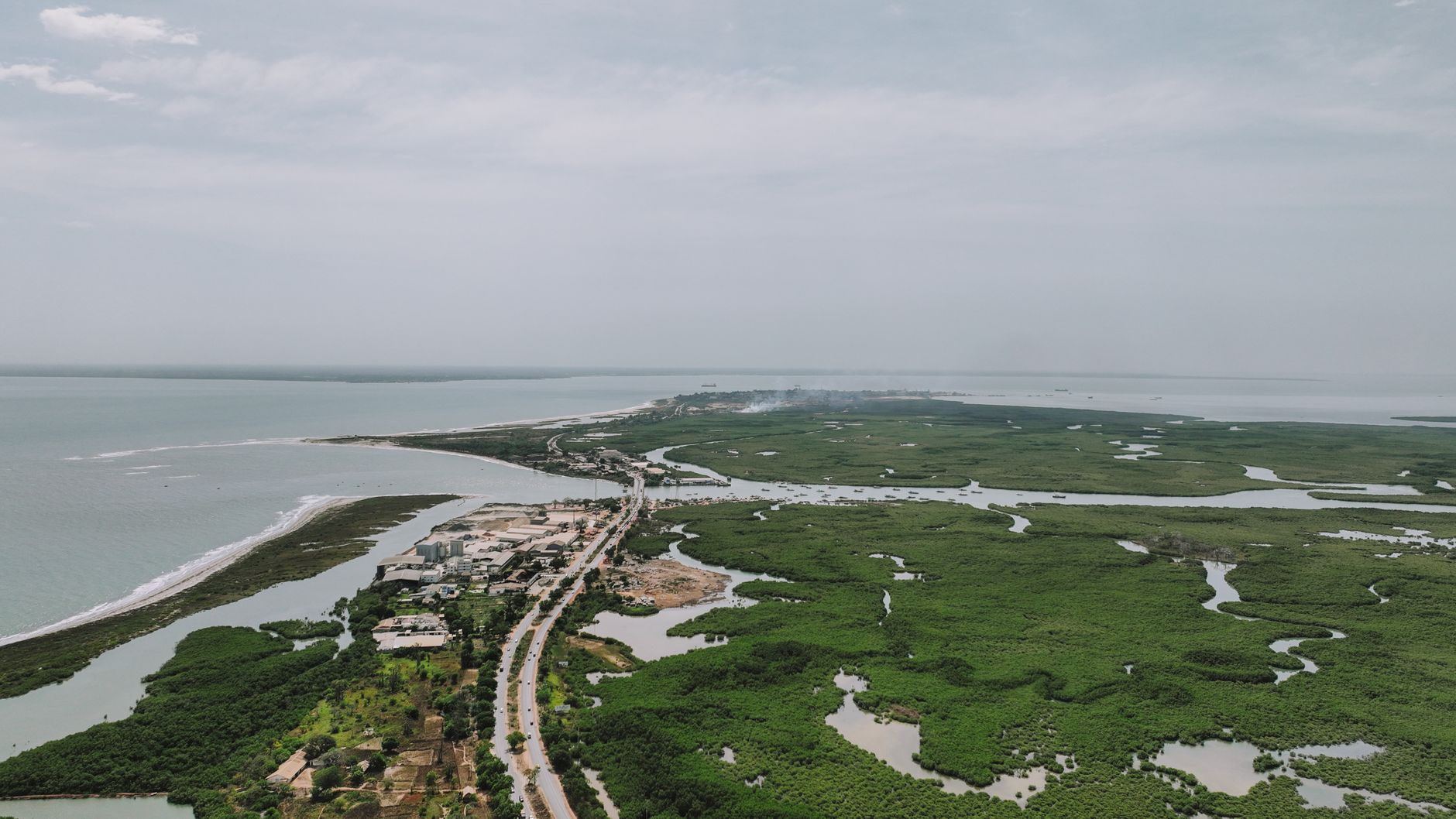
An aerial perspective of Banjul, Gambia, capturing the unique intersection of coastal infrastructure and dense mangrove ecosystems.
Kelly on Pexels
12
Frequently asked
Is Banjul worth visiting?
Yes, if you want to see the real Gambia beyond the beach resorts. It's a small, walkable capital where colonial history, daily commerce at Albert Market, and recent political memory at Arch 22 collide. You can cover the main sights in a day, but the atmosphere takes longer to absorb.
How many days should I spend in Banjul?
One full day is enough for the core sights. Start at Arch 22, walk to the National Museum and MacCarthy Square, then get lost in Albert Market. Add a second day if you want to take the ferry to Barra or explore the residential quarters with their wooden houses.
How do I get around Banjul?
Walk. The city center is compact and flat. For longer distances, use green-yellow taxis—agree on a price before you get in. The ferry to Barra is a form of transport and an attraction in itself.
What is there to do in Banjul at night?
Not much. Banjul is primarily a daytime city. Evening life is quiet. Most visitors stay in the nearby resort areas of Kotu or Kololi, which have more restaurants and bars, and take day trips into the capital.
Is Banjul safe for tourists?
It's generally safe, with standard city precautions advised. Petty theft can occur in crowded areas like Albert Market, so keep valuables secure. The political situation is stable, but Arch 22's exhibits are a sobering reminder of a recent, difficult past.
How much does it cost to visit Banjul?
It's very affordable. Museum entry is 200 Dalasi (about $3). Local meals and transport cost very little. The biggest expense will be a taxi from the coastal resorts if you're not staying in the city.
Ready to book?
13Before you go
Practical Information
Flight
Getting There
Banjul International Airport (BJL) is the main gateway, 24 kilometers southwest of the city center. There are no passenger rail services. The Trans-Gambia Highway (north-south) and the Banjul-Serekunda Highway provide the primary road connections.
Directions transit
Getting Around
There's no metro. Shared yellow-and-green taxis ("gele-gele") and minibuses form the backbone. Negotiate fares before getting in. The Banjul–Barra ferry costs a few Dalasi and runs multiple times daily—check the 2026 schedule for exact crossings.
Thermostat
Climate & Best Time
Temperatures hover between 24°C and 32°C year-round. The dry season (November to May) sees almost no rain and is peak for tourism. The humid rainy season (June to October) brings downpours. Visit between November and February for cooler, dust-free days.
Translate
Language & Currency
English is the official language. You'll hear Wolof, Mandinka, and Fula in the markets. The currency is the Gambian Dalasi (GMD). Cash is king—ATMs exist in Banjul, but carry smaller bills for market transactions.
Take Banjul with you
All of Banjul, downloaded once.
0 places, one continuous walking route. Free with your first city.
Strictly necessary cookies keep navigation working. Analytics cookies (PostHog, Google Analytics) help us learn which pages work — aggregate only, no ads, no selling. You can change this any time from the footer.
Privacy
Cookie preferences
Pick what you're okay with. You can change this any time from the footer.
Strictly necessary
Always on
Sign-in, language, navigation. Always on.
Product analytics
PostHog and Google Analytics, aggregate usage only. Helps us see which pages work and which need fixing. No selling, no ads.
Marketing
Off today. Reserved if we ever run paid acquisition. We will ask again before turning it on.