An introduction.
Researched by the Audiala editorial team from historical records, architectural archives, and local expertise.
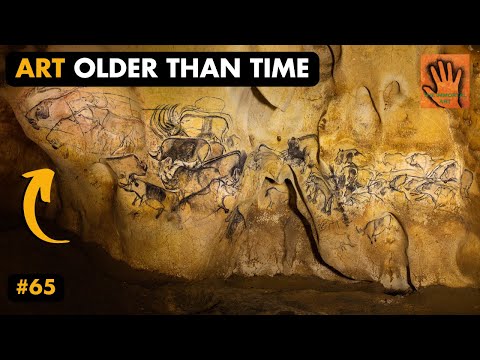
WWhy does one of humanity's oldest picture galleries hide behind a locked door while its double welcomes coach tours? Chauvet Cave in Vallon-Pont-d'Arc, France, is worth the trip because nowhere else brings you this close to the first great shock of human imagination: lions in motion, rhinos charging, charcoal still black after 36,000 years. Today you enter cool dimness, hear hushed voices bounce off stone, and watch visitors slow down in front of walls that seem to breathe, even though the cave most people see is the painstaking replica built to protect the real one.
That split matters. The original Grotte Chauvet-Pont d'Arc, sealed by a rockfall for roughly 20,000 years, is not open to the public; what you visit is Grotte Chauvet 2 Ardèche, a scientific reconstruction near the limestone plateau above the Ardèche River. Far from feeling fake, it sharpens the point: the real cave survives because almost nobody gets inside.
UNESCO inscribed the site on 22 June 2014 for what it documents, not for romance alone: the earliest-known and best-preserved figurative drawings on Earth, many dated to the Aurignacian period around 37,000 to 33,500 years ago. That age would be impressive anywhere. Here, the surprise is quality.
The walls do not look like humanity's first attempt at art. They look confident, observant, even sly: cave lions stalking in sequence, a bison sketched with the economy of a master who knows exactly when to stop, handprints that feel less like symbols than introductions. You come for prehistory, then leave arguing with your own idea of what early humans were supposed to be.
01 What to see.
The Replica Cave and Lion Panel
The Aurignacian Gallery
Take the Full Site Slowly
Videos
Watch & Explore Chauvet Cave
Chauvet cave (40-30,000 year old art)
You're not allowed in this cave. But there's a copy.
Plan and listen to Chauvet Cave with Audiala.
Audio guide in your pocket, itinerary in your browser. Built for the way you actually visit.
03 Visitor logistics.
The practical scaffolding for a good visit — kept short.
Getting There
The surprise starts before you arrive: the original Chauvet Cave is closed, so you visit Grotte Chauvet 2 Ardèche at 4941 Route de Bourg Saint-Andéol, 07150 Vallon-Pont-d’Arc. By car, come via A7/A49 exit 18 Montélimar Sud from the north, or A7/A9 exit 19 toward Bourg-Saint-Andéol, Saint-Remèze, then Vallon-Pont-d’Arc; free parking covers cars, coaches, and camper vans. Without a car, take line X76/76 from Valence TGV or Montélimar to Vallon-Pont-d’Arc, then use a taxi or the signed 9.8 km round-trip hike from the tourist office at 16 rue des Abeilles, about 3h15 with 277 m of climb.
Opening Hours
As of 2026, Grotte Chauvet 2 is open year-round, with summer hours at 08:30-20:30 from July 4 to August 31, 2026; from September 1-29 it shifts to 09:00-19:00, then 09:30-18:00 from September 30-October 16, and 09:30-19:30 from October 17-November 1. From November 2-December 18, 2026, hours are 10:30-17:30, and last admission is always 2 hours before closing. Mondays and Thursdays from July 6 to August 27, 2026 also host Les Soirées de Chauvet, with late-night programming running to 00:30.
Time Needed
Give this place more time than the word replica suggests. The guided cave visit takes about 1 hour, the Aurignacian Gallery needs at least 45 minutes, and the scientific exhibition about 45 minutes, so the official full visit lands around 3h30. If you move briskly, 1h45-2h15 covers the cave plus one extra space; half a day feels right if you add lunch, the wooded park, or seasonal events.
Accessibility
The site is wheelchair accessible from entrance to replica, with step-free routes and only slight slopes in places. As of 2026, wheelchair loans, cane-seats, accessible toilets, hearing loops, LSF video guides, FALC materials, audio description in four languages, and relief drawings on request are all available; assistance dogs are allowed. Accessible parking sits close to the entrance, with 16 car spaces and 2 long-vehicle spaces reserved for disabled visitors.
Cost & Tickets
As of 2026, the standard day ticket is 18 € for adults, 9 € for ages 10-17 and RSA holders, and free for children under 10; an annual pass costs 25 €. The ticket includes the cave replica, Aurignacian Gallery, scientific exhibition, and holiday or weekend activities, and online booking is the smart move because it locks in your timed slot and cuts reception time. No regular free day appears on the 2026 calendar, but partner sites including Aven d’Orgnac and Pont du Gard offer 1 € off per ticket within 7 days of your visit.
05 Tips for visitors.
Small things that change the day.
No Cave Photos
Photography is banned inside the replica cave, so stop planning the perfect mammoth shot and use your eyes instead. The dim light and hush are part of the staging, and the site provides official images if you want a souvenir that is sharper than a guilty phone snap.
Bring A Layer
Inside, the cave sits around 16-20°C, which feels cool after the white heat of an Ardèche parking lot. Even in July, pack a light layer unless you enjoy shivering through Ice Age lions that are 36,000 years old.
Empty The Car
Local police warnings focus less on pickpockets than on theft from parked cars at tourist sites and scenic pull-offs. Leave no bag, cable, or passport in view before you start your visit, because southern Ardèche summer parking has a way of attracting the wrong kind of curiosity.
Eat With Intent
If your slot is tight, stay on site: Aux Plateaux du Razal is the practical budget-to-mid-range choice, and La Pause Sapiens handles quick budget snacks. In Vallon-Pont-d’Arc, Arkadia suits a longer mid-range to splurge lunch, while Le Petit Jardin is a reliable mid-range town option; order Picodon or a chestnut dessert if you want the place to taste like Ardèche rather than generic tourist pizza.
Pair It Well
Chauvet makes more sense when you treat it as one stop in a prehistoric corridor, then continue to Pont d’Arc or Aven d’Orgnac. Also, the 1 € partner discount for Aven d’Orgnac, Pont du Gard, or the Crocodile Farm works for 7 days after your visit, which is small money but sensible money.
Book, Then Arrive
The common mistake is booking “Chauvet Cave” and expecting the original UNESCO cave rather than a timed visit to the replica complex. Book online, arrive 30 minutes early, and plan your meal around the slot; disappointment here usually starts with bad expectations, not bad archaeology.
04 A history of reinvention.
The Cave That Arrived Already Ancient
Most famous monuments spend centuries collecting damage, repairs, legends, and bad restoration decisions. Chauvet did the opposite: the decorated cave near Pont d'Arc vanished behind collapsed rock between about 29,000 and 21,000 years ago, then waited in darkness until 18 December 1994.
That sealed silence explains the jolt visitors still feel. Records show the cave preserves two main phases of human presence, first around 37,000 to 33,500 years ago and again around 31,000 to 28,000 years ago, along with bear bones, torch marks, footprints, and walls whose drawings survived because almost nobody touched them after prehistory.
The Night the Silence Broke
At first glance, Chauvet looks like a simple miracle story: three cavers stumble on a lost cave, France gains a prehistoric masterpiece, and everyone applauds. The surface version even reduces the discovery to one surname, Jean-Marie Chauvet, as if revelation belonged neatly to one man and one lucky afternoon.
But the details resist that tidy script. Official accounts name three discoverers, Jean-Marie Chauvet, Éliette Brunel, and Christian Hillaire, and what was at stake for them changed within days: a private speleological find became national heritage, then lawyers, ministries, and courts began deciding who owned the ground, the name, and the rights attached to the discovery. The turning point came late on 18 December 1994 when Brunel's headlamp caught a small red ochre mammoth and she cried out that people had been here; in that instant the cave stopped being a hole in the cliff and became evidence that could no longer belong only to its finders.
The hidden truth is less sentimental and more French. Records show the state moved fast: authentication under Jean Clottes on 29 December 1994, Historic Monument protection on 13 October 1995, state ownership on 14 February 1997, then a replica opened on 25 April 2015 because the original had to remain closed. Once you know that, the cave changes in front of you. You stop looking for an untouched fairy tale and start seeing a razor-thin compromise between discovery, credit, science, and restraint.
Before the Paintings Went Silent
Why You Can't Visit the Original
Listen to the full story in the app
The whole Chauvet Cave,
told well.
Audio guides for 1,100+ cities across 96 countries. History, stories, and local insight — offline ready.
06 Frequently asked.
The questions travellers send us most about Chauvet Cave.
Is Chauvet Cave worth visiting?
Yes, if you go knowing the real surprise: you will not enter the original cave, but the replica at Grotte Chauvet 2 Ardèche is still one of France's most affecting prehistoric visits. The copy gathers the cave's great panels into a 250 m route with 10 stations, so horses, lions, and mammoths appear in controlled darkness like figures stepping out of smoke. What stays with people is not fake-cave novelty but the sense that images made roughly 37,000 years ago still feel quick, risky, and alive.
How long do you need at Chauvet Cave?
Plan on 3 to 3.5 hours if you want to see it properly. The replica tour itself takes about 1 hour, then you need at least 45 minutes for the Aurignacian Gallery and about 45 minutes for the scientific exhibition. Half a day feels better if you want the wooded park too, with 15 hectares of oak shade spread around the site like a small outdoor museum.
How do I get to Chauvet Cave from Vallon-Pont-d'Arc?
From Vallon-Pont-d'Arc, most people drive or take a taxi to Grotte Chauvet 2 Ardèche at 4941 Route de Bourg Saint-Andeol. If you are on foot, the clearest marked option is a 9.8 km round-trip hike from the tourist office at 16 rue des Abeilles, with 277 m of climb, a stony sun-struck trail, and a walk time of about 3h15. Free parking is available on site, which makes a car the easier choice in summer heat.
What is the best time to visit Chauvet Cave?
The best time is spring or early autumn, when you get the long-view belvedere, the oak park, and fewer bodies moving through the timed visits. Summer works, but July and August bring the heaviest traffic and the hottest light outside, even if the cave interior stays around 16 to 20°C, cool as a stone cellar. If you are visiting in summer 2026, early or late slots make the day easier.
Can you visit Chauvet Cave for free?
Usually no, unless you are under 10 or you catch a special free event day. The standard adult ticket for 2026 is 18 euros, youth aged 10 to 17 pay 9 euros, and the ticket covers the replica cave, the Aurignacian Gallery, and the scientific exhibition. That said, the original Chauvet Cave is never open to ordinary visitors at any price.
What should I not miss at Chauvet Cave?
Do not miss the Lion Panel at the end of the replica route, because that is where the cave stops feeling like a display and starts feeling like a moving wall of intent. Also watch for the owl engraving that seems to twist its head back at you, and the hand-dot panel that only makes visual sense from one exact spot below it. Outside, the belvedere matters too: after all that dark, the bright Ardèche hills reset your eyes and change the scale of the whole visit.
Verified, and shown.
Researched and written by the Audiala editorial team from historical records, architectural archives, and local expertise.
Official World Heritage listing used for the cave's significance, conservation status, and the fact that the original decorated cave is protected rather than open to the public.
Used for 2026 ticket prices, opening information, last admission timing, and the practical distinction between the original cave and the public replica site.
Used for the exact visitor address, access directions, GPS coordinates, and parking information.
Used for official visit duration guidance, re-entry details, and practical planning advice for a standard visit.
Used for the marked walking route from Vallon-Pont-d'Arc, including distance, duration, elevation gain, and trail character.
Used for the structure of the public visit, including the replica route length, number of stations, and the site's main visitor components.
Used for the emotional and physical experience of the replica cave, especially the Lion Panel and the staged lighting inside the visit.
Used for the wooded park, belvedere, landscape views, and the outdoor part of the visitor experience.
Used for the discovery story and the modern historical framing that gives Chauvet its human drama.
Used for the owl engraving detail highlighted in the answer about what not to miss.
Used for the viewpoint-dependent hand-dot image that only resolves from one precise position.
Last reviewed
Researched from Wikidata, Wikipedia & official sources · fact-checked · How we make our guides →