Plan and listen to Monastery Of The Jacobins with Audiala.
Audio guide in your pocket, itinerary in your browser. Built for the way you actually visit.
Introduction
The Monastery of the Jacobins (Couvent des Jacobins) in Toulouse is a cornerstone of Southern French Gothic architecture and a vital chapter in the city’s religious and cultural history. Founded in the 13th century by the Dominican Order, known in France as the Jacobins, the monastery was instrumental in the Catholic Church’s efforts to reassert orthodoxy during periods of religious turbulence. Its unique double-nave layout, iconic “palm tree” vault, and red brick construction make it a distinctive and celebrated landmark. Today, the site welcomes visitors as a deconsecrated cultural venue, hosting exhibitions, concerts, and offering guided tours, while remaining a place of pilgrimage thanks to the relics of Saint Thomas Aquinas (Wikipedia; Guide Toulouse Pyrénées; Toulouse Tourisme).
This comprehensive guide explores the monastery’s origins, architectural highlights, religious and cultural importance, and provides up-to-date information on visiting hours, ticketing, accessibility, and travel tips.
Origins and Foundation
The Monastery of the Jacobins traces its foundation to 1229, shortly after the Albigensian Crusade, a campaign by the Catholic Church to suppress Cathar heresy in southern France. The Dominicans—called Jacobins in France, after their first Parisian convent on Rue Saint-Jacques—established the monastery as both a spiritual stronghold and a political statement reinforcing Catholic orthodoxy in Toulouse (Wikipedia; Guide Toulouse Pyrénées).
Construction began soon after the Dominicans’ arrival, funded by local nobility and the papacy, emphasizing the importance of the order’s preaching and educational missions in the region (Toulouse Tourism; Encyclopedia Britannica).
Architectural Significance
Southern French Gothic and Red Brick Mastery
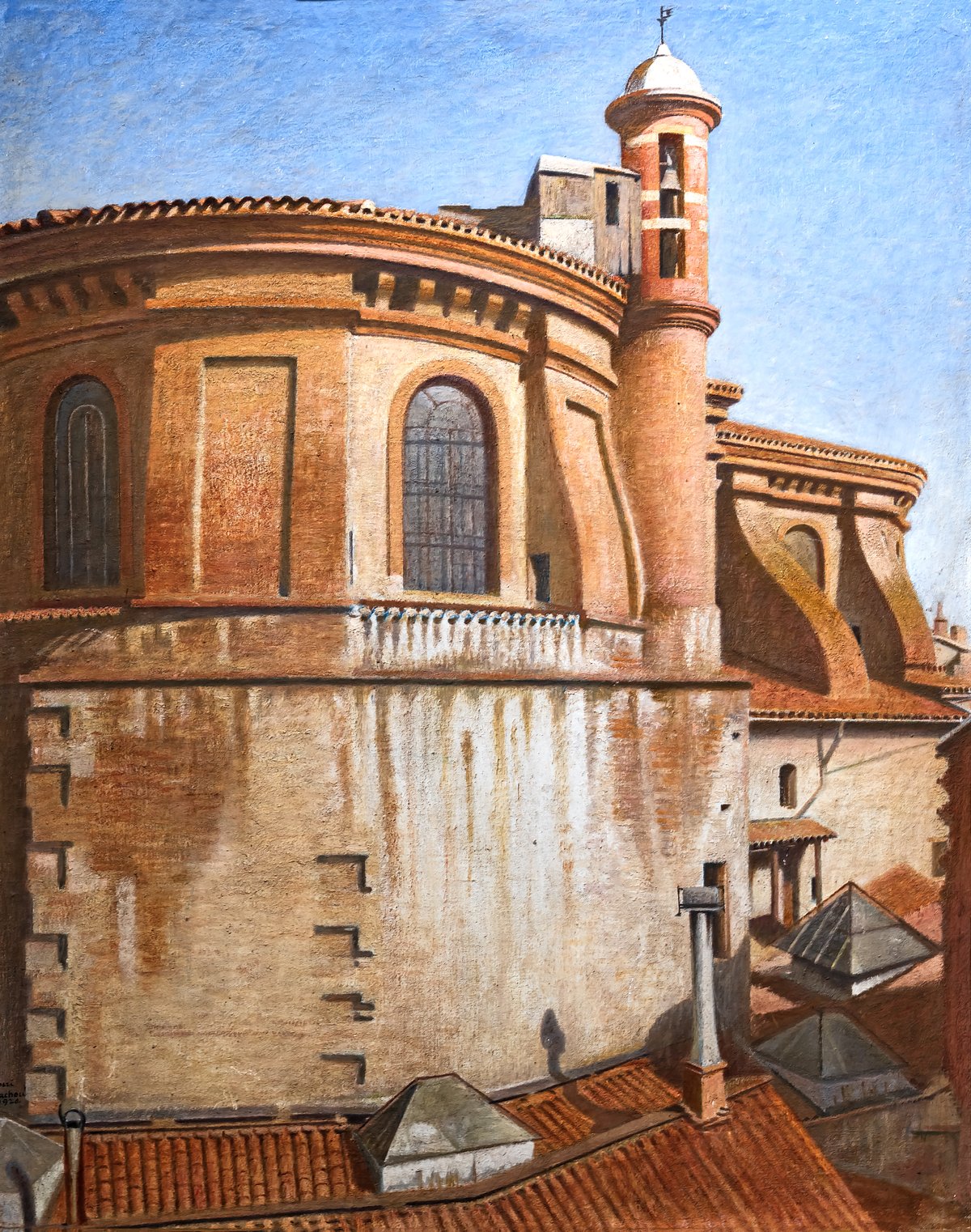
The Monastery of the Jacobins stands as a hallmark of Southern French Gothic architecture, characterized by its pink-red brick façade—a signature of Toulouse, known as “La Ville Rose” (Trip101). The monastery’s design is intentionally austere, with minimal exterior ornamentation, reflecting the Dominican vow of poverty and the region’s abundant brick resources.
Key Features
Double-Nave Layout
The church’s rare double-nave design, supported by slender columns, was an architectural innovation meant to accommodate large preaching audiences—a core Dominican activity (Toulouse Tourisme). This symmetrical plan provides expansive, luminous interiors.
The “Palm Tree” Vault
The most iconic feature is the “palm tree” vault in the choir: a single, central column that rises to 22 radiating brick ribs, evoking a palm’s canopy (ibnbattutatravel.com). This striking structure is unique in European Gothic architecture and a highlight of any visit.
Cloister and Ancillary Spaces
Adjacent to the church, the cloister is a peaceful, arcaded courtyard built in the early 14th century. The refectory, chapter house, and chapels reflect the monastery’s monastic functions and now frequently host cultural and educational events (Guide Toulouse Pyrénées).
Religious and Historical Role
The Inquisition and Ecclesiastical Authority
From the late 13th century, the Monastery of the Jacobins became the seat of the Inquisition in Toulouse. The Dominicans, entrusted by the papacy, investigated and prosecuted heresy, reinforcing the city’s status as a center of Catholic authority during turbulent times (History Today).
Relics of Saint Thomas Aquinas
The monastery’s greatest spiritual treasure is the relics of Saint Thomas Aquinas, transferred here in 1369. Aquinas, a Dominican friar and theologian, remains a pivotal figure in Catholic philosophy. His tomb, located in the main church, continues to attract pilgrims and scholars, especially during his feast day on January 28 (Sacred Destinations; Dominican Order).
Intellectual and Cultural Influence
The Jacobins were central to the intellectual life of medieval Toulouse, housing one of the earliest Dominican studia. The monastery’s proximity to the University of Toulouse fostered theological debate and academic exchange, helping shape European scholasticism (UNESCO; Stanford Encyclopedia of Philosophy).
Evolution Over Time
Medieval Expansion
After initial construction in the 13th century, the monastery saw further development, including the addition of the higher nave roof and the Chapel of Saint Antonin in the 14th century (Wikipedia).
Revolution and Secularization
During the French Revolution, the Dominican Order was dissolved. The site was seized, repurposed as a barracks, and suffered significant damage—stained glass was destroyed, and interior paintings were whitewashed (Wikipedia).
19th and 20th Century Restoration
After the army left in 1861, restoration efforts began, culminating in the return of Aquinas’s relics in 1974. The monastery became a cultural venue, hosting exhibitions and safeguarding Toulouse’s historical treasures during wartime (Wikipedia).
Modern Era: Cultural Venue
Today, the Monastery of the Jacobins is deconsecrated but vibrant, offering concerts, exhibitions, and guided tours. It is a UNESCO-listed site and a major part of Toulouse’s cultural and touristic landscape (Guide Toulouse Pyrénées; Toulouse Tourisme).
Visitor Information
Visiting Hours and Tickets
- Hours: Open Tuesday to Sunday, 10:00 AM to 6:00 PM. Closed Mondays. Hours may vary during holidays or special events (Trip101).
- Admission: Entry to the church and chapel is often free. Tickets (€3–€7) are required for the cloister, chapter house, and special exhibitions. Discounts are available for students, seniors, and children; free on the first Sunday of each month (Trip101).
- Purchase: Tickets can be bought on-site or online through the official website.
Accessibility
The site is wheelchair accessible, with ramps and adapted facilities in main areas. Some surfaces may be uneven due to the building’s age; assistance is available upon request (France Travel Planner).
Getting There
Located at Place des Jacobins in central Toulouse, the monastery is easily reached by metro (Carmes station, Line A), bus, or on foot from major city attractions and hotels (ACE Hôtel Toulouse).
Tours and Amenities
Guided tours are available in multiple languages and are recommended for deeper insight. The site offers restrooms, a gift shop, and shaded seating in the cloister. Photography is generally permitted, though flash and tripods may be restricted.
Family and Interactive Experiences
The monastery offers interactive tours for families, including tablet games and discovery backpacks for children (ACE Hôtel Toulouse). Special events and educational workshops are regularly scheduled.
Frequently Asked Questions (FAQ)
Q: What are the opening hours of the Monastery of the Jacobins?
A: Typically Tuesday to Sunday, 10:00 AM to 6:00 PM; closed Mondays. Check the official website for seasonal updates.
Q: How much do tickets cost?
A: Entry is free for some areas; €3–€7 for the cloister and exhibitions. Reductions apply for students, seniors, and children.
Q: Is the site accessible to wheelchairs?
A: Yes, major areas are accessible. Some historic flooring may be uneven; assistance is available.
Q: Are guided tours available?
A: Yes, in several languages. Booking ahead is recommended during busy periods.
Q: Can I visit the tomb of Saint Thomas Aquinas?
A: Yes, it is a focal point within the main church.
Events and Legacy
- Corpus Christi and Feast of Saint Thomas Aquinas: Major annual celebrations attract pilgrims and visitors.
- Concerts and Exhibitions: The monastery’s refectory and cloister host cultural events year-round.
- Architectural Influence: The Jacobins pioneered the Southern Gothic style, influencing subsequent regional buildings (ArchDaily).
Summary and Recommendations
The Monastery of the Jacobins is a must-see Toulouse historical site, offering a unique blend of medieval architecture, religious heritage, and cultural vibrancy. Whether drawn by its striking double-nave church, the palm tree vault, or the presence of Saint Thomas Aquinas’s relics, visitors will find a site where history, faith, and artistry converge. Plan your visit around updated hours, ticket options, and special events for an enriching experience. Enhance your stay with interactive resources, guided tours, and the Audiala app for a deeper dive into Toulouse’s heritage (France Travel Planner; Trip101; Sacred Destinations).
Listen to the full story in the app
The whole Monastery Of The Jacobins,
told well.
Audio guides for 1,100+ cities across 96 countries. History, stories, and local insight — offline ready.

Verified, and shown.
Researched and written by the Audiala editorial team from historical records, architectural archives, and local expertise.
Researched from Wikidata, Wikipedia & official sources · fact-checked · How we make our guides →