Plan and listen to Model Of Mir At Cité De L'Espace with Audiala.
Audio guide in your pocket, itinerary in your browser. Built for the way you actually visit.
Introduction: Experience the Legacy of Mir at Cité de l’Espace
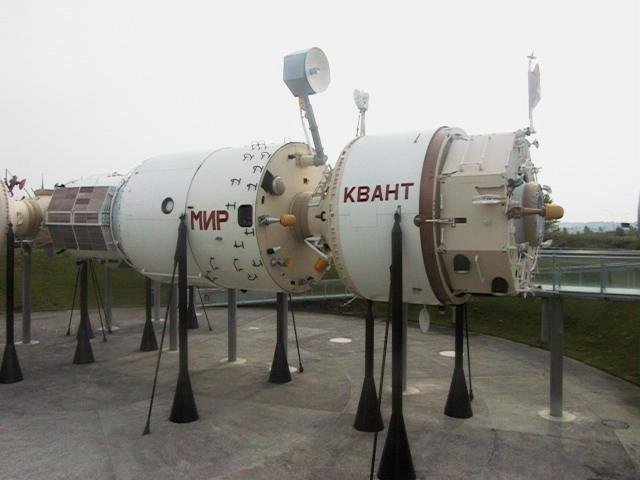
The Mir space station is an icon of international space collaboration and human ingenuity. Launched by the Soviet Union in 1986, Mir was the world’s first modular space station and orbited Earth for 15 years, hosting more than 100 astronauts from 12 countries. Its legacy set the stage for the International Space Station (ISS) and propelled advancements in materials science, human physiology, and Earth observation. At Cité de l’Espace in Toulouse, France, visitors can immerse themselves in this history through a full-scale, walk-through model of Mir—constructed using real test modules from the Khrunichev Center. The exhibit not only recreates the station’s unique living and working environments but also highlights France’s contributions to space exploration, with tributes to astronauts like Claudie Haigneré and Jean-Loup Chrétien.
This comprehensive guide covers everything you need to plan your visit: opening hours, ticket options, accessibility, on-site amenities, and nearby Toulouse attractions. For the latest details, consult the official Cité de l’Espace site and local news sources such as La Dépêche.

The Historical Background of Mir
Origins and Development
The Mir space station (“peace” or “world” in Russian) was launched in 1986 as humanity’s first modular space station. Developed during the late Soviet era, its core module was placed in orbit on February 20, 1986, and subsequent modules—including Kvant-1, Kvant-2, Kristall, Spektr, and Priroda—were added over the next decade, creating a vast, interconnected research platform. At its peak, Mir was the largest artificial satellite in orbit, with seven pressurized modules and multiple docking ports (Cité de l’Espace).
Achievements and Legacy
Mir conducted over 23,000 scientific experiments in biology, physics, materials science, and Earth observation. Notably, Russian cosmonaut Valeri Polyakov set a record for the longest continuous spaceflight—437 days aboard Mir. The station’s international collaborations, especially the Shuttle-Mir program (1995–1998), laid the groundwork for the ISS and marked a pivotal shift toward multinational space partnerships (TravelSetu).
French Connections
France played a significant role in Mir’s legacy. Claudie Haigneré became the first Frenchwoman in space during her 16-day Mir mission in 1996, and Jean-Loup Chrétien completed the first French spacewalk on the station in 1988 (La Dépêche).
The Mir Model at Cité de l’Espace
Authenticity and Layout
The Mir model at Cité de l’Espace is built from genuine test modules developed by the Khrunichev Center, not just a replica. Situated in the park’s outdoor gardens, it closely follows the original configuration:
- Core Module: Central living and working area.
- Kvant-1: Astrophysics research.
- Docking Node: Hub for module connections.
- Kvant-2 and Kristall: Life support, science, and crew quarters.
Visitors can traverse the interconnected passageways, experiencing the authentic scale and environment of Mir (Capcom Espace).
Immersive Experience
The exhibit offers a multisensory journey through:
- Soundscapes: Ambient recordings and multilingual mission dialogues.
- Dynamic Lighting: Simulates orbital conditions and launches.
- Interactive Zones: Recreate daily tasks, scientific work, and EVA preparation (La Dépêche).
Archival Material
Original objects, astronaut testimonies (notably from Claudie Haigneré), and materials from CNES provide visitors with a direct link to the real Mir missions (Cité de l’Espace).
Educational and Cultural Value
International Cooperation
Mir stands as a testament to scientific collaboration. Joint missions with Russian, American, European, and other astronauts are highlighted, underlining Mir’s role in bridging East and West (La Dépêche).
Life in Orbit
Exhibits showcase:
- Compact sleeping arrangements and exercise equipment.
- Microgravity experiments, especially in the Kristall module.
- Insights into nutrition, daily routines, and problem-solving in space (Cité de l’Espace).
Honoring French Astronauts
Special attention is given to Claudie Haigneré and Jean-Loup Chrétien, with personal stories and memorabilia that inspire new generations (La Dépêche).
Visiting the Mir Model: Hours, Tickets & Practical Information
Location and Arrival
- Address: Avenue Jean Gonord, Toulouse
- By Car: Ample on-site parking, signposted from the ring road (exit 17)
- Public Transport: Bus line 37 from Jolimont metro; also served by L1 and L8 (Lonely Planet)
- Bike: Free bike shelters available
Visiting Hours
- High Season (April–October): 10:00–18:00/19:00
- Low Season (November–March): 10:00–17:00
- Confirm seasonal hours on the official calendar.
Tickets and Admission
- Adults (15+): €26–€29
- Children (5–15): €19–€21
- Under 5: Free
- Family Pass: €85–€95
- Discounts for students, seniors, and groups
- Purchase online to avoid queues
Accessibility
- The Mir model and all key areas are wheelchair and stroller accessible
- Multilingual guides and signage
- Sensory-friendly options and staff assistance available (Visit Occitanie)
Facilities
- Restaurants, snack bars, picnic zones, gift shop
- Lockers and rest areas throughout the park
- Audio guides available in French, English, and Spanish (Abelard)
Enhancing Your Visit
- Guided Tours: Regular tours in French; English tours during peak season or by arrangement
- Workshops: Family-friendly, interactive sessions on space science and Mir operations
- Live Demos: Presentations on astronaut routines and technology
- Augmented Reality: Download the “My Cité de l’Espace” app for AR overlays and 3D animations (app details)
- Best Times: Weekdays and early mornings offer quieter visits
- Time Needed: Allow 30–45 minutes for the Mir model; plan at least a half-day for the entire park
Nearby Attractions in Toulouse
- Aeroscopia Museum: Aviation history exhibits
- L’Envol des Pionniers: Early aviation heritage
- Quai des Savoirs: Interactive science center
- Saint-Sernin Basilica: UNESCO World Heritage site
Frequently Asked Questions (FAQ)
Q: What are the Mir visiting hours at Cité de l’Espace?
A: Generally 10:00–18:00/19:00 in high season, 10:00–17:00 in low season; check the official calendar for updates.
Q: How do I buy tickets?
A: Tickets are available online or at the entrance; advance booking is advised.
Q: Is the Mir model accessible to visitors with disabilities?
A: Yes, including ramps, adapted restrooms, and staff assistance.
Q: Are guided tours available in English?
A: English tours are offered in high season or by prior request.
Q: Can I take photos inside the Mir model?
A: Yes, except in some IMAX or planetarium shows.
Q: How do I get there by public transport?
A: Bus 37 from Jolimont or Ramonville metro stations; see directions.
Summary and Visitor Tips for Model of Mir at Cité de l’Espace
The Mir space station model at Cité de l’Espace offers a unique, immersive journey into space history, blending authentic engineering with educational storytelling. It is a tribute not only to Mir’s pioneering achievements and international partnerships but also to the significant contributions of French astronauts. Visitors benefit from clear information on hours, ticketing, accessibility, and guided experiences, ensuring a smooth and enriching visit. For maximum enjoyment, book ahead, explore related attractions in Toulouse, and take advantage of digital guides and interactive workshops. Stay informed with the official Cité de l’Espace site and the Audiala app for exclusive content.
Listen to the full story in the app
The whole Model Of Mir At Cité De L'Espace,
told well.
Audio guides for 1,100+ cities across 96 countries. History, stories, and local insight — offline ready.
Verified, and shown.
Researched and written by the Audiala editorial team from historical records, architectural archives, and local expertise.
Researched from Wikidata, Wikipedia & official sources · fact-checked · How we make our guides →