Plan and listen to Maison Calas with Audiala.
Audio guide in your pocket, itinerary in your browser. Built for the way you actually visit.
Introduction: Maison Calas and Its Historical Significance
Located at 50 rue des Filatiers in the heart of Toulouse, Maison Calas stands as a powerful symbol of France’s struggle against religious intolerance and for judicial reform. This historic townhouse was once home to Jean Calas, a Protestant merchant whose wrongful execution in 1762 for the alleged murder of his son became one of the most infamous miscarriages of justice in the Ancien Régime. The international uproar following the Calas Affair, amplified by Voltaire’s advocacy, ultimately led to Calas’s exoneration and spurred a broader movement for religious freedom and human rights in France.
While the building’s late Gothic timber-framed façade and 19th-century architectural refinements attract heritage enthusiasts, its deeper significance lies in the dramatic events that unfolded here. Today, Maison Calas is recognized as an emblem of tolerance and the enduring fight for justice (Guide Tourisme France; Wikipedia: Jean Calas; Justice.gouv.fr).

Origins and Architectural Evolution
Maison Calas dates back to circa 1490, showcasing Toulouse’s late Gothic style with timber-framed façades and stone portals (Guide Tourisme France; POP Culture Gouv). In the 19th century, the house was updated with Ionic pilasters and window frames, and a modification to the courtyard. Despite these changes, the building remains a notable example of period architecture and has been classified as a Monument Historique since 1980 (Monumentum). Today, the structure is privately owned but protected by heritage laws.
The Calas Affair: Family Tragedy and Judicial Injustice
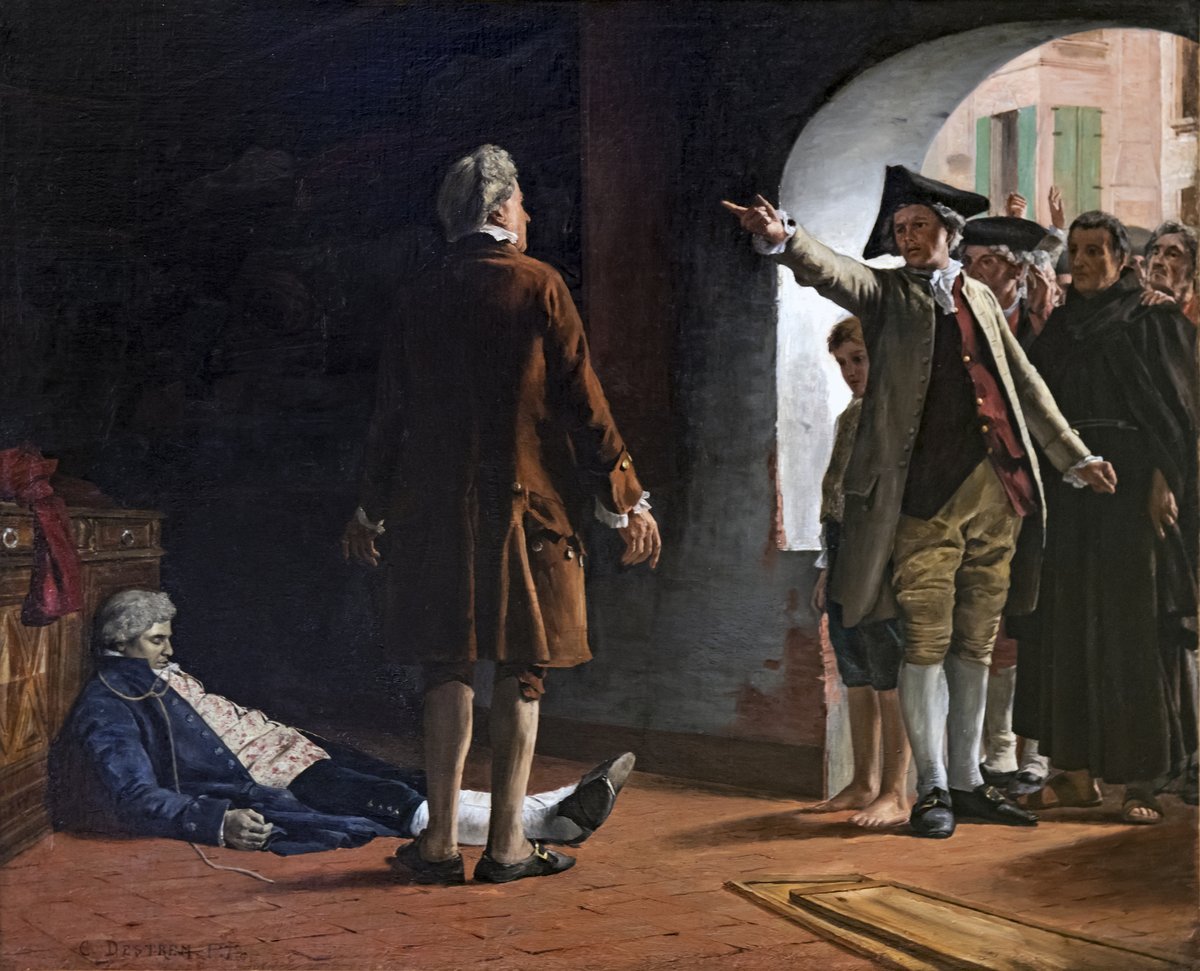
Jean Calas was a Protestant textile merchant living in a predominantly Catholic Toulouse during a period marked by religious tensions. In October 1761, his son Marc-Antoine was found dead. Fearing the stigma of suicide, the family’s attempt to conceal the nature of Marc-Antoine’s death fueled suspicions. Amid local anti-Protestant sentiment, Jean Calas was arrested and, despite a lack of direct evidence, convicted and executed by breaking on the wheel in March 1762 (Executed Today; Justice.gouv.fr).
Voltaire’s Advocacy and the Fight for Tolerance
Outraged by the injustice, Enlightenment thinker Voltaire led a campaign to clear Calas’s name. His publication of the Treatise on Tolerance (1763) made the Calas Affair a rallying point for religious freedom and legal reform. After a royal review, Calas was posthumously exonerated in 1765, and his family received compensation (Wikipedia: Jean Calas; History Today: Voltaire and the Calas Case). The episode is now recognized as a turning point in the French Enlightenment and the movement toward human rights.
Maison Calas Today: Symbolism and Preservation Efforts
Symbolic Importance
Maison Calas is a living monument to religious tolerance and the dangers of fanaticism. Associations such as “Jean Calas, l’Européen vous regarde” advocate for its restoration and conversion into a memorial dedicated to secularism, freedom of thought, and Enlightenment values (La Dépêche).
Preservation Status and Recent Developments
Despite its recognized importance, Maison Calas remains underutilized as a public heritage site. The building features commemorative plaques but is not regularly open for public visits, apart from special events like European Heritage Days (L’Opinion; France 3 Occitanie). Preservationists continue to advocate for its transformation into a dedicated museum or cultural center.
Recent incidents, such as a fire in January 2023, have highlighted the vulnerability of the site, prompting renewed calls for enhanced protection and restoration.
Visitor Information: Hours, Tickets & Accessibility
- Visiting Hours: The exterior and commemorative plaques are viewable at all times from the street. The interior is generally closed, but access may be granted during special cultural events or guided tours.
- Tickets: Viewing the exterior is free. Guided tours, if available during special events or by arrangement, may require advance booking and a fee (usually €10–€20).
- Guided Tours: Offered during European Heritage Days and by local heritage associations. Check the Toulouse Tourist Office for schedules.
- Accessibility: The exterior is accessible and located on flat, paved streets. Interior accessibility is limited due to the building’s historic structure.
- Location: 16/50 rue des Filatiers, 31000 Toulouse. Nearest metro: Esquirol (Line A). Public car parks: Esquirol and Carmes.
Exploring Nearby Toulouse Historical Sites
Maison Calas is centrally located in the Carmes district, making it an ideal starting point for a historical walking tour of Toulouse. Nearby attractions include:
- Place du Capitole: The city’s iconic central square.
- Basilica of Saint-Sernin: A UNESCO World Heritage Romanesque church.
- Jacobins Convent: Renowned for its Gothic architecture.
- Hotel d’Assézat: Home to the Bemberg Foundation art collection.
- Place des Carmes Market: A vibrant local market offering Toulouse specialties (Kirstie Will Travel).
Frequently Asked Questions (FAQ)
Q: What are the Maison Calas visiting hours?
A: The exterior is accessible at all times. The interior opens only during special events or by arrangement.
Q: Is there an admission fee?
A: Viewing the exterior is free. Guided tours may require tickets during special events.
Q: Are guided tours available?
A: Yes, during European Heritage Days or by arrangement with local heritage groups. Check with the Toulouse Tourist Office.
Q: Is Maison Calas accessible for visitors with limited mobility?
A: The exterior is accessible on mostly flat, paved streets. The interior is not generally open and may have accessibility constraints.
Q: What is the best time to visit?
A: Spring and autumn offer pleasant weather. Special events, such as European Heritage Days in September, provide unique access.
Listen to the full story in the app
The whole Maison Calas,
told well.
Audio guides for 1,100+ cities across 96 countries. History, stories, and local insight — offline ready.
Verified, and shown.
Researched and written by the Audiala editorial team from historical records, architectural archives, and local expertise.
Researched from Wikidata, Wikipedia & official sources · fact-checked · How we make our guides →