Plan and listen to Gallo-Roman Ramparts Of Toulouse with Audiala.
Audio guide in your pocket, itinerary in your browser. Built for the way you actually visit.
Introduction
In the heart of southwestern France, the Gallo-Roman ramparts of Toulouse stand as a testament to the city’s ancient origins and its significance during the Roman era. Built between the late 3rd and early 4th centuries CE, these defensive walls mark Toulouse’s transformation from the Roman settlement of Tolosa into a fortified city. Today, visitors can explore surviving sections showcasing Roman construction techniques like opus mixtum and opus testaceum, which combined brick and stone for both resilience and beauty (Musée du Patrimoine; Wikimedia Commons; Wikipedia).
These ramparts not only provided military defense but also symbolized Roman authority, enclosing around 90 hectares and shaping Toulouse’s urban plan—a legacy that endures in the modern city’s streets. Over centuries, the walls were adapted into medieval fortifications, leaving a rich tapestry of architectural layers. Today, accessible public sections, museum exhibits, and guided tours invite visitors to engage with Toulouse’s ancient past and appreciate the ongoing preservation efforts (Toulouse Tourism; Monumentum).
This guide provides detailed information on the history, features, visiting hours, ticketing, accessibility, and tips to help you make the most of your journey into Toulouse’s Roman legacy.
Origins and Historical Context
Toulouse, originally Tolosa, became a Roman city in the 1st century BCE after the Volcae Tectosages, a Celtic tribe, were conquered. As Roman rule waned in the late 3rd century CE, instability prompted cities across Gaul to fortify themselves. The ramparts in Toulouse were built using opus mixtum—alternating layers of brick and stone—reflecting both military function and imperial prestige (Musée du Patrimoine).
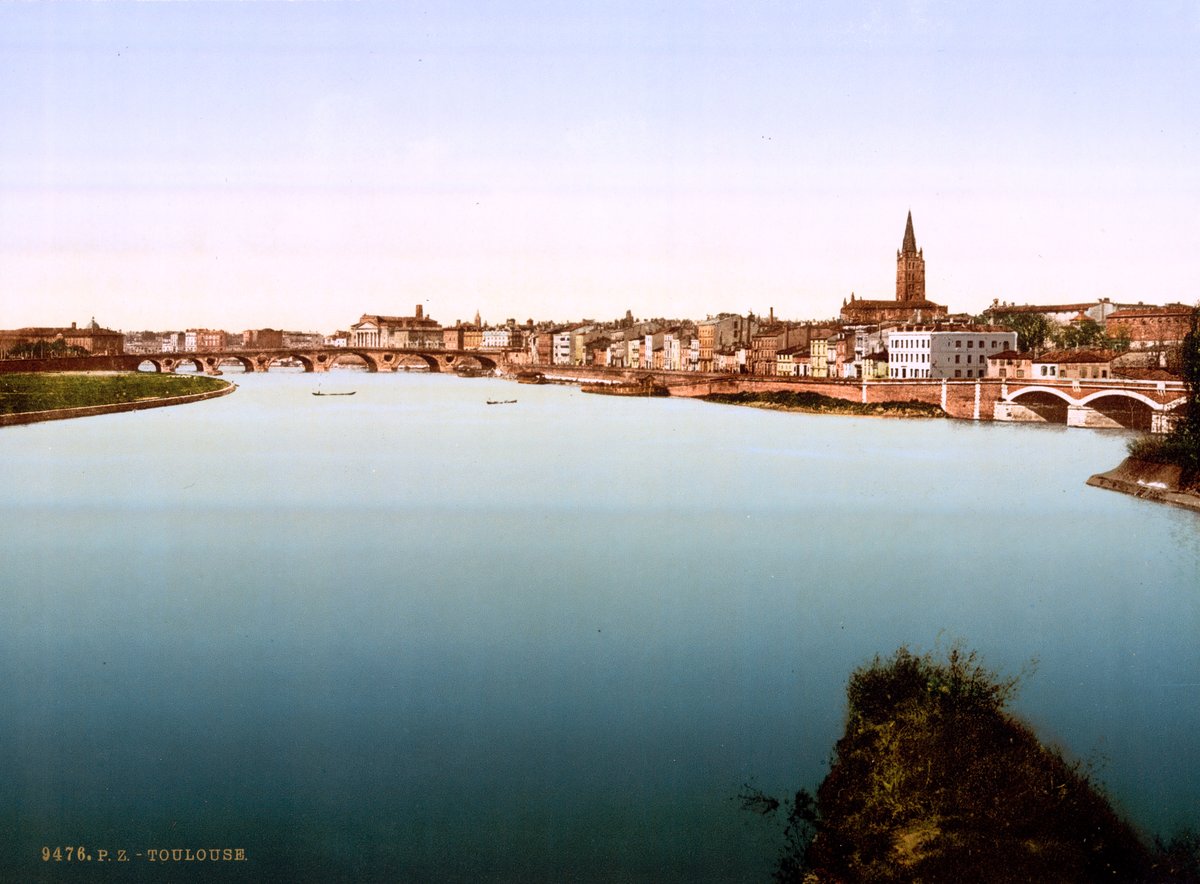
The walls enclosed the administrative and economic hub on the Garonne River, vital for trade between the Mediterranean and the Atlantic. Monumental gates controlled city access, and the ramparts became both a practical defense and a symbol of civic identity (Wikipedia).
Architectural Features and Techniques
Construction Details
- Materials: Local limestone, brick, and mortar; some spolia (reused stones from earlier structures) were incorporated.
- Dimensions: Walls up to 4 meters thick and 8 meters high; towers spaced every 30–40 meters for surveillance and defense (Wikimedia Commons).
- Techniques: Opus mixtum and opus testaceum create robust, visually striking surfaces; foundations sometimes include pebbles from the Garonne River.
Surviving Elements
- Curtain Wall and Saint-Jacques Tower: At rue Bida and place Saint-Jacques, a 32-meter stretch of wall with a partially preserved tower.
- Institut Catholique de Toulouse: Houses a 70-meter rampart segment and remnants of a defensive ditch, viewable during heritage events (Monumentum).
- Rue de la Fonderie and Rue du Taur: Display visible wall fragments and characteristic Roman masonry.
Urban Integration
The ramparts’ outline still shapes street patterns in the historic center. Many sections are embedded within later buildings, highlighting centuries of adaptation.
Evolution and Preservation
After the fall of Rome, Toulouse’s ramparts were repaired and expanded by the Visigoths and Franks, then incorporated into medieval defenses. Archaeological discoveries have revealed construction details and the reuse of Roman materials during later modifications.
The French government designated the ramparts as a Monument Historique in 1990, with protections extended in 2022 to safeguard underlying land and subsoil (Monumentum). Ongoing conservation efforts focus on stabilizing masonry, combating weathering, and ensuring safe public access.
Visiting Information
Hours and Access
- Outdoor Remains: Freely accessible year-round, 24/7, at public sites such as rue Bida, place Saint-Jacques, and rue de la Fonderie.
- Institut Catholique Section: Restricted access except during special events (e.g., European Heritage Days) or by arrangement.
Tickets
- Public Sites: Free of charge, no tickets required.
- Guided Tours: Offered by the Toulouse Tourist Office and local agencies; booking required, with prices typically ranging from €8–€15 (Toulouse Tourist Office).
Accessibility
- Street-Level Sites: Main public sections are wheelchair accessible.
- Private/Institutional Grounds: May have limited access; check in advance with the tourism office.
Facilities
- Restrooms, Food, Shops: Available at major squares nearby, including the Capitole and Saint-Sernin Basilica.
Visitor Experience and Tips
- Best Time to Visit: Spring and autumn offer pleasant weather; early morning or late afternoon light is ideal for photography.
- Guided Tours: Enhance your understanding of Roman Toulouse, often combined with visits to nearby sites like the Musée Saint-Raymond.
- Interpretive Panels: Bilingual signage at key points; English-speaking tours available with advance booking (Toulouse Tourism).
- Safety: Respect signage and barriers; do not climb or damage the masonry.
- Travel: The site is easily reached on foot or via metro lines A (Capitole) and B (Jeanne d’Arc).
Nearby Attractions
- Basilica of Saint-Sernin: One of Europe’s largest Romanesque churches.
- Capitole de Toulouse: City hall and historic theater.
- Musée Saint-Raymond: Major archaeology museum with Roman artifacts.
- Amphitheatre and Baths (Purpan Quarter): Remains of Roman public buildings.
- Rue Saint-Rome and Rue des Filatiers: Streets that follow ancient Roman axes.
Frequently Asked Questions (FAQs)
Q: What are the visiting hours for the Gallo-Roman ramparts?
A: Public sections are open 24/7; institutional sections have limited hours.
Q: Do I need a ticket to see the ramparts?
A: No tickets for outdoor sites; guided tours may require fees.
Q: Are the sites accessible for those with limited mobility?
A: Yes, most street-level remains are accessible; some private sites may not be.
Q: Are guided tours available in English?
A: Yes, book through the Toulouse Tourist Office.
Q: Can I take photos?
A: Photography is welcome; best light is during early morning or late afternoon.
Summary and Recommendations
The Gallo-Roman ramparts of Toulouse are a vivid reminder of the city’s Roman roots and its evolution through centuries of change. With freely accessible remains, informative panels, and enriching guided tours, visitors can explore these ancient defenses alongside Toulouse’s other historical landmarks. Preservation efforts ensure these unique structures will educate and inspire for generations.
To make the most of your visit:
- Explore public sections at rue Bida, place Saint-Jacques, and rue de la Fonderie.
- Join a guided tour for deeper insight.
- Combine your walk with a visit to the Musée Saint-Raymond or Basilica of Saint-Sernin.
- Download the Audiala app for interactive maps and audio guides.
- Check Toulouse Tourism for updates and event information.
Embrace Toulouse’s Roman legacy and immerse yourself in the city’s enduring heritage.
Listen to the full story in the app
The whole Gallo-Roman Ramparts Of Toulouse,
told well.
Audio guides for 1,100+ cities across 96 countries. History, stories, and local insight — offline ready.

Verified, and shown.
Researched and written by the Audiala editorial team from historical records, architectural archives, and local expertise.
Researched from Wikidata, Wikipedia & official sources · fact-checked · How we make our guides →