Introduction
Place de la République stands at the crossroads of Strasbourg’s complex Franco-German heritage, serving as both a monumental city square and a vibrant symbol of the region’s layered past. Conceived in the wake of the Franco-Prussian War as Kaiserplatz, its grand architecture, central gardens, and poignant memorials mark Strasbourg’s transformation from imperial showcase to French republican space. Today, it anchors the Neustadt district, a UNESCO World Heritage site, offering visitors an immersive journey through history, culture, and urban elegance (int.strasbourg.eu; Wikipedia).
This detailed guide explores the square’s origins, architectural highlights, visiting hours, ticketing information, accessibility, and travel tips. You’ll also find guidance on guided tours, photography, nearby attractions, and answers to frequently asked questions—everything you need for a rewarding visit to one of Strasbourg’s most significant historical sites (frenchmoments.eu; strasbourg-pratique.com).
Photo Gallery
Explore Place De La République in Pictures

Historic building visit during the Heritage Day event held in Strasbourg on September 16, 2007, featuring cultural heritage activities and visitors

Historic photograph of Marshal Foch accompanied by Generals Weygand and Gouraud reviewing troops at Place de la République in Paris on November 21, 1920.

Historical exterior and interior photographs of the National and University Library in Strasbourg showcasing the building and ongoing renovations during the 1930s.

Historical photo of the Fourth French Army entry into Strasbourg on November 22, 1918, led by General Gouraud, symbolizing the liberation of the city after World War I.

Snow blanket covers Strasbourg in January 2007, showcasing the city's historic architecture and serene winter landscape.

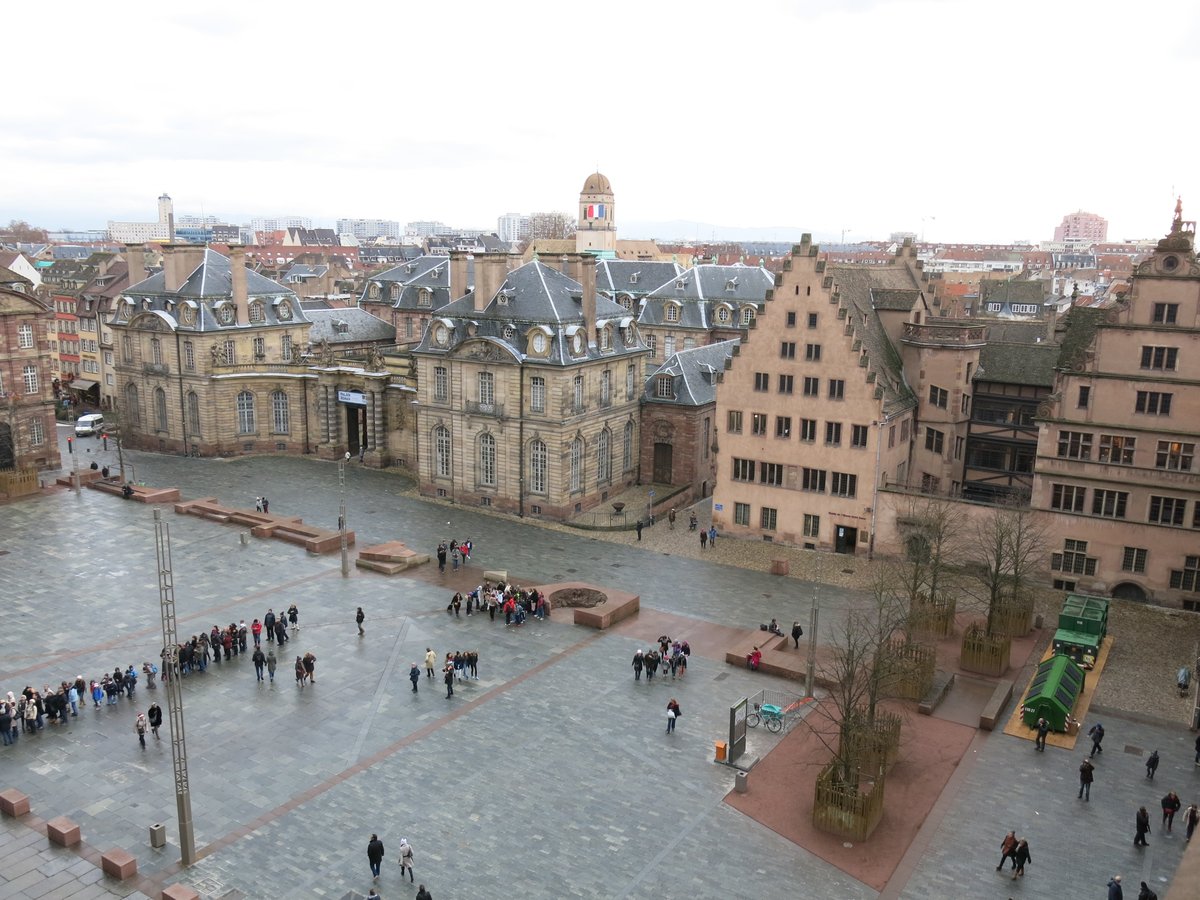
The former parliament building of Alsace-Lorraine, designed by architects Skjold Neckelmann and August Hartel, now serves as the Theatre National de Strasbourg (TNS). It features neo-Renaissance architecture with statues symbolizing Alsace and Lorraine, and is located next to the Renaissance-inspire

Close-up shot of 'La curiosité du printemps,' showcasing a vibrant orange and yellow flower blooming in spring with delicate petals.

Historic view of the Imperial Palace in Strasbourg featuring the monument to Emperor Wilhelm I, showcasing German imperial architecture and heritage.

Historic pillars of an old door on Avenue de Marseille in Strasbourg, complemented by tram rails creating a picturesque urban scene.

View of Place de la République in Strasbourg's Imperial Quarter showcasing the unique mixed war memorial at its center and the historic Palais du Rhin building in the background.

Vintage postcard showing Place de la République and Avenue de la Liberté in Strasbourg circa 1910, capturing historical city view

The image shows people enjoying sunny weather at Place de la République, highlighted by vibrant flower decorations enhancing the lively atmosphere.
History and Urban Planning
The Place de la République emerged after the Franco-Prussian War (1870–1871), when Strasbourg and Alsace-Lorraine were annexed by the German Empire. The German administration aimed to showcase its power by transforming Strasbourg into a modern imperial capital, launching the ambitious Neustadt (New Town) project. The square—then named Kaiserplatz—was envisioned as the district’s monumental centerpiece.
Urban planners such as Jean-Geoffroy Conrath, August Orth, and Hermann Eggert designed the area with wide, tree-lined avenues in an orthogonal and radial pattern, distinct from the medieval Grande-Île. By 1915, Strasbourg’s population had more than doubled, reflecting the city’s dynamic growth (int.strasbourg.eu).
Architectural and Political Significance
The Monumental Ensemble
Place de la République is defined by its harmonious arrangement of monumental buildings in neo-Renaissance, neo-Baroque, and Art Nouveau styles. This ensemble was not only a feat of urban design but also a political statement, underlining German imperial authority and modernity (frenchmoments.eu; immoval.com).
Key Buildings:
- Palais du Rhin: Formerly the Kaiserpalast, built between 1883 and 1888 by Hermann Eggert, it stands as a striking example of German Neo-Renaissance design. Today, it houses the Central Commission for Navigation on the Rhine (Wikipedia).
- National and University Library (BNU): Completed in 1895, its Italian Renaissance-inspired façade and grand staircase symbolize intellectual ambition.
- Théâtre National de Strasbourg (TNS): Occupying the former regional parliament, this building blends Neo-Renaissance and classical elements and is now a major center for the performing arts.
- Préfecture du Bas-Rhin and Hôtel des impôts: Administrative buildings in Baroque and Classical revival styles add to the square’s monumental character.
Symbolism and Evolution
The square’s architecture projected the permanence of German rule. However, after World War I and the return of Strasbourg to France, the square was renamed Place de la République and gained new symbols, such as the Monument aux Morts, a memorial to Alsace’s war dead. The evolving use of these buildings reflects Strasbourg’s shifting allegiances and enduring identity (strasbourg-pratique.com).
Key Historical Events and Shifting Sovereignties
Place de la République has witnessed turbulent times and political transformations:
- 1871–1918 (German Annexation): The square was the hub of administrative and military power. Its buildings served both ceremonial and practical roles, including as hospitals during World War I (archives.strasbourg.eu).
- 1918 (Return to France): After World War I, the square was renamed and became a symbol of restored French sovereignty. Public celebrations and political events marked the transition.
- 1936: The installation of the war memorial by Léon-Ernest Drivier poignantly captured Alsace’s dual loyalties and the region’s tragic history.
The Square’s Role in Strasbourg’s Urban Identity
Today, Place de la République is both a tranquil green space and a lively urban hub. Residents and visitors enjoy its central garden, mature trees—including historic ginkgo biloba specimens—benches, and shaded paths. The square is a favored spot for relaxation, civic gatherings, commemorations, and cultural events (frenchmoments.eu; strasbourg-pratique.com).
The surrounding buildings continue to serve vital civic and cultural functions, housing the national theater, library, and regional administration. The war memorial at the center reminds visitors of the region’s turbulent past and the resilience of its people.
Visiting Hours, Tickets, and Accessibility
- Square and Gardens: Open to the public 24/7 year-round, free of charge.
- Palais du Rhin: Occasionally open to the public during events like European Heritage Days; check official sources for details.
- Théâtre National de Strasbourg (TNS): Tickets required for performances; purchase via the TNS website.
- National and University Library: Open on weekdays; access to exhibitions or reading rooms may require registration.
- Accessibility: The square is fully wheelchair-accessible, with paved paths, curb cuts, and accessible tram stops.
- Public Transport: Served by tram lines B, C, E, and F ("République" stop) and several bus lines. Walking and cycling are convenient, with city bike rentals available (Megan Starr).
Must-See Sights and Nearby Attractions
- Grande-Île: Strasbourg’s medieval core and UNESCO World Heritage site, home to the famous cathedral and picturesque Petite France.
- Parc de l’Orangerie: A favorite for families and picnics, located northeast of the square.
- European Quarter: Visit the European Parliament and Council of Europe for insight into Strasbourg’s modern political role.
- Local Dining: Sample Alsatian cuisine at winstubs and cafés along Avenue de la Liberté or in the university quarter.
UNESCO World Heritage and Contemporary Importance
The 2017 expansion of Strasbourg’s UNESCO World Heritage listing recognized Neustadt and Place de la République as outstanding examples of late 19th-century urban planning that blend French and German architectural traditions (int.strasbourg.eu). The square’s eclectic ensemble, civic role, and historical resonance make it a living record of Strasbourg’s evolution over centuries.
Frequently Asked Questions (FAQ)
Q: What are the opening hours of Place de la République?
A: The square and gardens are open 24/7. Buildings like Palais du Rhin and TNS have separate hours; check their websites.
Q: Is there an entrance fee?
A: No, the square is free to access. Some events or performances in surrounding buildings may require tickets.
Q: Are guided tours available?
A: Yes, guided tours focusing on Neustadt and Place de la République can be booked through tourism offices or private operators (Travel France Bucket List; gpsmycity.com).
Q: Is the square wheelchair accessible?
A: Yes, the area is fully accessible.
Q: How do I get there by public transport?
A: Take tram lines B, C, E, or F to the "République" stop. Buses and city bike rentals are also available.
Photography Tips
- Best Light: Early morning and late afternoon provide the most flattering natural light for architecture and gardens.
- Seasonal Highlights: Visit in spring for magnolias or in autumn for golden ginkgo foliage (strafari.com).
- Key Views: Capture the façades of the Palais du Rhin, TNS, and the central war memorial from different angles for dramatic, postcard-worthy shots.
Listen to the full story in the app
Your Personal Curator, in Your Pocket.
Audio guides for 1,100+ cities across 96 countries. History, stories, and local insight — offline ready.
Audiala App
Available on iOS & Android
Join 50k+ Curators
Sources
- verified
- verified
- verified
- verified
- verified
- verified
- verified
- verified
- verified
- verified
Last reviewed: