Introduction
The Passerelle des Deux Rives, or the Bridge of Two Banks, is an extraordinary pedestrian and cyclist bridge that serves as a powerful symbol of European unity and reconciliation. This iconic structure spans the Rhine River, connecting Strasbourg in France with Kehl in Germany. Inaugurated in 2004 as part of the 'Jardin des Deux Rives' project, the bridge epitomizes the collaborative spirit and mutual respect that have come to characterize Franco-German relations post-World War II.
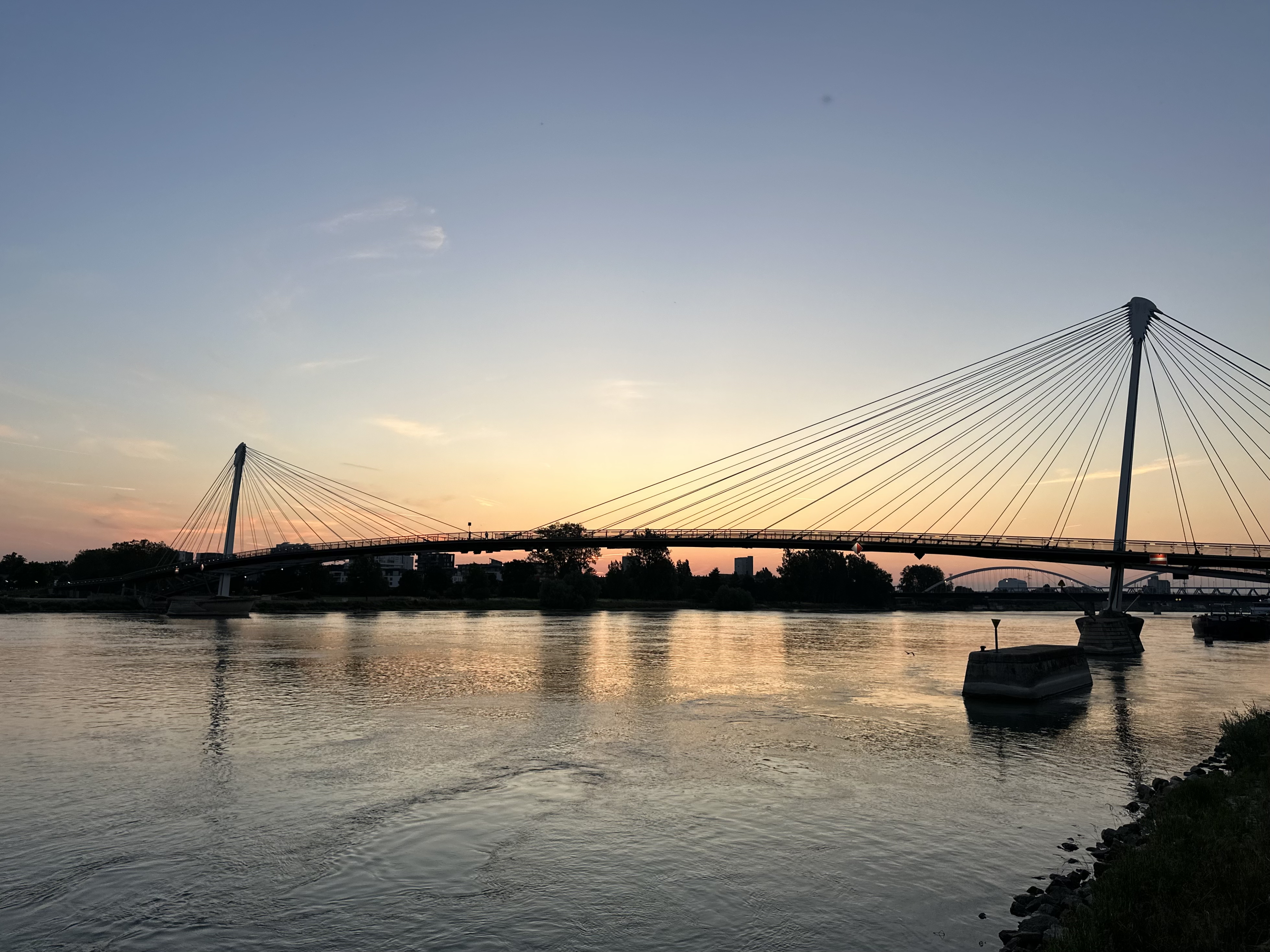
Designed by renowned Austrian architect Dietmar Feichtinger, the bridge stretches 387 meters and features a unique double-deck structure, with one deck for pedestrians and another for cyclists (source). This architectural marvel not only emphasizes transparency and lightness but also serves as a practical and aesthetically pleasing route for eco-friendly transportation.
The surrounding Jardin des Deux Rives park further enhances the visitor experience, offering a binational space that hosts numerous cultural events, festivals, and exhibitions aimed at fostering a sense of community among residents of both cities (source). The park's focus on sustainability and biodiversity, along with the bridge's eco-friendly design, underscores the commitment to environmental stewardship in this collaborative project.
This comprehensive guide explores the historical, architectural, and cultural significance of the Passerelle des Deux Rives. It also provides practical information for visitors, including ticket prices, opening hours, travel tips, and nearby attractions, ensuring an enriching experience for anyone planning a visit to this remarkable landmark.
History of Passerelle des Deux Rives
Origins and Conception
The Passerelle des Deux Rives was conceived as part of the larger 'Jardin des Deux Rives' project, marking a significant milestone in post-World War II Europe. This project symbolizes the reconciliation and strengthening of Franco-German relations, showcasing a new era of unity and cooperation.
Historical Context
Inaugurated in 2004, the bridge serves as a physical and metaphorical link between Strasbourg and Kehl, two cities that have experienced the complexities of European history (source). The project represents not only a commitment to peace but also a shared vision for a collaborative future.
Architectural Significance
Designed by Austrian architect Dietmar Feichtinger, the bridge is 387 meters long and features a unique double-deck structure, with one deck for pedestrians and another for cyclists. The design emphasizes transparency and lightness, with slender steel cables and a minimalistic aesthetic. Constructed using approximately 1,500 tons of steel and 2,000 cubic meters of concrete, the bridge is an architectural marvel (source).
Symbol of European Unity
The Passerelle des Deux Rives stands as a powerful symbol of European unity and cooperation. It physically and metaphorically bridges the gap between two nations that were once adversaries. The bridge is part of the larger Jardin des Deux Rives, a binational park hosting numerous cultural events, festivals, and exhibitions that foster a sense of community among the residents of Strasbourg and Kehl (source).
Cultural and Social Impact
The bridge and surrounding park have become focal points for cultural exchange and social interaction. The Jardin des Deux Rives hosts the annual 'Festival des Deux Rives,' featuring music, dance, and art from both French and German cultures, attracting thousands of visitors each year. This promotes cross-cultural understanding and collaboration. The park also offers recreational activities, including walking trails, picnic areas, and playgrounds, making it a popular destination for families and tourists (source).
Economic Significance
The Passerelle des Deux Rives has positively impacted the regional economy by facilitating easy access between Strasbourg and Kehl. This has boosted local businesses and tourism, leading to the growth of cafes, restaurants, and shops on both sides of the Rhine. The bridge enhances the area's appeal as a tourist destination, attracting visitors worldwide to experience the unique blend of French and German cultures (source).
Environmental Considerations
The construction and maintenance of the Passerelle des Deux Rives have been carried out with a strong emphasis on environmental sustainability. The bridge's design minimizes its ecological footprint by using durable materials and energy-efficient lighting. The surrounding Jardin des Deux Rives park features native plant species and sustainable landscaping practices, promoting biodiversity and ecological balance. Additionally, the bridge encourages eco-friendly transportation by providing a safe and scenic route for pedestrians and cyclists, reducing the reliance on motor vehicles (source).
Visitor Information
- Visiting Hours: The bridge and park are open year-round, 24/7.
- Tickets: No tickets are required to visit the bridge.
- Best Time to Visit: Spring and summer months are ideal for visiting when the weather is pleasant, and the park is in full bloom.
- Accessibility: The bridge is fully accessible to pedestrians, cyclists, and individuals with disabilities, with ramps and smooth pathways to accommodate wheelchairs and strollers.
- Guided Tours: Available in multiple languages, including French, German, and English, offering insights into the history and significance of the bridge and the Jardin des Deux Rives.
- Events and Festivals: Check the local event calendar for festivals and cultural events, with the 'Festival des Deux Rives' being a highlight.
- Nearby Attractions: Explore the Strasbourg Cathedral, Petite France district, and the Black Forest in Germany for a more enriching experience.
- How to Get There: Easily accessible via public transportation from major landmarks in Strasbourg and Kehl.
- Safety: Stay on designated paths and avoid visiting late at night. Always keep an eye on personal belongings.
- Photography: The bridge offers stunning views of the Rhine River and surrounding landscapes. Ideal for photography, especially during sunrise or sunset (source).
FAQ
1. Are there any tickets required to visit the Passerelle des Deux Rives? No, visiting the bridge is free.
2. What are the visiting hours for the Passerelle des Deux Rives? The bridge and park are open year-round, 24/7.
3. How can I get to the Passerelle des Deux Rives from Strasbourg? The bridge is easily accessible via public transportation from major landmarks in Strasbourg.
4. Is the Passerelle des Deux Rives accessible for individuals with disabilities? Yes, the bridge is fully accessible with ramps and smooth pathways.
Listen to the full story in the app
Your Personal Curator, in Your Pocket.
Audio guides for 1,100+ cities across 96 countries. History, stories, and local insight — offline ready.
Audiala App
Available on iOS & Android
Join 50k+ Curators
Sources
-
verified
Feichtinger, D
Passerelle des Deux Rives
-
verified
Strasbourg
Jardin des Deux Rives
-
verified
Kehl
(2023, July 23). Press Release
-
verified
Eco Construction
Passerelle des Deux Rives
Last reviewed:


