Introduction
Nestled in Strasbourg’s Neustadt district, the Palais du Rhin stands as a monumental symbol of the city’s Franco-German heritage and 19th-century architectural ambition. Originally built as the Kaiserpalast under the German Empire after the Franco-Prussian War, it showcases neo-Renaissance grandeur inspired by Italian Renaissance palaces. Today, the Palais du Rhin is a protected Monument Historique and continues to play a vital role in Strasbourg’s cultural and administrative life. This guide provides a comprehensive overview—including history, architecture, visiting hours, ticketing, accessibility, and tips—to help you make the most of your visit. For up-to-date details, see the official Strasbourg tourism website and related resources (Spotting History; Strasbourg.eu; Archi-Wiki).
Photo Gallery
Explore Palais Du Rhin in Pictures
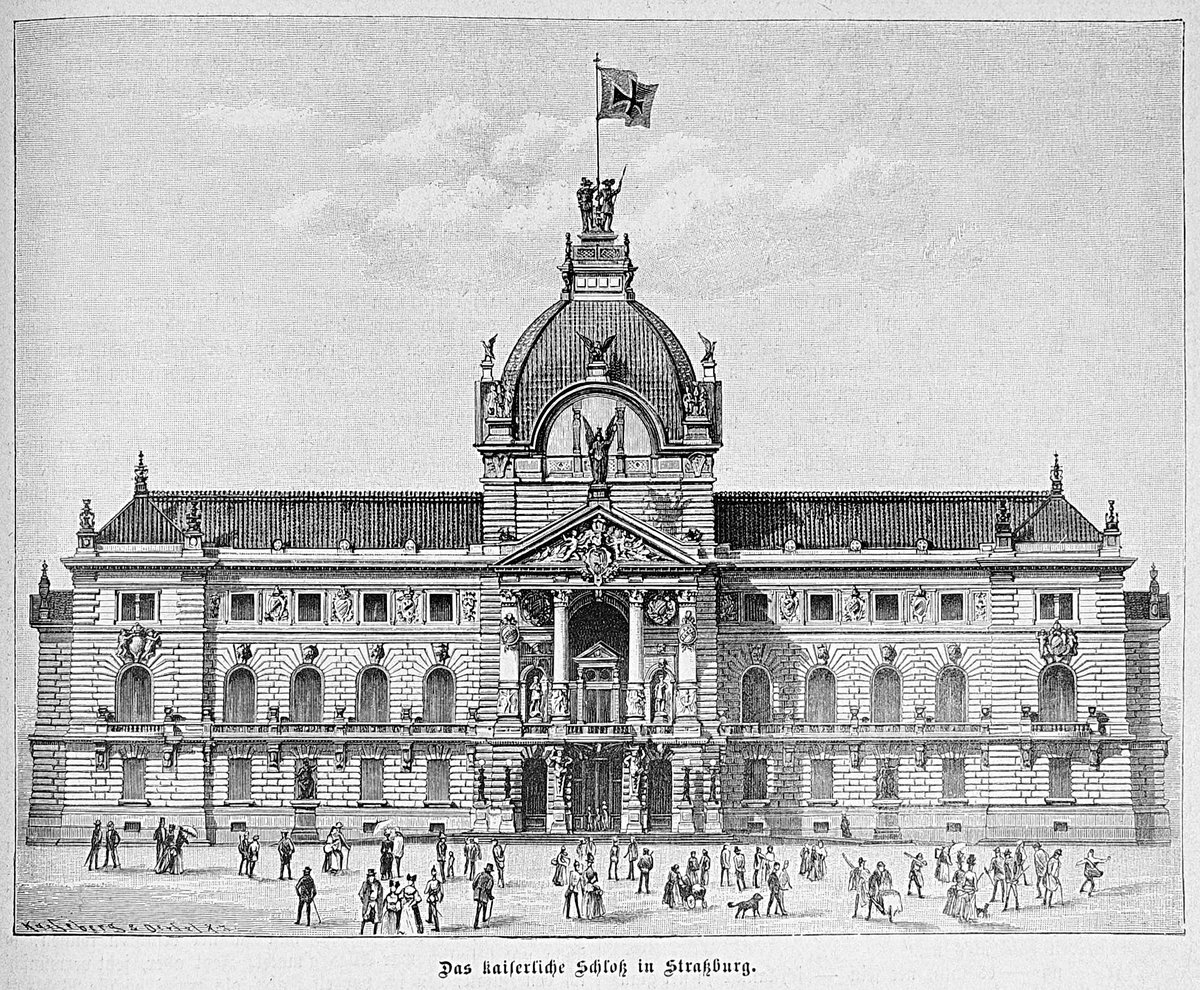
Detailed illustrated page from the 1887 issue of the German magazine Die Gartenlaube, showcasing period artwork and design.
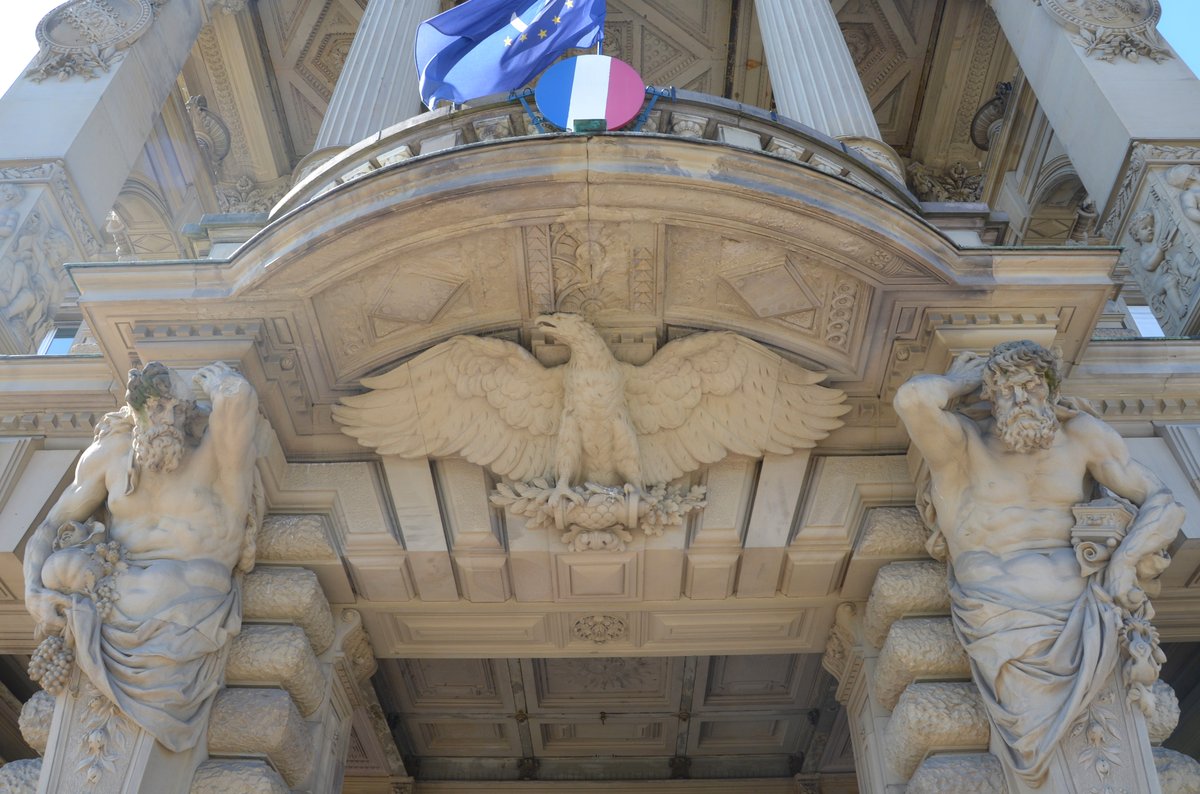
Detailed architectural view of the impressive facade of the Palais du Rhin located in the imperial district of Strasbourg
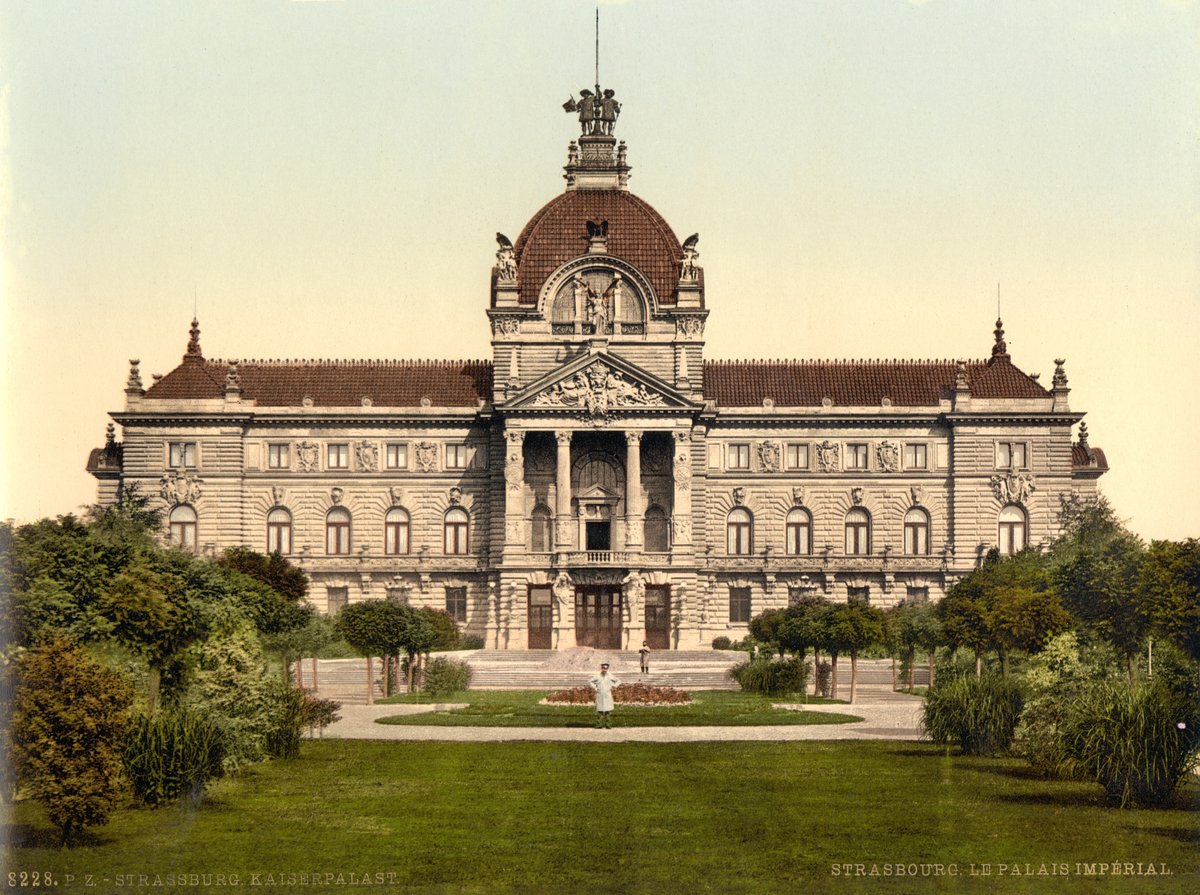
A historic view of the Imperial Palace in Strasbourg as it appeared in the year 1900, showcasing its architectural style and significance.
Origins and Historical Context
The Palais du Rhin, originally the Kaiserpalast, was constructed between 1884 and 1889 following the annexation of Alsace-Lorraine by the German Empire after the Franco-Prussian War. The German authorities envisioned the Neustadt as a showcase of imperial power, with the palace as its focal point on Place de la République (visitstrasbourg.fr). Designed by Prussian architect Hermann Eggert and commissioned by Emperor Wilhelm I, the palace embodied the new German identity imposed on Strasbourg and reflected the ambitions of the newly expanded city (int.strasbourg.eu).
Architectural Significance
An exemplar of German neo-Renaissance style, the Palais du Rhin features a massive central dome, rusticated stone façades, and elaborate sculptural programs reminiscent of Florence’s Palazzo Pitti (int.strasbourg.eu). The building’s symmetrical quadrilateral form, monumental portico, and decorative details—such as the Reich’s coat of arms and imperial monograms—were deliberate statements of authority. Notable sculptors, including Bergmeier, Klein-Riegger, and Ottman, contributed to the ornate façades (Monumentum).
Although designed as an imperial residence, the palace was seldom occupied by the German emperors, serving more as a symbol of power than a home (ccr-zkr.org).
Role in Local and European History
After World War I and the return of Alsace to France, the palace was renamed Palais du Rhin and began a new chapter as an administrative hub. It houses the Central Commission for Navigation on the Rhine (CCNR), the oldest European international organization, underscoring Strasbourg’s ongoing role as a crossroads of European cooperation (ccr-zkr.org). Having survived the tumult of two world wars, the palace today stands as a testament to reconciliation and shared heritage (trek.zone).
Visiting Hours and Tickets
- Exterior and Gardens: Open daily, year-round, from dawn to dusk. Free access.
- Interior Access: Restricted to special events, notably the European Heritage Days (September) and occasional official openings. Guided tours during these events may require advance registration.
- Tickets: No fee for gardens or exterior. Interior access during events may require free or paid tickets; check the Strasbourg tourism website or the Palais du Rhin’s page for current details.
Accessibility
- Gardens/Exterior: Fully accessible to visitors with reduced mobility.
- Interior: Accessibility may be limited due to the historic structure. For specific needs, contact the event organizer or Strasbourg tourist office in advance.
Public transit is recommended—tram lines B, C, E, F stop at République. The area is pedestrian-friendly, with limited parking nearby.
Visitor Experience and Tips
What to See
- Exterior: Admire the palace’s imposing dome, symmetrical wings, and ornate sculptures.
- Gardens: Enjoy landscaped lawns, mature trees, and a tranquil setting perfect for photos and relaxation.
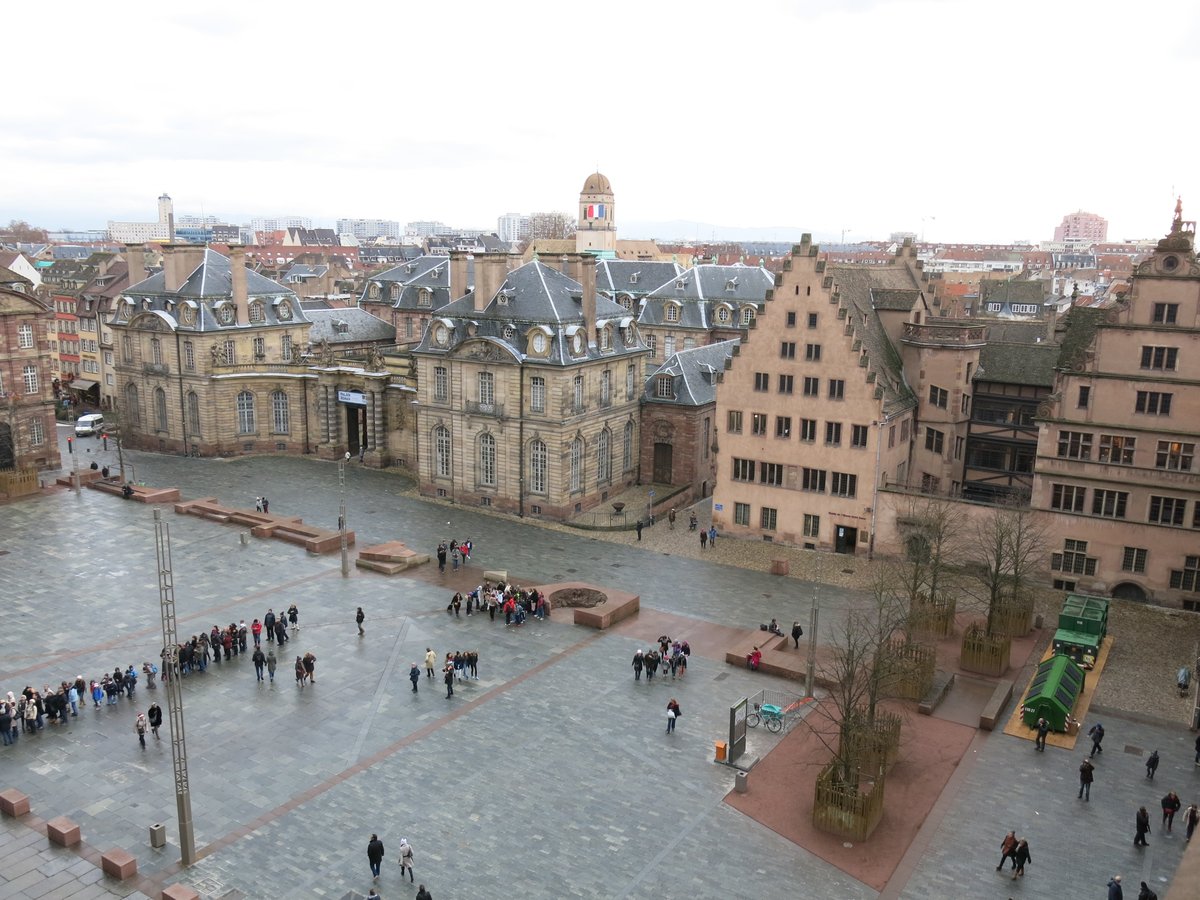
- Place de la République: The palace anchors this grand square, surrounded by other monumental buildings such as the National Library and National Theatre.
Event Tips
- Visit during European Heritage Days for rare interior access.
- Check DRAC Grand Est or Strasbourg tourism for guided tour announcements.
- The gardens are ideal for a picnic or a quiet break during city explorations.
Nearby Attractions
- Strasbourg Cathedral
- National Library
- National Theatre
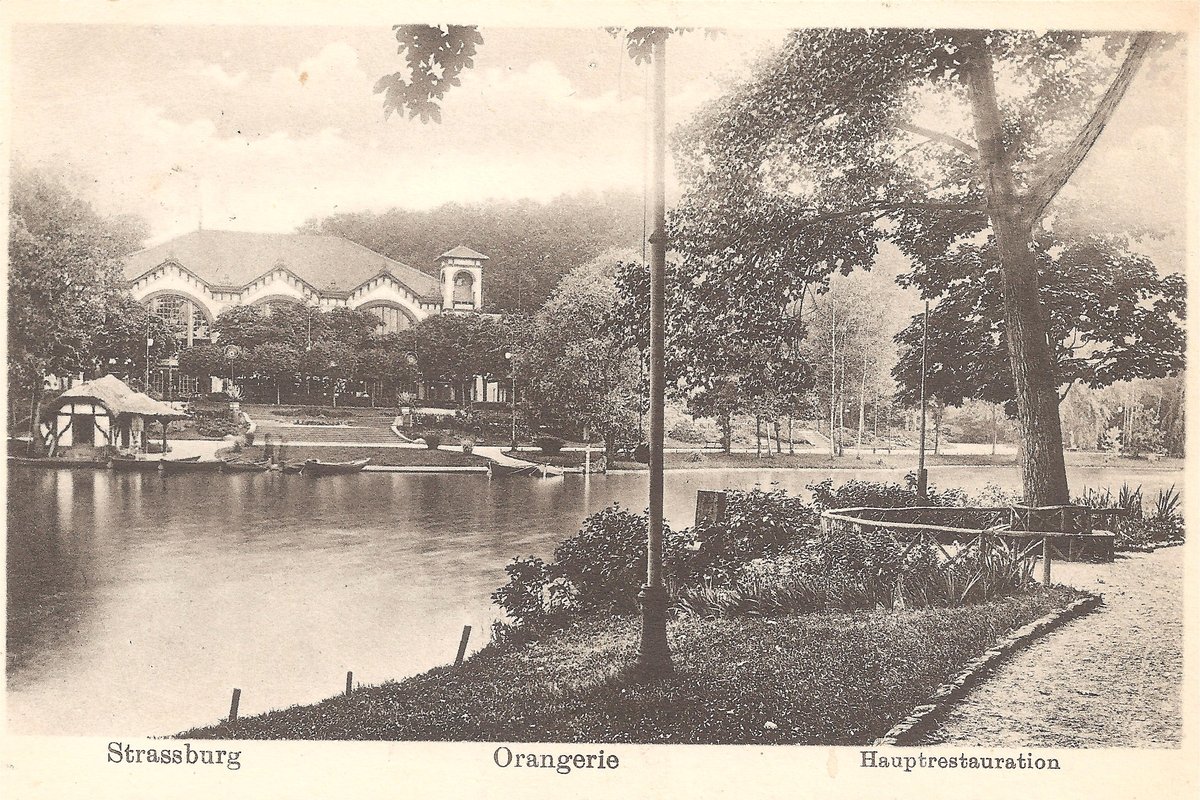
- Parc de l’Orangerie
- Petite France
(shegoesthedistance.com; gpsmycity.com)
Notable Architectural Details
- Central Dome: Copper-clad and visible across the district.
- Grand Staircase: Renaissance-inspired, with vestibules and lavish decoration.
- Façade Sculptures: Including allegorical figures, imperial eagles, and city coats of arms.
- Rusticated Masonry: Echoes Florentine Renaissance style and imparts a sense of solidity.
- Ceremonial Halls: Opulent interiors, accessible during special events (Monumentum).
Restoration and Preservation
Damaged during World War II, the palace was carefully restored in the 1960s and again in recent decades, preserving original decorative elements and ensuring compliance with its Monument Historique status (Monumentum). Modern interventions focus on maintaining both the structure and its historic gardens.
Current Functions and Adaptive Reuse
The Palais du Rhin serves as the seat of the Central Commission for Navigation on the Rhine and the DRAC Grand Est (regional office of the Ministry of Culture). It occasionally hosts public exhibitions, official ceremonies, and cultural events in the Salle des Fêtes. The palace’s gardens offer a peaceful retreat, and outbuildings are sometimes used for temporary exhibitions (Archi-Wiki).
The Palais du Rhin in the Urban Landscape
The palace defines Place de la République and is an integral part of the Neustadt district—a UNESCO World Heritage site. Its monumental presence and harmonious relationship with neighboring buildings (National Library, Theatre) make it a key element of Strasbourg’s urban heritage (Visit Strasbourg; The Crazy Tourist).
Plan Your Visit
- Address: 2 Place de la République, 67000 Strasbourg, France
- Transport: Tram stop République (Lines B, C, E, F)
- Updates: Strasbourg Tourism
Download the Audiala app for guided tours and event alerts, and follow official channels for current information.
FAQs
Q: What are the Palais du Rhin visiting hours?
A: The gardens and exterior are open year-round, dawn to dusk. Interior is only open during special events.
Q: Is there an admission fee?
A: No fee for gardens and exterior. Interior tours during events may require free or paid tickets.
Q: Are guided tours available?
A: Rarely, during events like European Heritage Days. Check Strasbourg tourism for announcements.
Q: Is the site accessible for wheelchair users?
A: The gardens are accessible. Interior accessibility may be limited.
Q: How do I get tickets for special events?
A: Through the DRAC Grand Est or Strasbourg tourism office; advance booking is advised.
Listen to the full story in the app
Your Personal Curator, in Your Pocket.
Audio guides for 1,100+ cities across 96 countries. History, stories, and local insight — offline ready.
Audiala App
Available on iOS & Android
Join 50k+ Curators
Sources
- verified
- verified
- verified
- verified
- verified
- verified
- verified
- verified
Last reviewed: