Introduction
Located in the dynamic Esplanade district of Strasbourg, the Faculty of Law, Political Science and Management is a distinguished part of the University of Strasbourg—one of Europe’s oldest and most respected academic institutions. With roots stretching back to 1538, the faculty reflects Strasbourg’s unique position at the crossroads of French and Germanic influences, and its proximity to major European institutions further enhances its reputation. This guide provides a detailed overview of the faculty’s historical development, academic standing, visitor information, and practical tips for exploring both the campus and its surrounding attractions (Times Higher Education).
Photo Gallery
Explore Faculty of Law, Political Science and Management of Strasbourg in Pictures

Bus decorated for the university back-to-school event parked in front of the Strasbourg Law Faculty building.

The Faculty of Law, Economics and Management at the University of Strasbourg showcasing its historic building exterior.

The Faculty of Law, Economics and Management building at the University of Strasbourg, showcasing the university's academic infrastructure
Historical Evolution and Significance
Origins and Early Development
Founded as a Lutheran humanist school in the 16th century and later elevated to university status in 1621, the University of Strasbourg integrated legal studies as a central component from its inception. Over the centuries, the faculty’s curriculum was shaped by alternating French and German governance, fostering a distinct tradition in comparative and cross-border legal education (Times Higher Education; University of Aberdeen).
Post-War Reorganization and Academic Expansion
After World War II, Strasbourg became a symbol of European reconciliation. The establishment of the Institute of Political Studies (Sciences Po Strasbourg) in 1945, managed by the faculties of Arts and Law, and the city’s role as host to the Council of Europe and the European Court of Human Rights, further elevated the faculty’s significance (UZH Double Degree; Sciences Po Strasbourg History).
The Esplanade Campus and Modernist Architecture
In the 1960s, the faculty relocated to the Esplanade campus, featuring modernist structures designed by Roger Hummel. These buildings symbolize the city’s transformation from military defense to a center of education and civic openness. The site, now a listed historical monument, is celebrated for its architectural value and integration into the city’s academic landscape (Strasbourg City).
Institutional Changes: The Modern Era
Following the 1968 university reforms, the University of Strasbourg was divided into three entities, with the Faculty of Law becoming part of Robert Schuman University (Strasbourg III). The 2009 merger reunified the universities, and today the faculty maintains its identity within the larger University of Strasbourg, continuing its multidisciplinary and international mission (Times Higher Education).
Academic Excellence and International Engagement
The faculty is recognized as one of France’s premier centers for legal and political studies. It offers a broad range of undergraduate, graduate, and doctoral programs, many with a strong international focus and in multiple languages. Partnerships with leading European universities, such as the University of Zurich, and active participation in Erasmus and other exchange programs underscore its global outlook (Unistra Faculty Overview; UZH Double Degree).
The faculty’s proximity to the European Parliament, Council of Europe, and European Court of Human Rights gives students unparalleled opportunities for research, internships, and policy engagement (Law Studies NG; Standyou). Research activity is robust, with numerous affiliated centers exploring topics in European and international law, human rights, and comparative legal systems.
Campus Setting, Accessibility, and Facilities
Location and Transport
The faculty is centrally located at 1 Place d’Athènes, 67045 Strasbourg Cedex, within the Esplanade campus (droit.unistra.fr). The campus is easily accessible by public transport, notably tram lines C and E at “Observatoire” and “Esplanade” stops. Strasbourg’s extensive cycling infrastructure and Vélhop bike-sharing system further facilitate access (visitstrasbourg.fr; international-welcome.unistra.fr).
Accessibility
All main buildings are equipped with ramps, elevators, and adapted restrooms, ensuring full accessibility for visitors with reduced mobility. Bilingual signage and campus maps are available at entrances and online, and the campus is smoke-free (international-welcome.unistra.fr).
Facilities and Amenities
- Libraries: The specialized law library houses over 300,000 volumes, including rare legal texts. Public access is available for consultation, especially during special exhibitions and events (droit.unistra.fr).
- Dining: The Restaurant Universitaire Esplanade and nearby cafés offer affordable and diverse dining options.
- Other Services: Restrooms, water fountains, vending machines, ATMs, and bookstores are all within walking distance.
Visiting the Faculty: Hours, Tours, and Practical Tips
Visiting Hours
- General Access: Monday to Friday, typically 8:00 AM–6:00 PM. Some areas, such as lecture halls and libraries, may have specific schedules or restricted access during exams and events.
- Guided Tours: Group and individual tours can be arranged, especially during university open days and European Heritage Days in September. Virtual tours are also available (visitstrasbourg.fr; international-welcome.unistra.fr).
- Tickets: There is no general entry fee. Some special events or exhibitions may require prior registration or tickets (droit.unistra.fr).
Events and Academic Life
The faculty hosts a vibrant calendar of public lectures, moot court competitions (such as the annual René Cassin moot), and international conferences on law and human rights. Many of these are open to visitors and provide insight into the faculty’s intellectual culture (droit.unistra.fr).
Photography and Etiquette
Photography is allowed in public spaces but should not disrupt academic activities. For photos inside classrooms or during events, permission is required. Visitors are encouraged to dress smart-casual and observe academic etiquette, including punctuality and polite greetings.
Nearby Attractions
The faculty’s central location makes it an excellent starting point for exploring Strasbourg’s cultural and historical landmarks:
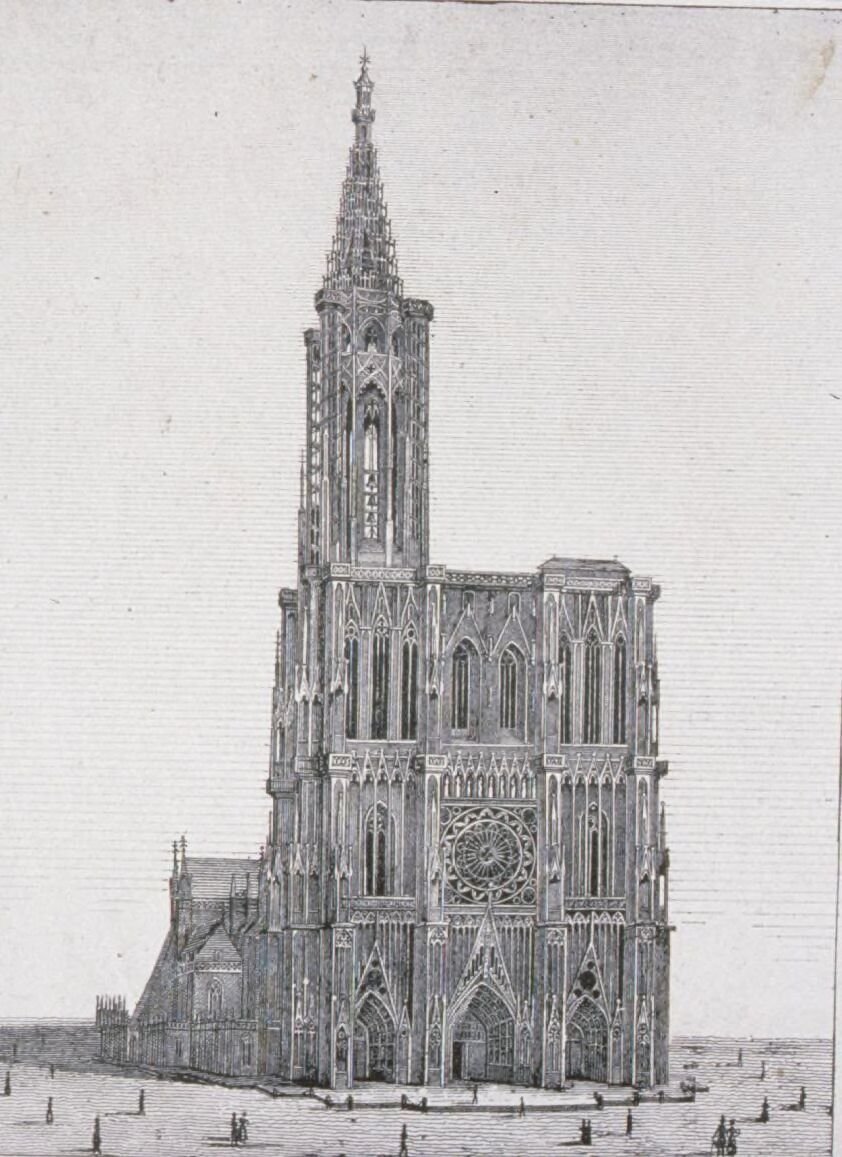
- Strasbourg Cathedral: One of Europe’s finest Gothic structures.
- Petite France: Picturesque medieval quarter.
- European Institutions: The European Parliament and Council of Europe are a short tram ride away.
- Parc de l’Orangerie: Ideal for relaxation after a campus visit.
- Grande Île and Neustadt District: Both UNESCO World Heritage sites featuring remarkable architecture and vibrant city life (visitstrasbourg.fr; destinationabroad.co.uk).
Frequently Asked Questions (FAQs)
What are the visiting hours?
The faculty is open Monday to Friday, 8:00 AM–6:00 PM. Check the official website for special schedules.
Is there an entry fee?
No general entry fee; some events may require registration or tickets.
Are guided tours available?
Yes, both in-person and virtual tours are offered, especially during open days and heritage events.
Is the faculty accessible for people with disabilities?
Yes, all main facilities are accessible.
Can I take photographs on campus?
Yes, in public areas. Permission is needed inside classrooms or during academic sessions.
Are programs offered in English?
Several master's programs and select courses are taught in English.
How can I reach the faculty?
The campus is easily accessible by tram, bus, bicycle, or on foot from the city center.
Practical Visitor Tips
- Plan Ahead: Always check the faculty’s website for updated hours, tour availability, and event schedules.
- Use Sustainable Transport: Take advantage of Strasbourg’s public transport and cycling infrastructure.
- Respect Academic Activities: Maintain a quiet demeanor in study areas and during lectures.
- Combine Visits: Explore nearby attractions such as the Botanical Gardens and the historic Neustadt district.
- Engage: Attend public lectures or events for a deeper immersion in Strasbourg’s academic life.
Contact Information
- Address: 1 Place d’Athènes, BP 66, 67045 Strasbourg Cedex
- Phone: +33 (0)3 68 85 81 00
- Website: droit.unistra.fr
- International Welcome Portal: international-welcome.unistra.fr
Listen to the full story in the app
Your Personal Curator, in Your Pocket.
Audio guides for 1,100+ cities across 96 countries. History, stories, and local insight — offline ready.
Audiala App
Available on iOS & Android
Join 50k+ Curators
Sources
- verified
- verified
- verified
- verified
- verified
- verified
- verified
- verified
- verified
- verified
- verified
Last reviewed: