Introduction
The Equestrian Statue of Joan of Arc in Strasbourg is a compelling testament to French history, unity, and resilience. Created by Paul Dubois and inaugurated on Bastille Day in 1922, this monument stands at Place Arnold in the Neustadt district—a symbolic location reflecting Strasbourg's Franco-German past. The statue's powerful depiction of Joan with a raised sword highlights her dual legacy as both a military leader and a saint. This guide provides a comprehensive overview of the monument’s history, artistic features, visitor information, and travel tips to help you plan your visit to one of Strasbourg’s most significant cultural landmarks (Wikipedia; History Hit).
Joan of Arc: National Symbol and Historical Figure
Joan of Arc (Jeanne d’Arc), born circa 1412, is one of France’s most celebrated heroines. Her leadership during the Hundred Years’ War, fueled by visions and unwavering faith, culminated in the lifting of the siege of Orléans and the coronation of Charles VII. After her capture and execution in 1431, she was exonerated decades later and canonized in 1920, becoming a lasting symbol of courage, faith, and patriotism (History Hit). Her image has inspired countless works of art and public monuments throughout France and beyond.
Proliferation and Artistry of Joan of Arc Statues
National Movement
Following Joan’s canonization, monuments to her sprang up across France, especially in the late 19th and early 20th centuries. There are over a hundred Joan of Arc statues in France alone, each reflecting local artistic traditions and political sentiments (Joan Lives). These statues range from academic realism to modernist abstraction, but the most iconic form is the equestrian statue, emphasizing Joan’s leadership and valor.
Artistic Trends and Symbolism
The equestrian format, traditionally reserved for rulers and military leaders, underscores Joan’s exceptional place in history. Artists generally depict her in full armor, often with a sword or banner—symbols of her martial prowess and spiritual mission. Paul Dubois’s version in Strasbourg is notable for depicting Joan with an upraised sword, conveying both her determination and sense of divine purpose (Facts.net). The use of bronze ensures durability and allows for intricate detailing.
The Strasbourg Monument: History and Symbolism
Historical Context
Commissioned after World War I, the Strasbourg statue reflects the region’s return to France after decades of German rule. The choice of Joan, a Lorraine native closely associated with French identity, was deliberate—her image served as a rallying point for national unity and pride (Wikipedia).
Originally placed in the Jardin du Palais du Rhin at Place de la République, the statue was later moved to Place Arnold, in front of the Église Saint-Maurice. Its inauguration on July 14, 1922, further cemented its role as a symbol of reclaimed sovereignty.
Artistic Features
Dubois’s sculpture presents Joan of Arc mounted on a dynamic horse, sword raised high, and gaze fixed forward with a resolute, visionary expression. The harmony between rider and horse, along with the detailed armor and earnest facial features, captures both the saintly and warrior aspects of Joan’s character. The simple pedestal directs focus to the powerful figure above (Wikipedia).
Cultural and Political Significance
The statue not only commemorates Joan’s role as a liberator but also serves as a focal point for civic pride and unity in Strasbourg. Its prominent placement in the Neustadt, a district shaped by German urban planning, reasserts French cultural presence. Annual commemorations and civic ceremonies at the monument further underscore its living role in the city’s collective memory (factsgem.com).
Visiting Information
Location and Accessibility
- Address: Place Arnold, 67000 Strasbourg, France
- District: Neustadt (UNESCO World Heritage Site)
- Nearest Landmarks: Église Saint-Maurice, Palais du Rhin, Orangerie Park
The monument is situated in a tranquil, leafy square, surrounded by grand 19th-century architecture and easily accessible by public transport.
Visiting Hours and Admission
- Hours: Open 24/7 (outdoor public space)
- Admission: Free; no tickets required
Getting There
- Tram: Gallia stop (lines C, E, F), about 400 meters from the statue (Visit Strasbourg)
- Bus: Several lines serve Avenue de la Liberté and nearby streets
- Bicycle: Strasbourg’s extensive bike lanes and shared bike stations make cycling a great option (Visit Strasbourg)
- Car: Parking is available nearby, but public transport is recommended to avoid congestion
Tours and Events
- Guided Tours: Many local operators and the Strasbourg Tourist Office include the statue in city walking tours (Visit Strasbourg)
- Annual Events: Major commemorations occur on May 8 (lifting of the siege of Orléans) and May 30 (Joan’s martyrdom), featuring processions and ceremonies (Facts.net)
Photography Tips
- Best Lighting: Early morning or late afternoon for soft, golden tones
- Angles: Front-left perspective to capture Joan’s expression with Église Saint-Maurice in the background
- Etiquette: Do not climb the monument; respect ceremonies and commemorative activities
Community Engagement and Conservation
Joan of Arc statues in France are often focal points for community pride and remembrance. The Strasbourg monument is regularly maintained to preserve its bronze detail and patina (factsgem.com). Locals and visitors commonly leave flowers or notes on significant dates, and the statue remains a gathering site for national and regional events.
Nearby Attractions
- Église Saint-Maurice: Neo-Gothic church immediately behind the statue
- Palais du Rhin: Former imperial palace, now housing public offices and events
- Botanical Gardens: Peaceful green space within walking distance
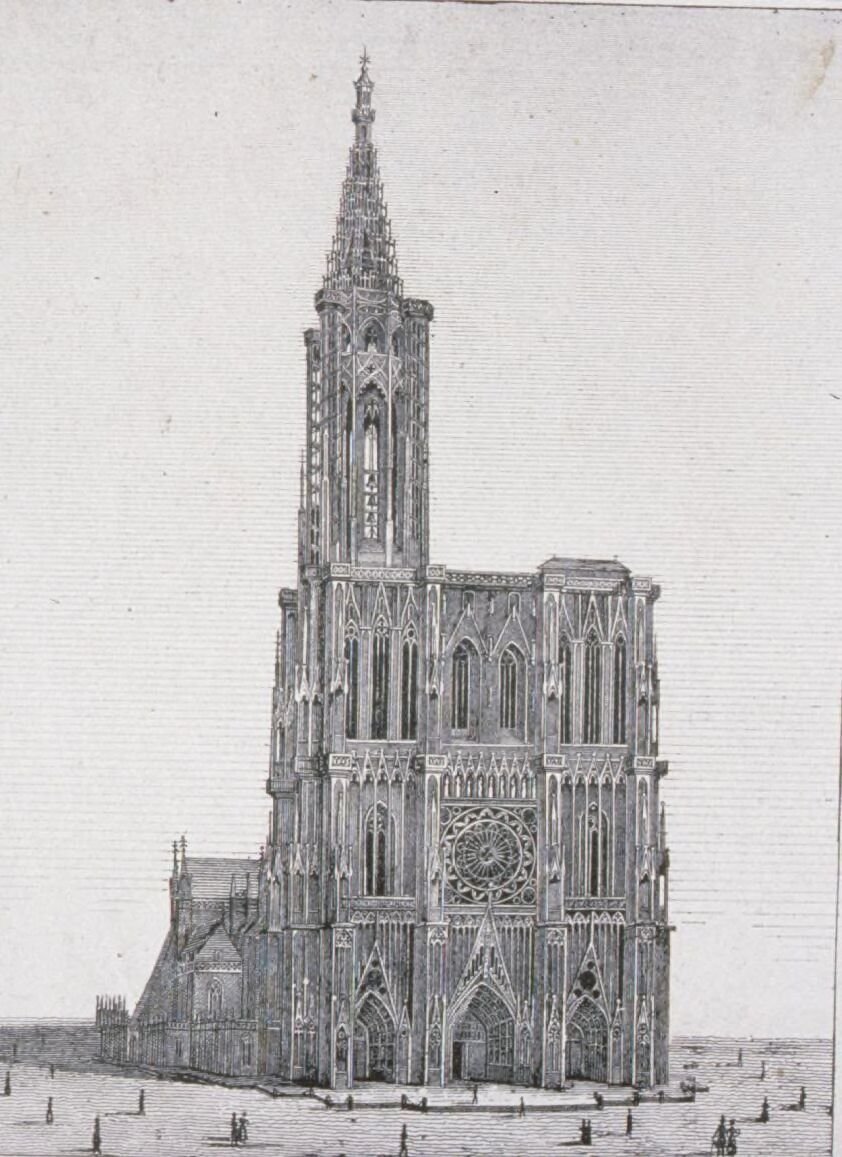
- Strasbourg Cathedral: Iconic Gothic masterpiece, about 1.5 km away (France-Voyage)
- Orangerie Park: Strasbourg’s oldest park, perfect for relaxation
Dining options and public amenities such as restrooms are available nearby, especially in the Neustadt and around Place de la République.
Frequently Asked Questions (FAQ)
Q: What are the visiting hours of the Equestrian Statue of Joan of Arc in Strasbourg?
A: The statue is accessible 24/7; there are no restrictions or entry fees.
Q: Is the statue wheelchair accessible?
A: Yes, flat paved walkways facilitate access for wheelchairs and strollers.
Q: How do I get there by public transport?
A: Take Tram lines C, E, or F to Gallia stop; the statue is a short walk away.
Q: Are guided tours available?
A: Yes, the statue is featured in many city and historical walking tours.
Q: When are the busiest times to visit?
A: Major commemorative events in early May and late May draw the largest crowds.
Summary & Visitor Tips
The Equestrian Statue of Joan of Arc in Strasbourg is a powerful intersection of history, art, and civic pride. Its accessible, central location, free admission, and proximity to other major sites make it a rewarding stop for visitors. For the best experience:
- Visit early or late in the day for ideal lighting and fewer crowds.
- Consider joining a guided tour for historical context.
- Respect the monument and ongoing commemorative ceremonies.
- Explore nearby attractions to enhance your understanding of Strasbourg’s heritage.
- Use eco-friendly transport options like bicycles or trams (Visit Strasbourg).
For more insights, audio tours, and up-to-date information on events, download the Audiala app or consult the Strasbourg tourist information office.
Listen to the full story in the app
Your Personal Curator, in Your Pocket.
Audio guides for 1,100+ cities across 96 countries. History, stories, and local insight — offline ready.
Audiala App
Available on iOS & Android
Join 50k+ Curators
Sources
- verified
- verified
- verified
- verified
- verified
- verified
Last reviewed: