
Rochefort and its heritage
Rochefort, France, combines maritime history, cultural heritage and natural landscapes. Established in the 17th century as a strategic naval arsenal by Jean-Baptiste Colbert for King Louis XIV, the town became a centre of French naval power. Its preserved arsenal, the Corderie Royale and the replica frigate L’Hermione illustrate this maritime legacy, including Rochefort’s connection to the American Revolution (Wikipedia; francerent.com).
Visitors can also see 17th- and 18th-century architecture at Place Colbert, museums and the Conservatoire du Bégonia. The Charente River, surrounding marshlands and nearby islands offer estuarine scenery and wildlife (guide-charente-maritime.com; France This Way).
History
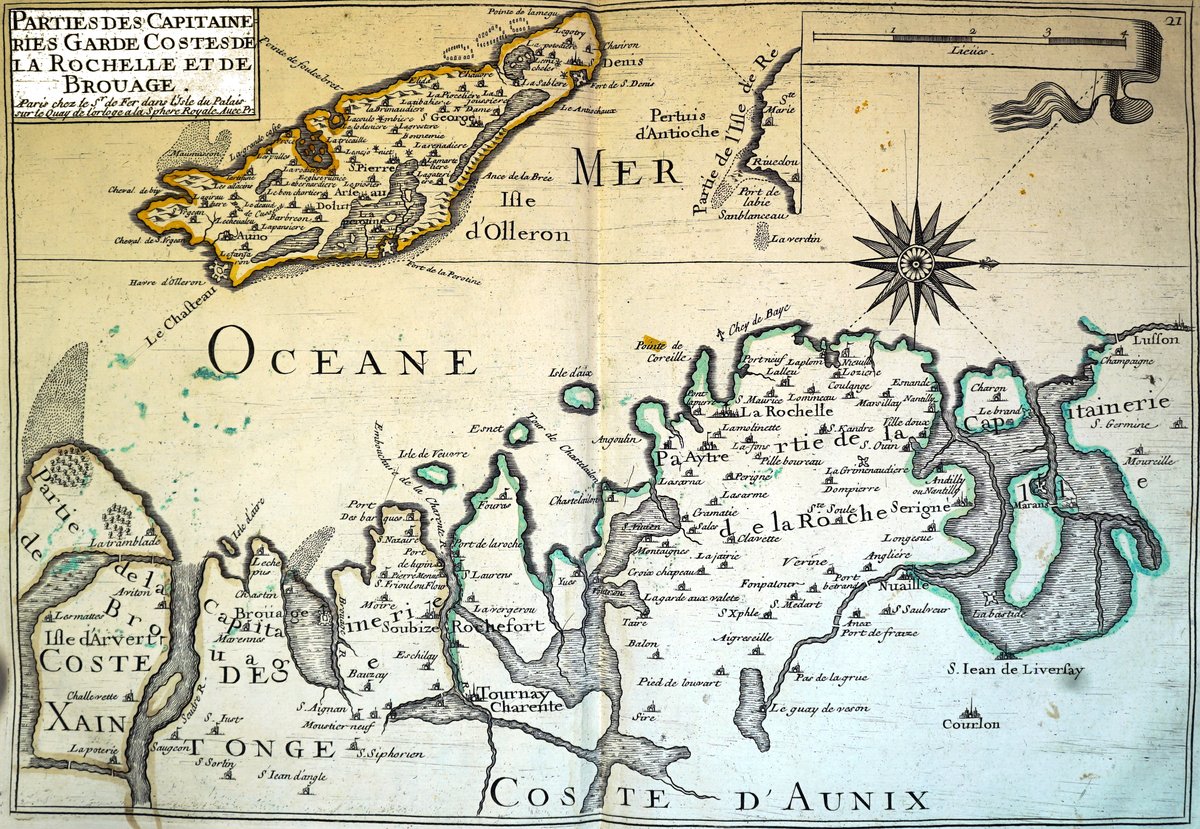
In 1665, Jean-Baptiste Colbert chose Rochefort for a new naval arsenal. Its inland position on the Charente River was considered secure, with the islands of Aix and Madame providing protection (Wikipedia). Construction of the Ponant Arsenal began in 1666, and Vauban, Louis XIV’s military engineer, fortified the site (francerent.com).
The Arsenal de Rochefort was at the centre of French naval power from 1666 to 1926. It employed thousands of people and produced hundreds of ships and essential naval equipment. Among its vessels was L’Hermione, which carried the Marquis de Lafayette to America in 1780 (francerent.com). Its grand architecture, dry docks and workshops reflect the scale of France’s naval ambitions.
Built between 1666 and 1669, the Corderie Royale was Europe’s longest factory, measuring 374 metres. It produced ropes for sailing ships, including ropes up to 200 metres long. Rope-making ended in 1867, but the building remains a symbol of technical achievement and now serves as a cultural attraction (guide-charente-maritime.com; croisieuroperivercruises.com; Wikipedia).
The arsenal helped make Rochefort a centre for scientific, architectural and technical innovation, supporting urban growth and a vibrant cultural scene. After its closure, the town continued to preserve its maritime heritage through museums and public events (croisieuroperivercruises.com).
What to see
Arsenal and Corderie Royale
The Arsenal complex brings together historic naval buildings, workshops and dry docks. Exhibits explore naval technology and art, while the Corderie Royale offers interactive rope-making demonstrations (francerent.com; croisieuroperivercruises.com).
L’Hermione
The replica frigate L’Hermione recalls the vessel that carried Lafayette to America in 1780. The site also offers the Accro-mâts climbing adventure.
Place Colbert
This iconic square is known for its elegant façades and arc de triomphe-fountain. It was also a film location for Les Demoiselles de Rochefort. It is open year-round and free to access.
Museums and cultural heritage
The Musée Hèbre de Saint-Clément is one of Rochefort’s museums. The Maison de Pierre Loti is a historic monument, currently closed for restoration; check its website for updates.
Other museums include the Musée des Commerces d’Autrefois and the Musée Archéologique de la Vieille Paroisse. Rochefort also hosts annual festivals, workshops and educational events that keep its heritage active for all generations.
Conservatoire du Bégonia and gardens
The Conservatoire du Bégonia has more than 1,500 begonia species in a 1,000 m² greenhouse. The Jardin des Retours, next to the Corderie Royale, and the Jardins de la Marine provide green space within the town (France This Way; Pourquoi Pas Nous).
Practical visiting information
Opening hours and tickets
Opening times and ticket information provided for Rochefort’s attractions include:
- Most major sites The Arsenal, Corderie Royale and museums generally open Tuesday–Sunday, 10:00 AM–6:00 PM. Hours may vary seasonally and on holidays.
- Arsenal and Corderie Royale Tuesday–Sunday, 10:00 AM–6:00 PM from April–October; reduced winter hours. Closed Mondays. Adults €8; reduced €5; under 18 free. The complex is fully accessible. Official Corderie Royale Website
- L’Hermione Daily, 10:00 AM–6:00 PM, with seasonal variations. Adults €10; children aged 6–12 €5; under 6 free. Accessibility is partial; contact the site for details. Official L’Hermione Site
- Musée Hèbre de Saint-Clément Tuesday–Sunday, 10:00 AM–6:00 PM. Adults €6; reduced €3; under 18 free. Fully accessible. Official Musée Hèbre de Saint-Clément
- Maison de Pierre Loti Currently closed for restoration. Maison de Pierre Loti Official Page
- Conservatoire du Bégonia Wednesday–Sunday, 2:00–6:00 PM. Adults €5; children €2; under 12 free.
- Musée des Commerces d’Autrefois Saturday–Sunday, 2:00–6:00 PM. Adults €4; under 12 free.
- Musée Archéologique de la Vieille Paroisse Thursday–Sunday, 2:00–6:00 PM. Adults €3; under 18 free.
- Jardin des Retours Open year-round and free.
- Maison du Transbordeur and Transporter Bridge Tuesday–Sunday, 10:00 AM–5:00 PM. Crossing costs €2 per trip. Official Transporter Bridge Site
Tickets are available onsite and online; the tourism office and attraction entrances are also listed as places to buy them. General adult tickets typically range from €8–€12, with discounts for children, seniors and groups. Combination tickets offer savings; combined tickets for the main attractions are approximately €22.
Guided tours are available in multiple languages, including English and French. Audio guides and interactive apps are also available. Booking guided tours in advance is recommended during peak season.
Most main attractions are wheelchair accessible, but access can vary by site. Contact individual attractions in advance about specific needs. Photography is permitted in most areas, although some exhibits have restrictions.
Getting to Rochefort
- Train Direct connections are available from Paris (4–5 hours), La Rochelle and Saintes.
- Car Rochefort is approximately 480 km from Paris via the A10 motorway. Parking is available.
- Plane Bordeaux-Mérignac (150 km) and La Rochelle airports are nearby, with onward travel by train or car.
Other practical information
Accommodation ranges from budget hotels to luxury guesthouses and island stays. Rochefort’s central market sells fresh produce and seafood; local specialties include Marennes-Oléron oysters and farci charentais.
The town has spa facilities, and pharmacies and medical services are easily found. The tourist office is at Place Colbert. The currency is the euro (€), and credit cards are widely accepted. The emergency number is 112.
Tips and local experiences
Rochefort hosts festivals, open-air concerts and maritime celebrations, particularly from spring to early autumn. July’s mild climate, with average highs of 25°C/77°F, is suited to outdoor activities. Check the city’s official tourism calendar for current events.
Many sites have interactive exhibits for children. When greeting staff, use “Bonjour”; observe lunch and dinner hours, and dress neatly for town and restaurants. Walking and cycling are ways to get around while supporting sustainable tourism; respect conservation efforts.
Nearby places and nature
Charente River, estuary and wetlands
Rochefort’s riverside setting includes tidal flats, salt marshes and scenic walking and cycling paths. The estuary is a starting point for boat excursions and island visits (France This Way). Trails through the Marais de Brouage and other protected areas offer birdwatching and wildlife viewing (France Voyage).
The marshes and estuary are rich in birdlife, including herons, egrets and storks. Conservation programmes and guided tours are available (France This Way; France Voyage).
Islands and coast
- Île d’Aix Reachable by ferry from Fouras, this car-free island is suited to walking and cycling (France This Way).
- Île Madame Accessible at low tide from Port-des-Barques, it offers nature walks (Pourquoi Pas Nous).
- Île d’Oléron About 40 minutes by car, it is known for beaches and oyster farms (Pourquoi Pas Nous).
- Fouras and Chatelaillon-Plage Beaches in Fouras are 15 minutes away by car. Both destinations offer swimming, water sports and views of Fort Boyard (Audiala).
Walking, cycling and the Transbordeur Bridge
Rochefort’s terrain is flat, with dedicated paths including the Charente riverside trail and links to the Vélodyssée Atlantic cycling route (Audiala). The historic Transbordeur Bridge is a crossing for pedestrians and cyclists over the Charente (Pourquoi Pas Nous).
Frequently Asked Questions (FAQ)
Q: What are the opening hours for Rochefort’s attractions?
A: Most sites are open 10:00 AM–6:00 PM, with seasonal variation. Check official websites for specific hours.
Q: Where can I buy tickets?
A: Tickets are available at the tourism office, at site entrances and online.
Q: Are guided tours available in English?
A: Yes. Major sites and local tour operators offer guided tours in English.
Q: Is Rochefort family-friendly?
A: Yes. The town has interactive museums, parks and nearby beaches.
Q: What are the best photographic spots?
A: The Arsenal Quarter, riverside promenades and views of Fort Boyard from Fouras.