



Place
France Updated May 2026
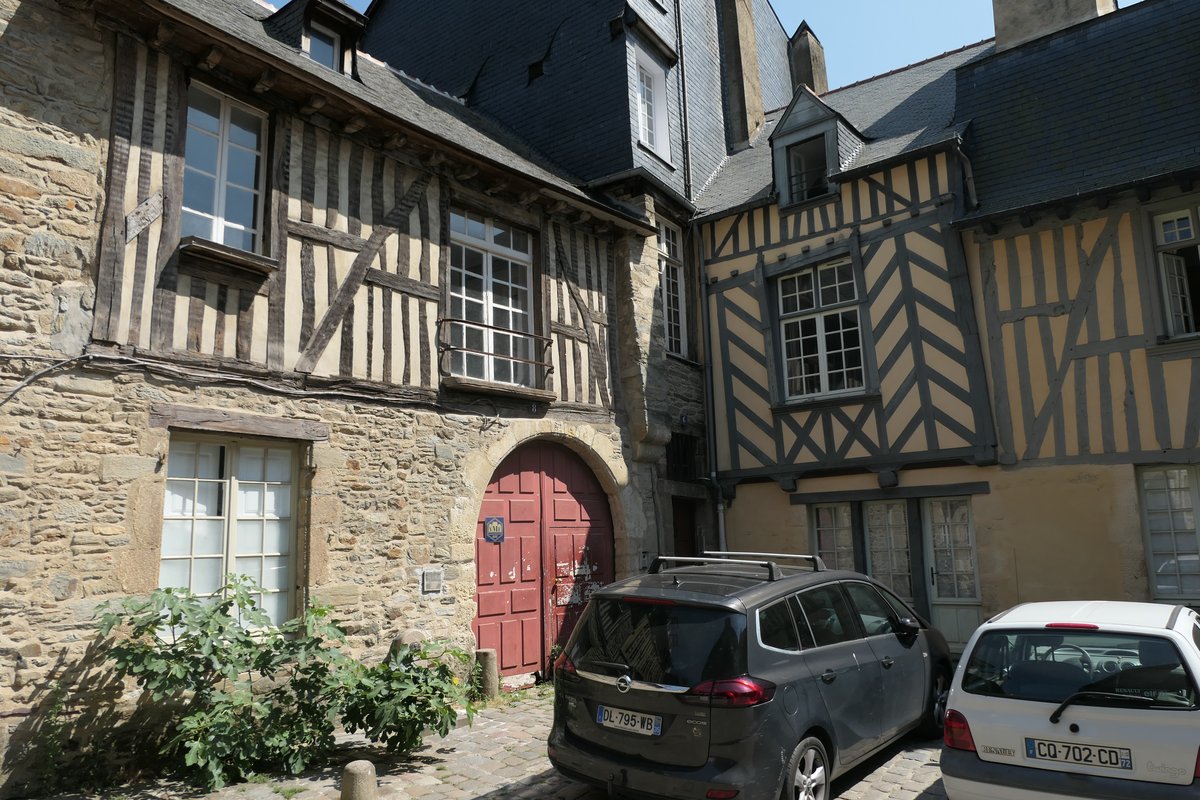
Half-timbered houses lean over the cobbles of Rue du Chapitre like gossiping neighbours, their crooked beams the survivors of a 1720 fire that ate seven days and roughly a thousand buildings of old Rennes. The capital of Brittany rebuilt itself twice over — once in stone after the flames, again in glass and ambition for the 60,000 students who now make it one of the youngest cities in France. Come for the Parlement de Bretagne; stay for the bars that don't empty until dawn on Rue Saint-Michel, the street locals nicknamed la rue de la Soif. The street of thirst.

Built from cited sources · see the method · How we make our guides →
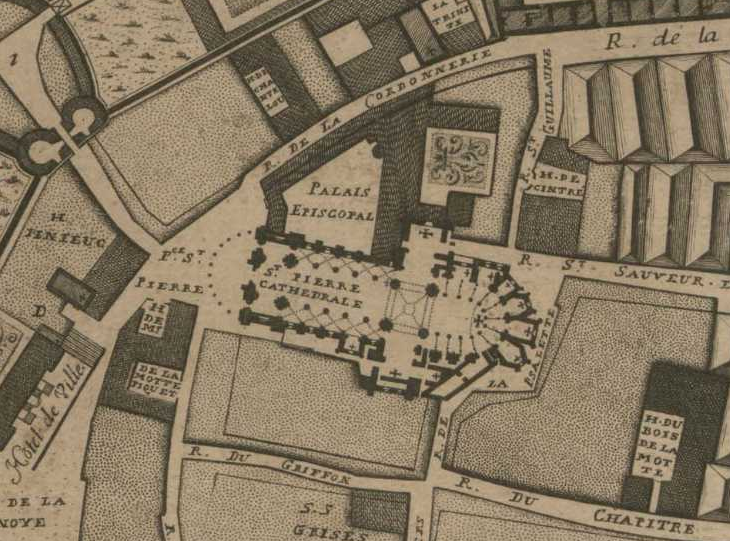
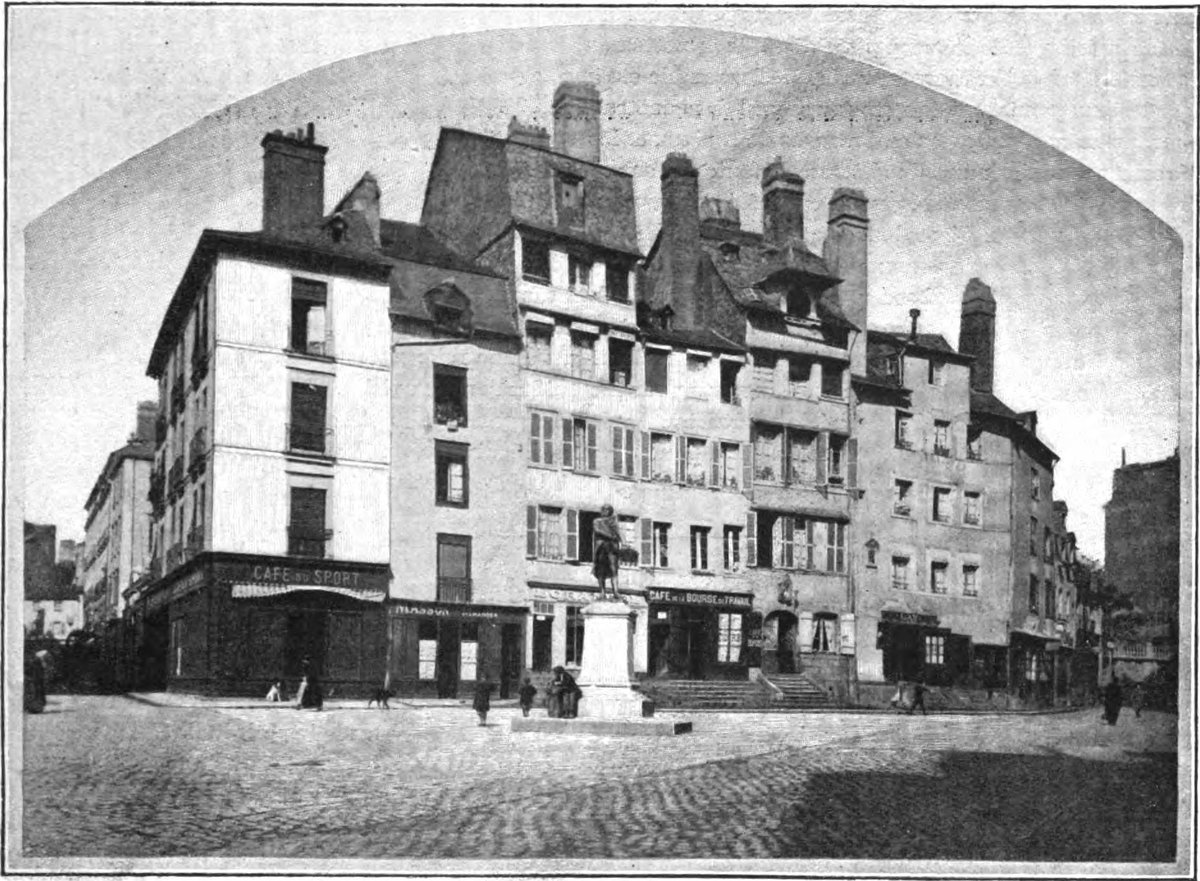
Rennes sits where the Vilaine meets the Ille, two rivers that gave the city its trade and, eventually, its students. The medieval core escaped the great fire on its western edge, which is why you can still walk under timber-framed facades from the 15th and 16th centuries on Rue Saint-Georges and Place du Champ-Jacquet, then turn a corner into the severe grey granite and tufa the architect Jacques Gabriel imposed after 1720. Two cities, stitched together along a burn line you can still trace on a map.
This is Breton territory, and it doesn't let you forget it. Street signs run bilingual in French and Breton, the black-and-white Gwenn ha Du flag turns up on balconies, and the Musée de Bretagne inside Les Champs Libres lays out the region's stubborn sense of itself across centuries. The food follows suit — galettes of buckwheat folded around egg and ham, washed down with cider served in ceramic bowls rather than glasses.
The student population sets the tempo. Cafés stay loud, the Saturday market at Place des Lices fills one of Europe's largest covered halls with 300-odd stalls, and the nightlife clusters tight enough that you can cross the old town's entire drinking district on foot in ten minutes. A working regional capital that happens to be very good at enjoying itself.
Not every monument, just the ones we'd walk you past ourselves.




Where to wander, by quarter — each with its own rhythm.
Before you go
Two thousand years at the confluence of the Ille and the Vilaine
A Gaulish people, the Riedones, put down roots in eastern Armorica and gather where the Ille meets the Vilaine. They call the place Condate, the Celtic word for confluence, and the name will cling to the city for three more centuries. There is no dramatic founding here, just people choosing the practical logic of two rivers meeting.
Before Rome arrived, the Riedones were minting billon coinage, local copies of the gold staters of Philip II of Macedon that had filtered west along trade routes. The faces on the coins blur Macedonian models into something stranger and more Celtic. Money this early tells you the confluence already mattered to people far beyond it.
When Vercingetorix called the tribes of Gaul to rise against Caesar, the Riedones sent fighters. It was the high-water mark of resistance and the beginning of the end. Within a generation the confluence would belong to Rome, and Condate would be rebuilt to Roman taste.
Under Augustus the Romans laid out an actual town, the first dense settlement on the site, and made it capital of the civitas Riedonum. Roads radiated out like a star, the principal one running west toward Vorgium across the Osismii lands. For nearly three centuries the city had no walls at all, which tells you how secure the Roman peace felt here.
Sometime around the year 80, a man named Titus Flavius Postuminus served as duumvir, one of the town's two chief magistrates. He is the oldest inhabitant of Rennes whose name we actually know, surfacing from an inscription rather than a chronicle. Everyone before him is a people, a coin, a wall. He is the first person.
With barbarian raids pressing into Gaul, the open town finally walled itself in brick. The name Condate began to fade as the place quietly took the name of its people instead, Civitas Riedonum, the seed of the word Rennes. Fear, in the end, is what gave the city both its defenses and its modern name.
The Holy See of Rennes was founded in the mid-fifth century, planting the church at the center of a city the Roman order was abandoning. A place of worship would stand on the site of the present cathedral within decades. The bishops were about to become the most durable power in town.
As Bretons pushed into the western peninsula and Franks held the east, Bishop Melaine of Rennes negotiated a treaty between the two. He was a churchman doing the work of a diplomat in a frontier town caught between two expanding worlds. Rennes sat exactly on that seam, which is why it kept producing peacemakers.
Around 850 the Breton leaders Nominoe and Lambert II forced their way into Rennes, pulling the city fully into the Breton orbit after centuries on the Frankish edge. The frontier had finally moved, and Rennes ended up on the Breton side of it. From here the city's story becomes Brittany's story.
At a tournament held in Rennes for the marriage of Charles of Blois and Jeanne de Penthievre, an unknown teenager named Bertrand du Guesclin unhorsed champion after champion. He would become Constable of France, the greatest soldier of his age, but Rennes saw him first as a rough provincial boy nobody expected. The city that watched him win would soon need him to fight.
During the Breton War of Succession, Henry of Grosmont, Duke of Lancaster, threw his army around the walls of Rennes. Bertrand du Guesclin answered with raids and guerrilla cunning rather than open battle, harrying the English until the siege broke. It was the campaign that made his reputation, fought to keep his own city free.
The Couvent des Jacobins was founded in 1369 as a Dominican house, soon a place of pilgrimage and burial at the heart of medieval Rennes. Its Gothic vaults survived six centuries of war, fire and revolution. Restored and reopened in 2018 as a convention center, it now shelters the tourist office under the same stone arches that once sheltered friars.
The Portes Mordelaises went up as the principal gate of the walled town, complete with a drawbridge over the moat. Dukes of Brittany swore their loyalty oath here before passing through into the city. It is the last great vestige of the ramparts, and standing under it you are walking the exact threshold every duke crossed.
Charles VIII marched a French army to the walls of Rennes and laid siege to the duchess Anne of Brittany inside. The standoff ended not in slaughter but in a wedding: the Treaty of Rennes in November married Anne to the French king. Mass graves from the fighting, unearthed in 2021, are a reminder that the diplomatic marriage was paid for in ordinary lives.
The Edict of Union formally bound Brittany to the French crown, ending centuries of duchy independence. Rennes, the old Breton capital, now had to find its place inside a much larger kingdom. It would do so, characteristically, by becoming the seat of the law.
When Brittany's sovereign court of justice was established, Rennes won out over its richer rival Nantes to host it. The Parlement made the city the legal and administrative capital of the province, a status that shaped everything that followed. Lawyers, not merchants, would set the tone of Rennes for the next two centuries.
From the great outbreak of 1563 to the last major one in 1640, plague returned to Rennes again and again, more than a dozen documented waves in eighty years. In 1597, with famine in the countryside, the city barred the poor at its gates for fear of contagion. The walls that kept out armies were turned, in the end, against the hungry.
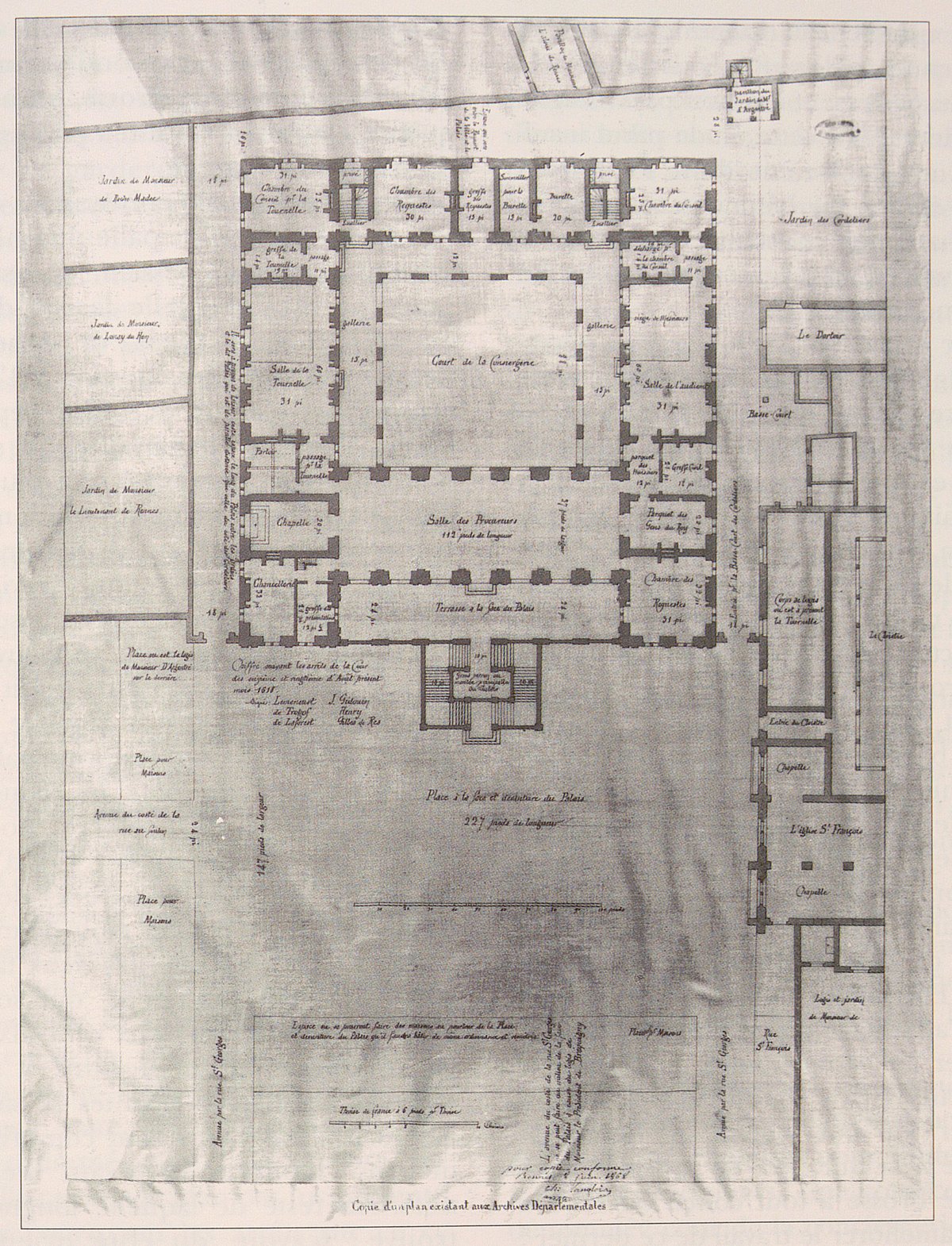
Built across nearly forty years to a design by Salomon de Brosse, the architect of the Palais du Luxembourg in Paris, the Parlement palace gave Rennes its grandest building. It blended classical order with Breton character and housed the province's highest court. It would survive the fire that destroyed everything around it, and then nearly burn anyway in 1994.
On the night of 22 December 1720 a fire broke out on the Rue Tristin and burned for days. It destroyed 945 houses, nearly half the built city, and left some 8,000 people homeless in the December cold. The flames stopped just short of the Parlement, sparing the one building that mattered most to the city's pride.
Out of the ashes, the architect Jacques Gabriel laid down a rational grid of straight stone streets where a medieval timber maze had stood. The Place de l'Hotel de Ville, the Town Hall completed in 1743, and later the Opera all date from this rebuilding. It is why central Rennes feels so unlike the half-timbered tangle that survived around its edges, the fire drew a hard line between two cities.
A tailor turned mayor, Jean Leperdit governed Rennes through the worst of the Terror. The story told of him is that he tore up a list of citizens condemned to the guillotine, defying Paris to save his neighbors. He died in Rennes in 1823, remembered less for politics than for one act of nerve.
Founded from goods confiscated during the Revolution, the Musee des Beaux-Arts opened its doors with art seized from churches and emigre nobles. Its collection now runs from Egyptian antiquities to drawings attributed to Leonardo and Rembrandt. A museum built from what the Revolution took away.
When the Republic ordered a mass levy of 300,000 men in 1793, royalist peasants across Ille-et-Vilaine rose in revolt. The Chouannerie turned the lanes and hedgerows around Rennes into a long, ugly guerrilla war. The city held for the Republic while the country bled around it.
After the old nave was torn down and revolution halted the work, the neoclassical Cathedrale Saint-Pierre was finally completed in 1845. Mathurin Crucy began it and Louis Richelot finished it, behind a facade older than the church it fronts. Step inside and the gilded, heavy interior feels almost imperial, a long way from the medieval church it replaced.
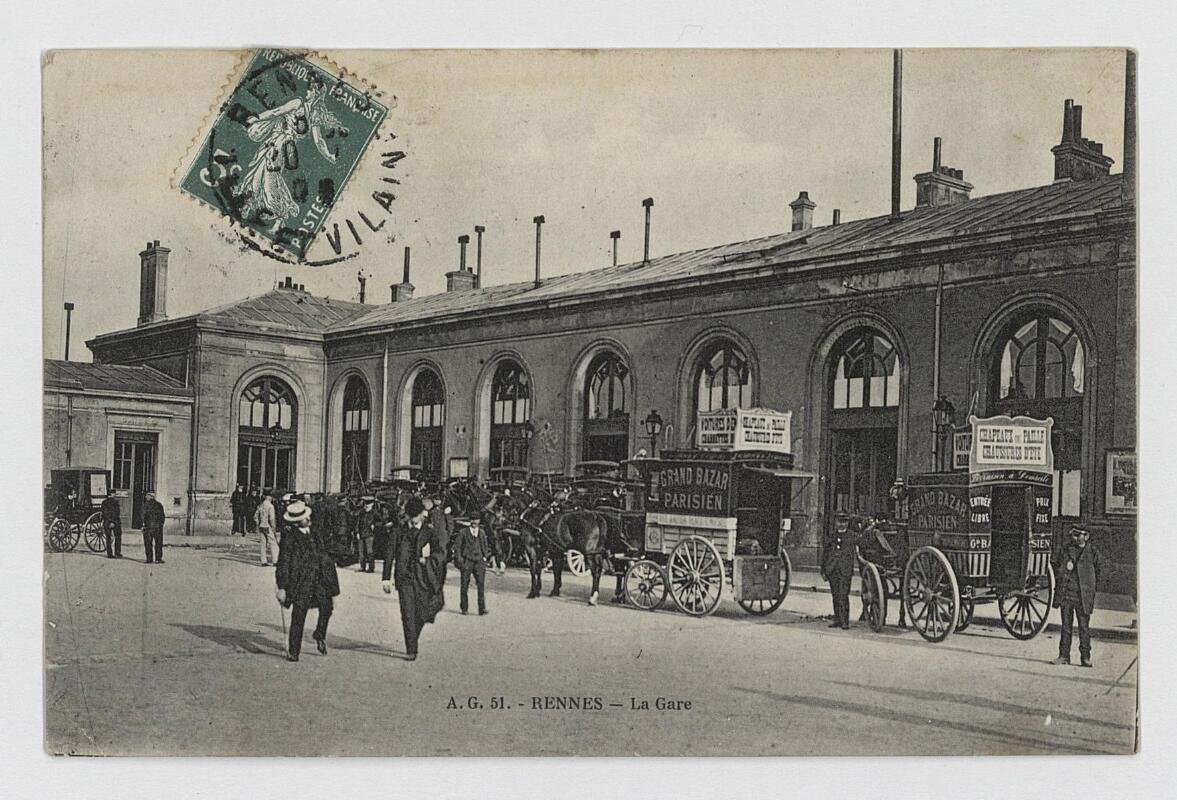
When the station opened in 1857, Rennes began spilling south of the Vilaine toward the tracks. The railway pulled the city's growth in a new direction and tied the Breton capital firmly to Paris. The medieval and classical city now had an industrial neighbor.
The playwright Alfred Jarry was schooled at the lycee in Rennes, and it was there, mocking a pompous physics teacher, that he and his classmates conceived the monstrous Pere Ubu. Ubu Roi would later detonate on the Paris stage and help invent the theatre of the absurd. The grotesque king of modern drama was born from schoolboy ridicule in a Rennes classroom.
In the summer of 1899 the retrial of Alfred Dreyfus was held at the Rennes lycee, and the world's press descended on the city. For weeks Rennes was the stage on which France argued with itself over justice, antisemitism and the army. A provincial courtroom became, briefly, the conscience of a nation.
On 17 June 1940 a German strike on an ammunition train at the station killed roughly a thousand people in a single catastrophic blast. The next day German troops marched into Rennes, beginning four years of occupation. The war had arrived all at once, in fire, at the railway that had once promised only progress.
On 4 August 1944 the US Third Army under General Patton freed the city, with the retreating Germans blowing the bridges over the Vilaine behind them. Allied bombing in the preceding year had already cost hundreds of lives. Liberation came at the price of a broken, scarred city that would spend decades rebuilding.
In the Mabilais building, designed by Louis Arretche, engineers developed the Minitel and the smart card, two technologies that put Rennes at the front of French telecoms. Long before anyone said tech hub, the city was quietly inventing the tools of a connected France. The building is now the totem of French Tech Rennes, still trading on a 1970s breakthrough.
On 19 March 2002 Line A of the driverless VAL metro opened, making Rennes the smallest city on earth with a metro system. For a place of barely 200,000 people it was an audacious bet on the future. Line B followed in 2022, threading 15 stations across a city that had decided to think much bigger than its size.
Novelist · 1816–1887
Born here
Féval was born in the Hôtel de Blossac and grew up among the stone streets the 1720 fire had forced Rennes to rebuild. He gave France the swashbuckling Lagardère of Le Bossu, the kind of cloak-and-dagger Paris romance that outran his hometown. He'd probably be amused that his city now trades on Minitel and metro lines rather than melodrama.
Playwright · 1873–1907
Schooled here 1888–1891
Jarry arrived as a schoolboy at the lycée and, with classmates, sharpened a cruel caricature of their physics teacher into Père Ubu. That grotesque tyrant became Ubu Roi, the play that detonated modern theatre in 1896. The absurdist who scandalized Paris was, in a sense, hatched in a Rennes classroom.
Mayor and tailor · 1752–1823
Lived and died here
A working tailor turned mayor during the Terror, Leperdit reportedly tore up a list of citizens condemned to the guillotine rather than carry out the sentence. The gesture made him a local emblem of decency under pressure. A statue still honors the man who put conscience above orders.
Constable of France · 1320–1380
Made his name here
Du Guesclin first turned heads at a 1338 tournament in Rennes, unseating seasoned champions as an unknown young Breton. Two decades later he led the guerrilla defense of the city against the Duke of Lancaster's siege of 1356–57. Rennes was where the future Constable of France learned he could win.
Where locals actually book dinner — not the tourist menus.
Small things that change how the city treats you.
The city, as it actually looks.
Yes, especially if you want Brittany without the coastal crowds. The medieval old town survived the 1720 fire that razed 945 houses, leaving a striking split between leaning half-timbered streets and Jacques Gabriel's stone-grid reconstruction. With 60,000 students it runs younger and cheaper than most French cities, and the Parlement de Bretagne alone rewards the trip.
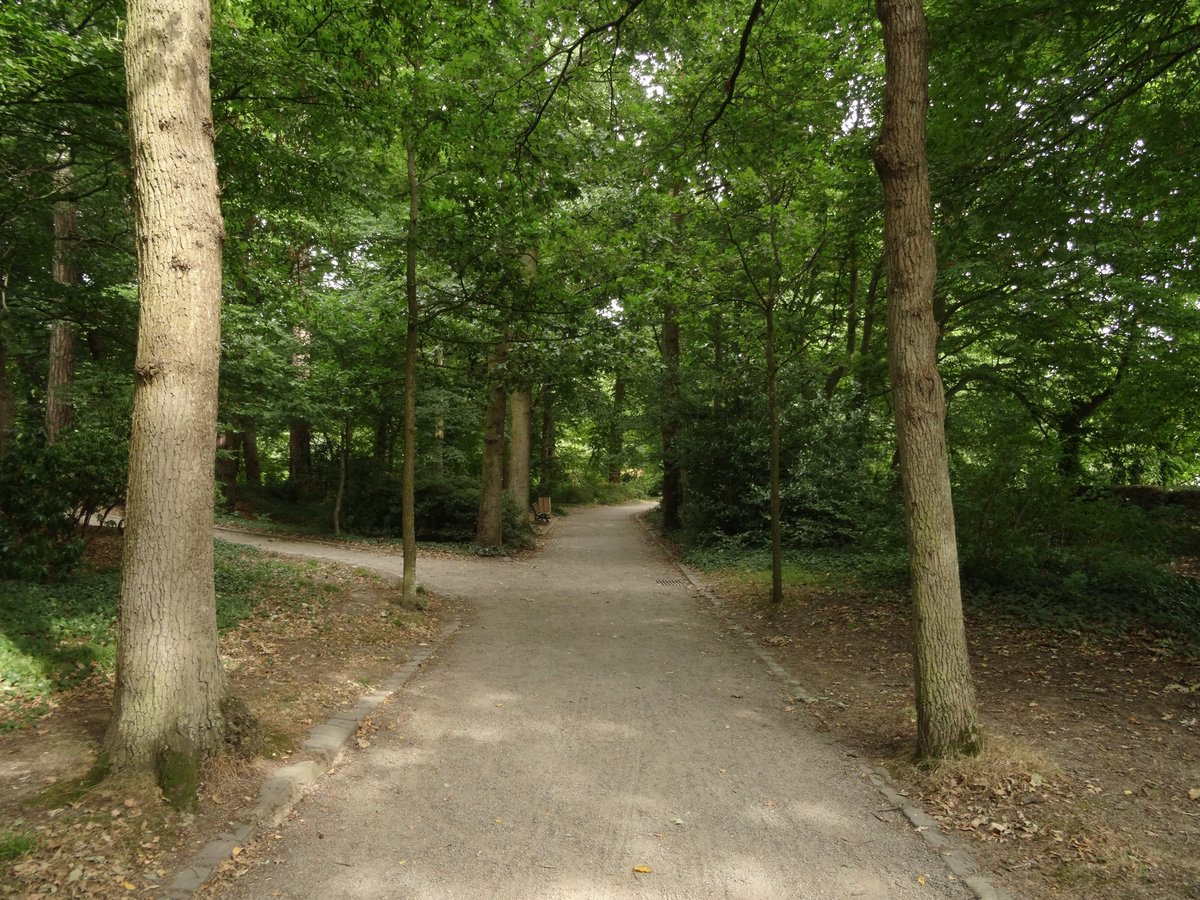
Two days covers the essentials comfortably. Day one for the old town, Parlement de Bretagne and Parc du Thabor; day two for Les Champs Libres, the Musée des Beaux-Arts and the Couvent des Jacobins. Add a third if you want a day trip to the coast or Mont-Saint-Michel.
Take bus C6 or #57 to Place de la République, about 20 minutes for €1.50. Buses run every 20 to 30 minutes daily; the stop sits roughly 300m from the terminal. A taxi costs around €18 and runs on demand 24/7.
Yes. The tourist core around the Parlement and cathedral is busy and well-lit. The sensitive residential quarters like Le Blosne and Maurepas sit far from anything a visitor needs to see. Standard caution applies around the station and the Saint-Michel bar strip late at night.
The TGV from Paris Montparnasse reaches Rennes in about 1 hour 25 minutes. The station sits on metro line B and is a major bus hub, so you can reach the center within minutes of arriving.
Rennes is the capital of Brittany and home to the Parlement de Bretagne, the region's old sovereign court of justice. It's also one of France's youngest, most student-heavy cities, the birthplace of the Minitel and the smart card at Le Mabilais, and the setting of the second Dreyfus trial in 1899.
42 places to discover







Saved and recently read places — kept on this device only.