Plan and listen to Porte De Mars with Audiala.
Audio guide in your pocket, itinerary in your browser. Built for the way you actually visit.
Introduction: The Significance of Porte de Mars
Situated at the heart of Reims, France, the Porte de Mars is a monumental Roman triumphal arch, renowned as the largest surviving example in the world. Built in the early 3rd century AD, it once served as a principal gateway to Durocortorum, the Roman predecessor of modern-day Reims. This grand structure, measuring approximately 32 meters in length and nearly 13 meters in height, boasts three vast arched passageways and is adorned with intricate bas-reliefs depicting mythological and civic scenes. Its enduring presence through centuries of upheaval and transformation makes it a vivid symbol of Reims’ layered heritage and a must-see for history enthusiasts (Nomads Travel Guide; reimschampagne-chapter.com).
Freely accessible year-round and located near other UNESCO World Heritage sites like Cathédrale Notre-Dame de Reims and Palais du Tau, the Porte de Mars is an essential stop for visitors exploring the city’s rich past (Reims Tourism Office; Dabbling in Jetlag).
- Origins and Roman Construction
- Architectural Features and Artistic Details
- Medieval and Modern Transformations
- Preservation and Restoration
- Historical Significance and Symbolism
- Visitor Information: Hours, Tickets, Accessibility
- Travel Tips and Nearby Attractions
- Visual Experience and Interpretation
- Frequently Asked Questions (FAQ)
- Planning Your Visit and Key Facts




1. Origins and Roman Construction
The Porte de Mars dates to the early 3rd century AD, a period of prosperity for Durocortorum, capital of the Roman province Gallia Belgica. Named for a nearby temple to Mars, the Roman god of war, the arch was one of four monumental city gates, strategically positioned at the city’s northern edge. With its triple-arched design, the structure served as a ceremonial and functional entrance, symbolizing Roman authority and welcoming travelers, merchants, and processions (Nomads Travel Guide).
2. Architectural Features and Artistic Details
Monumental Scale and Structure
Constructed with local limestone and chalk, the arch measures 32 meters long, 13 meters high, and 7.5 meters deep. Its three arches—one central and two flanking—were designed for both vehicular and pedestrian passage. Engaged columns, Doric and Ionic cornices, and richly decorated entablatures showcase Roman engineering and aesthetics (reimschampagne-chapter.com).
Decorative Reliefs
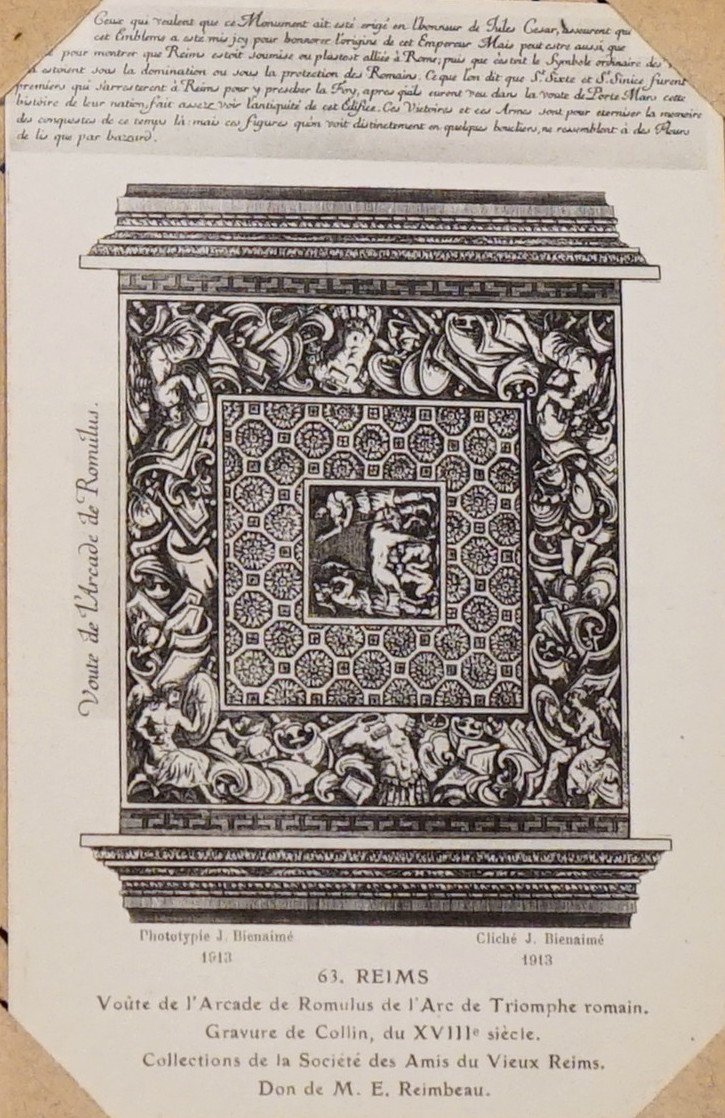
Bas-reliefs depict mythological scenes such as Romulus and Remus, Leda and the Swan, and various Roman deities. Agricultural motifs, friezes, and allegorical figures express Roman virtues and the city’s prosperity. The blend of Roman and Gallic traditions in the artwork reflects Reims’ cosmopolitan character during antiquity (Nomads Travel Guide; reimschampagne-chapter.com).
3. Medieval and Modern Transformations
Following the fall of the Roman Empire, the Porte de Mars was integrated into the medieval city’s defensive walls, serving as a fortified gate. By the 16th century, its military function faded, but the arch remained a prominent urban landmark. Urban development eventually obscured the monument, until 19th-century restoration efforts restored its freestanding character (Nomads Travel Guide).
4. Preservation and Restoration
The arch survived the destruction of Reims during World War I and has benefited from multiple restoration campaigns since the 19th century. Today, it is protected as a historic monument and included in the UNESCO World Heritage ensemble of Reims. Ongoing conservation ensures the preservation of its sculptural details and structural integrity (Dabbling in Jetlag).
5. Historical Significance and Symbolism
The Porte de Mars stands as a rare example of Roman monumental architecture outside Italy. Its scale and decorative richness surpass those of other Roman gates in France. Symbolizing resilience and continuity, the arch serves as a tangible link between ancient, medieval, and modern Reims (History Hit; FranceRent).
6. Visitor Information: Hours, Tickets, Accessibility
- Visiting Hours: The Porte de Mars is an open-air monument in a public park, accessible 24/7 throughout the year. Daylight hours are best for viewing the reliefs.
- Tickets: No entrance fee or ticket is required.
- Accessibility: The monument is at street level, with paved paths suitable for wheelchairs and strollers. Nearby parking and public transport options make it easy to reach (Reims Tourism Office; Spotting History).
7. Travel Tips and Nearby Attractions
- Best Time to Visit: Spring and summer provide pleasant weather; early mornings and late afternoons offer optimal light for photography.
- How to Get There: A 10-minute walk from the Reims train station (Gare de Reims), located at Place de la République. Local buses and trams also serve the area (Best Things to Do in Reims; France Travel Planner).
- Nearby Sites: Combine your visit with Cathédrale Notre-Dame de Reims, Palais du Tau, and Musée Saint-Remi. Champagne houses are also within easy reach (BonAdvisor).
8. Visual Experience and Interpretation
- On-Site: Walk through the three arches to admire carvings up close. Nighttime illumination enhances the monument’s grandeur.
- Virtual Resources: Explore official websites for virtual tours and high-resolution images (Virtual Tour of Porte de Mars).
- Educational Value: Informational plaques in French and English provide historical context. Educational programs and workshops are often organized in collaboration with local museums (reimschampagne-chapter.com).
9. Frequently Asked Questions (FAQ)
Q: Do I need tickets to visit the Porte de Mars?
A: No, it is freely accessible without tickets.
Q: What are the visiting hours?
A: Open 24/7, as it is outdoors in a public space.
Q: Is the site wheelchair accessible?
A: Yes, paved walkways provide full accessibility.
Q: Are guided tours available?
A: Yes, many city walking tours include the Porte de Mars. Check with the Reims tourist office or local operators (Nomads Travel Guide).
Q: Can I enter or climb the arch?
A: Walking through the arches is allowed, but climbing or entering the structure is prohibited.
10. Planning Your Visit and Key Facts
- Location: Place de la République, Reims, France
- Best Access: Walking from Gare de Reims or via local transport
- Nearby: Cathédrale Notre-Dame de Reims, Palais du Tau, Musée Saint-Remi, and Champagne houses
- Facilities: No dedicated restrooms or visitor center, but cafés and green spaces are nearby
- Safety: Well-patrolled area; exercise standard precautions
Internal Links
External Links
Summary: Why Visit the Porte de Mars?
The Porte de Mars is a remarkable surviving relic of Roman Reims, celebrated for its monumental scale, intricate artistry, and enduring historical significance. Open and accessible to all, it offers a powerful visual and educational encounter with antiquity amid the vibrant city of Reims. Its central location enables easy integration into any Reims itinerary, alongside the city’s other celebrated historical sites. Whether you’re a history buff, art lover, or casual traveler, the Porte de Mars is an essential stop that embodies the city’s resilience and cultural richness (Nomads Travel Guide; reimschampagne-chapter.com; Best Things to Do in Reims; History Hit; FranceRent; Dabbling in Jetlag; Reims Tourism Office).
For the latest updates, travel tips, and guided tour information, consult the official Reims tourism website and consider downloading the Audiala app for audio guides and interactive maps.
Listen to the full story in the app
The whole Porte De Mars,
told well.
Listen to sourced travel stories with local history and practical context — ready offline.
Verified, and shown.
Researched and written by the Audiala editorial team from historical records, architectural archives, and local expertise.
Built from cited sources · see the method · How we make our guides →