Introduction
Nestled in Paris’s 9th arrondissement, the Théâtre de l’Athénée Louis-Jouvet stands as a testament to French theatrical tradition and architectural splendor. Renowned for its Belle Époque décor and Italianate auditorium, this historic venue offers visitors both a glimpse into Paris’s past and a vibrant present-day cultural experience. This comprehensive guide covers the theater’s origins, architectural highlights, visitor information, and practical tips to ensure an enriching visit.
For the most up-to-date details, consult the official Athénée Théâtre Louis-Jouvet website or explore in-depth features from reputable cultural resources (Le Parisien).
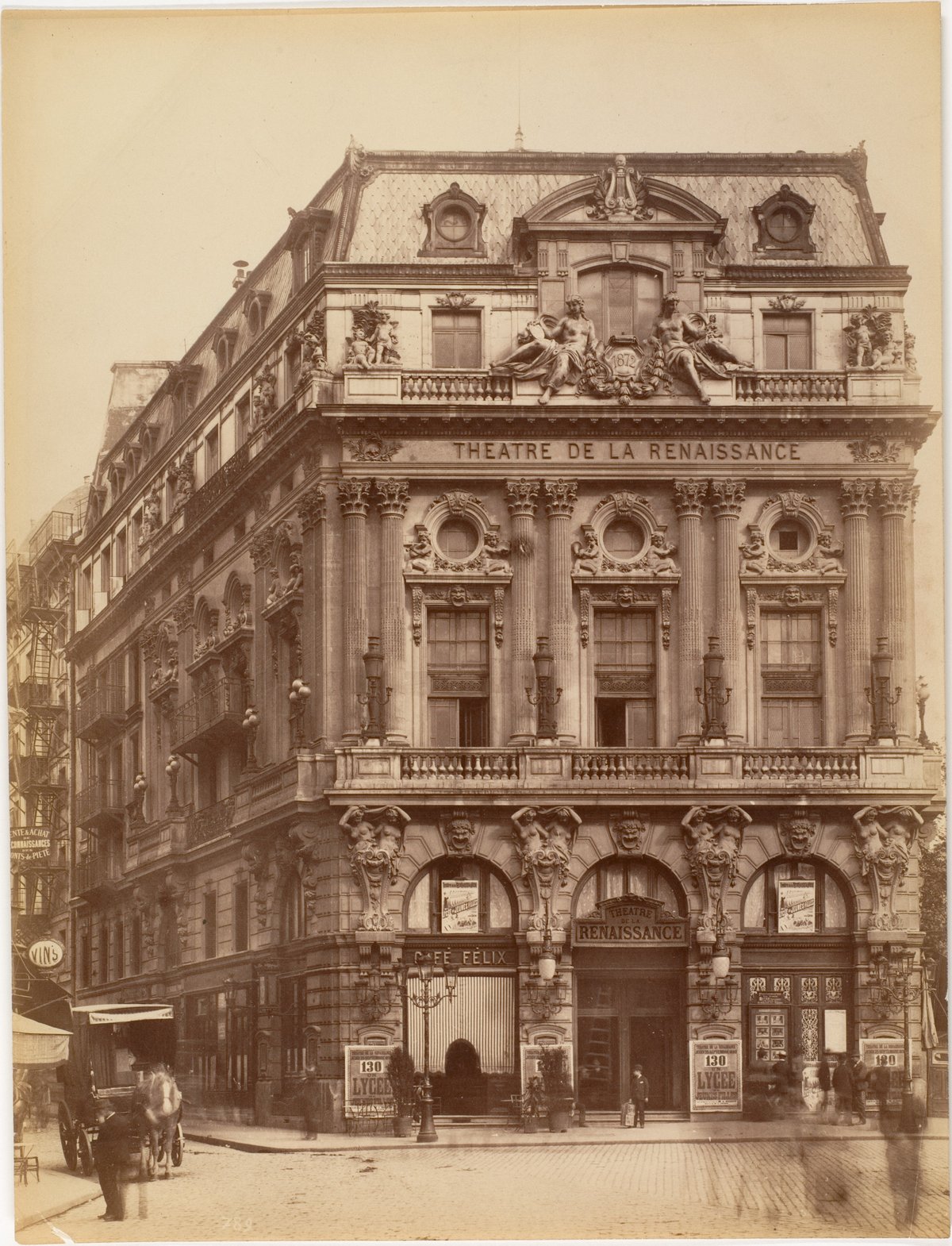
The Athénée’s origins trace to 1881, when ambitious theater directors transformed a grand hôtel particulier on rue Boudreau into the Eden-Théâtre, inaugurated in 1883 (Le Parisien). This lavish palace, inspired by oriental motifs and one of Paris’s first electrically lit venues, could seat 1,200 guests and even featured a women’s velodrome beneath the stage.
Despite its grandeur, the Eden-Théâtre struggled financially and underwent several transformations before giving way to the more intimate and refined Théâtre de l’Athénée. In 1894, architects Stanislas Loison and Paul Fouquiau reimagined the space, inaugurating it as the Théâtre de la Comédie-Parisienne. By 1896, the façade was relocated to face Square de l’Opéra Louis-Jouvet, further integrating the theater into Paris’s vibrant urban landscape (theatreinparis.com).
In 1996, the Athénée was declared a Monument Historique and underwent meticulous restoration, balancing Belle Époque elegance with modern amenities (fr.wikiarquitectura.com).
Photo Gallery
Explore Théâtre De L'Athénée in Pictures
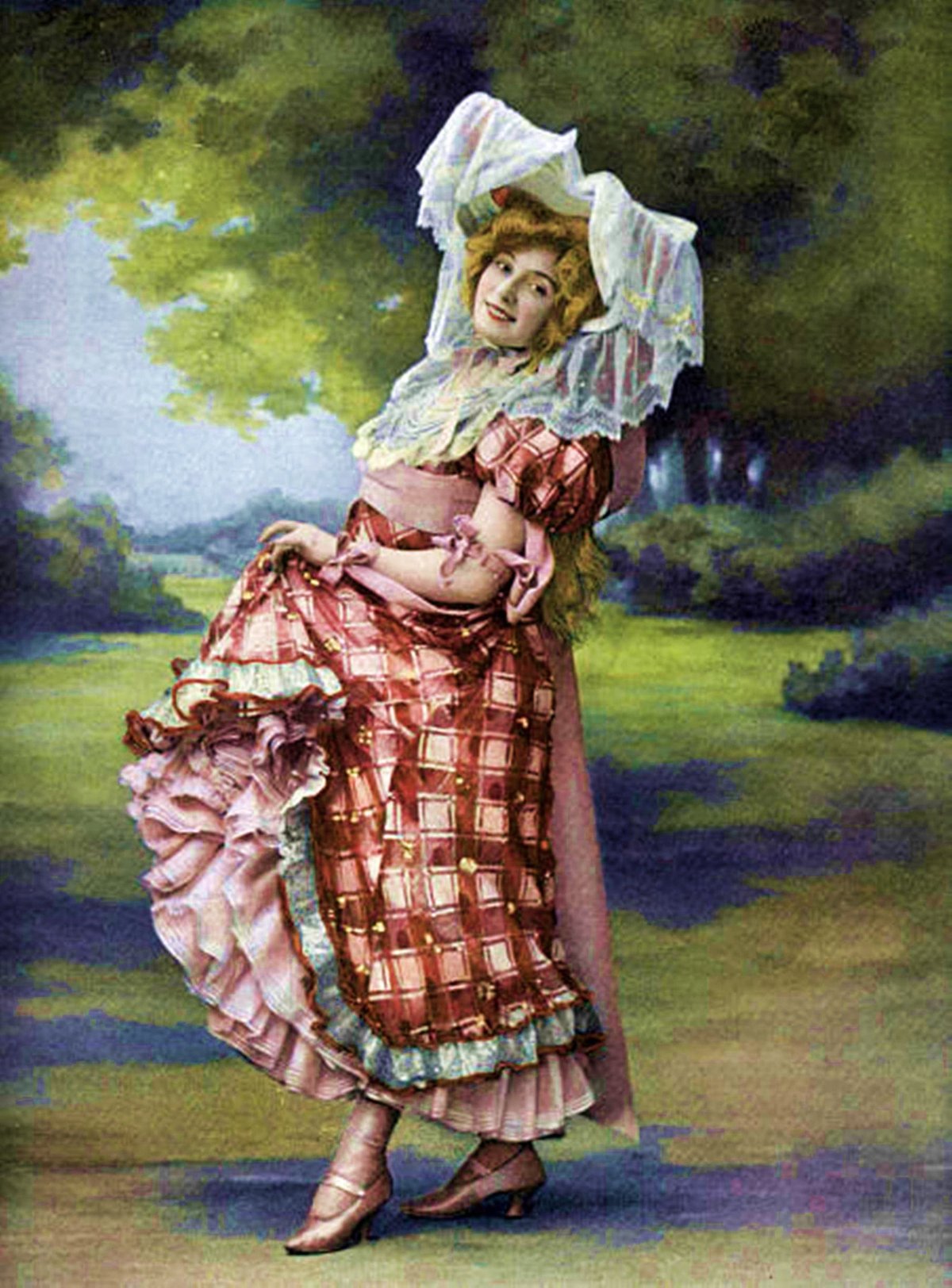
Photograph of French actress Amélie Diéterle playing Betsy in the play La petite Milliardaire at Théâtre des Variétés in Paris during the Belle Époque, published in The Theater magazine in July 1905.
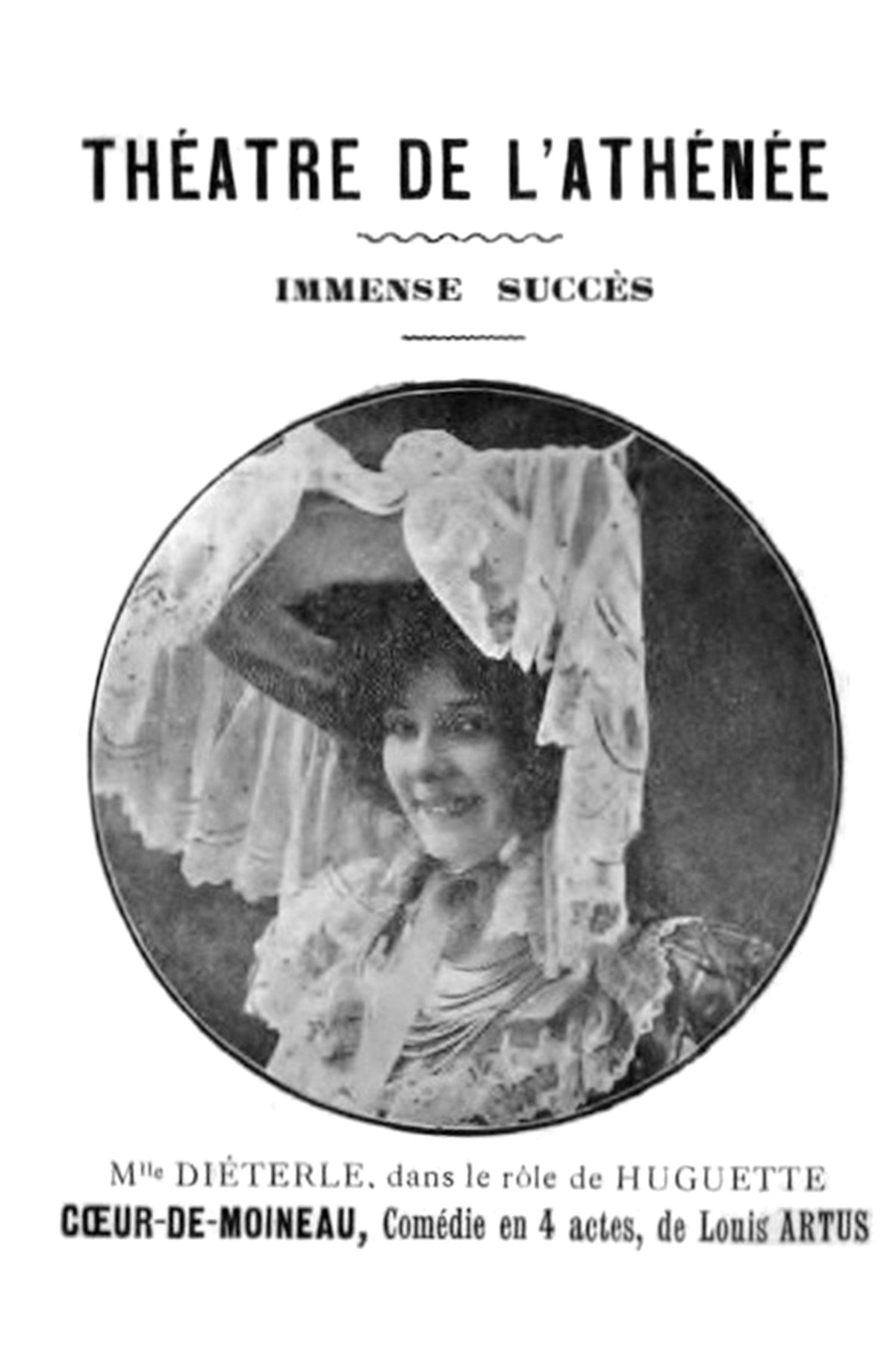
Vintage 1905 poster of Théâtre de l'Athénée comedy Heart of sparrow by Louis Artus starring Amélie Diéterle as Huguette, French actress renowned in Belle Époque Paris theatre scene.
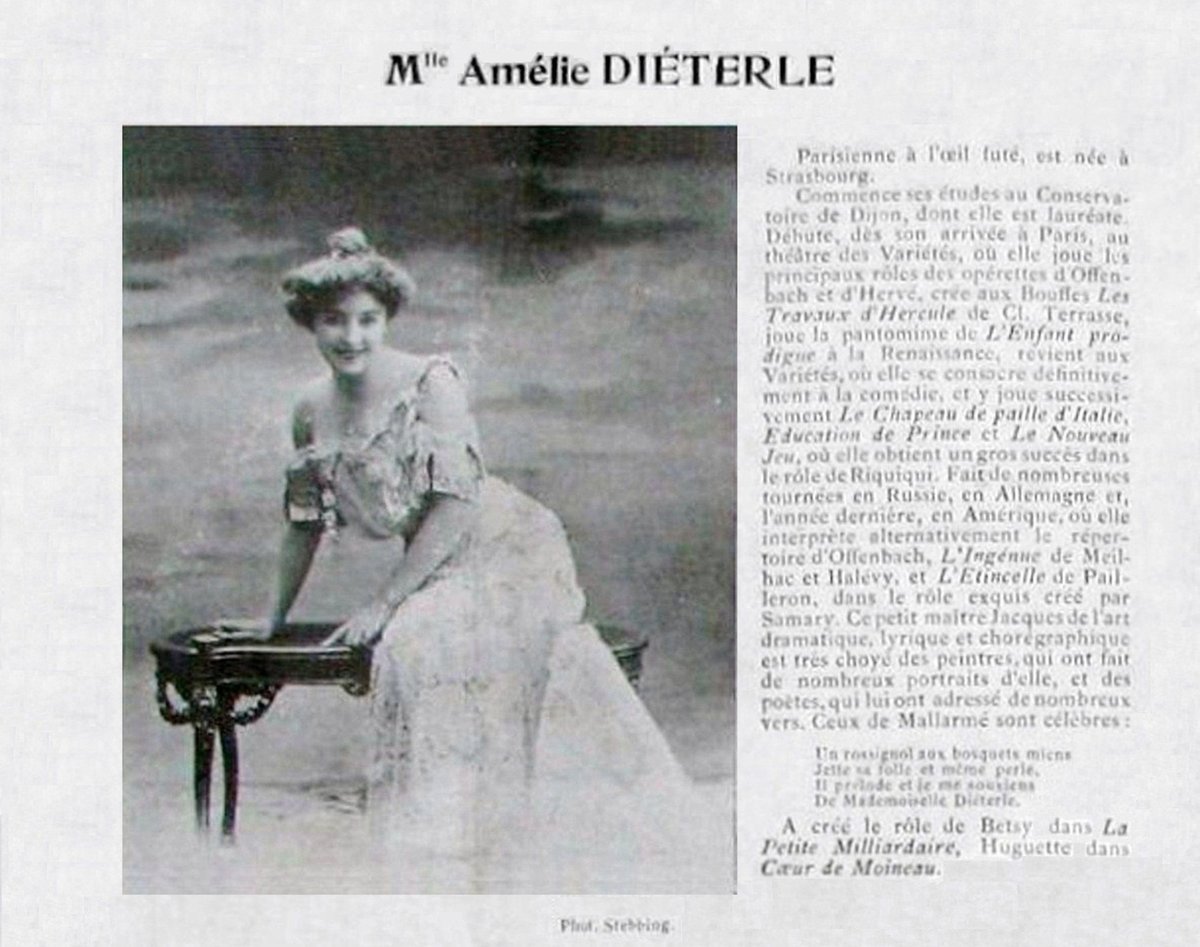
1905 official program excerpt from Théâtre de l'Athénée featuring French actress Amélie Diéterle in the comedy Cœur de Moineau by Louis Artus with an Edouard Stebbing photo and her biography
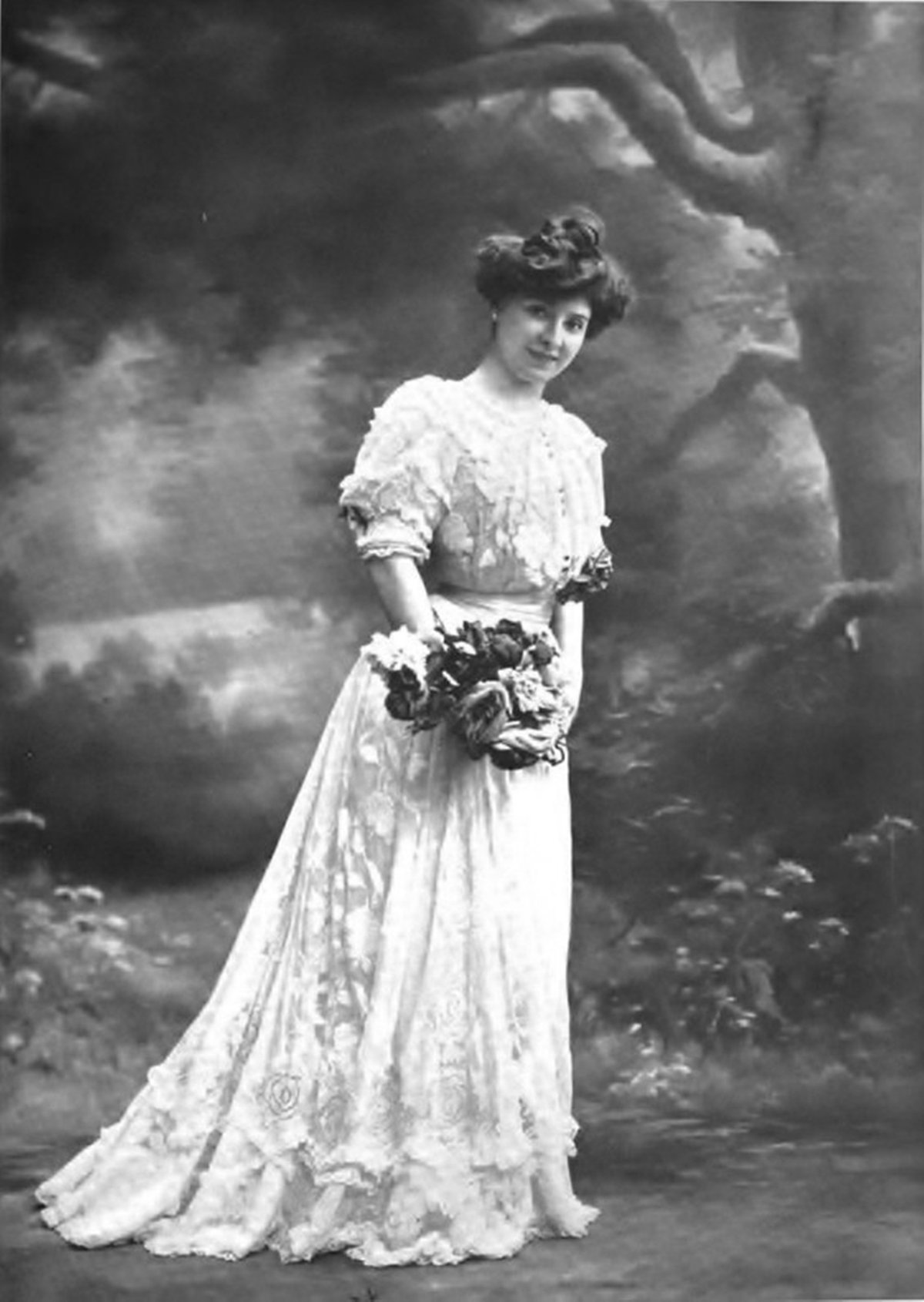
Black and white photograph of French actress Amélie Diéterle performing as Huguette in the four-act comedy Cœur de moineau by Louis Artus, shown at Théâtre de l'Athénée, published in The Theater magazine, July 1905 issue during the Belle Époque period.
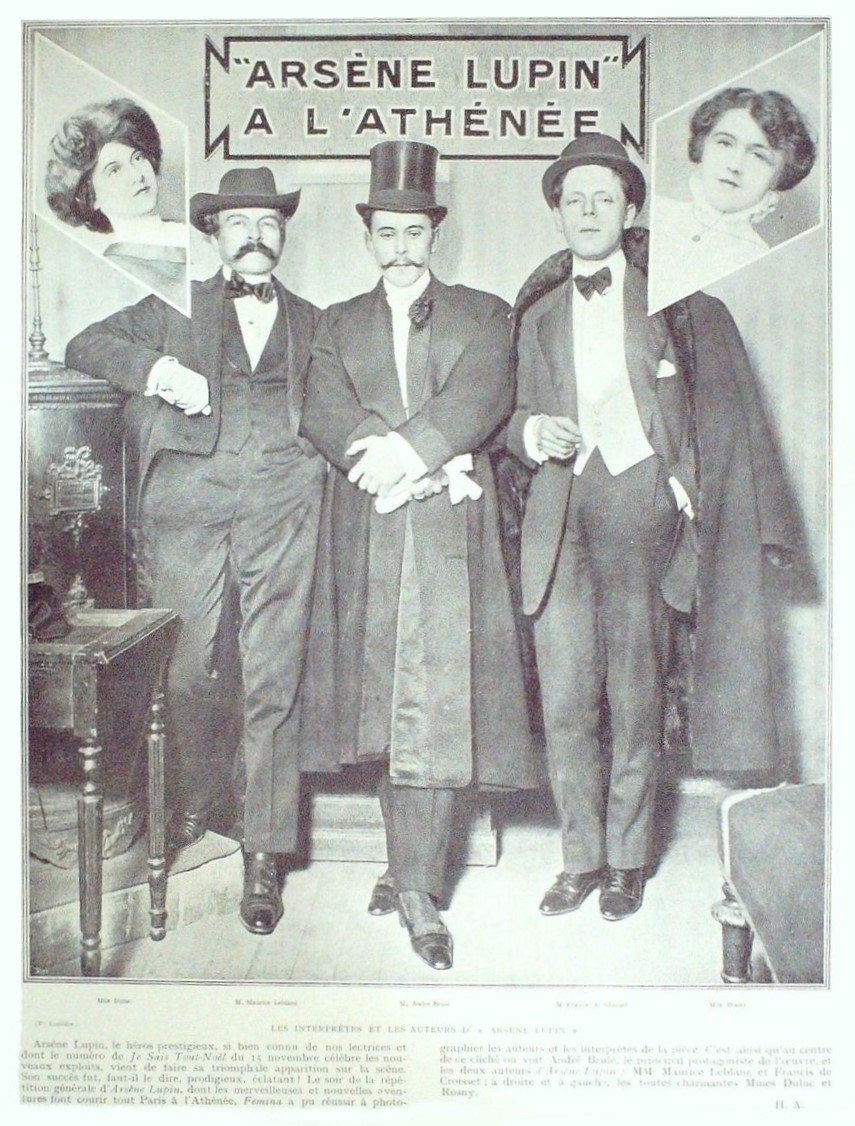
Black and white photograph from 1908 showing actor André Brulé as Arsène Lupin, flanked by authors Maurice Leblanc and Francis de Croisset, published in Femina magazine, issue 188 on November 15, 1908.
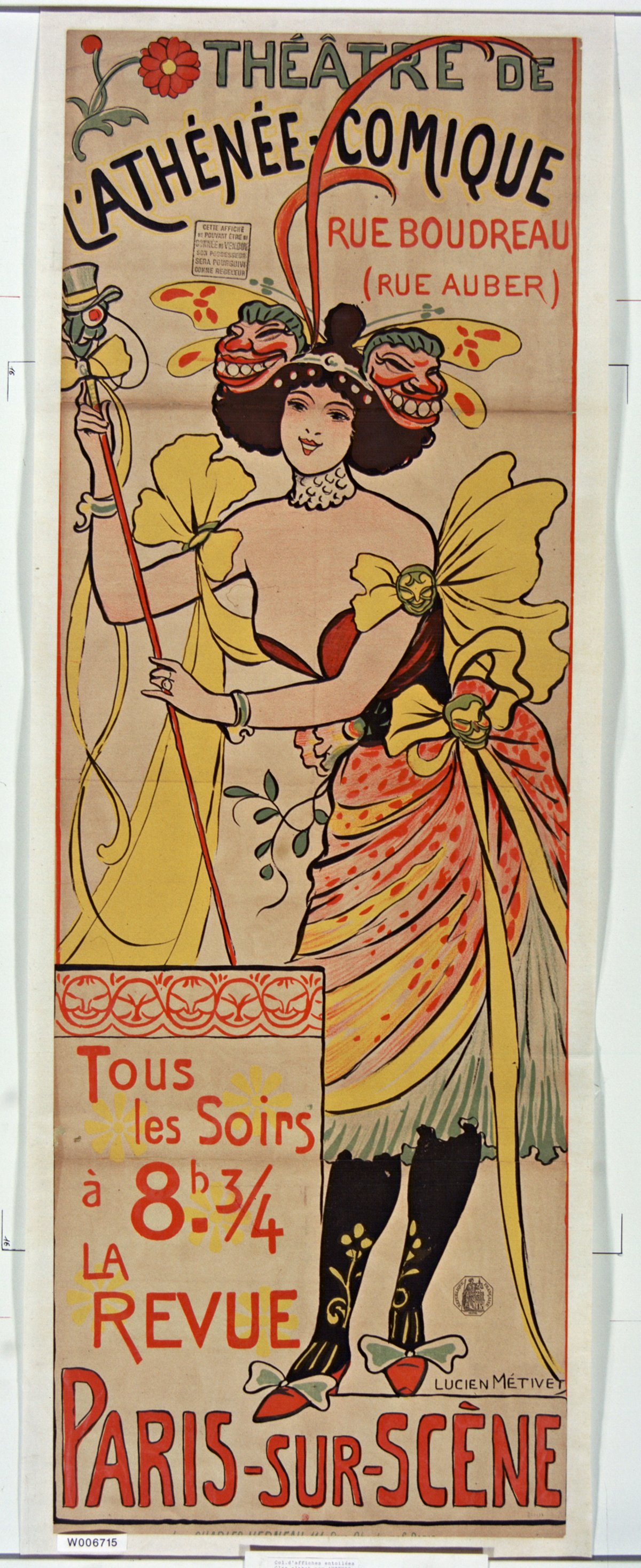
Theatre de l'Athenée-Comique vintage 1895 Paris poster by Lucien-Marie-François Metivet advertising evening revue Paris-sur-scène at 8:45 PM on Rue Boudreau (now Rue Auber)
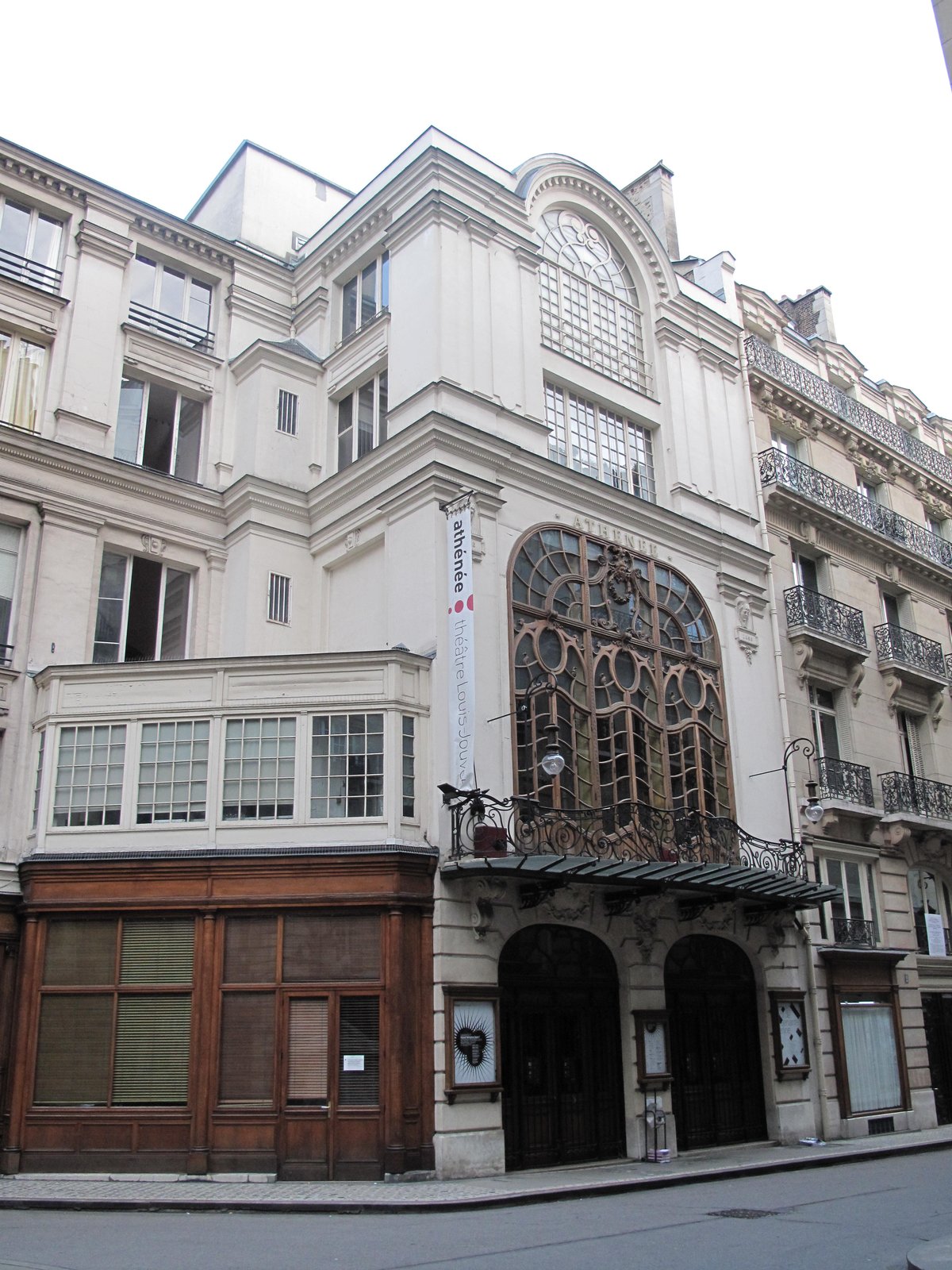
Exterior view of the Théâtre de l'Athénée located in the 9th arrondissement of Paris, showcasing its elegant architectural design.
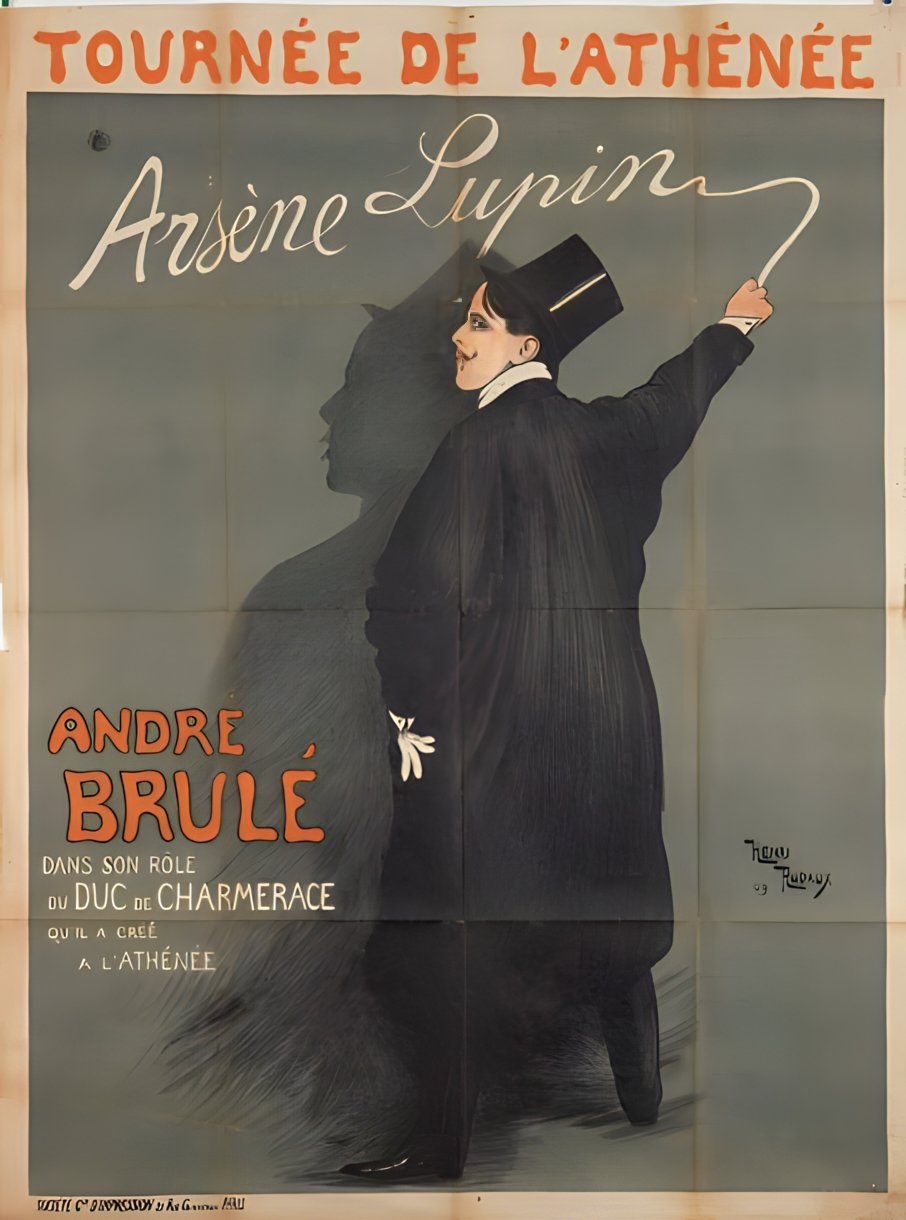
Vintage 1909 poster titled Tournée de l'Athénée showcasing Arsène Lupin with actor André Brulé in the role of Duc de Charmerolle, painted by Henri-Edmond Rudaux, printed by Société générale d'impression in Paris.
Architectural Highlights
Exterior
The Athénée’s symmetrical façade, adorned with classical pilasters and detailed ornamentation, reflects Parisian elegance of the late 19th century. Though understated at street level, the entrance leads to a richly decorated interior (theatreinparis.com).
Auditorium
Seating approximately 550 across orchestra, boxes, amphitheater, and gallery (“paradis”), the Italianate auditorium is renowned for its intimacy and acoustics (en.wikiarquitectura.com). Highlights include:
- Gilded moldings, plush garnet-red seats, and Art Nouveau-inspired details
- A sky-painted ceiling with nine gilded rays radiating from a central chandelier
- A proscenium arch with floral motifs, a shield, angels, and roses
- Modern scenic equipment from the 1996 restoration (parisupdate.com)
Foyers and Circulation
Elegantly appointed with marble, mirrors, and decorative moldings, the theater’s foyers provide stylish space for socializing and movement, efficiently accommodating audience flow.
The Louis Jouvet Era (1934–1951)
Louis Jouvet’s directorship marked the Athénée’s golden age. A visionary in French theater, Jouvet’s leadership elevated the venue as a crucible for avant-garde productions and intellectual rigor, premiering works by Jean Giraudoux such as “La Folle de Chaillot” and “Ondine” (Le Parisien). Jouvet’s holistic approach to theater integrated acting, set design, lighting, and direction, helping cement the theater’s reputation for excellence.
The enduring legacy of this era is reflected in the theater’s official name and the preservation of period features, such as original 1940s signage and backstage facilities.
Notable Productions and Events
From its early days, the Athénée has hosted premieres and landmark revivals, attracting leading directors, actors, and playwrights. The Christian-Bérard studio, established in the attic during Pierre Bergé’s directorship, continues to nurture experimental and emerging theater artists. The venue’s programming balances classical repertoire with contemporary innovation, appealing to diverse audiences (theatreinparis.com).
Visiting Information
Hours and Ticketing
- Box Office: Open Tuesday to Friday from 15:00 to 19:00, and from 15:00 on performance days (75.agendaculturel.fr).
- Showtimes: Most performances begin in the evening; check the official schedule.
- Tickets: Available online, by phone (+33 (0)1 53 05 19 19), or at the box office. Prices generally range from €8 to €60 depending on seat and production, with discounts for students, seniors, and groups (offi.fr). Early booking is recommended.
Accessibility
- Main Auditorium: Wheelchair accessible via elevator. Reserve accessible seating in advance.
- Salle Christian-Bérard: Accessible only by stairs (4th floor).
- Facilities: Accessible restrooms; staff assistance available on request (75.agendaculturel.fr).
Getting There
- Address: 7 rue Boudreau, 75009 Paris
- Metro: Opéra (Lines 3, 7, 8); Havre-Caumartin (Lines 3, 9); Madeleine (Lines 8, 12, 14)
- RER: Auber (Line A)
- Bus: Lines 20, 21, 27, 29, 32, 45, 52, 66, 68, 95
- Parking: Paid garages nearby (e.g., Parking Meyerbeer Opéra, Haussmann Galeries Lafayette). Advance booking recommended (Paris public transport tips).
Amenities and Visitor Tips
- Cloakroom: Available for coats and small bags; large luggage not permitted.
- Refreshments: Café/bar open before performances and during intermissions; many nearby dining options.
- Wi-Fi: Not standard; check the website for digital updates.
- Dress Code: Smart-casual; bring layers for temperature changes (Paris dress tips).
- Etiquette: Arrive 15–20 minutes early. Photography and recording are not allowed during performances (Paris etiquette).
Guided Tours and Special Events
Special guided tours offer insights into the theater’s architecture and history. These are organized occasionally—check the official website for availability.
Role in Parisian Cultural Life
The Athénée is a cornerstone of Paris’s theater district, fostering artistic dialogue and community. Its blend of tradition and innovation continues to inspire the city’s cultural landscape, serving as a gathering place for artists, intellectuals, and audiences (Le Parisien).
Frequently Asked Questions (FAQ)
Q: What are the box office hours?
A: Tuesday–Friday, 15:00–19:00; from 15:00 on performance days.
Q: How do I buy tickets?
A: Online, by phone, or in person at the box office.
Q: Is the theater accessible?
A: The main auditorium is wheelchair accessible; some areas require stairs.
Q: Are performances in English?
A: Most are in French; some operas and concerts may provide surtitles.
Q: Are guided tours available?
A: Occasionally—check the official website for details.
Listen to the full story in the app
Your Personal Curator, in Your Pocket.
Audio guides for 1,100+ cities across 96 countries. History, stories, and local insight — offline ready.
Audiala App
Available on iOS & Android
Join 50k+ Curators
Sources
- verified
- verified
- verified
- verified
- verified
Last reviewed: