Introduction: History and Cultural Significance
Located in the heart of Paris’s 2nd arrondissement, Notre-Dame-des-Victoires is a remarkable emblem of France’s religious heritage and classical architecture. Established in 1629 by King Louis XIII to commemorate his victory at the Siege of La Rochelle, the basilica has borne witness to centuries of faith, artistry, and historical change. Its stunning French classical design, monumental paintings by artists such as Carl Van Loo, and an extraordinary collection of over 37,000 ex-voto offerings make it a unique destination for pilgrims, art lovers, and history enthusiasts alike.
The basilica is not only a repository of art and history but also an active place of worship and Marian devotion. It played a central role in the development of the dogma of the Immaculate Conception and continues to welcome visitors with free admission and accessible facilities. Its proximity to landmarks such as the Palais Royal and Les Halles further enhances its appeal as a must-see stop in Paris. For further information, consult the official Notre-Dame-des-Victoires website, Paris Top Ten, and France Voyage.
Photo Gallery
Explore Notre-Dame-Des-Victoires in Pictures
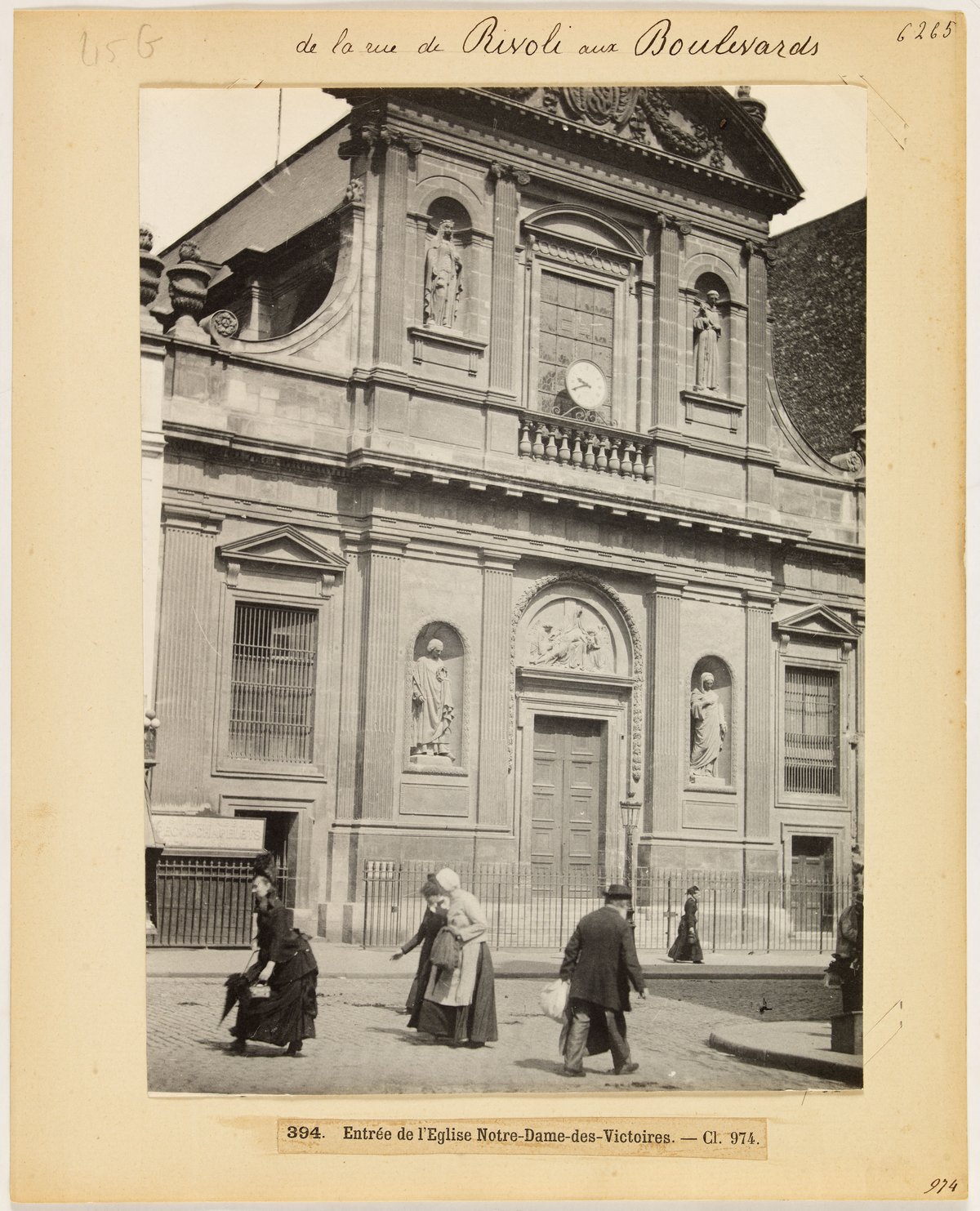
Historic photograph of the entrance to Basilique Notre-Dame-des-Victoires located in the 2nd arrondissement of Paris, taken by Hippolyte Blancard around 1890. The platinum print depicts the detailed architecture and entrance area of this notable Parisian basilica.
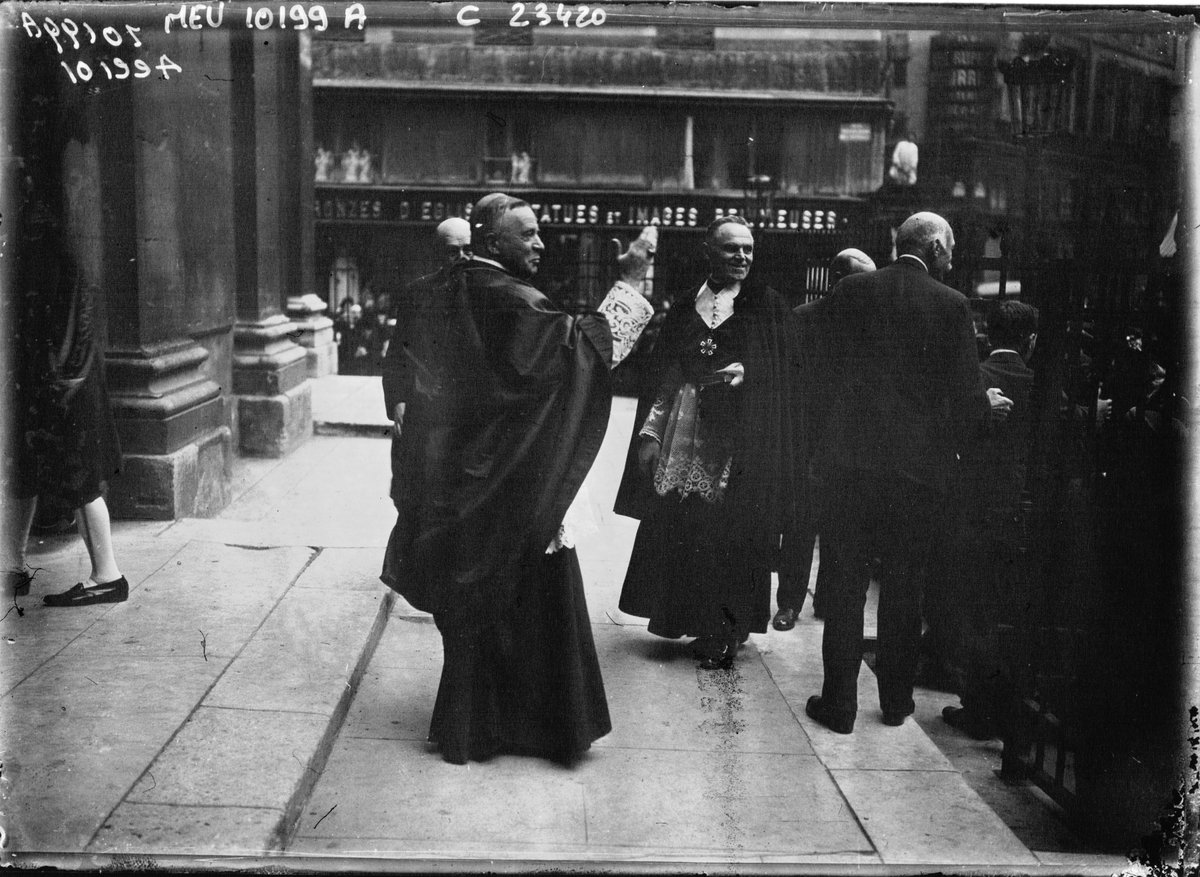
Historic photograph dated October 14, 1923, showing Cardinal Dubois blessing the crowd at Notre-Dame des Victoires in Paris during the religious ceremony of Sister Thérèse. Image provided by the Agence Meurisse in French language.
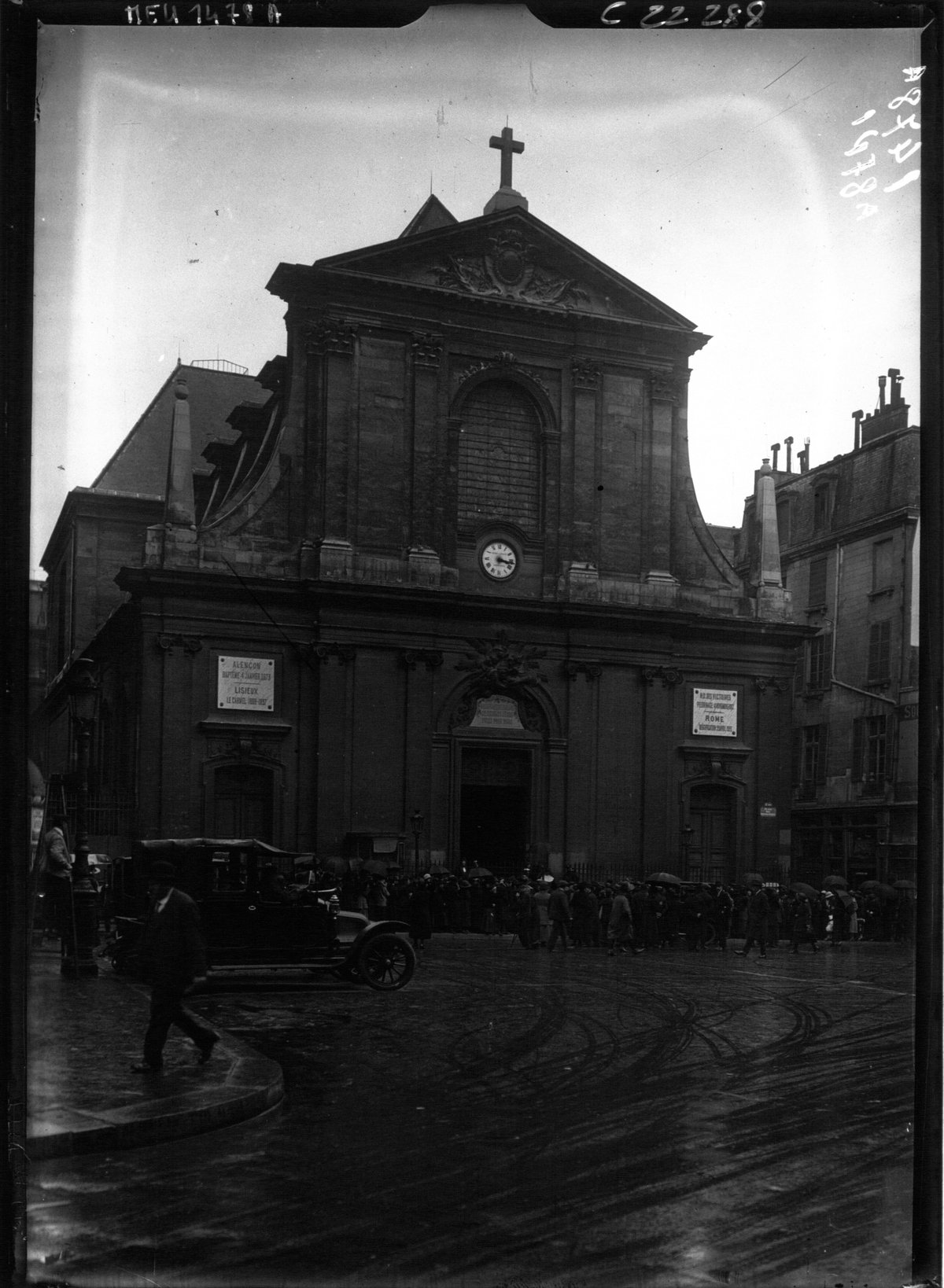
Vintage black and white image depicting the Notre-Dame des Victoires church in Paris, showcasing Parisian monuments, part of the Meurisse photographic collection from 1478 A, distributed by the Agence Meurisse.
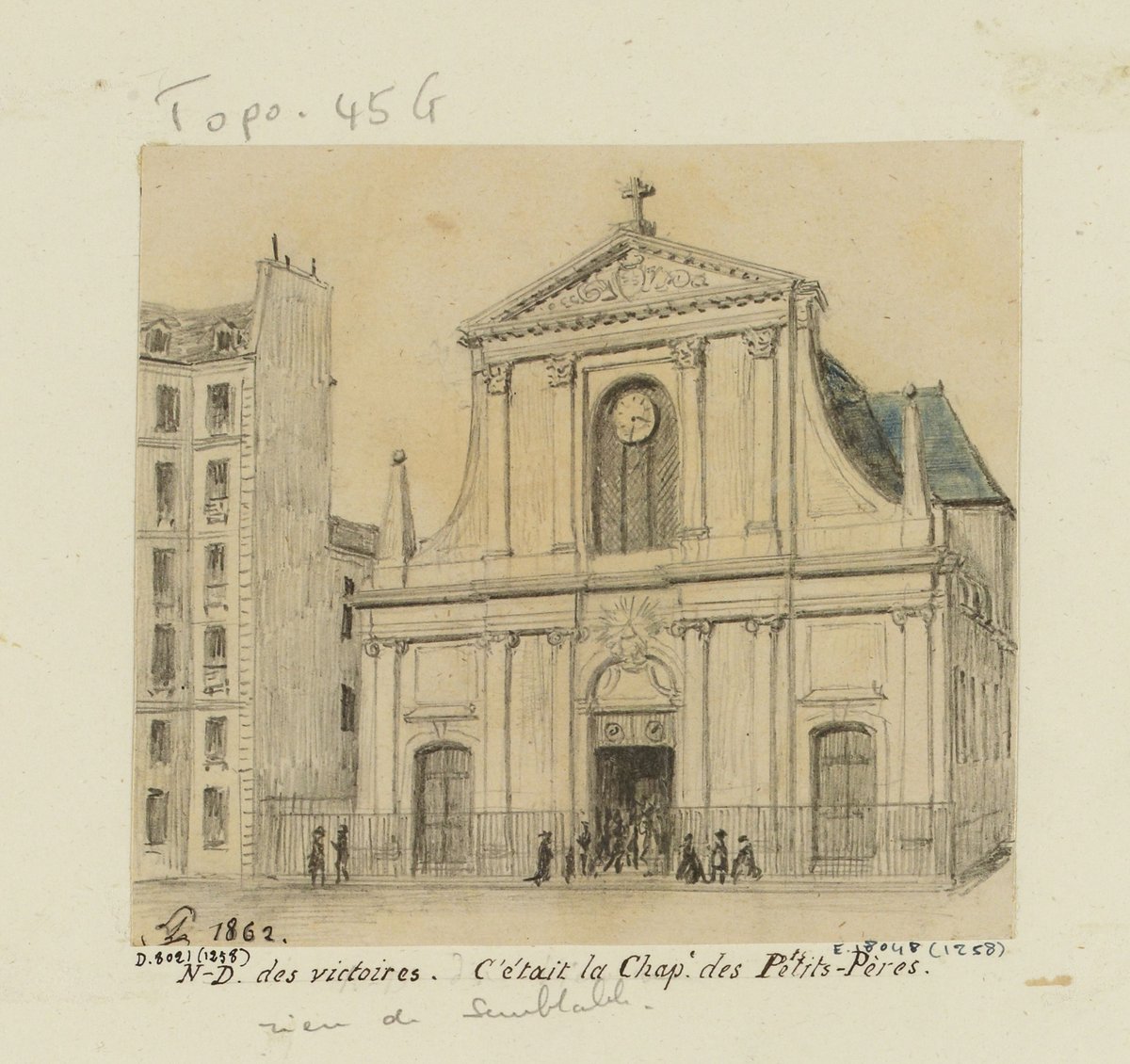
1861 drawing of Notre-Dame des Victoires chapel, Paris by Léon Leymonnerye, using pencil and watercolor, part of a Paris churches series from Musée Carnavalet collection.
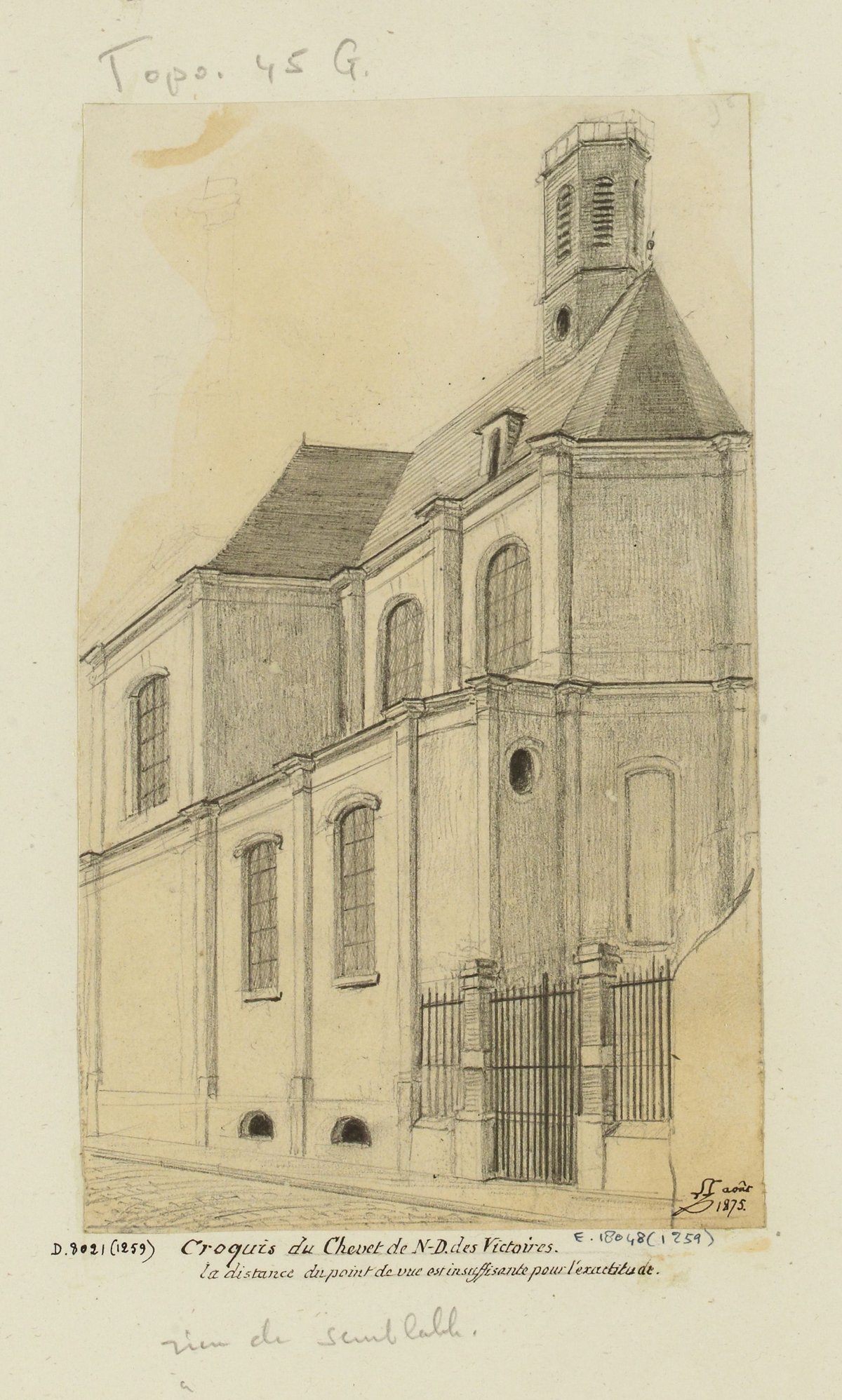
Detailed pencil and watercolor drawing of the chevet of Notre-Dame des Victoires church in Paris by Léon Leymonnerye, created in August 1875. Part of the Paris churches series, housed in Musée Carnavalet with inventory number D.8021(1259). Dimensions 15.3 x 9.2 cm.
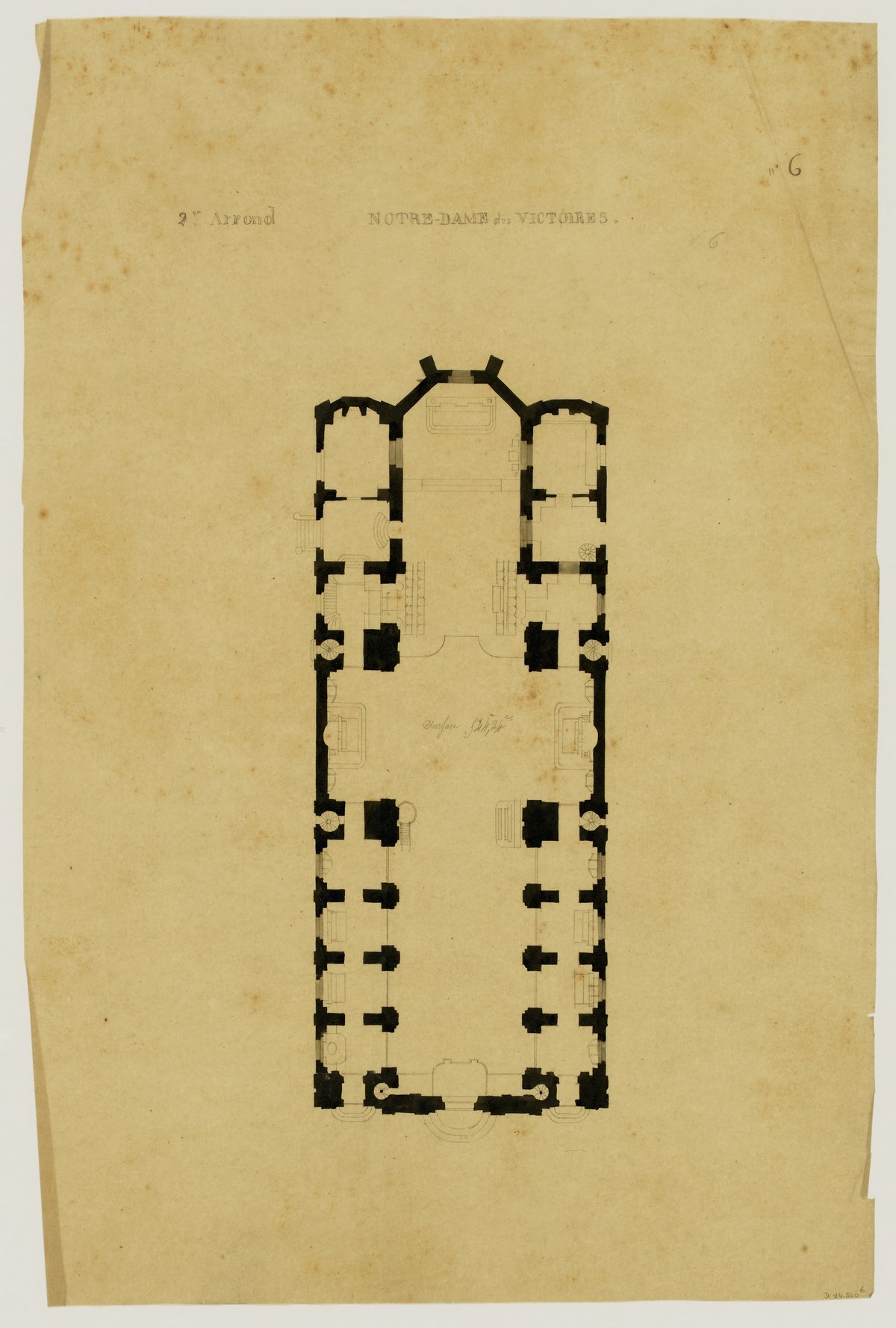
Detailed 1861 architectural drawing of Notre-Dame-des-Victoires church by Lèbe-Sigun, featuring plans, sections, and elevations on tracing paper, preserved at Musée Carnavalet, Paris.
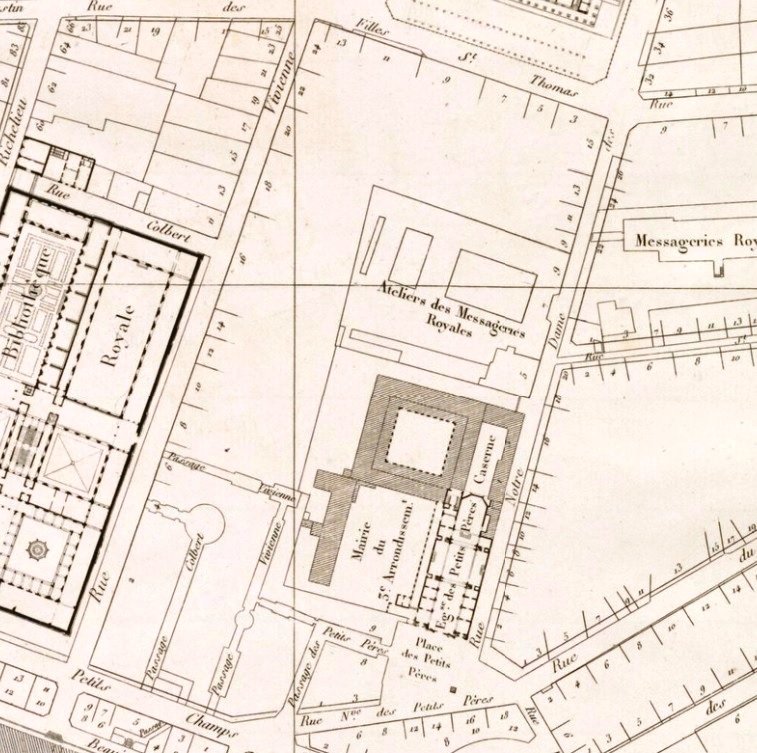
Detailed map plate from the Atlas de Jacoubet showing the state of a city block before the construction of Rue de la Banque in Paris.
Origins and Foundation
Notre-Dame-des-Victoires was founded by King Louis XIII in the 17th century following his victory at the Siege of La Rochelle. The foundation stone was laid on December 9, 1629, and the church was originally intended as a convent chapel for the Discalced Augustinians, known as the “Petits Pères.” The church’s construction was a multi-generational project, with significant contributions from architects such as Pierre Le Muet, Libéral Bruant, Gabriel Leduc, and Jean-Sylvain Cartaud. The latter expanded the nave and added the domed roof over the transept, with the church finally consecrated in 1740.
Architectural Evolution & Features
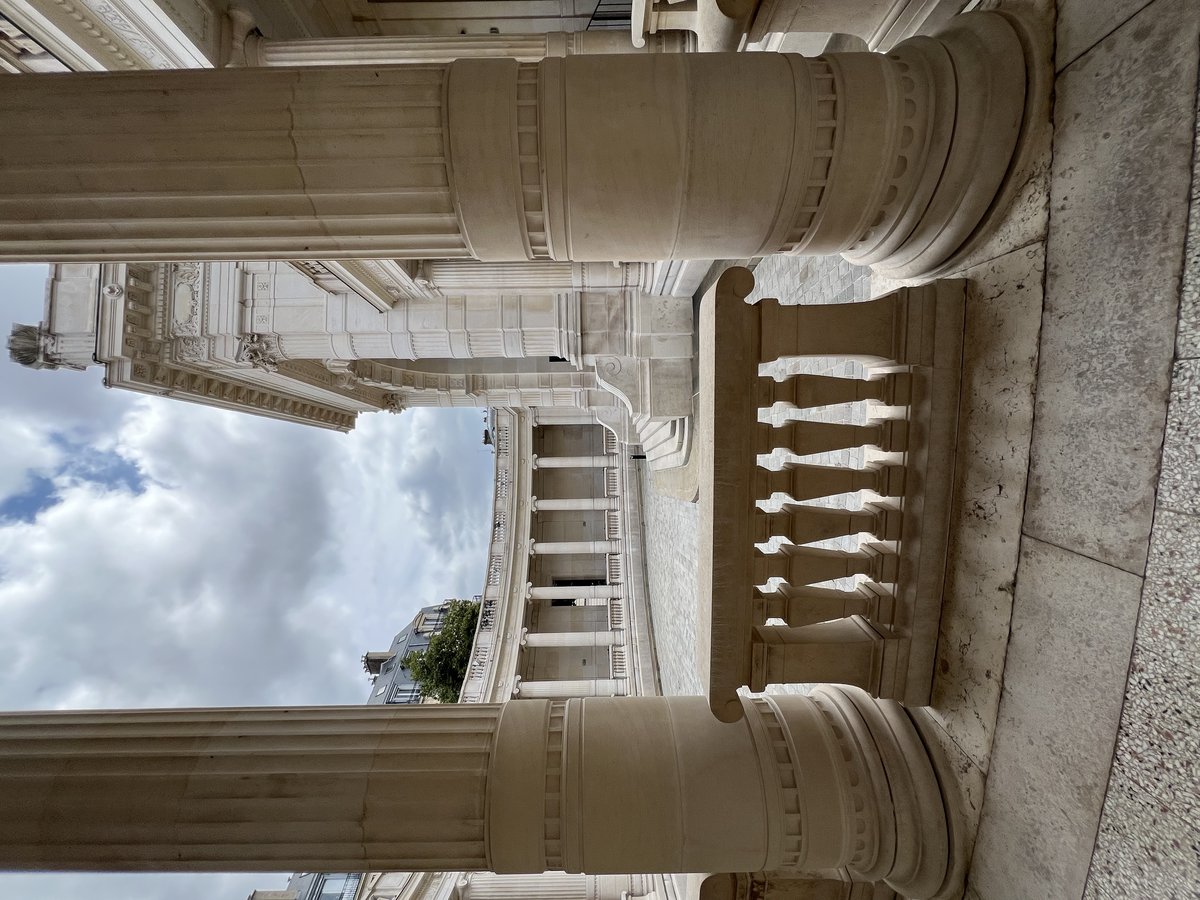
Notre-Dame-des-Victoires exemplifies French classical architecture. Its façade, designed by Jean-Sylvain Cartaud, features Ionic and Corinthian columns, a triangular pediment, and balanced symmetry—hallmarks of the French Baroque style. The basilica measures 62 meters long by 24.5 meters wide, with a 15-meter-high vault. Inside, the nave and side aisles lead to a richly decorated choir, adorned with seven monumental paintings by Carl Van Loo depicting scenes from the life of Saint Augustine.
Notable interior highlights include:
- Stained Glass Windows: Featuring Marian imagery and commemorative scenes, these windows bathe the space in vibrant light.
- The Grand Organ: Built in the 18th century and restored by Alfred Kern in 1973, the organ is celebrated for its powerful acoustics and has hosted performances by noted composers and musicians.
- Pulpit and Sculptures: The intricately carved pulpit by Louis-Alexandre Régnier and numerous statues underscore the basilica’s artistic heritage.
- Ex-Voto Collection: Over 37,000 ex-voto plaques, metal hearts, and military decorations line the walls, symbolizing centuries of answered prayers and personal stories.
For more on the basilica’s architecture and art, see Paris Top Ten, Catholic Shrine Basilica, and France Voyage.
Religious and Cultural Significance
Notre-Dame-des-Victoires is renowned for its Marian devotion, especially as a site dedicated to the Immaculate Heart of Mary. The church’s ex-voto tradition began in earnest during the 19th century, particularly after Father Charles-Éléonore Dufriche-Desgenettes consecrated the parish to Mary in 1836, leading to the foundation of the international Archconfraternity.
The basilica’s spiritual importance was recognized by Pope Pius IX, who sent a new crown for the Virgin’s statue ahead of the 1854 proclamation of the Immaculate Conception dogma. The ongoing Perpetual Novena, held every Tuesday since 1836, and the basilica’s role as a pilgrimage site, especially during the Feast of the Immaculate Conception and the Assumption, underline its enduring significance.
Notable Historical Events
- French Revolution: The church was secularized, with the convent suppressed and the building used for non-religious purposes. Worship resumed in 1809.
- 19th and 20th Centuries: The basilica played a role in notable conversions and Marian devotion. It was elevated to minor basilica status in 1927.
- Famous Visitors: Figures such as Mozart and Saint Thérèse of Lisieux have prayed here.
Visiting Information
Visiting Hours
- Monday to Saturday: 7:30 AM – 7:00 PM
- Sunday: 8:00 AM – 7:00 PM
Hours may vary on holidays or during special events; check the official website for updates.
Admission & Tickets
Entry to Notre-Dame-des-Victoires is free. Donations are welcomed to support the church’s upkeep.
Accessibility
The basilica is wheelchair accessible, with ramps and assistance available. Service animals are permitted.
Guided Tours & Events
Guided tours—highlighting the basilica’s history, art, and ex-voto tradition—are available on weekends and by appointment. The church also hosts concerts, especially organ recitals, and special Marian celebrations throughout the year.
Getting There
Address: 6, rue Notre-Dame des Victoires, 75002 Paris
Metro: Sentier (Line 3), Bourse (Line 3), Palais Royal - Musée du Louvre (Lines 1 & 7)
Bus: Lines 20, 39, 48
The basilica’s central location makes it easy to combine with visits to nearby attractions.
Nearby Attractions
- Palais Royal and its gardens
- Musée Grévin
- Passage des Panoramas
- The Louvre Museum
- Place des Victoires
Photography Tips
Photography is permitted without flash; videography requires prior permission. The ex-voto walls, stained glass, and main altar provide excellent photo opportunities.
Frequently Asked Questions (FAQ)
Q: Is admission to Notre-Dame-des-Victoires free?
A: Yes, entry is free for all visitors.
Q: What are the visiting hours?
A: Monday to Saturday: 7:30 AM–7:00 PM; Sunday: 8:00 AM–7:00 PM.
Q: Are guided tours available?
A: Yes, on weekends and by appointment; check the website for details.
Q: Is the basilica accessible for visitors with disabilities?
A: Yes, ramps and accessible facilities are provided.
Q: Can I attend Mass or special events?
A: Daily Mass, confessions, and regular concerts are open to all.
Q: Is photography allowed inside?
A: Photography is permitted without flash.
Listen to the full story in the app
Your Personal Curator, in Your Pocket.
Audio guides for 1,100+ cities across 96 countries. History, stories, and local insight — offline ready.
Audiala App
Available on iOS & Android
Join 50k+ Curators
Sources
- verified
- verified
- verified
- verified
- verified
Last reviewed: