An introduction.
Researched by the Audiala editorial team from historical records, architectural archives, and local expertise.
WWhy does one of Paris's most peaceable gardens sit on ground once linked to devils, dynastic panic, prison carts, and machine-gun fire? Today the Jardin du Luxembourg in Paris, France, smells of cut grass and damp stone, with green chairs scraping the gravel, children pushing toy sailboats across the basin, and the pale facade of Luxembourg Palace holding the whole scene in place. Visit because few places in the city let you feel French history and ordinary Parisian life at the same time, in the same patch of shade.
Most visitors arrive expecting a beautiful park. Fair enough. The clipped lawns, chestnut alleys, puppet theatre, and Medici Fountain deliver exactly that, and the mix of strict French geometry with softer English-style planting keeps the eye moving.
But the deeper pleasure is the contradiction. Records show this 25.72-hectare garden, roughly 36 soccer fields, has been repeatedly cut, rebuilt, shelled, occupied, and argued over, yet it still works as a place for sitting, strolling, gossiping, reading, and watching children turn a pond into a private navy.
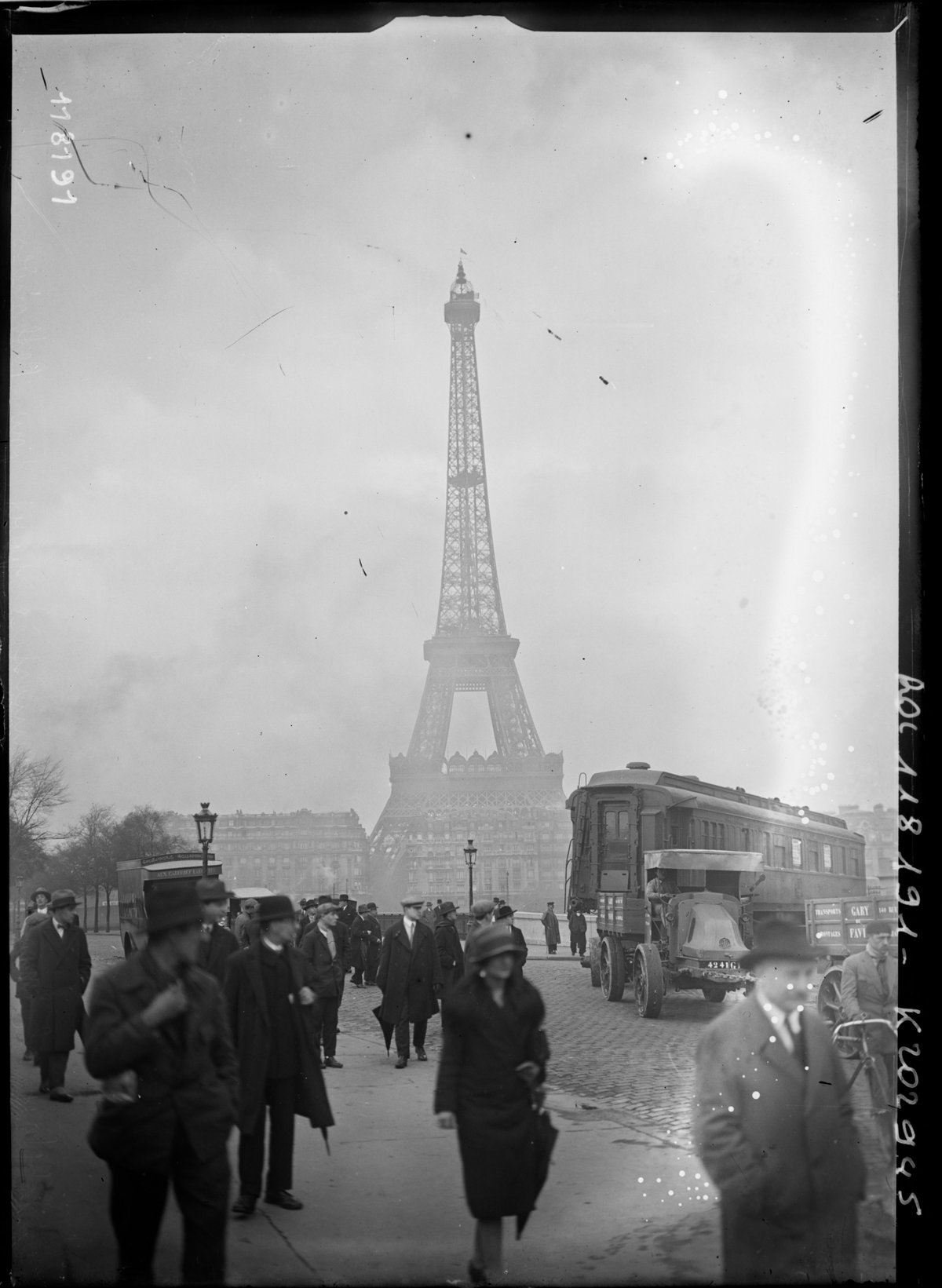
That continuity matters. Paris has grander set pieces, from the royal theater of the Louvre Museum to the vertical swagger of the Eiffel Tower, but the Luxembourg shows something rarer: how a place tied to state power can still feel intimate enough for a chess game, a kiss, or an hour spent doing absolutely nothing.
01 What to see.
Grand Bassin and the Queens' Terrace
Medici Fountain
A Better Luxembourg Walk
Plan and listen to Jardin du Luxembourg with Audiala.
Audio guide in your pocket, itinerary in your browser. Built for the way you actually visit.
03 Visitor logistics.
The practical scaffolding for a good visit — kept short.
Getting There
RER B to Luxembourg-Senate is the cleanest arrival; the station opens almost at the garden edge near Boulevard Saint-Michel, and you can be by the central paths in about 2 minutes. Metro works too: Odeon on lines 4 and 10 is about 6 minutes on foot via Rue de Medici, while buses 58, 84, and 89 stop at Senat and bus 82 at Auguste Comte; from the Panthéon, the walk down Rue Soufflot takes about 9 minutes.
Opening Hours
As of 2026, Jardin du Luxembourg changes hours every two weeks on the 1st and 16th of each month, which is a very Parisian way of following the light. On July 16-31, 2026, it opens 7:30 am-9:00 pm; the longest days run to 9:30 pm on June 16-30, while December closes as early as 4:30 pm, and the garden is generally open daily, including major French holidays.
Time Needed
Give it 45-60 minutes if you want the essentials: the central basin, the palace frontage, the Medici Fountain, and a chair long enough to hear the gravel crunch under other people's steps. A first proper visit takes 1.5-2 hours, and 2.5-3 hours makes sense if you add the railing exhibitions, café time, and the quieter southern stretches.
Accessibility
The easiest wheelchair route starts at Rue de Medici, where the entrance is wide and flat, then follows the paved paths to the central pond and around the palace; those surfaces are much easier than the side alleys of gravel, which can drag after rain like a suitcase on coarse sand. RER B Luxembourg is the best transit option because it has elevator access to street level, and accessible toilets are available near the Auguste-Comte entrance and beside the Senat.
Cost & Tickets
As of 2026, entry to the garden is free every day, so you do not need a ticket, timed slot, or skip-the-line booking. Keep one distinction clear: the Musée du Luxembourg next door is a separate paid attraction with its own admission rules, even though it shares the same elegant backdrop.
05 Tips for visitors.
Small things that change the day.
Senate Rules
This feels relaxed, but it is not a loose municipal park; the Senate runs it, and the rules show. Most lawns are off-limits, alcohol outside licensed areas is banned, smoking is banned, and loudspeaker-style behavior will make you look like you've missed the point of the place.
Photo Limits
Personal photos are generally fine, especially around the basin when the chairs throw long shadows across the gravel. Professional shoots need Senate authorization, and drones are prohibited without permission, so do not arrive with a crew mindset or a flying camera.
Best Light
Go early or late. Morning gives you softer light on the palace façade and a better shot at finding one of the 4,500 green chairs before the regulars claim them, while late afternoon makes the Medici Fountain feel cooler, darker, and more theatrical than the open lawns.
Eat Nearby
Skip the priciest terrace reflex and walk with intent: La Crêperie Servandoni is a solid budget stop for quick galettes, Breizh Café Odéon is a dependable mid-range lunch around the €20-30 mark, and Le Choupinet works if you want a classic brasserie facing the garden at a higher bill. For just coffee, French Theory Coffee Shop is the cheaper pause, while Café Le Rostand gives you the postcard view across Place Edmond Rostand.
Pair It Well
The garden combines naturally with Luxembourg Palace, which looms over the whole place, and with the short walk up to the Panthéon via Rue Soufflot. If you are coming from Notre-Dame de Paris, walking here in about 17 minutes makes more sense than dropping underground for one stop too many.
Save Money
Do not pay for a taxi unless mobility requires it; RER B and a short walk beat Paris traffic and land you closer to the garden gates. Also avoid buying snacks at the first kiosk you see inside if budget matters, because the streets around Odéon and Saint-Sulpice usually give you better value a few blocks away.
Where to Eat
Don't Leave Without Trying
Dining Tips
- check Lunch in Paris usually runs between 12:00 and 13:30, while dinner is commonly 20:00 to 22:30.
- check Many kitchens close after lunch and reopen for dinner, so do not assume full meal service in mid-afternoon.
- check If a place says service continu, it serves full meals outside the usual lunch and dinner windows.
- check Cafes and bars often open around 7:00 to 8:00, so coffee and breakfast start earlier than lunch service.
- check Service and tax are already included on restaurant bills as service compris.
- check Tipping is not required; for especially good service, a small extra amount or modest percentage is normal.
- check Marché Raspail runs Tuesday and Friday from 7:00 to 13:30, and the organic Marché biologique Raspail runs Sunday from 7:00 to 14:30.
- check Nearby food shopping is also strong at Marché couvert Saint-Germain, open Tuesday to Saturday 8:00 to 20:00 and Sunday 8:00 to 13:30.
Restaurant data powered by Google
04 A history of reinvention.
A Garden That Kept Receiving the City
The Jardin du Luxembourg looks settled, but its long habit is survival through reuse. Senate records show the site passed from a late Roman villa to the feared ruins of Vauvert, then to a Carthusian enclosure, then to Marie de Medicis's great project from 1612 onward, and later to a prison precinct, a parliamentary garden, a wartime stronghold, and finally the public space people call le Luco.
What stayed the same was less the design than the function. People kept coming here to withdraw from Paris and to stage Paris at the same time: monks behind walls, a queen building distance from the Louvre, senators behind railings, children at the basin, gardeners training apprentices, and citizens claiming a bench as if it had been waiting for them for centuries.
Marie de Medicis Built a Refuge and Lost It
At first glance, this seems like Marie de Medicis's garden, preserved more or less as she imagined it: a queen's retreat with a grotto, terraces, water, and long views. That version survives because the setting still flatters it. Sit near the basin and the place feels composed, assured, almost immune to politics.
Then the details start to argue back. Senate sources document that the garden's boundaries were cut back, the Medici Fountain was dismantled and moved about 30 meters in 1862, and the ring of queens around the basin belongs to the 1840s, not to Marie's own moment. Even the famous fountain carries later additions and reused sculpture, which means the supposed 17th-century whole is partly a 19th-century reconstruction.
The hidden truth is sharper. Marie de Medicis did not commission the Luxembourg as a pretty indulgence; she needed an independent seat of authority on the Left Bank, and records show she began assembling the estate in 1612 while Salomon de Brosse shaped the palace for her. On 10 and 11 November 1630, the Day of the Dupes began at the Luxembourg, when Marie tried to bring down Cardinal Richelieu and save her own political position. She lost. By 1631, with the palace essentially finished, her son Louis XIII forced her out.
Once you know that, the garden changes under your feet. The calm is real, but it is not innocence; it is the afterlife of a defeat. Every chair facing the palace faces a stage built for power, then taken away from the woman who paid for it.
What Changed
What Endured
Listen to the full story in the app
The whole Jardin du Luxembourg,
told well.
Audio guides for 1,100+ cities across 96 countries. History, stories, and local insight — offline ready.

06 Frequently asked.
The questions travellers send us most about Jardin du Luxembourg.
Is Jardin du Luxembourg worth visiting?
Yes, especially if you want Paris at its most self-possessed rather than most theatrical. The garden spreads across 25.72 hectares, about 36 football fields, with the Senate palace at its center, 4,517 green chairs, and a bright central basin where children still push toy sailboats into the wind. What stays with people is the contrast: sharp gravel geometry in the sun, then the cooler hush by the Medici Fountain under plane trees.
How long do you need at Jardin du Luxembourg?
Give it 1.5 to 2 hours for a first visit. That gives you time for the central basin, the statue-lined terraces, the Medici Fountain, and at least one stretch of sitting still long enough to hear chairs scrape over gravel and watch the light move across the palace facade. If you only have 45 minutes, keep to the basin and fountain.
How do I get to Jardin du Luxembourg from central Paris?
The easiest route is usually RER B to Luxembourg-Senat. That station puts you right by the garden near Boulevard Saint-Michel, while Metro options like Odeon, Mabillon, and Saint-Germain-des-Pres leave you a short walk through the 6th arrondissement. Buses 21, 27, 38, 58, 82, 83, 84, 85, and 89 also stop nearby.
What is the best time to visit Jardin du Luxembourg?
Early morning or late afternoon is best, and spring through early autumn shows the garden at full strength. Morning gives you cleaner light, fewer crowds, and that faint damp-stone coolness near the Medici Fountain; late afternoon softens the formal lines and makes the palace frontage glow. Summer stays lively longer, but always check the Senate timetable because opening hours shift on the 1st and 16th of each month.
Can you visit Jardin du Luxembourg for free?
Yes, entry to the garden is free every day it is open. You do not need a ticket or advance booking for the park itself, though separate attractions nearby, such as the Musee du Luxembourg, follow their own admission rules. The better question is not price but timing, since the gates close with the season and the lawns are more regulated than many visitors expect.
What should I not miss at Jardin du Luxembourg?
Do not miss the Medici Fountain, the central basin with its toy boats, and the ring of queens around the terraces. Most visitors stop at the fountain's famous front, but the smarter move is to walk around the back and find the reused Leda bas-relief, a small clue that this calm garden was rebuilt, shifted, and argued over for centuries. Also sit in one of the heavy green chairs for ten minutes; the place makes more sense once you stop moving.
Verified, and shown.
Researched and written by the Audiala editorial team from historical records, architectural archives, and local expertise.
Official dimensions of the garden, design character, and the number of movable chairs.
Official seasonal opening hours and the rule that the schedule changes on the 1st and 16th of each month.
Official information on free entry, transport links, entrances, toilets, and visitor rules.
Closest RER and Metro access details, including Luxembourg-Senat and walking distances from nearby stations.
Visitor-facing confirmation of free access, holiday opening, nearby stops, and accessible facilities.
Official history and significance of the Medici Fountain, including its layered chronology and restoration.
Details on the often-missed rear side of the Medici Fountain and the reused Leda bas-relief.
Research support for realistic visit duration estimates for a short or standard first visit.
Last reviewed
Researched from Wikidata, Wikipedia & official sources · fact-checked · How we make our guides →