Introduction
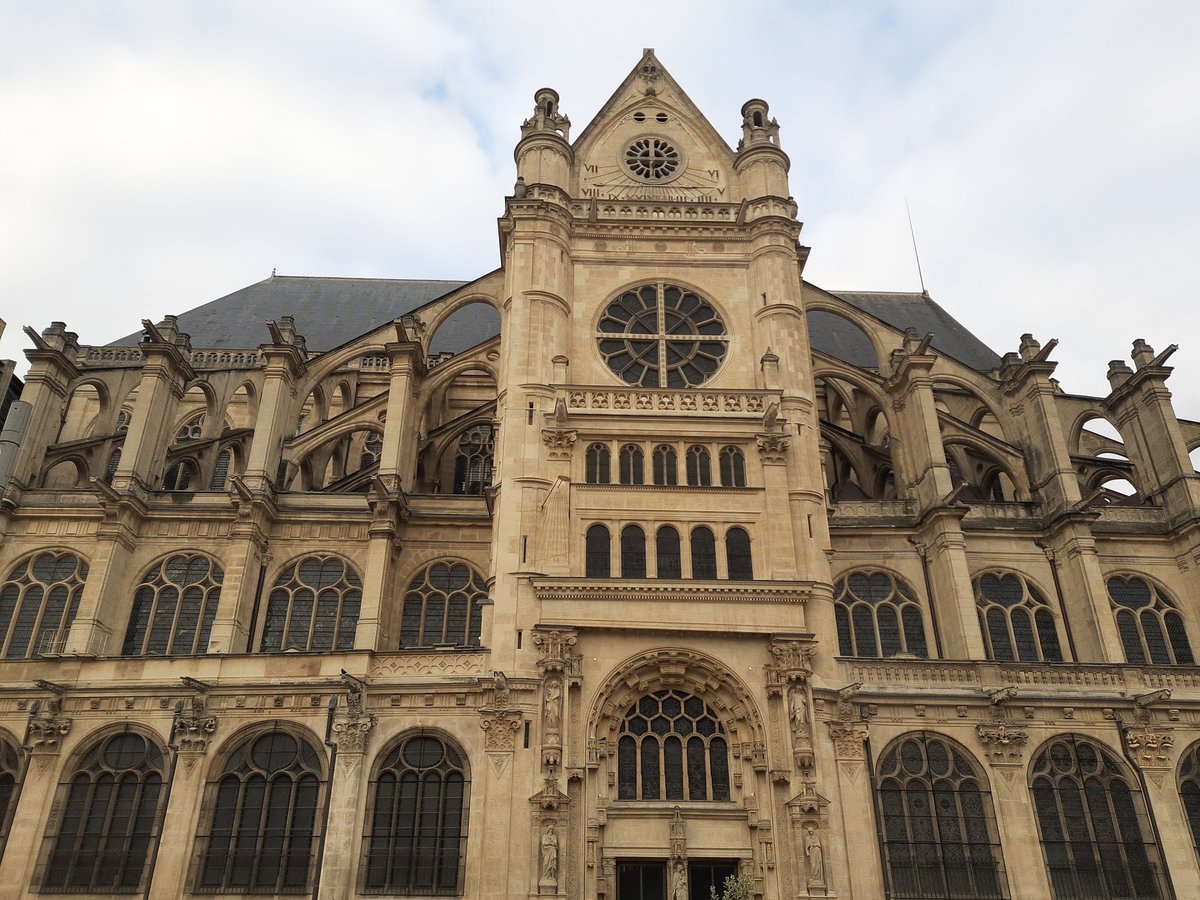
Located in the historic Les Halles district, the Church of Saint Eustache (Église Saint-Eustache) stands as an enduring symbol of Paris’s architectural and cultural heritage. Famed for its unique blend of Gothic, Renaissance, and Classical styles, this magnificent church has witnessed pivotal events in French history, hosted generations of Parisians, and continues to serve as a vibrant center for worship, music, and the arts. Whether you’re drawn by its soaring vaults, renowned grand organ, or its role in the life of the city, this guide provides everything you need to plan your visit, from detailed historical context and architectural highlights to practical information on hours, tickets, and accessibility.
For further insights, see the Liturgical Arts Journal, Sortir à Paris, and the official Saint Eustache website.
Photo Gallery
Explore Church of Saint Eustache in Pictures
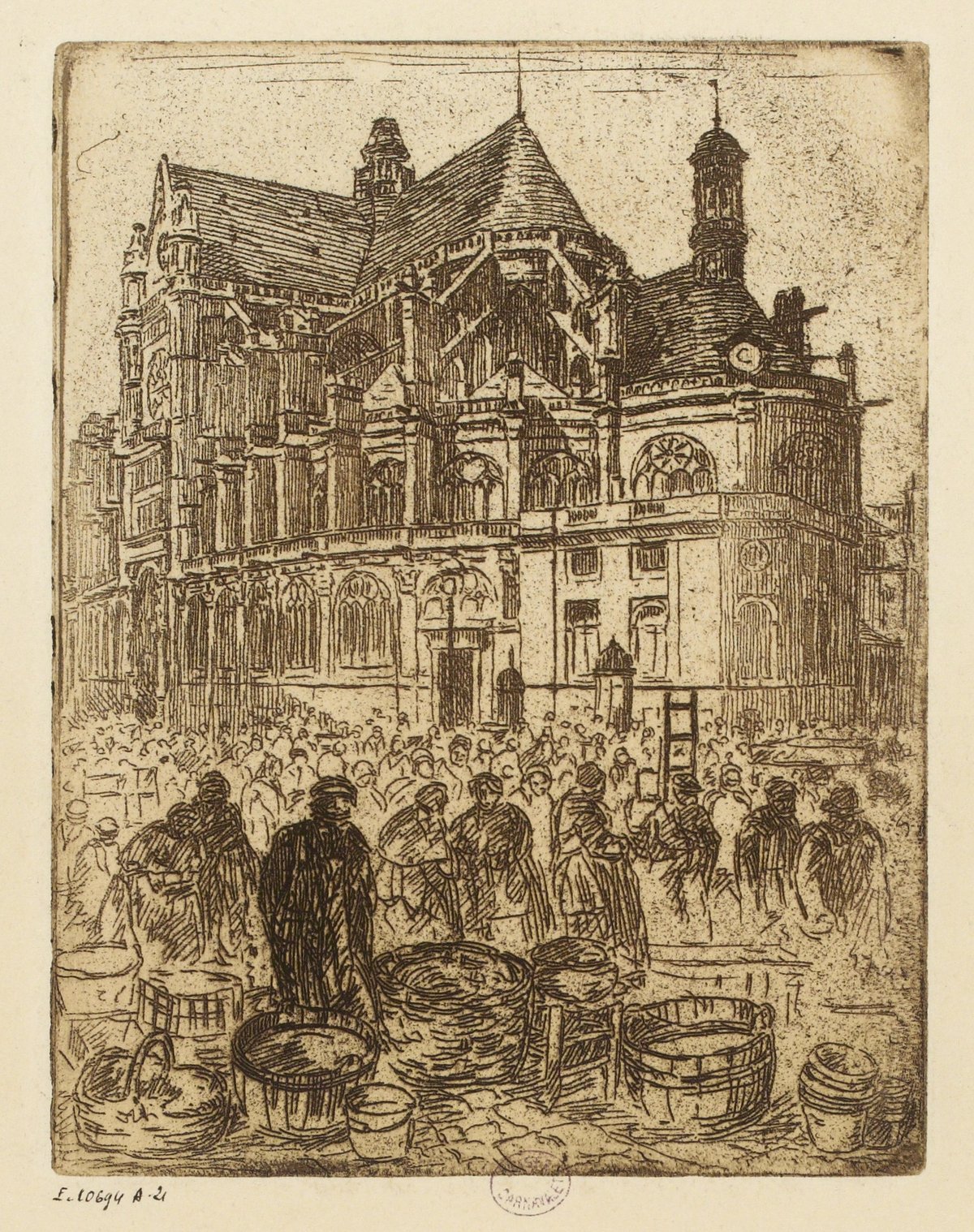
Etching by Gaston Ernest Laplace depicting the apse of Saint-Eustache Church in Les Halles, Paris. Created using the etching technique, the artwork measures 16.6 cm by 13.2 cm and is part of the Musée Carnavalet, Histoire de Paris collection, inventory number G.16614.

An etching print depicting the apse of Saint-Eustache church located in Les Halles, Paris. Created by Gaston Ernest Laplace using the etching technique, measuring 16.6 cm by 13.2 cm, housed in the Musée Carnavalet, Histoire de Paris.
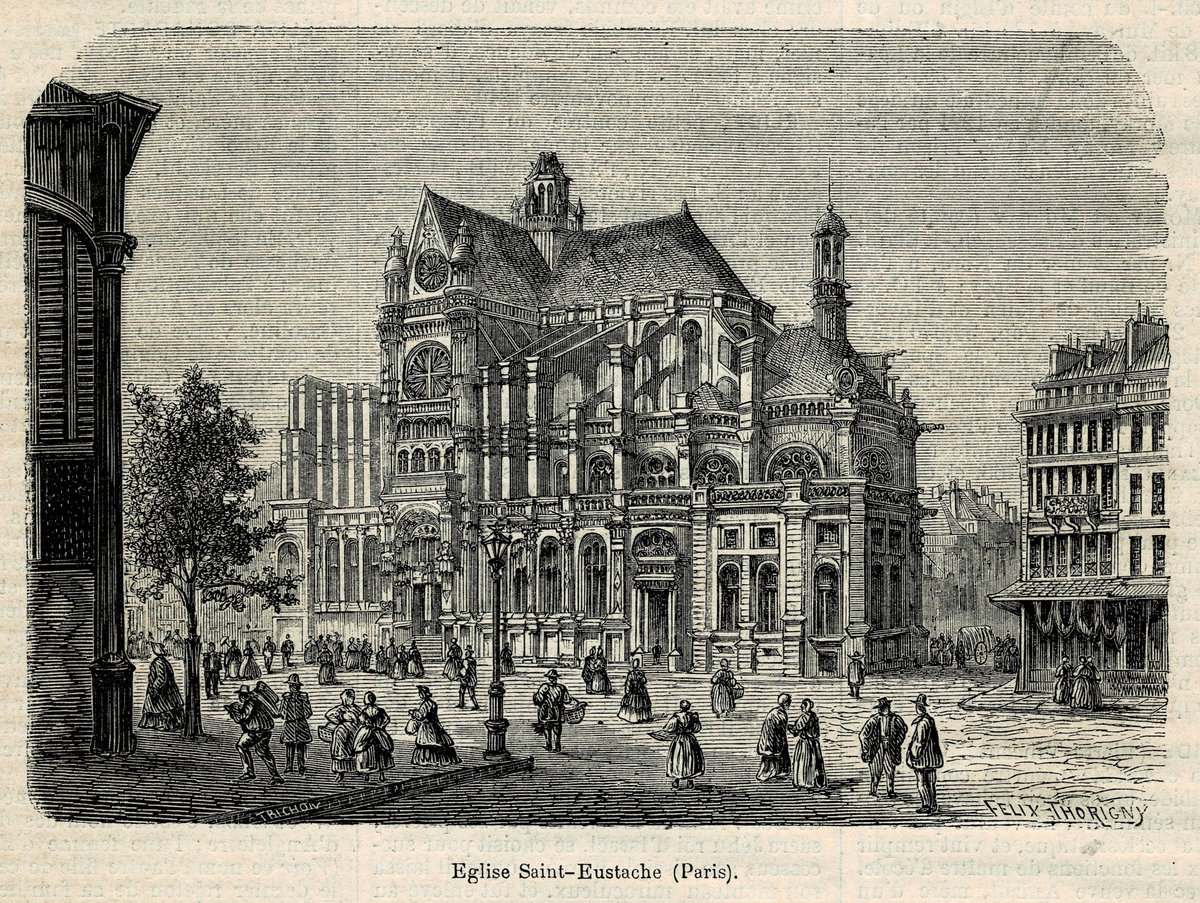
An illustration from volume 2 of the 'Dictionnaire populaire illustré' authored by Edmond Alonnier and Joseph Décembre, covering diverse topics including history, geography, biography, technology, mythology, antiquities, fine arts, and literature.
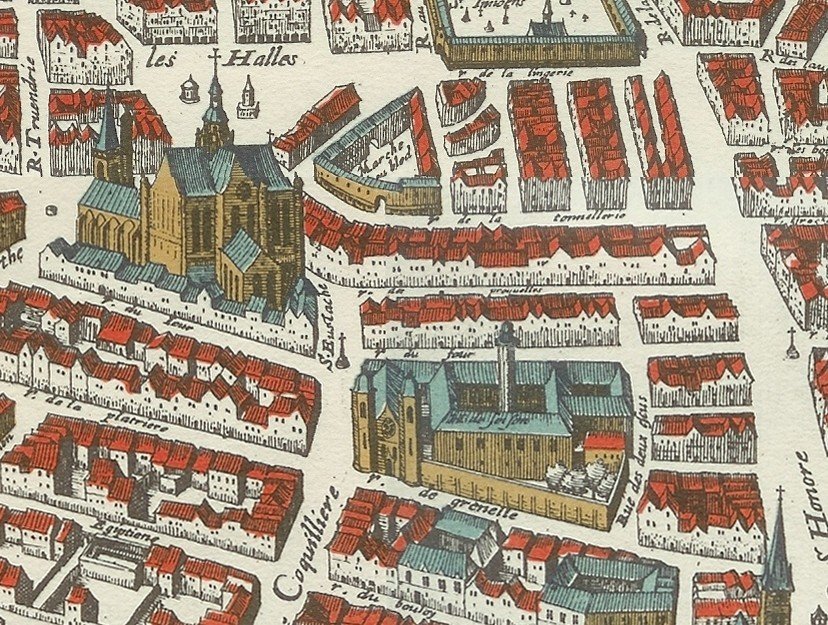
Image of the historic Hotel de Soissons building located in Soissons, France, showcasing classical French architecture.
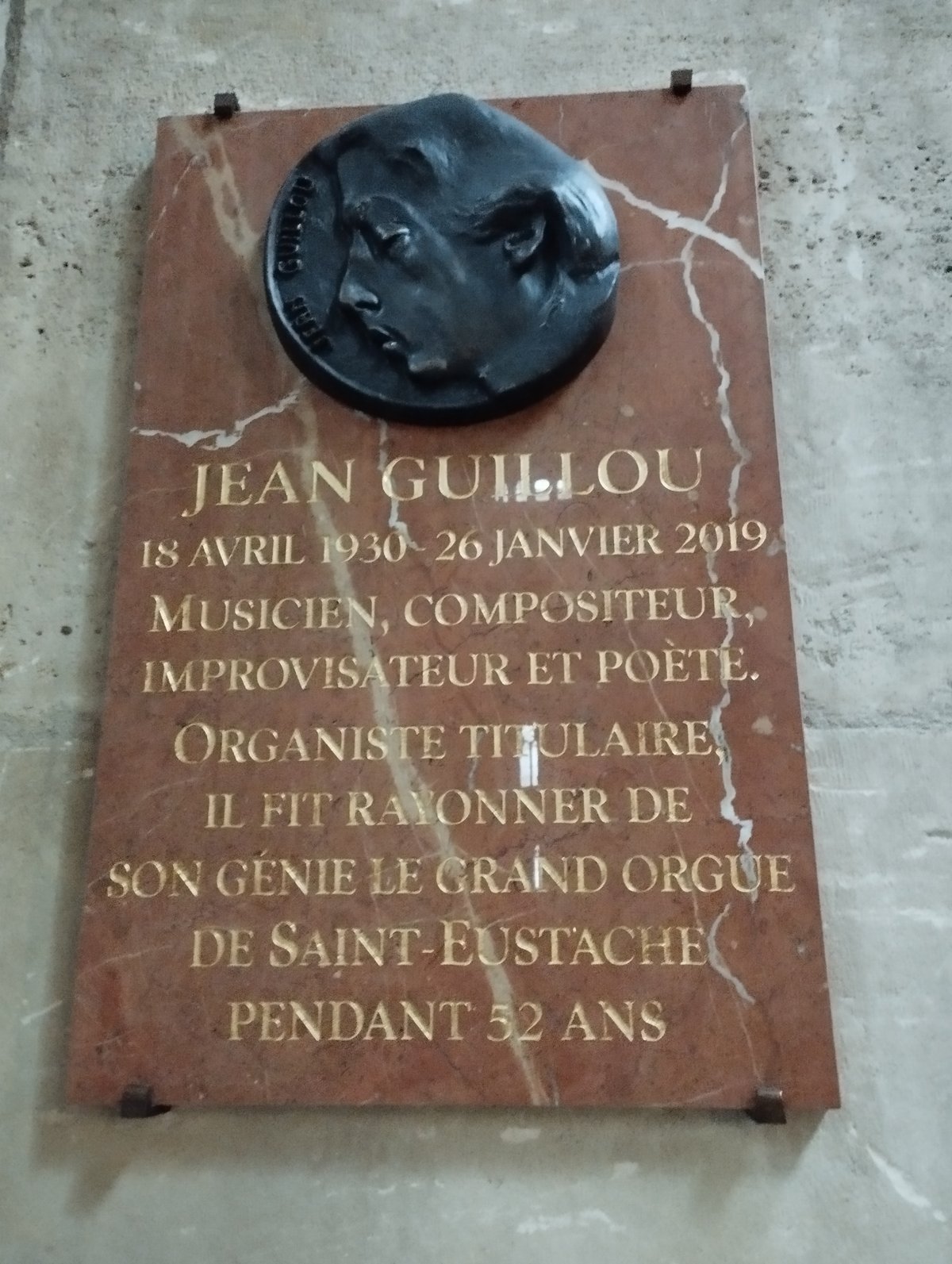
Plaque honoring Jean Guillou displayed at Saint-Eustache Church, featuring engraved text and decorative elements
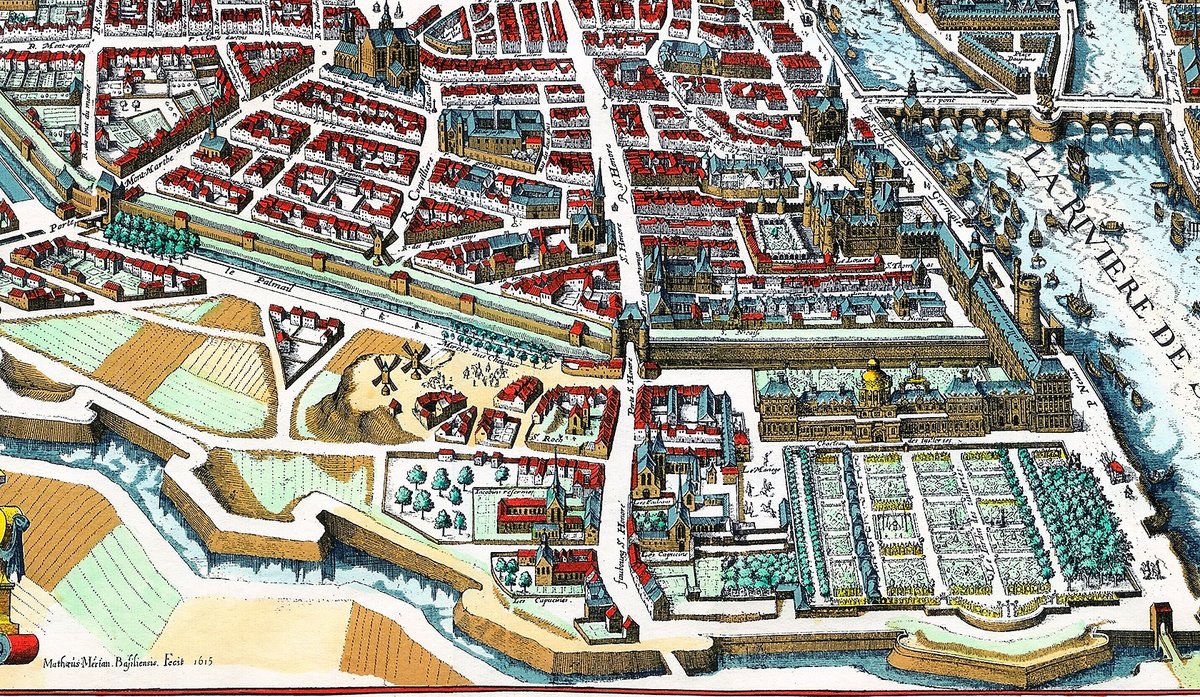
Detailed 1615 Merian map of Paris highlighting Les Tuileries palace and Porte Montmartre gate
Early Origins and Medieval Foundations
The origins of Saint Eustache date back to the early 13th century when Jean Alais, a merchant at Les Halles, funded the construction of a chapel dedicated to Saint Agnes. By 1223, this modest chapel became the parish church for the bustling Les Halles market district, reflecting the area’s growing prominence in medieval Paris (Wikipedia). In 1303, the church was rededicated to Saint Eustace after acquiring his relics, cementing its connection to the local community and Parisian merchants (Liturgical Arts Journal).
Renaissance Construction and Architectural Evolution
By the 16th century, the original church could no longer accommodate the expanding congregation. Construction of the present building began in 1532 and was completed in 1633, with final consecration in 1637 (Liturgical Arts Journal; Wikipedia). The design is a remarkable fusion: Flamboyant Gothic structure with flying buttresses and pointed arches, combined with Renaissance and classical interior ornamentation. The result is a unique and harmonious architectural statement that was both innovative and controversial in its era (Sortir à Paris).
Financial constraints prolonged construction, resulting in a mix of building styles and an unfinished south tower—a visible reminder of historical challenges (Sortir à Paris).
Historical Events and Cultural Role
Saint Eustache has been a focal point in Parisian public life for centuries. Its proximity to Les Halles, the city’s commercial heart, made it a gathering place for merchants and guilds—most notably the Corporation des Charcutiers, commemorated in the Chapel des Charcutiers with unique stained glass.
The church has hosted significant milestones: Louis XIV’s First Communion (1649), baptisms of Cardinal Richelieu, Madame de Pompadour, and Molière (who was also married here), and the funeral of Mozart’s mother. Notable burials include Marie de Gournay and Queen Anne of Austria (Wikipedia; France Guide).
The French Revolution and Restoration
During the French Revolution, Saint Eustache was desecrated, converted into the “Temple of Agriculture,” and used as a food depot. It returned to Catholic worship in 1803 but required extensive restoration after a fire in 1844. Renowned architect Victor Baltard led the restoration, rebuilding the organ case, pulpit, high altar, and repairing major structural damage. The church also suffered during the Paris Commune in 1871 and had its façade restored again in the late 1920s (Wikipedia; Sortir à Paris).
Architectural Highlights and Artworks
Saint Eustache’s vast nave, at 105 meters long and 34 meters high, rivals many cathedrals in scale (Paris Insiders Guide). The interior features 25 chapels, adorned with paintings, murals, and stained glass. Key highlights include:
- Chapel of the Virgin: Features a sculpture by Jean-Baptiste Pigalle and paintings by Thomas Couture (Wikipedia).
- Rubens, Manetti, and Santi di Tito paintings: Including "The Disciples of Emmaus," "Ecstasy of the Madeleine," and "Tobias and the Angel."
- Banc d’œuvre: Ornate 18th-century seating for the lay committee.
- Stained Glass Windows: Three levels of windows showing biblical stories and saints (Paris Top Ten).
- Historic and Contemporary Sculpture: “Le Départ des Halles” by Raymond Mason and works by Keith Haring.
Music and Contemporary Culture
The church is renowned for its grand pipe organ, the largest in France with over 8,000 pipes (Paris Top Ten). It hosts regular concerts, including free recitals on Sunday afternoons, and has been the stage for premieres by composers like Berlioz and Liszt.
Saint Eustache is also a venue for cultural events such as Nuit Blanche, featuring contemporary art installations, and supports social initiatives including La Soupe Saint-Eustache (Sortir à Paris; official site).
Visiting Saint Eustache: Hours, Tickets & Accessibility
- Location: 2 Impasse Saint-Eustache, 75001 Paris, near Châtelet–Les Halles metro/RER station (official site).
- Admission: Free for general visits. Some concerts or tours may require a ticket (kevmrc.com).
- Hours: Typically open daily from 10:00 AM to 6:30 PM. Access may be limited during Mass or special events. Mass is celebrated at 12:30 and 18:00 on weekdays (12:30 only during certain holidays), 18:00 on Saturday, and at 9:30, 11:00, and 18:00 on Sundays (official site).
- Accessibility: Step-free access via the central glass door; call ahead for assistance if needed.
- Guided Tours: Available occasionally, especially during heritage days; check the official website for schedules.
- Photography: Non-flash photography is permitted. Please respect services and maintain silence.
Travel Tips and Nearby Attractions
- Best Times: Early mornings or late afternoons on weekdays are less crowded.
- Nearby Sites: Nelson Mandela Garden, the Canopée, Pompidou Centre, the Seine, and the Louvre.
- Quiet Reflection: Use side chapels for contemplation.
- Community Life: Saint Eustache is active in social outreach and regularly features contemporary art.
Frequently Asked Questions (FAQ)
Q: What are the opening hours of Saint Eustache?
A: Open daily, usually 10:00 AM–6:30 PM. Check the official site for updates.
Q: Is there an admission fee?
A: General entry is free; special events or tours may require a ticket.
Q: Are guided tours available?
A: Yes, especially during special events or heritage days. Details on the official website.
Q: Is Saint Eustache accessible for visitors with reduced mobility?
A: Yes. Step-free access and assistance are available.
Q: Can I take photographs inside?
A: Yes, non-flash photography is allowed except during services.
Listen to the full story in the app
Your Personal Curator, in Your Pocket.
Audio guides for 1,100+ cities across 96 countries. History, stories, and local insight — offline ready.
Audiala App
Available on iOS & Android
Join 50k+ Curators
Sources
- verified
- verified
- verified
- verified
- verified
- verified
- verified
- verified
- verified
Last reviewed: