Plan and listen to Stade Du Ray with Audiala.
Audio guide in your pocket, itinerary in your browser. Built for the way you actually visit.
Introduction
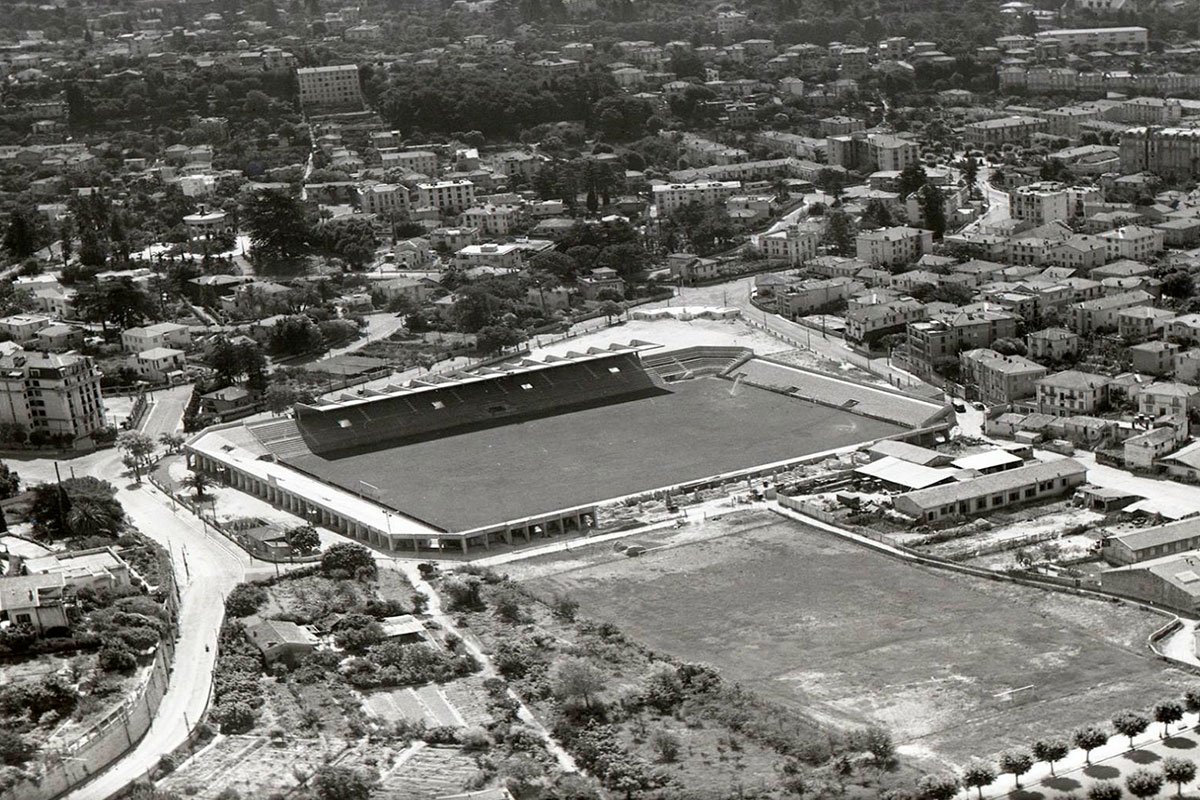
Stade du Ray, once the beating heart of football in Nice, stands as a lasting symbol of the city’s sporting heritage and community spirit. Inaugurated in 1927, the stadium was home to Olympique Gymnaste Club de Nice (OGC Nice) for more than 80 years. Although decommissioned in 2013 and demolished by 2017, its legacy lives on through the innovative Parc du Ray—a green urban oasis that blends the site’s rich history with modern ecological design. This guide offers a detailed look at Stade du Ray’s history, its transformation, practical visitor information, and tips for exploring nearby attractions. Whether you’re a football fan, history buff, or simply seeking to experience Nice’s cultural sites, you’ll find everything you need here. (Musée du Gym; Metropolitiques; Explore Nice Côte d’Azur; Le Monde)

History and Origins
Early Years (1927–1946)
Stade du Ray, originally called Stade Municipal du Ray, opened on January 30, 1927. Set in the Ray district of Nice, it quickly became synonymous with OGC Nice and the city’s burgeoning football culture. The original stadium could seat 2,500 people, featuring a single concrete stand with 300 seats. OGC Nice played its first match here against S.O. Montpellier on February 6, 1927. (Musée du Gym; PSS-archi)
Post-War Expansion (1947–1979)
Following World War II, Stade du Ray underwent significant renovations, increasing its capacity to 17,000 and adding a covered main stand. The stadium reached record attendance in 1952 with 22,740 fans. Installation of floodlights in 1960 allowed for night matches, and the West Stand opening in 1979 pushed capacity to 28,000. (Stadium Guide; PSS-archi)
Decline and Closure (1980–2013)
Due to aging infrastructure, the stadium’s capacity was gradually reduced through partial demolitions and temporary seating, dropping to 17,415 by 2004. Despite these challenges, Stade du Ray remained a beloved venue until OGC Nice moved to the new Allianz Riviera in 2013. The stadium was decommissioned and demolished between 2016 and 2017. (Musée du Gym; PSS-archi)
Cultural and Sporting Significance
OGC Nice Legacy
Stade du Ray was the home of OGC Nice, founded in 1908 and one of France’s most storied football clubs. The stadium witnessed four French championship victories and three Coupe de France titles during the 1950s, cementing its place in football history. The stadium also hosted youth clubs and local derbies, making it a central hub for football development in Nice. (Metropolitiques)
Community and Fan Culture
Matchdays at Stade du Ray were events of deep community connection. The “montée au Ray”—the walk up to the stadium—was a cherished ritual, and the intimate Populaire Sud stand became famous for its passionate supporters and unique atmosphere. The stadium’s proximity to residential neighborhoods fostered a close-knit relationship between players and fans, creating a “cauldron-like” energy that intimidated visiting teams and inspired generations of supporters. (Metropolitiques)
Transition to Allianz Riviera
The move to Allianz Riviera in 2013 marked a new era, with modern facilities and larger capacities. However, many fans felt nostalgic for the character and intimacy of Stade du Ray. To honor the legacy, two of Allianz Riviera’s stands were named “Ray” and “Populaire Sud,” and a patch of the old pitch was transplanted to the new ground. (Metropolitiques)
Visiting Stade du Ray Today
Parc du Ray: Urban Transformation
The former stadium site has been reimagined as Parc du Ray, a 3-hectare urban green space that anchors Nice’s Ecoquartier du Ray project. Designed by La Compagnie du Paysage and TPFI, the park was built atop the original stadium’s foundations, incorporating preserved features such as the iconic rotunda ticket office. The park’s design emphasizes biodiversity, sustainable mobility, and community recreation, with 476 trees planted and innovative landscaping that reused 12,000 cubic meters of earth. (Le Moniteur; Explore Nice Côte d’Azur)
Key Features
- Water Ribbon and Cascade: A flowing water feature recalls the area’s historic valley and helps cool the park in summer.
- Grand Meadow: A large open space for picnics, relaxation, or informal sports.
- Adventure Playground: Family-friendly play areas inspired by treetop (“accrobranche”) parks.
- Sports Facilities: Multi-sport fields and courts for community use.
- Pedestrian and Cycling Promenade: Wide paths encourage sustainable travel and connect local neighborhoods.
Visiting Hours & Tickets
- Hours: Open daily from 8:30 am–8:00 pm (April–September), 8:30 am–6:00 pm (October–March).
- Tickets: Free entry—no tickets required. (Explore Nice Côte d’Azur)
- Guided Tours: No official stadium tours, but local heritage organizations and tourism offices occasionally offer guided walks focusing on the Ray district’s history.
Accessibility and Facilities
- Location: 35, avenue du Ray, 06100 Nice; bordered by Boulevard Gorbella.
- Public Transport: Tram Line 1 (“Gorbella” stop); numerous bus routes.
- Parking: Limited street parking—public transport is recommended. (Traveling Canucks)
- Amenities: Accessible paths, water fountains, shaded seating, children’s play areas, and multi-sport courts.
Key Events and Architectural Evolution
- 1927: Inaugural match—OGC Nice vs. S.O. Montpellier.
- 1952: Record attendance—22,740 spectators.
- 1960: First night match after floodlight installation.
- 1979: Capacity peaks at 28,000 with new West Stand.
- 2013: Final OGC Nice match at Stade du Ray; stadium decommissioned.
- 2016–2017: Demolition and redevelopment as Parc du Ray.
Preserved elements include the original rotunda ticket office and a section of the south stand, thoughtfully integrated into the park’s design. (Wikipedia)
Nearby Attractions and Travel Tips
- Old Town (Vieux Nice): Baroque architecture, markets, and vibrant street life. (Traveling Canucks)
- Allianz Riviera & National Sports Museum: Modern stadium tours and football history exhibits. (Provence Lovers)
- Promenade des Anglais: Iconic seaside boulevard for walking or cycling. (CN Traveler)
Travel Tips:
- Use public transport for easy access.
- Bring a camera to capture preserved stadium features and park landscapes.
- Local eateries offer Niçoise specialties like socca; consider the French Riviera Pass for attraction discounts. (Lonely Planet)
Frequently Asked Questions (FAQ)
Q: What are Parc du Ray’s visiting hours?
A: Open daily, 8:30 am–8:00 pm (April–September), 8:30 am–6:00 pm (October–March).
Q: Is there an entrance fee?
A: No, entry is free.
Q: Are guided tours available?
A: There are no regular official tours, but local groups sometimes offer guided walks. The National Sports Museum at Allianz Riviera covers the site’s history in detail.
Q: Is the park accessible to people with disabilities?
A: Yes, there are paved paths and accessible facilities throughout Parc du Ray.
Q: What remains of Stade du Ray?
A: The rotunda ticket office and a section of the south stand are preserved as historical markers.
Summary and Visitor Recommendations
Stade du Ray’s legacy endures through Parc du Ray—a shining example of urban renewal balancing memory, ecology, and community. Today, visitors can freely explore landscaped grounds, preserved stadium features, and enjoy modern amenities, all while connecting with Nice’s football heritage. Combine your visit with trips to Old Town, the Promenade des Anglais, and Allianz Riviera for a rounded cultural experience. Download the Audiala app for guided tours and the latest event updates, and follow local channels for ongoing heritage initiatives. (France 3; OGC Nice; Metropolitiques; Explore Nice Côte d’Azur)
Listen to the full story in the app
The whole Stade Du Ray,
told well.
Audio guides for 1,100+ cities across 96 countries. History, stories, and local insight — offline ready.
Verified, and shown.
Researched and written by the Audiala editorial team from historical records, architectural archives, and local expertise.
Researched from Wikidata, Wikipedia & official sources · fact-checked · How we make our guides →