Plan and listen to Gallo-Roman Wall Of Nantes with Audiala.
Audio guide in your pocket, itinerary in your browser. Built for the way you actually visit.
Introduction: The Gallo-Roman Wall and Its Enduring Legacy
In the heart of Nantes, France, the Gallo-Roman Wall stands as a remarkable witness to the city’s ancient origins and its evolution through the centuries. Erected in the late 3rd century CE during the turbulent Crisis of the Third Century, the wall was both a feat of Roman military engineering and a symbol of resilience for the settlement once known as Portus Namnetum. Today, its visible remains, seamlessly woven into the modern urban landscape, invite visitors to journey back in time and explore the roots of Nantes’ identity (Wikipedia: Gallo-Roman culture; The History Blog; World History Edu).
This comprehensive guide covers the wall’s historical context, construction and features, visitor information, accessibility, nearby attractions, and practical travel tips—offering everything needed for a rewarding exploration of one of Nantes’ most significant historical landmarks.
Historical Context: Roman Gaul and the Birth of Nantes’ Defenses
Following the Roman conquest of Gaul in the 1st century BCE, Nantes (then Condevicnum or Portus Namnetum) became a thriving hub of administration and trade. Roman influence led to extensive urbanization, with new street grids, monumental structures, and, crucially, defensive walls (Wikipedia: Gallo-Roman culture). The construction of the city’s wall in the late 3rd century was a direct response to increasing threats from Germanic invasions and internal instability.
Strategic Importance and Reasons for Construction
The late Roman Empire was marked by external invasions and civil strife, prompting cities across Gaul to reinforce their defenses. Prior to this period, few Gallic cities had fortified walls; however, by the 4th century, over 80 cities—including Nantes—had erected robust fortifications (The History Blog). The wall was not just a military necessity but also a statement of Roman presence and authority.
Architectural Features and Construction Techniques
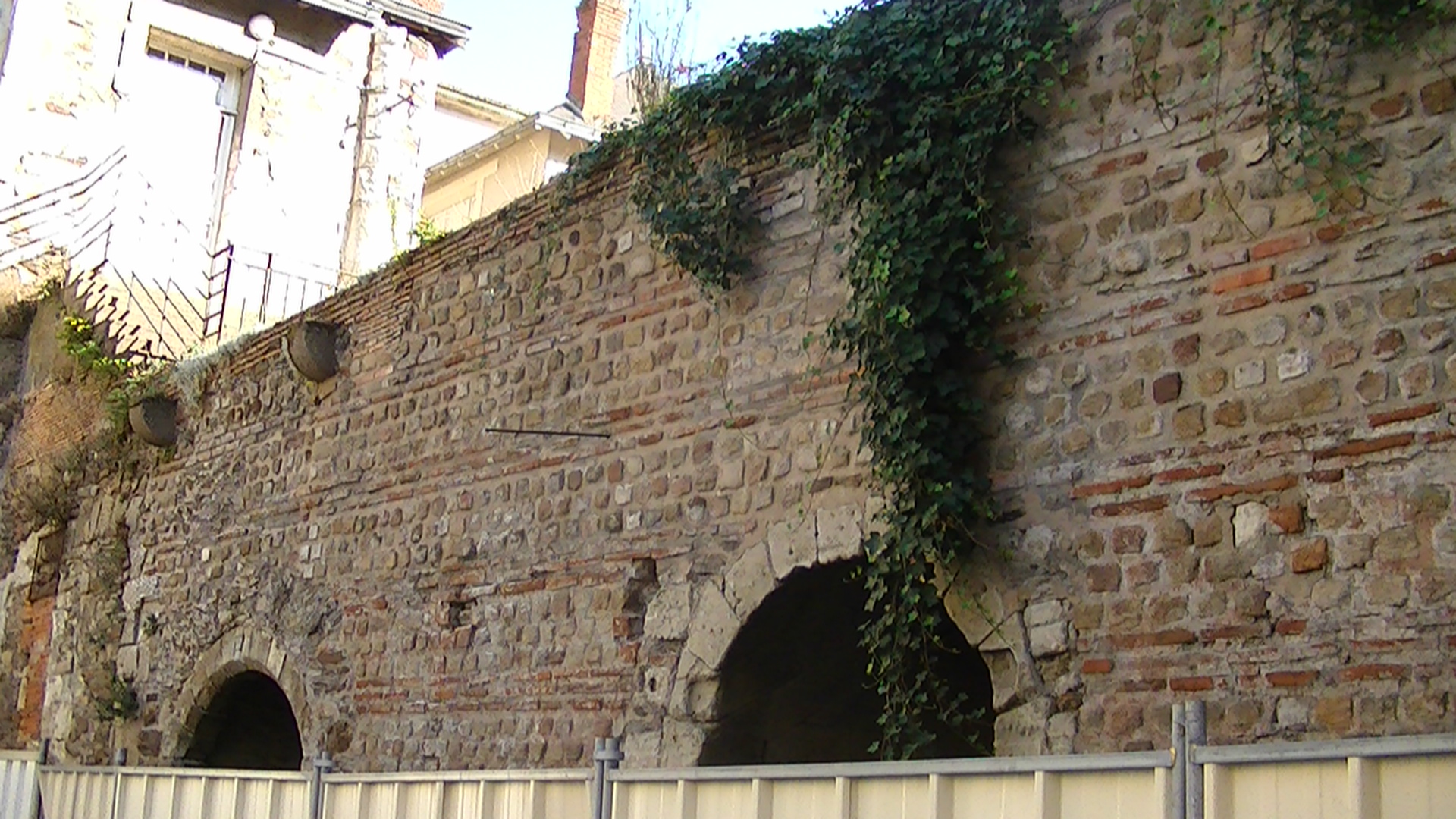
The Gallo-Roman Wall of Nantes was constructed using advanced Roman methods, notably opus mixtum—a blend of brick and stone bound with lime mortar (World History Edu). Builders often recycled materials from older structures, a practice known as spolia. The wall’s core was made of rubble and concrete, sandwiched between regular courses of stone and bands of brick, enhancing both strength and durability.
Key architectural highlights include:
- Thick foundations (often exceeding 3–4 meters)
- Circular and semi-circular towers at strategic intervals for defense
- Decorative brick banding, visible in surviving sections and similar to other Roman walls in France (Sarthe Tourism)
The Wall’s Impact on Urban Life
The wall defined the physical limits of Roman Nantes, controlling access and providing security for its inhabitants. Within its perimeter, the city thrived with temples, forums, baths, and a regular street grid. The structure also served as a psychological and cultural boundary, delineating the safety of Roman civilization from threats beyond (World History Edu).
Integration into Modern Nantes
Much of the wall’s circuit has disappeared due to urban development, but several substantial sections remain, especially near the Château des Ducs de Bretagne, Rue des Échevins, and Rue de la Juiverie. These remnants are carefully preserved and integrated into public spaces, sometimes incorporated into later buildings or displayed in open courtyards. Informative signage and interpretive panels provide historical context at key locations (Mary Anne’s France).
Visiting the Gallo-Roman Wall: Hours, Tickets, and Practical Information
General Access
- Outdoor Sections: Freely accessible year-round during daylight hours (roughly 9:00 AM–7:00 PM, depending on the season). No ticket is required for these public areas.
- Château des Ducs de Bretagne and Nantes History Museum: Portions of the wall are visible within these sites. Museum hours are typically Tuesday to Sunday, 10:00 AM–6:00 PM, closed Mondays. Entry to the castle grounds is free, while museum access costs about €8 for adults (discounts for students, seniors, and Nantes Pass holders) (Nantes Tourism Office).
Guided Tours
- Guided walking tours are available in multiple languages through the Nantes Tourism Office, especially during spring and summer or cultural events like “Le Voyage à Nantes.” Booking ahead is recommended (Le Voyage à Nantes).
Accessibility
- Most outdoor sections and the castle grounds are wheelchair accessible, with some cobbled streets requiring extra caution.
- Museum and castle facilities provide ramps and elevators; contact the tourism office for detailed accessibility information.
How to Get There
- On Foot: The wall’s remnants are centrally located, making them easily accessible by walking from the city center.
- Public Transport: Tram lines 1 and 2 (stop at “Duchesse Anne – Château”), as well as several bus routes, serve the area (Le Voyage à Nantes).
- Cycling: Nantes is bike-friendly, and many heritage routes—including the “Green Line”—connect key sites for cycling tours.
Parking is available in nearby public garages, but public transport or walking is recommended to best experience the historic district.
Nearby Attractions
Enhance your visit by exploring these neighboring highlights:
- Château des Ducs de Bretagne: Medieval castle and history museum, including Roman and medieval exhibits (Château des Ducs de Bretagne)
- Bouffay District: The medieval heart of Nantes, with vibrant cafés, restaurants, and historic streets
- Nantes Cathedral: Gothic architecture and notable burials
- Passage Pommeraye: A 19th-century glass-roofed shopping arcade
- Musée d’Histoire de Nantes: Exhibits covering the city’s evolution from Roman times onward
Preservation, Research, and Education
The Gallo-Roman Wall is protected as a historical monument, and any nearby construction is subject to archaeological oversight (Britannica). Ongoing excavations and research provide deeper insights into its construction and historical context. The wall features in educational programs and local history curricula, and the Nantes History Museum offers exhibitions integrating its story into the broader narrative of the city (Touropia).
Cultural Events and Urban Identity
The wall plays a starring role in annual cultural events such as the “Voyage à Nantes” festival, which uses a painted “green line” route to connect visitors with the city’s major attractions, including key wall segments (Le Voyage à Nantes). Summer months often bring historical reenactments and open-air lectures to the site.
Urban planners have celebrated the wall by integrating it into new developments, such as glass-panel viewing areas and open courtyards in the Bouffay district (Britannica).
Visitor Experience: Tips and Recommendations
- Best Time to Visit: Year-round; summer months offer added cultural events and guided tours.
- Location Highlights: Rue des Échevins, Rue de la Juiverie, and near the Château des Ducs de Bretagne.
- Amenities: Numerous cafés and shops in Bouffay; accessible public transport.
- Photography: The wall’s ancient stonework juxtaposed with modern architecture makes for striking photos, particularly at sunrise or sunset.
- Accessibility: Most public areas are accessible, with support for visitors with mobility needs.
Frequently Asked Questions (FAQ)
Q: Are tickets required to visit the Gallo-Roman Wall?
A: Outdoor sections are free and open year-round. Tickets are only needed for museum entry or guided tours.
Q: What are the opening hours?
A: Outdoor remains: daylight hours (approx. 9:00 AM–7:00 PM). Museum: typically 10:00 AM–6:00 PM, Tuesday–Sunday.
Q: Are guided tours available in English?
A: Yes, multilingual guided tours can be booked via the Nantes Tourism Office.
Q: Is the site accessible for wheelchair users?
A: Most outdoor and museum areas are accessible, but some cobbled streets may be uneven.
Q: Where can I find visitor maps and information?
A: Online at the Nantes Tourism Office or at physical locations in the city center.
Q: Can I take photographs?
A: Yes; photography is encouraged.
Enhance Your Visit: Visuals, Digital Guides, and More
- Visual Media: Panoramic and close-up images of the wall are available on official heritage websites. Virtual tours and interactive maps help plan your route.
- Audiala App: Download for audio guides, interactive tours, and up-to-date visitor information.
- “Green Line” Route: Follow this marked path to discover key sites across central Nantes.
Listen to the full story in the app
The whole Gallo-Roman Wall Of Nantes,
told well.
Audio guides for 1,100+ cities across 96 countries. History, stories, and local insight — offline ready.

Verified, and shown.
Researched and written by the Audiala editorial team from historical records, architectural archives, and local expertise.
Wikipedia
Roman walls built in Gaul during the third century crises
World History Edu
Official Nantes tourism site
History and Visit
Official tourism information
(2025). Events in France in July 2025
Nantes
Ancient Roman ruins in France
Best things to do in Nantes, France
15 Best Things to Do in Nantes, France
An Architectural Guide to Nantes, the French City of Weird and Wonderful Art
(2013). Roman Wall of Nantes
Things to do in Nantes
Exploring Nantes
Things to do in Nantes
Last reviewed
Researched from Wikidata, Wikipedia & official sources · fact-checked · How we make our guides →