Plan and listen to Saint-Victor with Audiala.
Audio guide in your pocket, itinerary in your browser. Built for the way you actually visit.
Introduction: The Enduring Legacy of Saint Victor Abbey
Nestled in Marseille's historic heart, the Abbey of Saint-Victor stands as an enduring symbol of the city's religious, architectural, and cultural evolution. With origins as a Greek and Roman quarry in the 2nd century BCE and transformation into a pioneering monastic center by Saint John Cassian in the 5th century CE, the abbey is a living chronicle of Western Christianity. It draws visitors with its ancient crypts, Romanesque-Gothic architecture, iconic Candlemas procession, and vibrant role in Marseille’s spiritual and communal life (marseille-tourisme.com; myguidemarseille.fr; marseilletourisme.fr; jds.fr; spottinghistory.com; guidetourism.net). This guide presents an in-depth overview of the abbey’s history, visitor information, architectural highlights, and nearby attractions, equipping travelers for a meaningful exploration of Marseille’s heritage.
Early Origins: From Ancient Quarry to Sacred Ground
The site of Saint Victor Abbey was once a Greek quarry, later serving as a necropolis from the 2nd century BCE. It became an early Christian burial ground, evidenced by multi-layered sarcophagi and subterranean tombs preserved in today’s crypts (marseille-tourisme.com; myguidemarseille.fr).
The Monastic Era: Foundation by John Cassian
Saint John Cassian established the abbey circa 415 CE, introducing Eastern monastic ideals to Western Europe (guidetourism.net). The abbey was named for Saint Victor, a Roman soldier martyred in 303 CE, whose relics were believed to be housed on-site (wikipedia.org). Under Cassian’s influence and with support from Bishop Proculus, the abbey became a focal point of Christian worship, learning, and relic veneration.
Medieval Expansion and Fortification
The 11th–14th centuries saw substantial growth and architectural refinement. Abbot Isarn oversaw construction of the upper church and the distinctive Romanesque tower (marseille-tourisme.com). Later renovations introduced Gothic elements and, under Pope Urban V (a former abbot), the abbey was fortified to protect against invasions, giving it its fortress-like appearance (historytools.org).
Intellectual and Spiritual Influence
Throughout the Middle Ages, Saint Victor Abbey emerged as a regional center of learning, with a renowned scriptorium and library attracting scholars from across Europe (historytools.org).
Decline, Revolution, and Restoration
The abbey’s influence waned in the late medieval period and suffered greatly during the French Revolution, when the monastic community was dissolved and the church desecrated (marseille-tourisme.com). Restoration began in the 19th century, culminating in its designation as a historical monument in 1840 (guidetourism.net).
Modern Era
Today, Saint Victor Abbey is an active place of worship, a venue for cultural events, and a focus of annual traditions such as Candlemas. Its architectural and historical layers make it a vital part of Marseille’s identity (touristplatform.com).
Architectural and Artistic Highlights
Romanesque and Gothic Synthesis
The abbey’s architecture reflects its long history. The central nave’s Romanesque arches and columns contrast with the Gothic elements of the aisles and choir (marseilletourisme.fr). The fortified exterior, with crenellated towers, underscores its defensive past (spottinghistory.com).
The Crypts
Beneath the church, the crypts date to the 5th century and house intricately carved early Christian sarcophagi. These subterranean chapels trace the abbey’s evolution from a pagan necropolis to a Christian sanctuary (marseilletourisme.fr).
The Black Madonna
The walnut-carved Black Madonna, Notre-Dame-de-la-Confession, is central to the Candlemas pilgrimage and a focus of local devotion (jds.fr).
Medieval Furnishings and Art
Despite losses during the Revolution, the abbey preserves medieval stone altars, capitals, and fragments of choir stalls. Dim lighting and robust columns create a solemn atmosphere.
Legends and Traditions
The abbey is entwined with Provençal legends of Saint Lazarus and Saint Mary Magdalene, and the tradition of the Navettes biscuits—boat-shaped treats blessed each Candlemas and linked to the arrival of Christianity in Marseille (marseilletourisme.fr; jds.fr).
Scenic Views
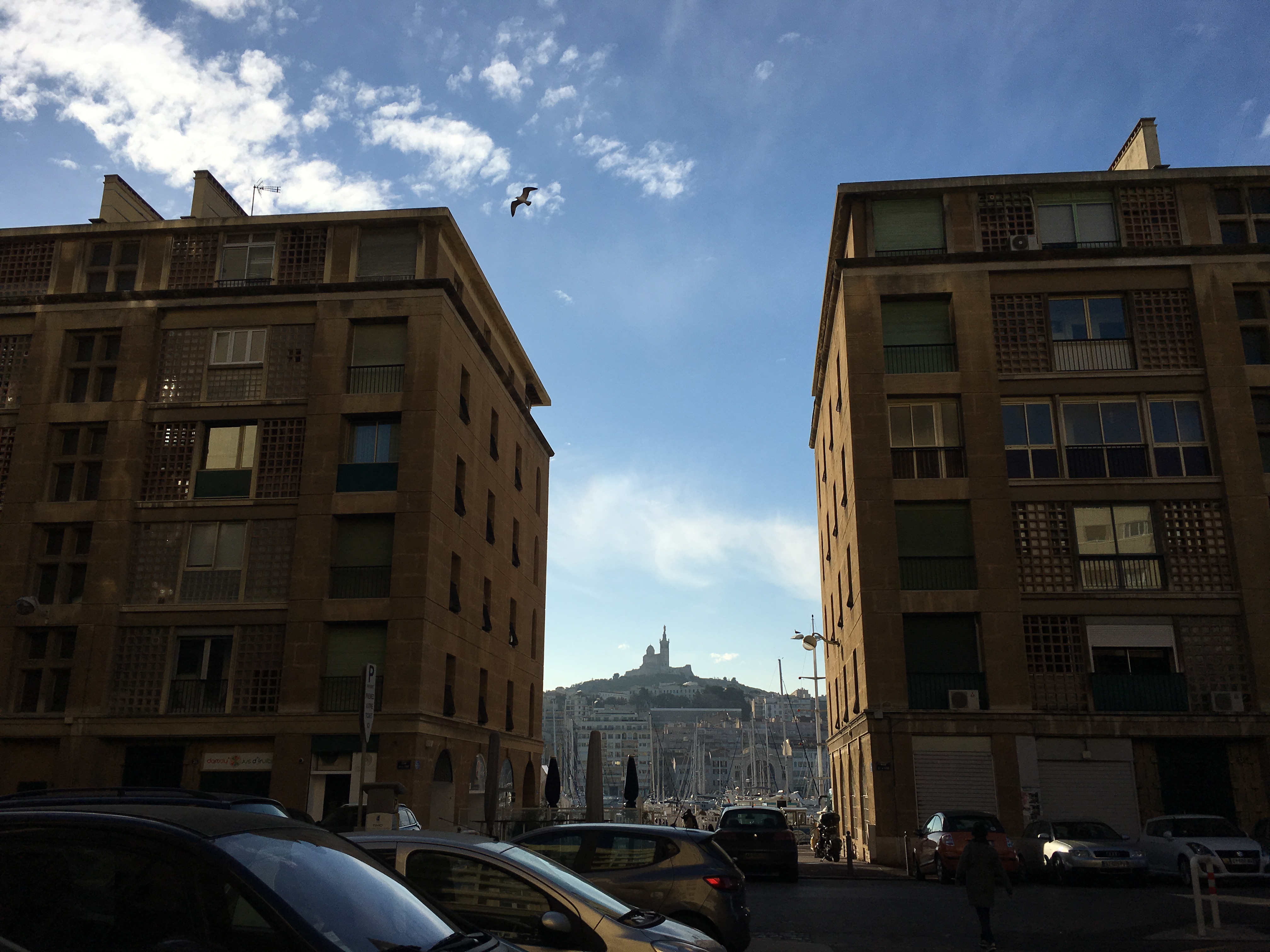
Perched above the Old Port, the abbey offers panoramic vistas of Marseille and the Mediterranean, making it a highlight for photographers and visitors alike (marseilletourisme.fr).
Visiting the Abbey: Practical Information
Opening Hours
- Daily: 9:00 AM to 6:00 PM (with seasonal or holiday variations; some sources note hours as early as 8:00 AM or as late as 8:00 PM—verify before your visit) (jds.fr; nomads-travel-guide.com).
Tickets and Admission
- Church: Free entry.
- Crypts: €2 fee as of 2025.
- Guided Tours: Available on select days for a fee; booking recommended (myguidemarseille.fr; nomads-travel-guide.com).
Accessibility
- The main church is partially accessible, but crypts and towers involve stairs and uneven surfaces. Assistance may be available upon request.
Facilities
- Restrooms and Gift Shop: Available.
- Nearby Cafés: Abundant in the surrounding neighborhood.
Getting There
- Location: 3 Rue de l'Abbaye, 13007 Marseille, France.
- By Foot: 10–15 minutes from the Old Port.
- By Bus: Lines 55, 60, 61, and 80 (stop: “Abbaye Saint Victor”) (Thrillophilia).
- By Car: Limited parking nearby; consider public transport for convenience.
Special Events and Living Traditions
Candlemas (La Chandeleur)
Every February 2nd, the Candlemas procession begins at the Old Port and ends at the abbey, featuring the Black Madonna and the blessing of Navettes biscuits. This event is a highlight of Marseille’s religious calendar and a unique visitor experience (jds.fr).
Concerts and Cultural Events
The abbey hosts the Saint Victor Classical Music Festival and other concerts, leveraging its acoustics and historic ambiance (marseilletourisme.fr).
Nearby Attractions
- Old Port (Vieux-Port): Marseille’s vibrant harbor, market, and café district (The Crazy Tourist).
- Le Panier: The city’s oldest neighborhood, renowned for its colorful streets (Voyage Tips).
- MuCEM: Museum of European and Mediterranean Civilisations, adjacent to the Old Port (Megan Starr).
- Fort Saint-Jean: 17th-century fortress with panoramic views and exhibitions.
- Four des Navettes Bakery: Historic shop famous for navettes biscuits.
Frequently Asked Questions (FAQ)
Q: What are the visiting hours for Saint Victor Abbey?
A: Open daily from 9:00 AM to 6:00 PM (verify before visiting; some sources note extended hours).
Q: Is there an entrance fee?
A: The main church is free; crypts require a €2 ticket (nomads-travel-guide.com).
Q: Are guided tours available?
A: Yes, on select days and by arrangement through the abbey or local tourism offices.
Q: Is the abbey accessible for wheelchair users?
A: The main church is accessible, but crypts and towers have stairs/uneven surfaces.
Q: When is the best time to visit?
A: Spring and autumn offer mild weather and fewer crowds. Early mornings or weekdays are quieter.
Q: What is the significance of Candlemas at the abbey?
A: It’s an annual pilgrimage celebrating the Black Madonna and the city’s faith, featuring processions and blessing of traditional biscuits.
Tickets & tours.
These are guided options from our partners — same price as booking direct.
Prices are indicative — final pricing and availability are confirmed at checkout. Audiala may earn a commission from bookings made through these links.
Listen to the full story in the app
The whole Saint-Victor,
told well.
Audio guides for 1,100+ cities across 96 countries. History, stories, and local insight — offline ready.

Verified, and shown.
Researched and written by the Audiala editorial team from historical records, architectural archives, and local expertise.
Last reviewed