Plan and listen to Sanctuary Of Cybèle with Audiala.
Audio guide in your pocket, itinerary in your browser. Built for the way you actually visit.
Introduction
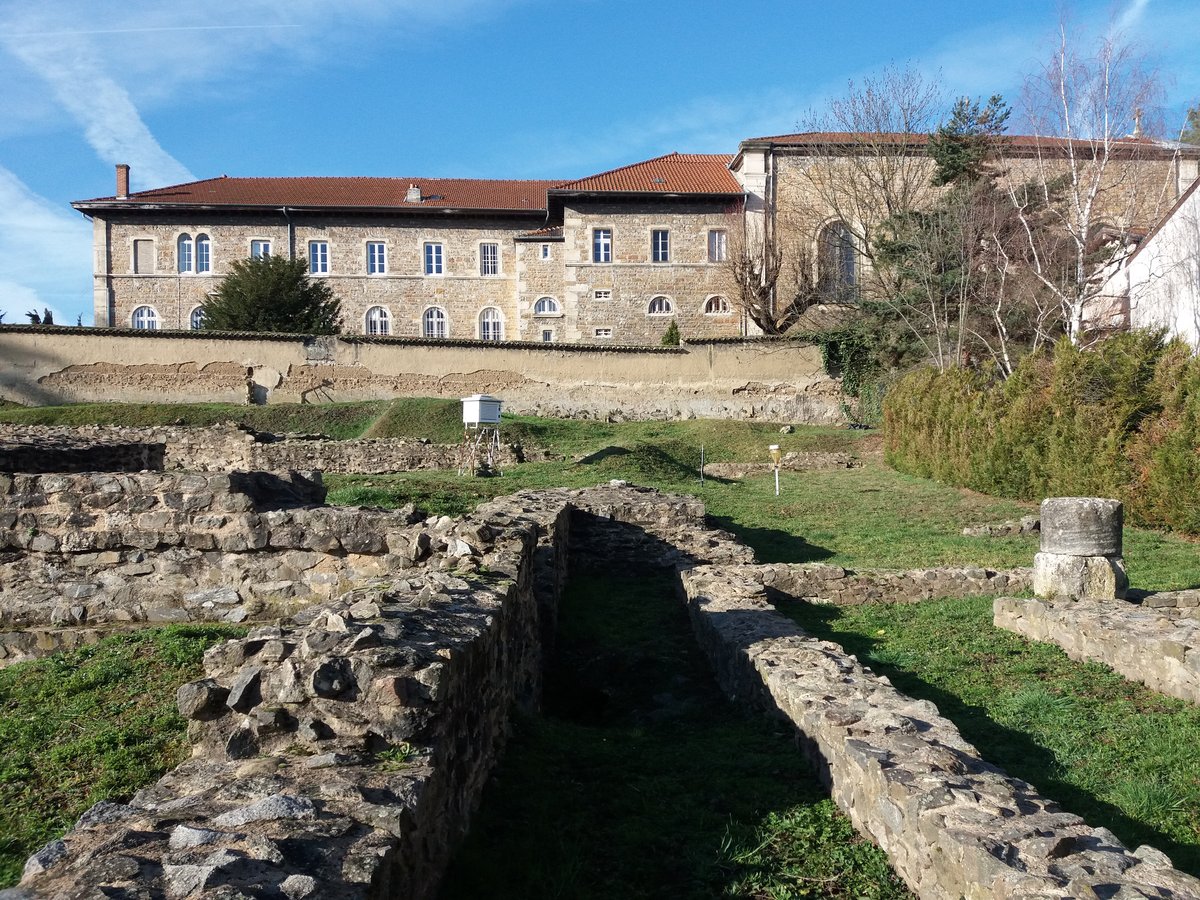
Perched atop Lyon’s legendary Fourvière Hill, the Sanctuary of Cybèle is a remarkable archaeological site that stands as a testament to the city’s Roman past and its evolution as a religious and civic center. This ancient sanctuary, dedicated to the Phrygian mother goddess Cybèle, offers visitors a unique opportunity to explore the spiritual, political, and urban tapestry of Lugdunum, the Roman name for Lyon. With its well-preserved ruins, layers of history stretching from the Bronze Age to late antiquity, and free public access year-round, the Sanctuary of Cybèle is a must-see for history enthusiasts, culture seekers, and families alike. This comprehensive guide details the sanctuary’s history, visiting information, ticketing, accessibility, guided tour options, and nearby attractions to help you make the most of your visit.
For official updates, resources, and interactive content, consult the Lyon Tourism Official Website, archeologie.lyon.fr, and Audiala.

Historical Background
Origins and Early Occupation
The Sanctuary of Cybèle sits on one of Lyon’s oldest settled areas, with archaeological evidence of habitation from the late Bronze Age. The site’s strategic location on Fourvière Hill made it an early center for both domestic life and commerce, predating the Roman foundation of Lugdunum in 43 BCE. Excavations reveal dwellings and shops dating back to 40–20 BCE, marking the area as a focal point of urban growth (archeologie.lyon.fr).
The Roman Era and the Cult of Cybèle
The sanctuary’s most significant development occurred in the 2nd century CE with its dedication to Cybèle, the Anatolian mother goddess. The discovery of the taurobolic altar from 160 CE—the earliest evidence of Cybèle’s cult in Gaul—underscores its importance. Rituals such as the taurobolium (bull sacrifice) were central to the cult, believed to ensure fertility and the city’s protection (france-voyage.com).
Archaeological Discoveries and Site Evolution
Twentieth-century excavations brought to light monumental limestone walls, sections of a basilica, aqueduct reservoirs, and stratigraphic layers indicating continuous occupation through late antiquity. The site evolved from private homes to a major sanctuary, reflecting Lyon’s administrative and religious prominence within the Roman Empire (archeologie.lyon.fr).
The Sanctuary’s Role in Roman Lugdunum
As the capital of Roman Gaul, Lugdunum was a melting pot of cultures. The sanctuary exemplifies the city’s integration of Eastern religious practices with Roman civic traditions, serving as a spiritual and social hub. Its proximity to other Roman sites—like the Ancient Theatre of Fourvière and the Odeon—highlights its central role in urban life (passportcollective.com).
Visiting the Sanctuary: Practical Information
Opening Hours
The Sanctuary of Cybèle is open year-round:
- April–October: 9:00 AM – 7:00 PM
- November–March: 9:00 AM – 5:00 PM
Tickets and Admission
- Entry: Free for independent visits.
- Guided or audio tours: Paid; advance booking recommended for guided experiences (Travel Buddies).
Accessibility
- The sanctuary features ancient, uneven terrain; some areas are partially accessible to visitors with reduced mobility.
- Paved walkways and ramps are present but may not cover all ruins.
- Contact the tourism office or tour providers for specific accessibility arrangements.
How to Get There
- Funicular: Line F2 from Vieux Lyon to Fourvière station.
- Bus: Several lines serve Fourvière.
- Walking: Steep, scenic climb from Old Town (Vieux Lyon).
- Parking: Limited near Fourvière; public transit is recommended.
Best Times to Visit
- Early morning or late afternoon for fewer crowds and optimal lighting.
- Spring and autumn offer milder weather and pleasant gardens.
Guided Tours and Special Events
- Smartphone Audio Tours: Available in English and French, triggered by GPS as you explore. Book online (Travel Buddies).
- Theatrical Tours: Storytelling and dramatized experiences offered by Cybèle Lyon.
- Special Events: Check with the Lyon Tourism Official Website for updates on heritage days, festivals, and educational workshops.
Nearby Attractions and Suggested Itinerary
- Ancient Theatre of Fourvière and Odeon: Adjacent sites illustrating Roman entertainment and architecture.
- Basilica of Notre-Dame de Fourvière: Offers panoramic city views and stunning mosaics.
- Gallo-Roman Museum: Exhibits artifacts contextualizing Roman Lyon.
Sample itinerary: Funicular to Fourvière → Basilica visit → Sanctuary and theaters → Gallo-Roman Museum → Descend to Vieux Lyon for dining and shopping.
Architectural and Archaeological Highlights
- Monumental Walls: The sanctuary’s north wall features a preserved limestone cornice.
- Multi-functional Spaces: Evidence suggests use for both religious ceremonies and civic gatherings.
- Urban Infrastructure: Includes paved roads, drainage, and building foundations, revealing sophisticated Roman urban planning.
- Artifacts: Statuary fragments, inscriptions, and altars reflect the city’s multicultural character (audiala.com).
Preservation and Modern Recognition
- Monument Historique: Designated in 1983; preservation is ongoing.
- UNESCO World Heritage: Part of Lyon’s Old Town, recognized for continuous urban development and exceptional historical value (UNESCO).
- Community Engagement: Volunteer programs and heritage events foster public involvement.
Frequently Asked Questions (FAQ)
Q: Is there an entrance fee?
A: No, independent visits are free. Guided tours and audio guides require tickets.
Q: What are the visiting hours?
A: Open daily from 9:00 AM to 7:00 PM (April–October), 9:00 AM to 5:00 PM (November–March).
Q: Is the sanctuary accessible for visitors with disabilities?
A: Partially accessible; some areas have uneven ground. Contact the tourism office or tour provider for details.
Q: Are guided tours available?
A: Yes. Smartphone audio and theatrical tours are available; advance booking is advised.
Q: Can I take photographs?
A: Yes. Please avoid climbing ruins or removing artifacts.
Q: Are there facilities on-site?
A: No dedicated amenities, but nearby Fourvière district offers restrooms, cafés, and shops.
Listen to the full story in the app
The whole Sanctuary Of Cybèle,
told well.
Audio guides for 1,100+ cities across 96 countries. History, stories, and local insight — offline ready.
Verified, and shown.
Researched and written by the Audiala editorial team from historical records, architectural archives, and local expertise.
Researched from Wikidata, Wikipedia & official sources · fact-checked · How we make our guides →