Plan and listen to Hôpital Édouard-Herriot with Audiala.
Audio guide in your pocket, itinerary in your browser. Built for the way you actually visit.
Introduction
Hôpital Édouard-Herriot, located on the east bank of the Rhône River in Lyon’s Grange-Blanche district, stands as a testament to medical innovation, modernist architecture, and cultural heritage. Originally conceived in the early 20th century to meet Lyon’s growing healthcare needs, the hospital—designed by the visionary architect Tony Garnier—embodies the “cité-jardin pour les malades” (garden city for the sick) concept, seamlessly integrating functional medical spaces with landscaped gardens. Over the decades, it has evolved into a leading university hospital, renowned for its medical breakthroughs, architectural significance, and ongoing commitment to public health (Docomomo France; Le Progrès; CHU Lyon).
This comprehensive guide equips visitors with essential information on the hospital’s history, architectural highlights, visiting hours, accessibility, and nearby attractions, ensuring a respectful and enriching experience at one of Lyon’s premier landmarks.


Origins and Founding Vision
Founded as Hôpital de Grange-Blanche in the early 20th century and championed by Mayor Édouard Herriot, the hospital was envisioned as a state-of-the-art institution for Lyon (Wikipedia). Tony Garnier, renowned for his modernist urban planning, won the design competition in 1909. Construction began in 1913 but was delayed by World War I, with the hospital officially opening in 1933. Ownership transferred to the Hospices Civils de Lyon in 1937, solidifying its role as a central pillar in Lyon’s healthcare system (Lyon Nature).
Architectural Significance
Garnier’s design for Hôpital Édouard-Herriot was revolutionary, featuring a “garden city” layout of 28 pavilions spread over 16 hectares. This layout prioritized sunlight, ventilation, and green spaces, fostering patient well-being and recovery (Chatillon Architectes). A 2.5-kilometer underground gallery network ensured efficient internal circulation. Notably, the chapel—designed by Louis Thomas with sculptures by Georges Salendre—is among several buildings now protected as historic monuments (Docomomo France).
The modernist aesthetic, with clean lines, rational planning, and the use of reinforced concrete, positioned the hospital at the forefront of European healthcare architecture (We Love Lyon; Baseland).
Role in Lyon’s Urban and Medical Development
The hospital’s creation marked a shift of major healthcare services from outdated city-center facilities to a modern, purpose-built complex. Its close links with Lyon’s university and nursing schools fostered advanced medical research and education. The hospital’s presence helped establish Grange-Blanche as a medical district, alongside other institutions like the Centre Léon Bérard (Docomomo France).
Notable Medical Milestones and Figures
- 1957: One of France’s first specialized burn treatment centers, led by Prof. Jean Creyssel.
- 1989: Installation of advanced magnetic resonance spectrometry equipment.
- 1998 & 2000: Site of the world’s first successful hand and double hand/forearm transplants performed by Prof. Jean-Michel Dubernard.
Other renowned figures include Eugène Villard, Gabriel Nove-Josserand, Frédéric Collet, and Léon Bérard (Wikipedia).
Modernization and Current Services
Recent modernization includes the construction and renovation of Pavillon H (2017) and Pavillon N (2023), integrating advanced technology while respecting heritage architecture (Team HCL). The hospital is recognized as a European center of excellence in oncology by ENETS. A new immunotherapy platform—delivering advanced treatments like CAR-T cell therapy—launched in 2025 (Le Progrès).
Visiting Hôpital Édouard-Herriot: Practical Information
Visiting Hours
- General hours: Typically 1:00 pm–8:00 pm for patient visits; hours may vary by department.
- Public access: Architectural and outdoor areas are accessible during regular opening hours. Always verify with the hospital for specific departmental schedules (CHU Lyon).
Tickets and Access
- Admission: No tickets or entrance fees are required for public areas. Access to patient care zones is restricted.
- Tours: Guided architectural or heritage tours are organized during special events (e.g., European Heritage Days) or by arrangement with Lyon’s tourism office.
Accessibility
- The hospital is equipped with ramps, elevators, and adapted restrooms for visitors with reduced mobility. Some historic pavilions may have limited access; contact the hospital for assistance (access map).
Getting There
- Address: 5 Place d’Arsonval, 69003 Lyon, France
- Metro: Line D, Grange-Blanche station
- Tram: Lines T2 and T5, Grange-Blanche stop
- Bus: Lines C8, C13, C16, C22, C26, 24
- Parking: Limited; public transport is strongly recommended (hospital access map).
Guided Tours and Special Events
- Guided tours are offered during heritage events and by arrangement. These tours explore the hospital’s history, architecture, and the legacy of Tony Garnier.
Nearby Attractions
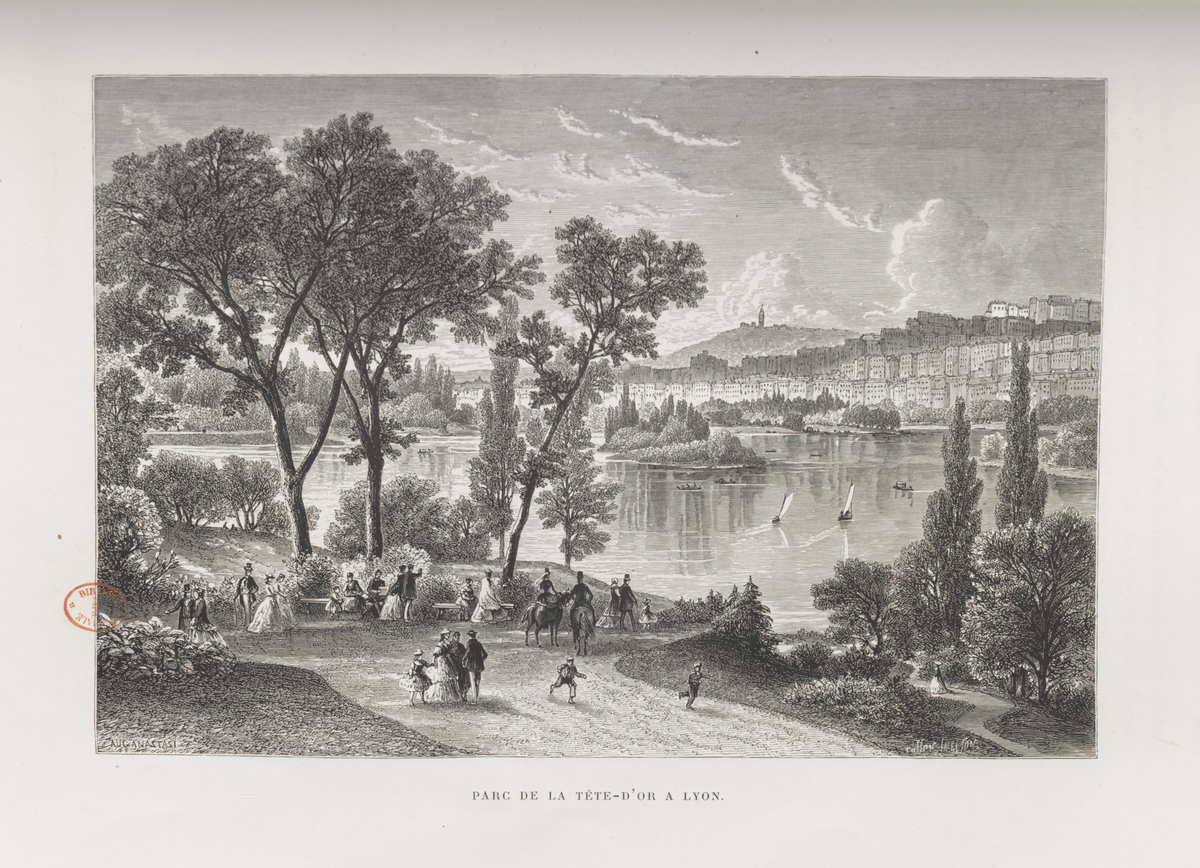
- Parc de la Tête d’Or: Lyon’s largest urban park, ideal for walking and relaxation.
- Vieux Lyon: The city’s Old Town, a UNESCO World Heritage site with Renaissance architecture.
- Musée des Confluences: A striking contemporary science and anthropology museum.
- Other Grange-Blanche institutions: Faculté de Médecine, Centre Léon Bérard, and Hôpital d’Instruction des Armées Desgenettes.
Visitor Etiquette and Facilities
- Respectful conduct: Maintain a quiet atmosphere; silence mobile phones.
- Photography: Prohibited in patient care areas. In public spaces, use discretion and respect privacy.
- Facilities: Information desks, cafeterias, waiting areas, restrooms, on-site ATM, and limited public Wi-Fi are available.
- Navigation: Buildings are numbered and color-coded; underground galleries connect many pavilions. Maps and staff assistance are available at entrances.
Frequently Asked Questions (FAQs)
Q: Can I visit Hôpital Édouard-Herriot as a tourist?
A: Yes, public areas and gardens are open; guided tours are occasionally available.
Q: Are tickets required?
A: No, unless participating in a special tour.
Q: What are the visiting hours?
A: Generally 1:00 pm–8:00 pm for patient visits; check for department-specific hours.
Q: Is the hospital accessible for visitors with reduced mobility?
A: Most areas are equipped for accessibility, though some historic pavilions may have limitations.
Q: Is photography allowed?
A: Yes, in public outdoor areas only; prohibited in patient zones.
Heritage and Cultural Impact
Hôpital Édouard-Herriot is recognized as a protected monument and a model of early modern hospital design. Its architectural and urban planning principles continue to influence hospital construction worldwide (Docomomo France).
Listen to the full story in the app
The whole Hôpital Édouard-Herriot,
told well.
Audio guides for 1,100+ cities across 96 countries. History, stories, and local insight — offline ready.
Verified, and shown.
Researched and written by the Audiala editorial team from historical records, architectural archives, and local expertise.
Researched from Wikidata, Wikipedia & official sources · fact-checked · How we make our guides →