Plan and listen to Basilique Saint-Just De Lyon with Audiala.
Audio guide in your pocket, itinerary in your browser. Built for the way you actually visit.
Introduction
In the heart of Lyon’s UNESCO-listed historic center, the Basilique Saint-Just de Lyon stands as a testament to the city’s layered spiritual, architectural, and civic history. Spanning more than two millennia, this site has evolved from a late Roman funerary basilica to a medieval religious center of international significance, surviving cycles of destruction and renewal. Today, visitors can explore both the evocative archaeological park—preserving ancient foundations—and the neoclassical Église Saint-Just, which continues to serve as a vibrant place of worship and cultural engagement (Wikipedia; Lyon Historique; Patrimoine Lyon; Lyon Tourism).
This comprehensive guide offers in-depth historical context, practical visitor information on hours and tickets, architectural highlights, and tips for experiencing Saint-Just, making it an essential resource for history enthusiasts, pilgrims, and travelers alike.


Roman Origins and Early Christianity
The story of Saint-Just begins in the late Roman era, on a necropolis southwest of ancient Lugdunum (Lyon). Here, early Christians established a funerary basilica, initially dedicated to the Maccabees, Jewish martyrs revered in both Jewish and Christian traditions. The basilica’s construction over Roman tombs symbolized the integration of Christian worship with earlier burial practices (fr.wikipedia.org; en.wikipedia.org; patrimoine-lyon.org).
Dedication to Saint Justus and Medieval Development
In the early 5th century, the basilica’s focus shifted to honor Saint Justus, the 13th bishop of Lyon, who died as a hermit in Egypt after participating in significant religious councils. His relics, returned to Lyon by his successor Antiochus, became central to the basilica’s identity and to local Christian devotion (en.wikipedia.org). Over time, the site expanded, especially during the Carolingian period, becoming a major religious and civic institution with its own chapter of canons.
Romanesque and Gothic Transformations
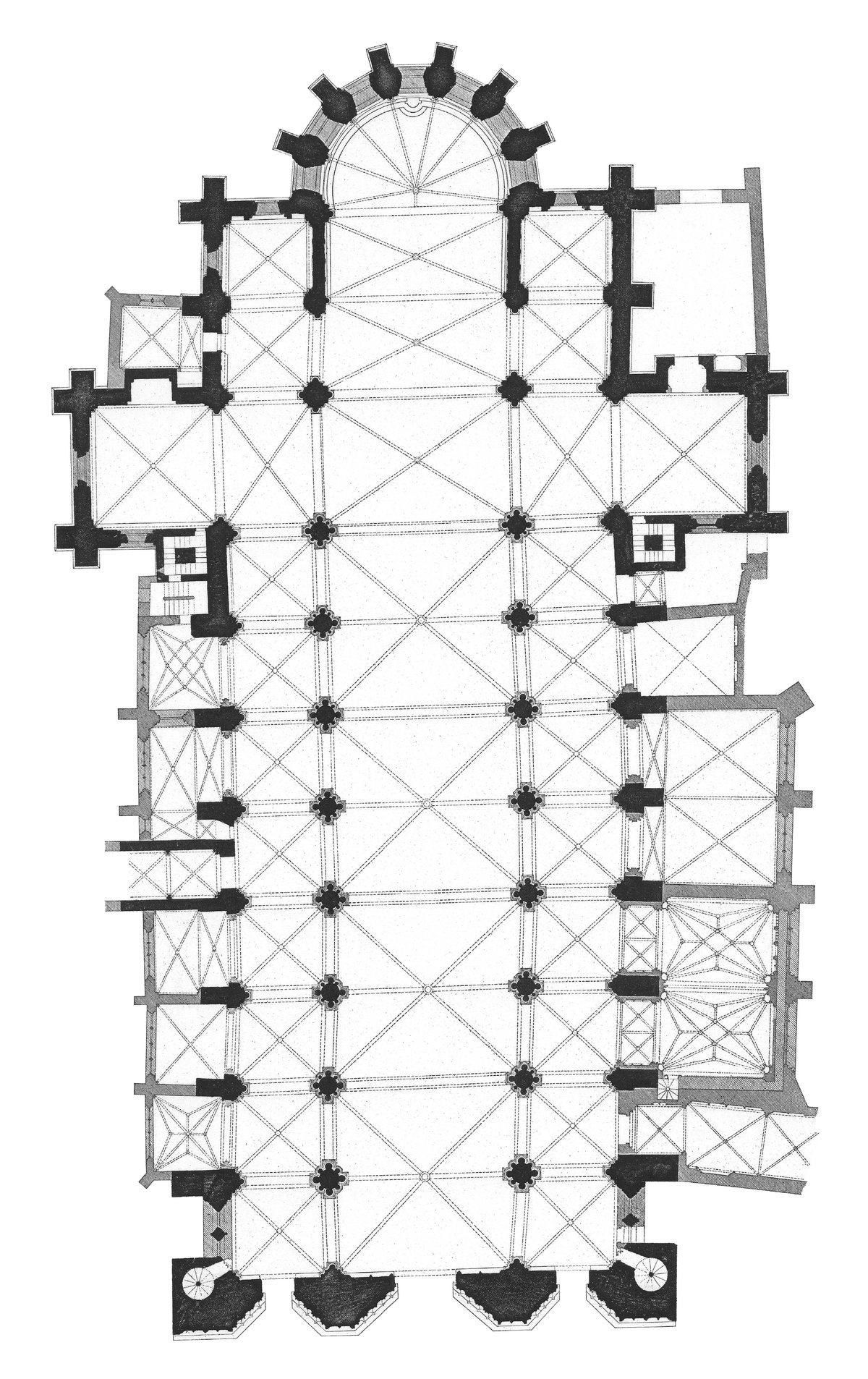
The 12th and 13th centuries saw Saint-Just rebuilt in the Romanesque style, then embellished with Gothic features. The basilica’s imposing towers and transept reflected both its spiritual significance and its strategic location in a fortified suburb. Enclosed within its own defensive walls, the complex included the Cloître Saint-Just and associated religious buildings (lyonhistorique.fr; fr.wikipedia.org).
Papal and Royal Associations
Saint-Just’s influence peaked in the Middle Ages. Pope Innocent IV resided here during his exile (1244–1251), excommunicated Emperor Frederick II, and blessed King Louis IX before the Seventh Crusade. The basilica notably hosted the coronation of Pope Clement V in 1305—a grand event dramatically marked by the collapse of the choir wall (en.wikipedia.org; fr.wikipedia.org). Over the centuries, French royalty and dignitaries visited, further cementing its prestige.
Destruction and Rediscovery
The Wars of Religion brought devastation in 1562, when Protestant troops destroyed most of the basilica, scattering its stones through the city. The ruins faded from memory until archaeological excavations in the 1970s uncovered the basilica’s foundations and ancient graves. Today, these remains form the Jardin Archéologique de Saint-Just, offering a direct connection to Lyon’s early Christian past (en.wikipedia.org; lyonhistorique.fr; archeologie.lyon.fr).
The Modern Église Saint-Just
After the destruction of the original basilica, the canons relocated inside the city walls, constructing a new church between 1565 and 1663. Consecrated in 1591, the Église Saint-Just features a neoclassical façade by Ferdinand-Sigismond Delamonce and a dual dedication—first to the Maccabees, then to Saint Justus. Despite damage during the Revolution, restoration preserved its artistic and spiritual heritage (en.wikipedia.org; patrimoine-lyon.org). Since 1980, the church has been protected as a Monument Historique.
Liturgical life thrives at Église Saint-Just, entrusted to the Fraternité Saint-Pierre, who celebrate the traditional Latin rite and the ancient Lyonnais liturgy. The church is also renowned for its exceptional acoustics, frequent sacred music concerts, and stained glass windows depicting local saints and biblical scenes.
Visiting Information
Hours and Admission
- Archaeological Park (Jardin Archéologique de Saint-Just): Open year-round, typically 9:00 AM–6:00 or 7:00 PM. Free entry (archeologie.lyon.fr).
- Église Saint-Just (41 rue des Farges): Open daily, 9:00 AM–6:00 PM. Access may be limited during liturgical services or special events. Entry is free; donations appreciated (patrimoine-lyon.org).
Accessibility
- Modern Church: Wheelchair accessible via main entrance. Assistance available upon request.
- Archaeological Park: Pathways accommodate reduced mobility, though some areas are uneven; suitable footwear is advised.
Guided Tours and Events
- Guided tours are offered through Lyon’s tourism office and the Association Culturelle des Sanctuaires Saint-Irénée Saint-Just (51 rue des Macchabées). Advance booking is recommended for group visits.
- Église Saint-Just hosts sacred music concerts, liturgical celebrations in the Latin and Lyonnais rites, and occasional cultural events.
Travel Tips
- Combine your visit with the Gallo-Roman Theatre of Fourvière and Basilica of Notre-Dame de Fourvière.
- Weekday mornings or late afternoons are quieter for visits.
- Modest attire is recommended; maintain a respectful atmosphere during services.
- The funicular from Vieux Lyon provides direct access to the Saint-Just district (Lyon Visite Funicular Info).
Architectural and Artistic Highlights
- Archaeological Park: Explore preserved Roman necropolis remains, early Christian tombs, and the foundations of multiple basilicas, with interpretive signage and a fresco showing the 1550 abbey plan (archeologie.lyon.fr; frenchmoments.eu).
- Église Saint-Just: Admire the neoclassical façade, 18th-century choir stalls, grand organ, stained glass windows, and portraits of the bishops. The crypt reveals early Christian mosaics and tombs, while Renaissance altarpieces and sculptures enrich the interior (patrimoine-lyon.org).
Nearby Attractions
- Roman Theatres of Fourvière: Ancient ruins that host the annual Nuits de Fourvière festival (traveltolyon.com).
- Jardin des Curiosités: Offers panoramic views of Lyon and unique sculptures.
- Vieux Lyon: The Renaissance old town, with traboules, bouchons, and artisan shops.
Frequently Asked Questions (FAQ)
Q: What are the visiting hours for Basilique Saint-Just de Lyon and its archaeological park?
A: Both are generally open daily from 9:00 AM to 6:00 or 7:00 PM; check official sources for seasonal updates.
Q: Is there an entrance fee?
A: No, both the archaeological park and Église Saint-Just are free to visit; donations are welcome.
Q: Are guided tours available?
A: Yes, through Lyon’s tourism office or the Association Culturelle des Sanctuaires Saint-Irénée Saint-Just.
Q: Is the site wheelchair accessible?
A: The modern church is fully accessible; the archaeological park has some uneven areas but is generally accommodating.
Q: Can I attend mass or concerts at the church?
A: Yes, regular masses (including in the ancient Lyonnais rite) and sacred music concerts are held throughout the year.
Discover More
The Basilique Saint-Just de Lyon, with its ancient roots and rich architectural legacy, is an essential stop for anyone exploring Lyon’s religious and cultural history. Free admission, accessible facilities, and a calendar of guided tours and events make it welcoming to all. Its proximity to other major historic landmarks further enhances its appeal as a cornerstone of Lyon’s UNESCO World Heritage site (Archeologie Lyon; French Moments; Visiter Lyon).
For a deeper, more immersive visit, download the Audiala app for audio guides, interactive maps, and the latest event updates. Connect with Lyon’s living heritage and plan your journey to Saint-Just today!
Listen to the full story in the app
The whole Basilique Saint-Just De Lyon,
told well.
Audio guides for 1,100+ cities across 96 countries. History, stories, and local insight — offline ready.
Verified, and shown.
Researched and written by the Audiala editorial team from historical records, architectural archives, and local expertise.
Researched from Wikidata, Wikipedia & official sources · fact-checked · How we make our guides →