Plan and listen to Auditorium Maurice-Ravel with Audiala.
Audio guide in your pocket, itinerary in your browser. Built for the way you actually visit.
Introduction: Auditorium Maurice-Ravel – Lyon’s Icon of Culture and Architecture
Located in Lyon’s bustling Part-Dieu district, the Auditorium Maurice-Ravel is a striking symbol of the city’s commitment to cultural innovation and architectural daring. Since its inauguration in 1975, the auditorium has not only been the home of the Orchestre national de Lyon but also a key destination for music lovers, architecture fans, and visitors eager to explore the best of Lyon’s dynamic artistic life. This guide explores the auditorium’s visionary origins, architectural marvels, cultural evolution, and everything you need to plan a memorable visit—from ticketing and accessibility to nearby attractions and practical tips (7alyon.com; auditorium-lyon.com).
Visionary Origins and Development
In the 1960s, Lyon embarked on an ambitious wave of urban and cultural renewal. Under the leadership of André Malraux, then Minister of Culture, and Marcel Landowski, the city sought a modern “maison de la culture” that would house a permanent orchestra and serve as a beacon for the arts (7alyon.com). This vision coincided with the growth of the Orchestre national de Lyon, which had outgrown its previous venue, the Salle Rameau (auditorium-lyon.com). The decision to build in the emerging Part-Dieu district reflected Lyon’s ambition to anchor culture at the heart of its modernization. Robert Proton de la Chapelle played a crucial role in realizing this vision (fr.wikipedia.org).
Architectural Significance and Construction
The auditorium’s architectural competition was won by Charles Delfante and Henri Pottier, assisted by acoustician Léon Conturie. Construction began in 1972 and concluded with the opening on February 14, 1975, coinciding with the centenary of Maurice Ravel’s birth (tribunedelyon.fr). The building is a signature example of 1970s brutalism, using 40,000 tonnes of concrete and 830 tonnes of steel to create a monumental, scallop shell–shaped form. This design eliminated interior pillars, delivering immaculate sightlines for all 2,100 seats and groundbreaking acoustics (hiddenarchitecture.net). The bold concrete exterior sparked passionate public debate, earning nicknames like “the bunker” and “the toad” (blog.thal.art).
The structure’s thick concrete walls effectively insulate it from city noise, and a ground-level atrium on fluted pillars welcomes visitors for exhibitions and gatherings (blog.thal.art).
Acoustic Innovations and Challenges
While visually impressive, the auditorium’s initial acoustics faced criticism due to insufficient acoustic studies, resulting in an overly low volume and problematic echoes from the concave rear wall (en.wikipedia.org). Musicians found it difficult to hear one another due to the lack of lateral walls. These challenges prompted significant modifications, including the installation of a Phillips acoustic system and removal of 33 ceiling spheres between 1993 and 2002 (tribunedelyon.fr). Today, the hall is acclaimed for its intimacy and adaptability to a variety of musical genres (7alyon.com).
The Grand Organ: Historic Instrument at the Heart of the Auditorium
One of the auditorium’s most remarkable features is its historic pipe organ, crafted by Aristide Cavaillé-Coll for the 1878 Paris Exposition Universelle. Relocated and restored several times, it found its permanent home in Lyon in 1977. With 82 stops, 121 ranks, and 6,508 pipes, it stands as one of France’s largest concert hall organs (fr.wikipedia.org). This instrument is central to the auditorium’s programming and often featured in special concerts (radioclassique.fr).
Cultural Role and Evolution
Since its opening, the Auditorium Maurice-Ravel has been the home of the Orchestre national de Lyon, which has achieved international renown (auditorium-lyon.com). The venue hosts around 160 concerts annually, spanning symphonic, chamber, jazz, world music, and cine-concerts, as well as educational workshops (auditorium-lyon.com). The auditorium also serves as a community hub, hosting exhibitions and public gatherings in its square (blog.thal.art). Its status as a “remarkable contemporary architecture” site, awarded in 2012, reflects its significance in 20th-century heritage (fr.wikipedia.org).
Visitor Guide: Hours, Tickets, Accessibility & More
Location and Getting There
- Address: 149 rue Garibaldi, 69003 Lyon, France
- District: Part-Dieu, close to Halles de Lyon – Paul Bocuse and Part-Dieu shopping center
- Transport: Short walk from Part-Dieu train station; Metro Line B, trams, and multiple bus lines serve the area (Lyon France)
Visiting Hours
Typically open on concert and event days, with box office hours Monday to Saturday, 10:00 AM to 6:00 PM. For guided tours and special events (such as European Heritage Days in September), check the official website.
Tickets and Reservations
Purchase tickets online, at the venue, or via authorized sellers. Prices vary by event and seat, with discounts for students, seniors, and groups (JDS). Subscription packages offer multiple concerts at reduced rates.
Accessibility & Amenities
- Fully accessible for visitors with reduced mobility (wheelchair access, elevators, adapted restrooms)
- Hearing assistance devices available
- On-site café, cloakroom, and gift shop
- Family-friendly programming and workshops
Guided Tours & Special Exhibitions
Guided tours (by reservation) reveal architectural and technical features, including the monumental organ. During European Heritage Days, free tours access usually restricted areas. In 2025, a special exhibition marks the 50th anniversary, with rare archives and interviews (Lyon Capitale).
Nearby Attractions
- Part-Dieu Shopping Center: Major retail hub
- Halles de Lyon – Paul Bocuse: Renowned food market
- Musée des Confluences: Contemporary science and anthropology museum
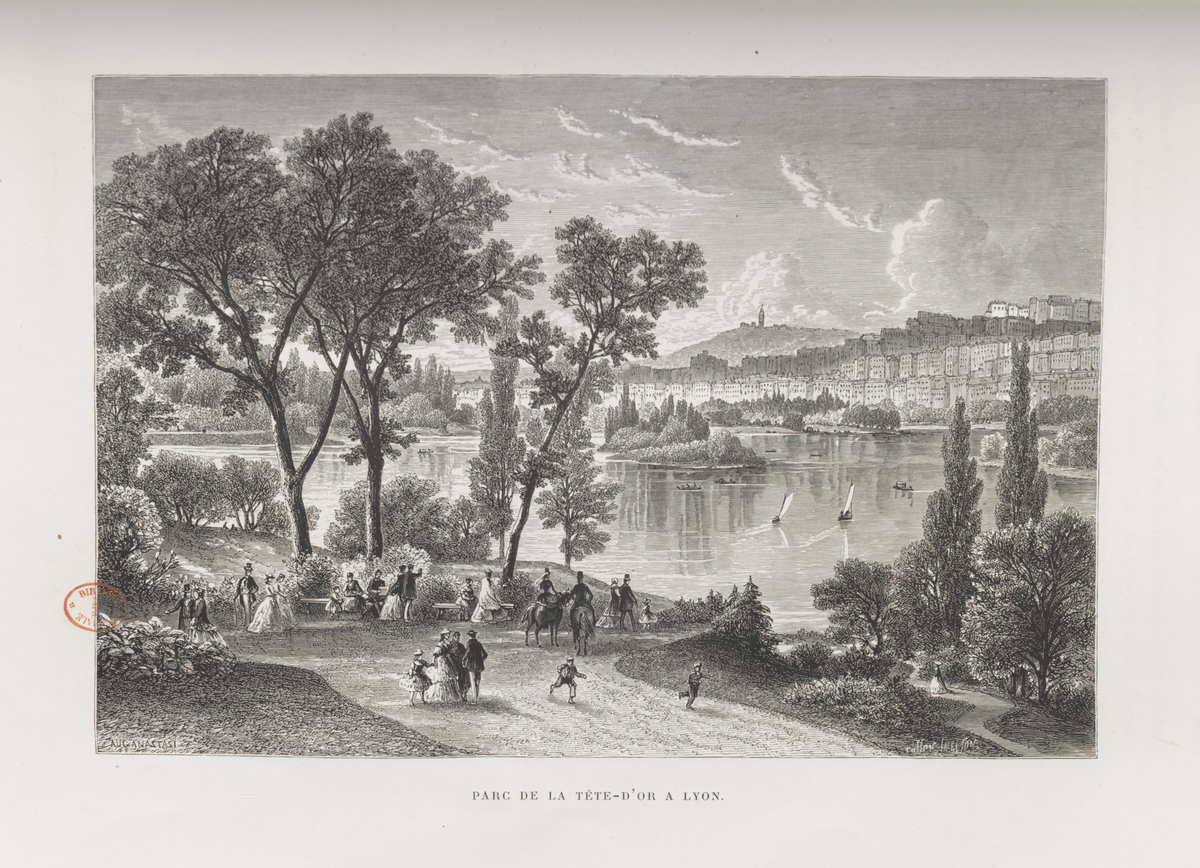
- Parc de la Tête d’Or: Expansive city park with a zoo and gardens
Practical Tips
- Arrive at least 30 minutes early
- Dress smart casual
- Photography is restricted during performances
- Announcements are typically in French, but staff assist international visitors
Architectural Highlights
- Exterior: Shell-like, brutalist concrete structure, a pioneering work for its time (POP Culture Gouv)
- Interior: 2,100-seat hall with Roman theater–inspired semi-circular layout, no internal pillars, excellent sightlines (hiddenarchitecture.net)
- Stage: Mechanically adjustable, accommodates up to 65 musicians in the pit, advanced lighting, and sound systems
- Grand Organ: Historic Cavaillé-Coll instrument, among France’s largest (7alyon)
- Renovations: Acoustic and lighting improvements between 1993–2002, enhanced visitor experience
Concerts, Events & Community Life
The auditorium presents a rich season of symphonic classics, jazz, world music, and contemporary works. It is home to the Orchestre National de Lyon and regularly welcomes celebrated international artists (Music Opera). Educational programs and family workshops make it a welcoming space for all ages.
Frequently Asked Questions (FAQ)
Q: What are the Auditorium Maurice-Ravel’s visiting hours?
A: The auditorium is open during concerts and events. The box office operates Monday–Saturday, 10:00 AM–6:00 PM. Check the official website for up-to-date hours.
Q: How do I buy tickets?
A: Tickets are available online, at the box office, and through authorized vendors. Early booking is recommended for popular events.
Q: Is the venue accessible for people with disabilities?
A: Yes, the auditorium is fully accessible, including wheelchair seating and hearing assistance.
Q: Are guided tours available?
A: Yes, by reservation and during special events such as European Heritage Days.
Q: What other attractions are nearby?
A: Part-Dieu shopping center, Halles de Lyon – Paul Bocuse, Musée des Confluences, and Parc de la Tête d’Or.
Visuals & Virtual Tours
Explore virtual tours and galleries on the official website for a preview of the auditorium’s architecture and performances. High-quality images with descriptive tags improve accessibility and help plan your visit.
Summary & Final Tips
The Auditorium Maurice-Ravel is a testament to Lyon’s cultural ambition and architectural innovation. Its iconic shell structure, pioneering construction, and historic organ offer music fans and architecture enthusiasts a unique experience. With a vibrant concert program, welcoming amenities, and a central location near Lyon’s top attractions, the auditorium is a highlight of any visit to the city. Plan ahead, secure your tickets, and take advantage of guided tours to fully appreciate this modern masterpiece (auditorium-lyon.com; 7alyon.com).
Plan Your Visit
- Official Website: Auditorium de Lyon
- Tickets: Infoconcert, Music Opera
- Guided Tours: JDS
- Special Exhibitions: Lyon Capitale
Stay connected through the Audiala app and social media for the latest updates, exclusive content, and event news. Lyon’s Auditorium Maurice-Ravel awaits—immerse yourself in its architecture, history, and vibrant cultural scene!
Listen to the full story in the app
The whole Auditorium Maurice-Ravel,
told well.
Audio guides for 1,100+ cities across 96 countries. History, stories, and local insight — offline ready.

Verified, and shown.
Researched and written by the Audiala editorial team from historical records, architectural archives, and local expertise.
Researched from Wikidata, Wikipedia & official sources · fact-checked · How we make our guides →