An introduction.
Researched by the Audiala editorial team from historical records, architectural archives, and local expertise.
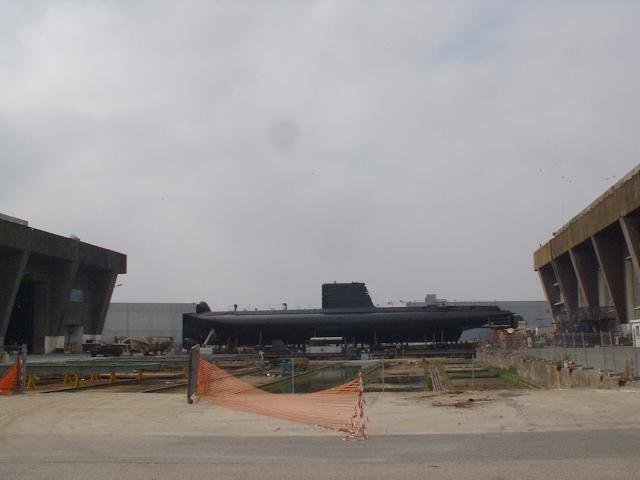
AA submarine bunker built for stealth now dominates the waterfront at Keroman 3 in Lorient, France, and that contradiction is exactly why you should come. This is where war turned architecture into armor: a vast concrete mass that survived the bombing that shattered the rest of the city. Visit for the scale, stay for the unease, and leave with a sharper sense of what the Atlantic war looked like when it reached shore.
Keroman 3 belongs to the former Keroman submarine base, now folded into the district locals call La Base. The air smells of salt and engine oil, gulls cut across the roofline, and the bunker still feels less like a ruin than a machine paused mid-task.
Most visitors arrive expecting military history in the abstract. What they find is something harsher: concrete thick enough to shrug off bombardment, a harbor chosen for speed, and a city that paid for that choice when Lorient was flattened while the bunkers endured.
That imbalance gives the place its charge. Keroman 3 is worth your time because it does not flatter the past; it shows, in one hard block of reinforced concrete, what total war demanded and what it left behind.
01 What to see.
The Sheer Face of Keroman 3
The Basin Beside K3
Walk La Base From Flore to K3
Plan and listen to Keroman 3 with Audiala.
Audio guide in your pocket, itinerary in your browser. Built for the way you actually visit.
03 Visitor logistics.
The practical scaffolding for a good visit — kept short.
Getting There
Keroman 3 sits inside Lorient La Base at Rue Roland Morillot, 56100 Lorient. By car, follow the N165 toward "Lorient / Larmor-Plage," enter at the Keroman roundabout, then use the P1 or P2 visitor car parks; by transit, IZILO bus lines T2 and T5 both serve La Base from Gare d'Échanges in roughly 15 to 20 minutes. On foot inside the site, allow 10 minutes from the central ticket office at the Cité de la Voile to the K3 entrance.
Opening Hours
As of 2026, Keroman 3 is visited only on timed guided tours rather than open wandering. The 2026 ticket calendar shows a lighter winter rhythm with single afternoon departures on some February dates, then multiple French-language tours a day from spring onward; English tours run from 2 June to 29 September 2026. Check the live ticket calendar before you go, because K3 slots change by date and language.
Time Needed
The guided visit itself lasts about 1 hour, though older site material still mentions up to 1 hour 30. Give yourself 1 hour 30 total if you're arriving from the central ticket office and want a few minutes on the roof after the guide finishes. Pair it with the Flore submarine or the Musée Sous-Marin and your stop easily becomes half a day, around 3 to 4 hours.
Cost/Tickets
As of 2026, a standard K3 guided ticket is €7.50 for adults and €4 for ages 7 to 17; children under 7 go free, and the reduced adult fare is €4. The better deal is often a combined pass with the Flore submarine: €16.20 adult / €9.45 child for two sites, or €20.40 adult / €12.30 child for Flore, K3, and the Musée Sous-Marin, which trims 10% to 15% off the separate visits.
Accessibility
K3 is the hard-edged version of wartime concrete: the current visitor route includes 135 steps and ends on the roof. As of 2026, the regular public tour is not accessible for wheelchair users or strollers, even though some group formats use a partly accessible route. Guide and assistance dogs are accepted; other dogs are not.
04 Tips for visitors.
Small things that change the day.
Book English Early
English-language K3 tours run only from 2 June to 29 September 2026. Outside that window, expect French-guided visits, so reserve ahead if language matters.
Use The Pass
K3 on its own is inexpensive, but the real saving comes when you stack it with the Flore submarine and museum. The two-site and three-site passes cut 10% to 15%, which is the rare tourist upsell that actually earns its keep.
Mind The Stairs
The tour includes 135 steps, about the height of climbing a 10-storey apartment block without a lift. Wear shoes with grip, and skip bulky bags or strollers unless you enjoy wrestling concrete.
Eat On Site
For a quick Breton lunch after the bunker, PC de la Base is the sensible choice for galettes and crêpes at budget-to-mid-range prices. K5 works better for a longer brasserie meal in the mid-range bracket, while La Baleine suits drinks, burgers, pizzas, and a terrace view over the rade.
Pick Your Weather
Grey skies do not hurt the bunker interior; they may even help, because K3 was built for gloom. But the roof panorama is exposed to wind off the harbor, so a clear, cool morning in spring or early autumn gives you the sharpest light and fewer crowds.
Leave Buffer Time
Arrive at the bunker entrance 10 minutes before the slot, not at the central ticket desk. The walk from the Cité de la Voile ticket office to K3 takes about 10 minutes, and missing that gap is the easiest way to turn military precision into personal chaos.
05 When Concrete Outlived the City
Records show that Germany turned to Lorient in June 1940, soon after the French defeat, because the port opened directly onto the Atlantic and already had naval infrastructure. Keroman 3 grew from that decision, part of a bunker complex built to shelter U-boats from attack and send them back to sea fast.
The cruel fact sits in plain view. Allied bombing devastated Lorient, yet the submarine base largely survived, so Keroman 3 now stands as both engineering feat and accusation.
Dönitz's Atlantic Gamble
Grand Admiral Karl Dönitz wanted more than a safe harbor. He needed a forward base that could keep his U-boats striking British shipping without wasting days on the return trip to Germany, and Lorient offered exactly that after he chose it on 28 June 1940, according to the official La Base history.
That choice set lives, resources, and prestige on the line for him personally. If the Atlantic campaign failed, the bet on French ports would look reckless; if it worked, Lorient would become the hinge of Germany's submarine war. Records show that exposed facilities quickly proved too vulnerable, which forced a turning point: temporary use of the fishing-port slipways gave way to the decision to build heavily protected bunkers on the Keroman peninsula.
Construction of the peninsula bunkers began in February 1941, according to the French Ministry of Culture inventory. Keroman 3 became the hardest expression of Dönitz's strategy, a block of reinforced concrete designed to keep submarines alive long enough to kill again.
A Base Built for Speed
The City That Took the Blow
Listen to the full story in the app
The whole Keroman 3,
told well.
Audio guides for 1,100+ cities across 96 countries. History, stories, and local insight — offline ready.

06 Frequently asked.
The questions travellers send us most about Keroman 3.
Is Keroman 3 worth visiting?
Yes, if wartime history and raw industrial architecture interest you. Keroman 3 is one of the giant surviving blocks of the former Lorient submarine base, built after Germany chose Lorient in June 1940 for its Atlantic U-boat campaign. The shock is the scale: these bunkers outlasted the bombing that flattened much of the city around them.
How long do you need at Keroman 3?
Give it 1 to 2 hours for the bunker area, and longer if you pair it with the wider La Base site. Keroman 3 works best when you slow down enough to read the concrete, the harbor, and the silence around them. Add extra time if you want museums or a longer walk along the former base.
How do I get to Keroman 3 from Lorient?
From central Lorient, head to La Base on the Keroman peninsula; that is the modern name locals use for the former submarine base area. The trip is short by car, taxi, bike, or local transport, and the route follows the working waterfront rather than some postcard old town. Once you arrive, look for signs to the former base and bunker sector.
What is the best time to visit Keroman 3?
Go in dry weather and good daylight, ideally in the morning or late afternoon. This is a place of concrete mass, long shadows, sea air, and hard angles, so light matters more than ceremony. Gray skies suit it too, frankly; the bunker does not need sunshine to make its point.
Can you visit Keroman 3 for free?
The wider exterior area around La Base can often be experienced without paying, but access conditions for Keroman 3 itself may depend on current site rules or guided visits. Check local visitor information before you go. This is a former military complex, not a church square you simply wander into.
What should I not miss at Keroman 3?
Do not miss the sheer mass of the bunker and the wider setting of the former submarine base. The story starts in June 1940, when Dönitz chose Lorient, then turns brutal: protected pens rose from February 1941 onward while the city outside was destroyed by bombing. Stand still for a minute and the place confesses what it was built to do.
Verified, and shown.
Researched and written by the Audiala editorial team from historical records, architectural archives, and local expertise.
Provided official French heritage context for the Keroman submarine base and confirmed key dates including June 1940 and February 1941.
Supplied the official site history, including Dönitz choosing Lorient on 28 June 1940 and construction chronology for the base.
Used for overview chronology, including end of June 1940 operations, the 7 July 1940 arrival of U-30, and bunker construction starting in November 1940.
Supported the timeline for early bunker construction and supplied place-specific context for Keroman 3.
Confirmed February 1941 construction timing and provided visitor-facing context for the wider La Base area.
Referenced for the absence of Keroman 3 from the UNESCO World Heritage results provided in the research context.
Researched from Wikidata, Wikipedia & official sources · fact-checked · How we make our guides →