


Place
Le Mont-Saint-Michel
France Updated Apr 2026
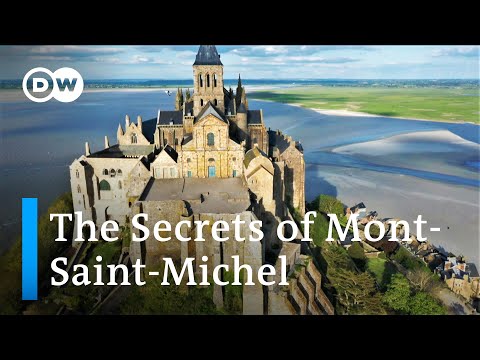
The tide arrives like a galloping horse and suddenly the rock you were walking toward becomes an island again. Le Mont-Saint-Michel sits in its bay on the Normandy-Brittany border in France, a granite fist rising 80 meters above the salt meadows with an abbey perched on its crown. The sight still stops conversations mid-sentence.
 Photo: Hub JACQU / Pexels
- Attractions
- 6
- Trip length
- 1-2 days
- Best season
- Spring & Autumn
Why Le Mont-Saint-Michel
Built from cited sources · see the method · How we make our guides →
Built atop a sanctuary founded in 708 after Archangel Michael reportedly poked Bishop Aubert’s skull to get his attention, the abbey known as La Merveille took shape between the 11th and 16th centuries. Its cloister floats on the uppermost level, colonnettes framing open sea rather than enclosed garden. The 14th-century ramparts below never fell to the English.
Thirty people live here year-round. After the last shuttle leaves around seven, the Grande Rue falls quiet except for the wind and the occasional creak of old granite. Stay overnight and you’ll meet the place the three million annual visitors never see.
The bay itself carries UNESCO status alongside the abbey. Its 14-meter tides expose quicksand and ancient pilings; guided barefoot crossings remain the only safe way to walk it. Come at equinox and the Mont turns fully insular for a few precious hours.
The Abbey on the Rock
Built atop a granite islet since 708, the abbey rises 80 metres above the bay. Its 13th-century Merveille halls and 1897 gilded archangel still command the horizon exactly as they did when the tide first isolated the site.Tides That Race
Europe’s largest tidal range reaches 14 metres here. At coefficient 110+ the water arrives at the speed of a galloping horse, turning the Mont into a true island twice daily. The sight never fails to reorder your sense of scale.Crossing the Bay
Licensed guides lead barefoot walks across the sands, past quicksand traps and the ruined priory on Tombelaine islet. Three-hour routes to the islet or full-day traversées remain the only safe way to feel the bay’s pulse.Unbreached Ramparts
The 14th–15th century chemin de ronde circles the rock without ever having let English troops inside. Walk it at dusk when the day-trippers have gone and the granite still holds the day’s heat.
Places to Visit
Not every monument, just the ones we'd walk you past ourselves.
Neighborhoods
Where to wander, by quarter — each with its own rhythm.
The Rock
The 900-meter tidal island itself holds the abbey, ramparts, and single medieval street. Climb the chemin de ronde for free views that change with every tide. At dusk the granite glows gold, footsteps echo between 15th-century houses, and the place finally belongs to its few permanent residents.Grande Rue
The only high street snakes uphill from the Porte de l’Avancée to the abbey steps. Wrought-iron guild signs still hang above granite doorways. Peer through the window at La Mère Poulard to watch cooks beat omelettes over open fire with theatrical copper pans; the €39 plate is optional.La Truie qui File
This narrow back lane threads between rooftops and bypasses the main tourist flow. Locals use it to descend after abbey visits. The light slants differently here, rooftops frame the bay, and you hear your own footsteps instead of tour groups.La Caserne
The purpose-built mainland village two and a half kilometers away holds the parking, hotels, and better-value restaurants. After 6:30 pm off-season the lots turn free. Most visitors treat it as a functional gateway; overnight guests discover it empties into near silence once the coaches leave.Avranches
Twenty-two kilometers east, this small Norman town guards the abbey’s original manuscripts at the Scriptorial museum. The Basilica of Saint-Gervais displays Bishop Aubert’s perforated skull. Its Jardin des Plantes offers the best mainland panorama across the bay.Pontorson
The nearest real market town nine kilometers south runs a Wednesday produce market. Locals drive here for pré-salé lamb and cider at half the price charged on the Mont. Its quiet streets and honest bistros restore perspective after the rock’s theatricality.
Plan your trip
Before you go
- Getting There
- No local airport. Fly into Rennes (RNS) 75 km away then take the Keolis Armor coach, or Paris CDG followed by TGV to Rennes and onward bus. Seasonal “Train du Mont-Saint-Michel” runs direct from Paris-Montparnasse to Pontorson station (9 km from the rock) June–September 2026. From Caen (CFR) use NOMAD trains via Villedieu-les-Poêles.
- Getting Around
- No cars reach the Mont. Park at La Caserne (€8–€27 in 2026) then walk the 2.7 km footbridge or ride the free Le Passeur shuttle (every few minutes until 1 am in summer). Inside the village only feet and steep stairs exist. Four long-distance cycle routes converge here but bikes must be left at mainland racks.
- Climate & Best Time
- Oceanic weather: summer highs 21–22 °C, winter 8–9 °C with frequent rain. September and October bring equinox tides over 110, magical light, and thinner crowds. Avoid July–August midday when 10 am–3 pm turns Grande Rue into a slow-moving queue. Winter offers near-empty ramparts but short days and biting wind.
- Safety
- Never walk the bay alone; quicksand and 6 km/h incoming tides have drowned the unprepared. Licensed guides are mandatory. On the rock, wet cobblestones and steep staircases cause most accidents. Pickpockets work the summer crowds on Grande Rue. Vigipirate security includes bag checks at the abbey.
03 Top tickets in Le Mont-Saint-Michel.
Book ahead
Curated from places in this city. Same price as official sites.
Prices shown are indicative — final pricing and availability are confirmed at checkout. Audiala may receive a commission from bookings made via these links.
The Rock That Refused to Yield
From granite outcrop to eternal pilgrimage fortress
- 525 million BCE
Granite Core Forms
Deep underground, magma cools into the leucogranite that will one day become Mont Tombe. The rock waits half a billion years while seas rise and fall around it. Erosion eventually isolates the 900-metre granite lump from the mainland. Without this ancient intrusion, nothing that follows would exist.
- 708
Archangel Appears
Bishop Aubert of Avranches dreams three times of the Archangel Michael commanding a sanctuary on the rock. On the final visit the angel pierces Aubert's skull to overcome his doubt. The perforated skull still rests in Avranches. A chapel rises on the mount that autumn.
- 708
Aubert of Avranches
The bishop obeys the angel's command and consecrates the first oratory on 16 October. He gathers twelve priests to serve the new shrine. His pierced skull becomes the most tangible proof of a vision that still draws millions. Without Aubert there is no Mont-Saint-Michel.
- 966
Benedictines Arrive
Duke Richard I of Normandy expels the canons and installs Benedictine monks from Saint-Wandrille. The formal abbey begins. Pilgrims soon arrive from Scotland, Poland, and Italy. The mount's reputation spreads across Christendom within decades.
- 996
Richard I of Normandy
The duke who replaced secular priests with Benedictines dies. His decisive act in 966 set the mount on its monastic course for the next thousand years. Later chroniclers credit him with sensing the site's destiny before anyone else.
- 1154
Robert de Torigni Becomes Abbot
The great Norman chronicler takes charge. Under him the library swells and the abbey reaches its intellectual peak. Henry II and Louis VII dine together here in 1158, an event unthinkable anywhere else. Torigni's pen preserves the mount's early legends.
Show the full timeline (18 moments)
- 1204
Philippe Auguste Funds La Merveille
After conquering Normandy the French king sends money north. The three-storey Gothic complex known as La Merveille rises: refectory, knights' hall, cloister with its delicate double colonnade open to the sea. The light inside still feels stolen from heaven.
- 1421
Choir Collapses Under Siege
English guns pound the mount during the Hundred Years' War. The Romanesque choir gives way with a roar that echoes across the bay. Monks and soldiers pick through the rubble while the tide races in at galloping-horse speed. The mount refuses to fall.
- 1433
Final English Assault Fails
A small French garrison throws back the last major English attack. The mount remains the only fortress in Normandy never taken during the entire war. Its ramparts, built wide enough for carts, still carry walkers today. English pride drowns in the quicksand.
- 1448
Flamboyant Choir Rises
Work begins on the replacement choir in the newest Gothic style. Its tracery and height announce defiance after decades of siege. When finished it floats above the bay like a stone ship. Pilgrims climbing the Grande Rue still catch their breath at the first glimpse.
- 1469
Louis XI Creates Order of Saint Michael
The king founds France's highest chivalric order inside the abbey. Knights swear their oaths beneath the archangel's statue. Louis also begins using the mount as a political prison. The same walls that protected France now swallow its troublesome subjects.
- 1791
Revolution Closes the Abbey
Monks are expelled and the mount renamed Mont Libre. The great bells fall silent. Within two years it becomes a prison for refractory priests. The smell of incense is replaced by the stink of confinement. The Revolution devours what it cannot understand.
- 1836
Victor Hugo Discovers the Mount
The writer arrives and is thunderstruck. He calls the prison a toad in a reliquary and campaigns for its rescue. His fury helps close the prison in 1863. Without Hugo the mount might have remained a bleak fortress of oubliettes instead of returning to daylight.
- 1863
Prison Doors Finally Close
After holding fourteen thousand prisoners the state prison shuts. Romantic writers and artists have won. Restoration begins immediately. The mount starts its slow transformation from Bastille des Mers back into a place of wonder.
- 1897
Gilded Archangel Takes His Place
Emmanuel Frémiet's copper statue, covered in gold leaf, is hoisted 170 metres above the sea. The archangel stands 4.5 metres tall with sword raised. On clear days the flash can be seen 50 kilometres away. Pilgrims still crane their necks to catch the glint.
- 1966
Monks Return After 175 Years
Benedictines celebrate the abbey's millennium and resume prayer in the church. The chant once more drifts through the Gothic vaults. The mount regains its original purpose just as mass tourism begins. Some say the balance has never been easy since.
- 1979
UNESCO Lists the Mount and Bay
Both the abbey and its tidal landscape receive World Heritage status. The designation recognises one of Europe's last great natural spectacles: tides that rise fourteen metres in hours. The listing changes everything and nothing. The water still races in faster than a horse.
- 2014
New Bridge Restores the Island
Dietmar Feichtinger's elegant causeway opens at a cost of €209 million. The old dyke is removed. For the first time in 130 years the mount becomes an island again at high tide. On 21 March 2015 the supertide completely submerges the bridge. The sea has the last word.
Who lived here
-
Bishop · c. 660–c. 725
Saint Aubert of Avranches
Founder of the original sanctuary
In 708 the Archangel Michael appeared to him three times. On the third visit Michael drove a finger through Aubert’s skull to overcome his doubts. That perforated skull still rests in Avranches. He founded the sanctuary on Mont Tombe that became today’s abbey. One wonders what the bishop would make of three million annual visitors trampling the rock he cleared with twelve priests.
-
Abbot and chronicler · c. 1110–1186
Robert de Torigni
Abbot of Mont-Saint-Michel 1154–1186
Under his rule the abbey’s library became one of Normandy’s finest. He hosted Henry II and Louis VII here in 1158 and wrote part of his universal chronicle on the island. The intellectual buzz he created is hard to picture now amid the souvenir shops, yet his Roman du Mont-Saint-Michel still shapes how we tell the mountain’s story.
-
Writer · 1802–1885
Victor Hugo
Campaigner against its use as a prison
He visited twice and raged that turning the abbey into a prison was like putting a toad in a reliquary. His public letters helped close the jail in 1863. Today he would probably smile at the restored tides but grumble about the price of an omelette on Grande Rue.
-
King of France · 1423–1483
Louis XI
Pilgrim and founder of the prison era
He came as a pilgrim, founded the Order of Saint Michael on the rock in 1469, then began using the abbey to lock up political enemies. The man who turned a place of archangels into the Bastille des Mers would likely be unsurprised that the gift shops now sell miniature swords and plastic monks.
Where to Eat
Where locals actually book dinner — not the tourist menus.
Insider tips
Small things that change how the city treats you.
Arrive after 6:30 pm
The last day-trip buses leave around 7 pm, emptying the Grande Rue and ramparts. Light softens, the abbey glows, and you’ll share the island with fewer than 30 residents.Book a bay guide
Never walk the bay alone. Quicksand and 14-metre tides that race in “at the speed of a galloping horse” make licensed guides from Chemins de la Baie compulsory for safety.Skip Mère Poulard
Watch the theatrical copper-pan omelette whisking from the street for free. Eating one costs €39 and locals call it the island’s biggest tourist trap.Park smart in La Caserne
Pay €20–28 at the 2.5 km mainland lot or wait until after 6:30 pm off-season when parking turns free. The Le Passeur shuttle then drops you 500 m from the gate.Buy abbey tickets online
Capacity is capped. €16 tickets bought in advance cut 60-minute queues on peak summer days when 10,000 people arrive between 10 am and 3 pm.Visit at equinox
March and September bring the highest tides. The new 2014 bridge disappears under water and the Mont becomes a true island again for a few hours.
Gallery
The city, as it actually looks.


Watch
Frequently asked
Is Le Mont-Saint-Michel worth visiting?
Yes, but only if you avoid the midday crowds. The abbey’s 13th-century Merveille complex, ramparts walk at golden hour, and the bay’s 14-metre tides create one of Europe’s most dramatic landscapes. Come late afternoon or stay overnight; the rock empties after 7 pm and the experience changes completely.
How many days do you need in Le Mont-Saint-Michel?
One full day is enough for the abbey, ramparts, and a guided bay walk. Two days lets you see dawn and dusk without tourists and add the Scriptorial museum in Avranches where the original abbey manuscripts are kept. Three days maximum before the small island starts to feel repetitive.
Can you walk to Le Mont-Saint-Michel from the mainland?
Yes, across the 2014 footbridge designed by Dietmar Feichtinger. It’s 760 m long and replaces the old causeway that caused silting. The free Le Passeur shuttle also runs from the La Caserne car park every few minutes.
Is it safe to walk in the bay without a guide?
No. The tides move faster than a running person and quicksand patches are common. Licensed guides from Chemins de la Baie or the tourist office are required; several people have died attempting it alone.
How much does it cost to visit Le Mont-Saint-Michel?
Abbey entry is €16. Parking at La Caserne costs €20–28 for the day. A guided bay walk runs about €12–18 per person. Eating on the rock is expensive; better value lies in Beauvoir or Pontorson.
When is the best time to visit Le Mont-Saint-Michel?
Late afternoon or evening from April to June, or during equinox tides in March and September. Avoid July, August and the hours between 10 am and 3 pm when thousands of day-trippers arrive simultaneously.
All Places to Visit.
1 place to discover
Pick up where you left off
Saved and recently read places — kept on this device only.
Photo credits (9)
- Hub JACQU — Pexels License (https://www.pexels.com/license/) — Source: https://www.pexels.com/photo/29033815/
- 3681 - Frankreichtour 2016 - Mont Saint Michel (37944788382) — Uwe Brodrecht — CC BY-SA 2.0 (https://creativecommons.org/licenses/by-sa/2.0/) — Source: https://commons.wikimedia.org/wiki/File:3681_-_Frankreichtour_2016_-_Mont_Saint_Michel_(37944788382).jpg
- 50170 Mont Saint-Michel, France - panoramio (16) — Marco Usan — CC BY 3.0 (https://creativecommons.org/licenses/by/3.0/) — Source: https://commons.wikimedia.org/wiki/File:50170_Mont_Saint-Michel,_France_-_panoramio_(16).jpg
- 50170 Mont Saint-Michel, France - panoramio (2) — Андрей Бобровский — CC BY 3.0 (https://creativecommons.org/licenses/by/3.0/) — Source: https://commons.wikimedia.org/wiki/File:50170_Mont_Saint-Michel,_France_-_panoramio_(2).jpg
- 3684 - Frankreichtour 2016 - Mont Saint Michel (37921713256) — Uwe Brodrecht — CC BY-SA 2.0 (https://creativecommons.org/licenses/by-sa/2.0/) — Source: https://commons.wikimedia.org/wiki/File:3684_-_Frankreichtour_2016_-_Mont_Saint_Michel_(37921713256).jpg
- 3678 - Frankreichtour 2016 - Mont Saint Michel (37944769372) — Uwe Brodrecht — CC BY-SA 2.0 (https://creativecommons.org/licenses/by-sa/2.0/) — Source: https://commons.wikimedia.org/wiki/File:3678_-_Frankreichtour_2016_-_Mont_Saint_Michel_(37944769372).jpg
- 3685 - Frankreichtour 2016 - Mont Saint Michel (37265599844) — Uwe Brodrecht — CC BY-SA 2.0 (https://creativecommons.org/licenses/by-sa/2.0/) — Source: https://commons.wikimedia.org/wiki/File:3685_-_Frankreichtour_2016_-_Mont_Saint_Michel_(37265599844).jpg
- 3679 - Frankreichtour 2016 - Mont Saint Michel (26199538969) — Uwe Brodrecht — CC BY-SA 2.0 (https://creativecommons.org/licenses/by-sa/2.0/) — Source: https://commons.wikimedia.org/wiki/File:3679_-_Frankreichtour_2016_-_Mont_Saint_Michel_(26199538969).jpg
- 50170 Mont Saint-Michel, France - panoramio (4) — Marco Usan — CC BY 3.0 (https://creativecommons.org/licenses/by/3.0/) — Source: https://commons.wikimedia.org/wiki/File:50170_Mont_Saint-Michel,_France_-_panoramio_(4).jpg
Photos may have been resized or cropped.