Plan and listen to Place Auguste Perret with Audiala.
Audio guide in your pocket, itinerary in your browser. Built for the way you actually visit.
Introduction
Place Auguste Perret lies at the heart of Le Havre, Normandy, and stands as a symbol of modern resilience and innovation. Following the devastation of World War II, Le Havre’s city center was almost entirely destroyed. The monumental task of rebuilding was entrusted to Auguste Perret, a visionary architect renowned for his pioneering use of reinforced concrete and modernist principles (UNESCO; World Heritage Site). Today, Place Auguste Perret is both a UNESCO World Heritage landmark and a vibrant city square, inviting visitors to experience its unique fusion of history, architecture, and community life.
This comprehensive guide details the square’s historical context, architectural highlights, visitor information, and cultural experiences, ensuring a rewarding visit to Place Auguste Perret.
Historical Context: Destruction and Rebirth
World War II and the Need for Reconstruction
Le Havre, a critical port on the English Channel, was nearly obliterated during Allied bombing raids in September 1944. Over 80% of the city center was destroyed—5,000+ buildings lost, 12,000 families displaced (UNESCO). The scale of destruction demanded not just rebuilding, but reimagining the city’s core.
Auguste Perret's Appointment and Vision
In 1945, the French government appointed Auguste Perret as chief architect for Le Havre’s reconstruction. Perret, known for blending classical order with modern materials, envisioned a city that was functional, beautiful, and socially inclusive (Normandie Tourisme). His plan combined modular design, prefabrication, and structural clarity to create a cohesive urban landscape.
Place Auguste Perret: The New Civic Heart
Originally named Place de l’Hôtel-de-Ville, the square became the symbolic and functional nucleus of the new Le Havre. Surrounded by uniform apartment blocks and overlooked by the imposing Town Hall tower, Place Auguste Perret embodies the ideals of human scale, openness, and post-war optimism (World Heritage Site; FranceRent).
Architectural Innovation and Urban Planning
Reinforced Concrete: The "Stone of the 20th Century"
Perret’s use of reinforced concrete allowed for rapid construction, durability, and aesthetic expression. Modular grids (6.24 meters per module) enabled efficient building while maintaining architectural harmony (Le Havre Etretat Tourisme). Facades feature bush-hammered textures and rhythmic columns, capturing the changing light and giving the cityscape a unique warmth.
Social Housing and Urban Life
Perret’s ISAI (Immeubles Sans Affectation Individuelle) buildings provided high-quality, adaptable housing for residents of varying family sizes (Mémoire Auguste Perret). Balconies, arcades, and communal spaces fostered a sense of continuity with traditional city life while embracing modernist ideals.
Urban Planning and the Modular Grid
Perret’s plan raised the city center 3.5 meters, allowing for underground infrastructure and parking, and establishing wide, light-filled avenues and public spaces (Mémoire Auguste Perret). The result is a city center that feels both spacious and intimately connected.
Key Landmarks and Experiences
Hôtel de Ville (Town Hall) and Tower
Dominating the square’s north side, the Town Hall features an 18-storey tower (72 meters) and serves as Le Havre’s administrative hub. The building’s monumental, clean lines exemplify Perret’s modernist vision (Normandie Tourisme).
Saint-Joseph Church
A short walk away, this iconic church (completed 1957) boasts a 107-meter lantern tower and over 6,500 stained-glass windows. Its bold concrete structure and play of light showcase Perret’s architectural mastery (The Crazy Tourist).
ISAI Model Buildings and Appartement Témoin Perret
The ISAI blocks around the square illustrate modular design and modern living. The Appartement Témoin Perret, a restored show apartment, offers guided tours with insights into daily post-war life (Normandie Lovers).
Maison du Patrimoine
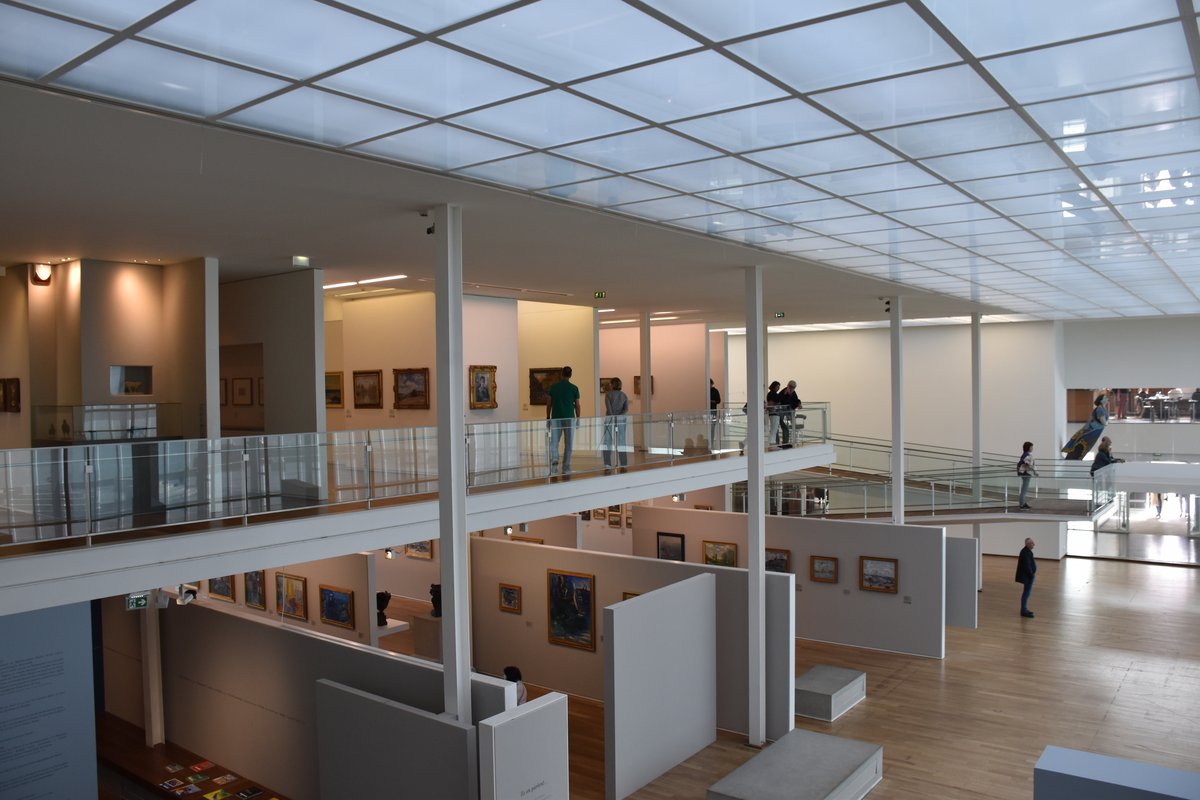
This heritage center offers interactive exhibits on Le Havre’s destruction and rebirth, helping visitors understand the site’s significance (Normandie Lovers).
Visiting Information: Hours, Tickets, Accessibility
- Place Auguste Perret: Open 24/7. Free public access.
- Appartement Témoin Perret: Open Tuesday–Sunday, 10:00–18:00. Tickets ~€6 adults; discounts available. Book via Normandie Lovers or the tourism office.
- Maison du Patrimoine: Open Tuesday–Saturday, 10:00–17:00. Admission free; charges for some tours/exhibitions.
- Saint-Joseph Church: Open daily, 9:00–19:00. Free entry.
- Accessibility: The square and surrounding streets are wheelchair-friendly, with accessible public transport (Normandie Lovers).
Cultural Events and Local Life
Place Auguste Perret is a living hub for Le Havre’s community and culture:
-
Festivals:
- Fête de la Mer (July): Boat parades, music, seafood (Over Your Place).
- Foire Saint-Michel (September): Medieval fair, rides, local treats.
- Le Havre en Lumière (Dec–Jan): City-wide light installations.
- Le Havre Carnival (Feb/March): Parades and street art.
-
Un Été au Havre: Annual summer art festival turning the city into an open-air gallery (Normandie Lovers).
-
Street Art: Look for Jace’s “Gouzou” characters and public art installations.
Practical Tips for Visitors
- Getting There: 15-minute walk from Le Havre train station; accessible via tram, bus, or car. Parking available nearby.
- Best Time to Visit: Spring–autumn for festivals; winter for light displays.
- What to Bring: Comfortable shoes, camera, basic French greetings (“Bonjour,” “Au revoir”).
- Local Food: Try oysters, moules marinières, camembert, and treats from Halles Centrales market.
- Shopping: Souvenirs include “LH” logo shirts, local beers, and artisanal goods (Normandie Lovers).
- Connectivity: Free Wi-Fi in cafés/hotels, tourist office nearby for info and maps.
- Sustainability: Walk, use public transport, and recycle where possible.
Frequently Asked Questions (FAQ)
Q: What are the opening hours of Place Auguste Perret?
A: The square is open 24/7.
Q: Is there an entrance fee?
A: No, access to Place Auguste Perret is free.
Q: Are guided tours available?
A: Yes, guided tours are offered by the tourism office and private operators. Book in advance, especially in high season.
Q: Is the area accessible for people with disabilities?
A: Yes, with smooth pavements and accessible public transport.
Q: What are the main nearby attractions?
A: Saint-Joseph Church, MuMa Museum of Modern Art, Halles Centrales, and Rue de Paris.
Listen to the full story in the app
The whole Place Auguste Perret,
told well.
Audio guides for 1,100+ cities across 96 countries. History, stories, and local insight — offline ready.

Verified, and shown.
Researched and written by the Audiala editorial team from historical records, architectural archives, and local expertise.
Researched from Wikidata, Wikipedia & official sources · fact-checked · How we make our guides →