
Historical Context and Significance
Post-War Origins and Founding
MuMa’s creation is deeply linked to Le Havre’s history. The port city was devastated in World War II, but its art collection survived thanks to the efforts of curators who preemptively evacuated key works. The museum was inaugurated in 1961 as a symbol of the city’s cultural revival and was named in honor of André Malraux, France’s first Minister of Cultural Affairs. Malraux’s vision for making art accessible and preserving heritage was instrumental in the museum’s founding (MuMa History).
Architectural Significance
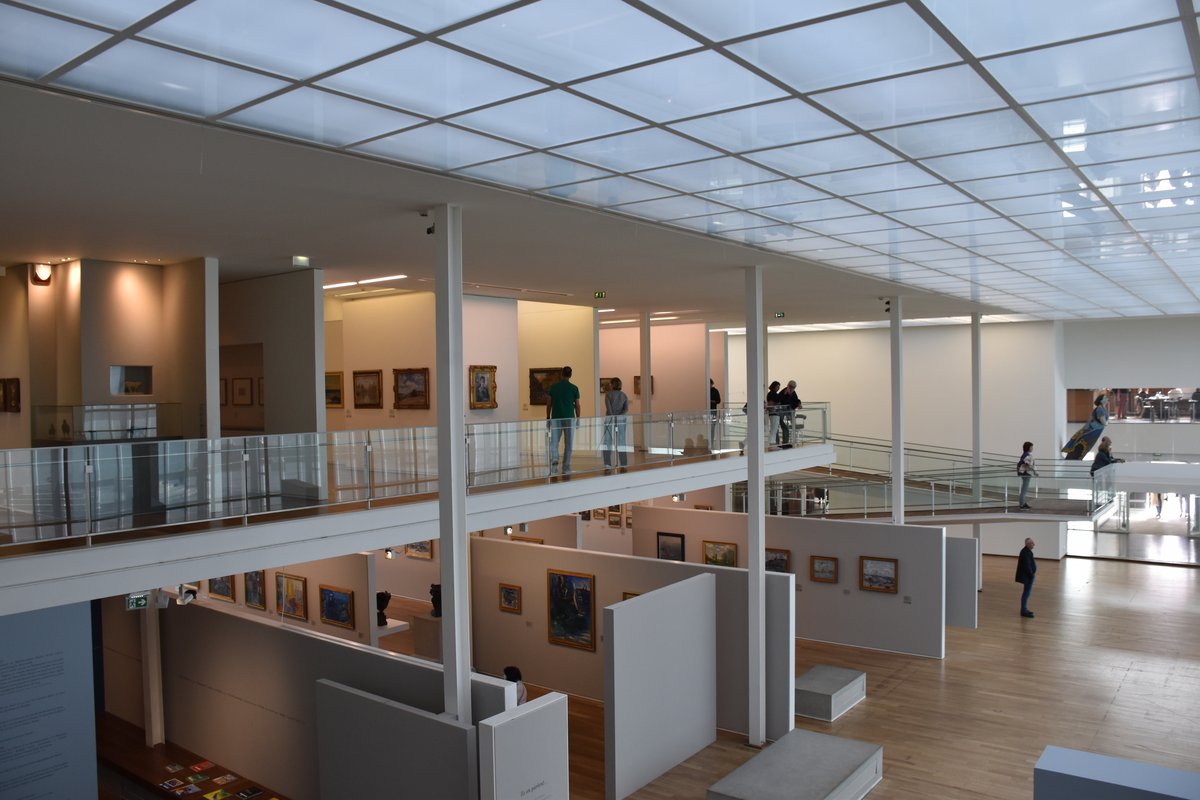
Designed by Guy Lagneau, Michel Weill, and Jean Dimitrijevic—with input from Jean Prouvé and lighting expert André Salomon—MuMa’s architecture epitomizes modernism. Its transparent glass façade, open-plan galleries, and striking use of steel and aluminum louvers invite daylight in, blurring the lines between interior art spaces and the harbor outside. The low, horizontal structure and panoramic windows directly reflect the Impressionists’ fascination with light and nature (MuMa Official Site, Google Arts & Culture).
The Evolution of the Collection
MuMa’s art holdings have grown through strategic acquisitions and generous donations. Key milestones include:
- 1900 Louis Boudin’s donation established the museum’s focus on Impressionist and Post-Impressionist art.
- 1936 Charles-Auguste Marande’s bequest expanded the 19th-century collection.
- 1963 Raoul Dufy, Le Havre native, bequeathed major works to MuMa.
- 2004 & 2009 Hélène Senn-Foulds’ gifts brought in pieces by Monet, Renoir, and Pissarro.
- 2014 The Pierre-Maurice Mathey donation enriched the 20th-century art collection.
The Cercle de l’Art Moderne, an artists’ society founded in Le Havre in 1906, fostered connections with avant-garde figures like Braque, Friesz, and Dufy, further shaping the museum’s modernist identity (MuMa History).
Architectural Highlights
MuMa’s design is a masterclass in modernist architecture. The building’s façade, composed of glass and steel, creates a vivid dialogue between the museum and its maritime environment. Cantilevered galleries echo the city’s port heritage, while natural light floods the interiors, heightening the display of Impressionist seascapes and landscapes. With floor-to-ceiling windows framing views of the Seine estuary and English Channel, visitors experience the same vistas that inspired many of the artists on display (Google Arts & Culture).
Art Collections and Exhibition Highlights
Impressionism and Its Legacy
MuMa is internationally recognized for its extensive Impressionist and Post-Impressionist collection. While Monet’s iconic "Impression, soleil levant" (painted in Le Havre) resides in Paris, MuMa offers a remarkable panorama of the movement, featuring works by:
- Eugène Boudin The largest collection of his luminous beach scenes in the world.
- Claude Monet "Le Bassin du Commerce, Le Havre" and other Normandy landscapes.
- Camille Pissarro, Alfred Sisley, Berthe Morisot Key figures in Impressionism.
- Gustave Courbet, Johan Barthold Jongkind Pre-Impressionist innovators of light.
The Senn Collection and 20th-Century Art
The Senn Collection, donated by Hélène Senn-Foulds, traces modern art’s evolution from the late 19th to mid-20th centuries. Highlights include:
- Nabis Artists Pierre Bonnard, Édouard Vuillard, Maurice Denis, Félix Vallotton.
- Fauvism André Derain, Raoul Dufy, Othon Friesz.
- School of Paris and Abstraction Georges Braque, Fernand Léger, Nicolas de Staël.
Maritime and Norman Landscapes
Reflecting Le Havre’s coastal setting, MuMa features works by Albert Marquet, Jean-Francis Auburtin, and Charles-François Daubigny—artists who captured the region’s distinct light and atmosphere.
Photography, Sculpture, and Decorative Arts
MuMa honors early photography in Normandy (1840–1890) and presents an important collection of modern sculpture and decorative arts, including Art Deco ceramics and works by Jean Arp and Ossip Zadkine.
Thematic and Temporary Exhibitions
Twice a year, MuMa hosts temporary shows exploring themes such as abstraction, maritime art, and the aesthetics of ocean liners. These exhibitions often feature loans from other institutions and rarely seen works, providing fresh insights for return visitors.
Practical Visitor Information
Visiting Hours
- Tuesday to Sunday 10:00 AM – 6:00 PM
- Thursdays Extended hours until 9:00 PM
- Closed Mondays and select public holidays
- Check the official MuMa website for up-to-date schedules and closures.
Ticket Prices
- General Admission €8
- Reduced Rate €5 (students, seniors, groups)
- Free Children under 18, residents of Le Havre, and all visitors on the first Sunday of each month
- Purchase Online via the official site or at the entrance
How to Get There
- Address 2 Boulevard Clemenceau, Le Havre
- By Train Direct trains from Paris (Gare Saint-Lazare) to Le Havre (approx. 2 hours); 15-minute walk from the station
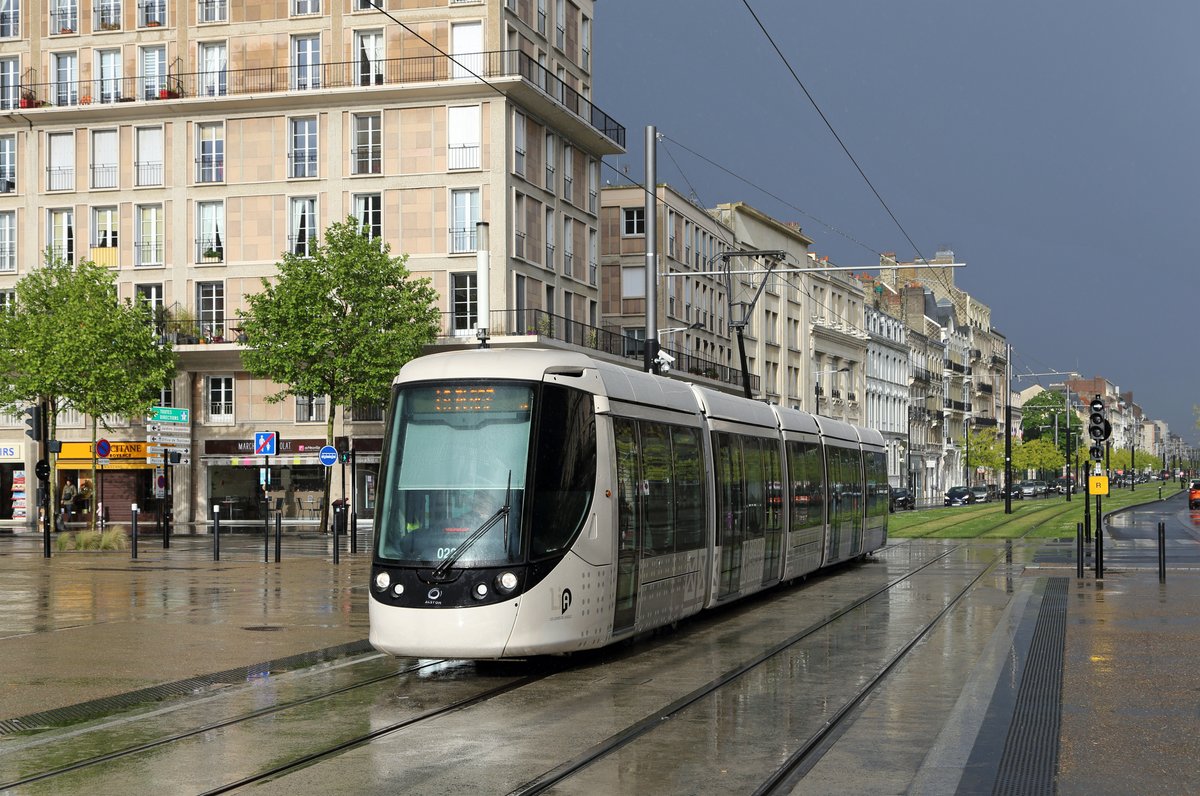
- By Bus Local lines 1, 2, 3, and 7 stop nearby
- By Car Parking available on Benjamin Norman Street and nearby garages
Accessibility and Visitor Amenities
- Wheelchair Accessible Ramps, elevators, and wide corridors
- Assistance Services for visitors with visual or hearing disabilities upon request
- Visitor Facilities Restrooms, cloakrooms, shop, and a seafront restaurant and tea salon with panoramic views
- Photography Non-flash photography allowed
Guided Tours and Special Events
- Guided Tours Available on weekends and by appointment; some in English (MuMa Events)
- Audio Guides Multilingual audio guides for deeper engagement
- Special Exhibitions and Events Check the event calendar for thematic shows, lectures, and workshops
Nearby Attractions
Make the most of your visit by exploring Le Havre’s UNESCO-listed city center, St. Joseph’s Church, the Port Center, and the seafront promenade. The city’s modernist architecture by Auguste Perret and the vibrant harbor area are also worth a visit.
Travel Tips
- Best Time Late afternoon for optimal natural light in the galleries
- Tickets Purchase online in advance to avoid queues
- Transport The museum is a 15-minute walk from the city center and main train station
- Language Most information is in French—translation apps or guided tours can enhance non-French speakers’ experience
- Dining The museum restaurant offers sea views, while nearby cafés provide additional options
Frequently Asked Questions (FAQ)
What are MuMa’s opening hours?
Tuesday to Sunday, 10:00 AM–6:00 PM (Thursdays until 9:00 PM); closed Mondays and select holidays.
How do I buy tickets?
Purchase online via the official website or at the museum entrance.
Is the museum accessible for visitors with disabilities?
Yes, with ramps, elevators, and adapted facilities. Assistance is available upon request.
Are guided tours available?
Yes, guided tours and audio guides are offered, some in English.
Can I take photos inside the museum?
Non-flash photography is generally permitted.
What attractions are nearby?
UNESCO-listed Le Havre center, St. Joseph’s Church, the Port Center, modernist architecture, and the seafront.
Discover More
The MuMa Musée d’Art Moderne André Malraux stands at the crossroads of history, art, and architecture. Its world-class Impressionist and modern collections, luminous design, and panoramic setting offer an experience unlike any other in Normandy. Whether you’re an art aficionado, a photographer, or a casual visitor, MuMa promises an enriching journey through light, color, and culture. Plan your visit, explore thematic exhibitions, and immerse yourself in the legacy of Le Havre’s most iconic museum.
For the most current information, ticket bookings, and virtual tours, visit the MuMa official website. Enhance your visit by downloading the Audiala app for personalized guides, and follow us on social media for updates on exhibitions and special events.