
Construction and Architecture
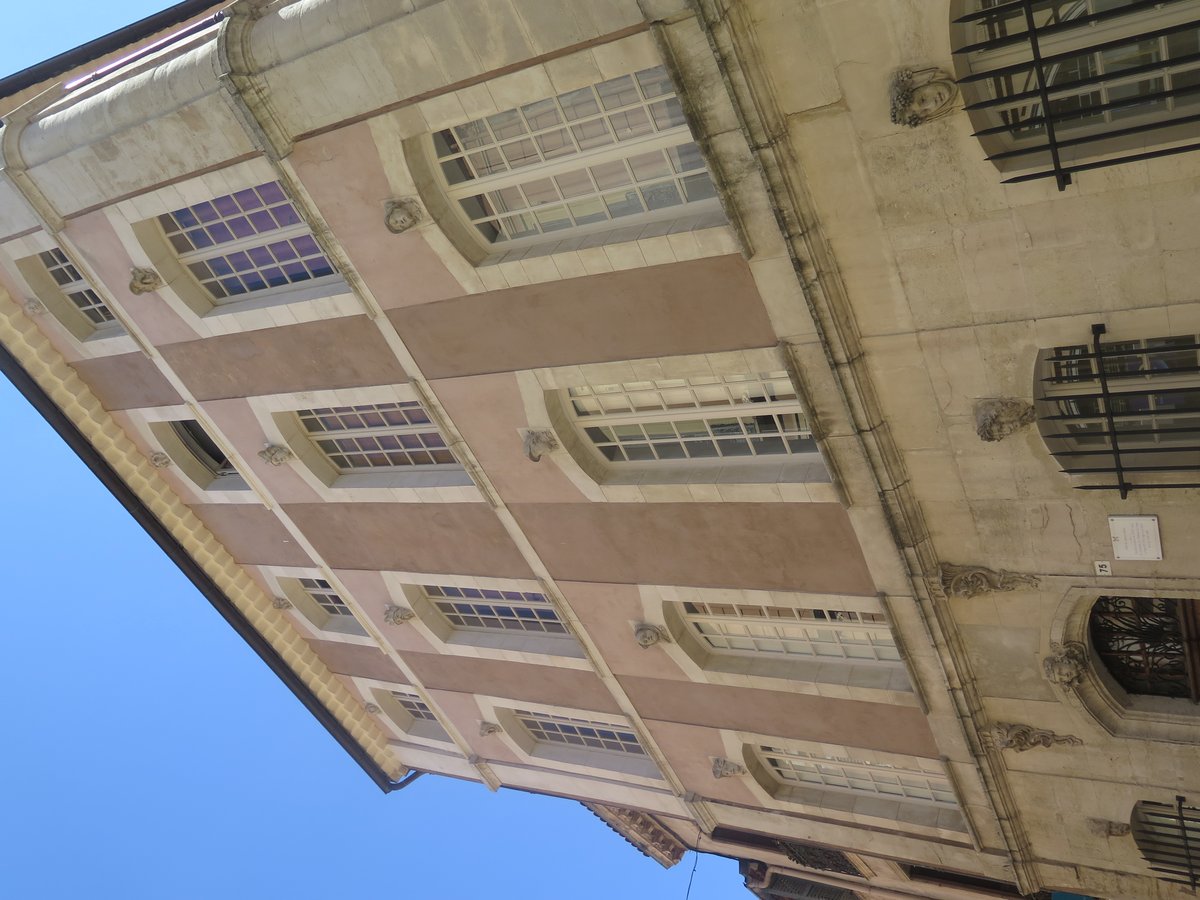
Commissioned around 1740 by César-François de Suffret, the Hôtel des Quatre Saisons is a quintessential example of 18th-century urban architecture. The rectangular plan features two small wings extending southward onto a garden, reflecting the period's urban mansion design. The building’s façade, facing rue du Général-de-Gaulle, is adorned with four bays of segmental windows and elaborate mascarons—stone faces and motifs that signified cultural sophistication and status. The dressed-stone ground floor, smooth-plastered upper stories, tall windows, ornate moldings, and high ceilings are consistent with the refined tastes of the French Enlightenment elite (POP: Plateforme ouverte du patrimoine).
Since 1995, the façades and roofs have been protected as Monuments Historiques, ensuring their preservation for future generations (Monumentum).
Evolution and Notable Guests
Originally a private residence, the Hôtel transitioned into a relais de poste (post relay inn) in 1809. This new role capitalized on Fréjus’s strategic position on Mediterranean travel routes. Among its most renowned guests was Pope Pius VII, who was lodged here under Napoleonic guard during his forced journey across France in 1812—a dramatic chapter that connects the building to major European historical events (Fréjus Tourist Office).
Location and Cultural Context
Situated in the historic center at 75 rue du Général-de-Gaulle, the Hôtel des Quatre Saisons is surrounded by Fréjus’s most significant landmarks, including the Roman amphitheater, Fréjus Cathedral, and the Porte aux Atlantes. Its evolution from a noble residence to a post house mirrors the city’s broader transformation from Roman port to vibrant modern destination. The building’s continued presence as a residential property managed under copropriété (joint ownership) reflects the adaptive reuse of historic sites in France (provence-alpes-cotedazur.com).
Visiting the Hôtel des Quatre Saisons
Exterior Viewing
The Hôtel des Quatre Saisons is primarily a private residence and is not generally open to the public. However, its remarkable façade can be admired from the street throughout the year. The mascarons and stonework are especially photogenic in the early morning or late afternoon light. Visitors are encouraged to respect the privacy of residents while viewing and photographing the exterior (POP: Plateforme ouverte du patrimoine).
Guided Tours and Heritage Events
Interior access is occasionally granted during special events, most notably the Journées Européennes du Patrimoine (European Heritage Days) each September. Guided tours led by the Fréjus Tourist Office may include visits to the Hôtel’s interior or garden during these events. Advance booking is recommended, and schedules are published on the Fréjus Tourist Office website and official heritage platforms (Monumentum).
Accessibility and Nearby Attractions
- Accessibility The street and immediate surroundings are pedestrian-friendly, though cobblestones may present challenges for some visitors.
- Getting There The Hôtel is a short walk from Fréjus train station and local bus stops; ample parking is available nearby.
- Nearby Sites Combine your visit with nearby attractions such as the Roman amphitheater, Fréjus Cathedral, and local museums for a more comprehensive exploration of the city’s heritage (frejus.fr).
Frequently Asked Questions (FAQ)
Q: Can I visit the interior of the Hôtel des Quatre Saisons?
A: Regular public access is not available. Occasionally, guided tours during heritage events offer limited interior viewing.
Q: Are there regular visiting hours or ticket prices?
A: No regular hours or ticketing exist for the Hôtel. Public access is typically limited to the façade, except during special events.
Q: Is the Hôtel accessible for people with disabilities?
A: The surrounding area is pedestrian-friendly; however, cobblestones may be challenging. Exterior viewing is possible for most visitors.
Q: Are guided tours available?
A: Guided tours are sometimes organized during major heritage events. Check with the Fréjus Tourist Office for up-to-date information.
Q: What else can I visit nearby?
A: The Roman amphitheater, Fréjus Cathedral, and archaeological museums are all within walking distance.