


Place
France Updated Jul 2026
Pine resin hangs in the air a few streets from a throne room, and that strange pairing tells you almost everything about Fontainebleau, France. This is the rare royal town where a morning can begin under Rosso Fiorentino's painted gods and end with sandstone dust on your shoes from the forest boulders. Come for the château, yes, but stay because the place refuses to behave like a museum piece.
 Photo: Gabriel Chamak / Pexels
Built from cited sources · see the method · How we make our guides →
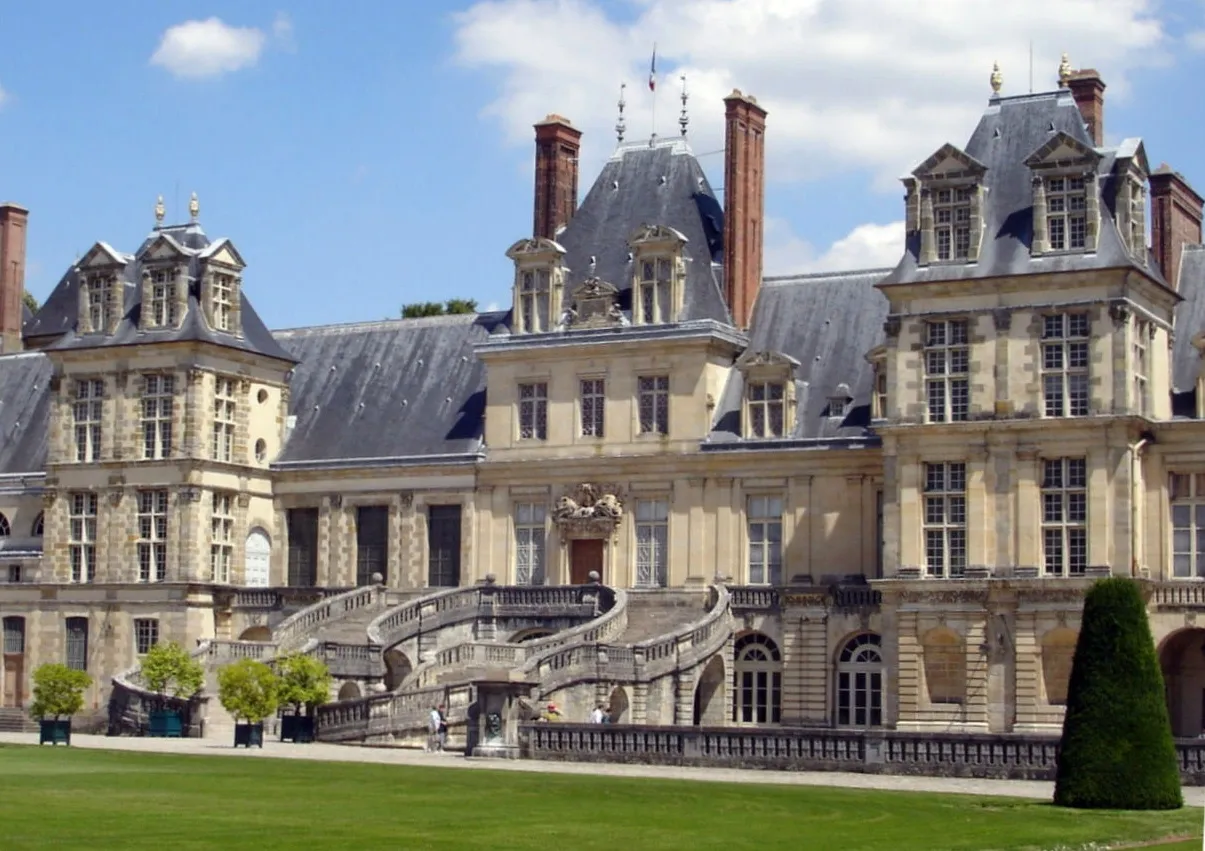
Fontainebleau matters because French power kept rewriting itself here. François I turned a medieval hunting lodge into a Renaissance experiment after 1528, pulling in Rosso Fiorentino, Primaticcio, Serlio, and Cellini; Napoleon later called it "the true home of kings, the house of ages," and his farewell to the Guard on 20 April 1814 still clings to the Horseshoe Staircase like a stage cue nobody has struck.
The town outside the palace gates is smaller, sharper, and more lived-in than first-time visitors expect. Rue Grande runs on pastry boxes, market gossip, and students from INSEAD speaking three languages before coffee; the covered market fills on Tuesday, Friday, and Sunday mornings, while the local dessert called a fontainebleau, half drained fromage blanc and half whipped cream, lands on the table with less fanfare than it deserves.
Then the forest changes the scale of everything. The Forêt de Fontainebleau wraps the town in blue-blazed Denecourt-Colinet trails, quiet ponds, and sandstone chaos that trained generations of painters and now draws climbers from Seoul, Berlin, and São Paulo; after a day here, the palace stops looking like an isolated monument and starts reading as one clearing in a much older kingdom of rock, oak, and light.
Not every monument, just the ones we'd walk you past ourselves.
Where to wander, by quarter — each with its own rhythm.
Before you go
From prehistoric forest paths to emperors, painters, and a world heritage palace
Most scholars date human use of the Fontainebleau forest to the Mesolithic, when hunters moved through sandstone outcrops and clear springs long before any palace stood here. The setting mattered from the start: water, game, and deep cover in a woodland that still feels older than the roads crossing it.
A royal charter of 1137 records Fontainebleau as a hunting lodge in the Capetian domain under Louis VII. That document is the city's hard historical anchor. What began as a practical retreat in the woods would grow, stone by stone, into a place where French rulers staged power away from Paris.
While in exile from England, Thomas Becket consecrated the chapel at Fontainebleau in 1169. The scene would have felt strange and charged: an embattled archbishop blessing a royal sanctuary in a forest court. Fontainebleau was already more than a hunting stop; it had entered the diplomatic and religious map of Europe.
Philip IV was born at Fontainebleau in 1268, tying the town to one of the hardest, coldest reigns in medieval France. This was the king who battled the papacy and destroyed the Knights Templar. Fontainebleau, often mistaken for a decorative court retreat, was already a cradle of ruthless statecraft.
Philip IV died here in 1314, closing a life that had bent the kingdom toward a more centralized monarchy. Birth and death in the same royal residence gave Fontainebleau a dynastic weight few French towns could match. The forest lodge had become a place where reigns began and ended.
Francis I ordered a sweeping reconstruction in 1528, turning a medieval stronghold into a Renaissance palace with Italian ambition in its bones. He wanted more than comfort. He wanted a French court that could rival Rome, Mantua, and Florence, and Fontainebleau became the experiment.
Rosso Fiorentino began work on the Galerie François I in the 1530s, wrapping walls in myth, stucco, and political theater. The rooms still carry that strange Fontainebleau mix: antique gods, French emblems, and the faint chill of stone beneath extravagant surface. A new visual language for the French monarchy was born here.
Louis XIII was born at Fontainebleau in 1601, in the king's apartment, and the palace later earned its nickname as the cradle of the Bourbon dynasty. Court ritual and childbirth met under the same painted ceilings. Dynastic continuity was never abstract here; it had rooms, corridors, and witnesses.
Between 1632 and 1634, builders created the great horseshoe staircase that now stages every arrival with a little ceremony. It is theatrical on purpose. Centuries later, Napoleon would use those same steps for his farewell, which tells you how architecture at Fontainebleau keeps waiting for its next act.
Louis XIV signed the Edict of Fontainebleau on 18 October 1685, revoking the Edict of Nantes and stripping French Protestants of legal protection. Paper did the damage. Families fled, churches were destroyed, and the palace became linked not just with splendor but with a decision that scarred the kingdom for generations.
The secret Treaty of Fontainebleau transferred Louisiana from France to Spain in 1762, negotiated far from the colony itself and far from the people who lived there. That is empire in one sentence. A wooded court outside Paris helped redraw the map of North America behind closed doors.
During the Revolution, the state auctioned Fontainebleau's furniture, library, and royal possessions in 1793. Rooms designed for ceremony were stripped bare. You can almost hear the echo that follows removal better than any speech about the fall of monarchy.
Napoleon made Fontainebleau an imperial residence in 1804 and had it refurnished at punishing speed before receiving Pope Pius VII. He understood the place immediately. A palace dense with royal memory could be turned into imperial propaganda, and he did exactly that.
After signing his abdication in April 1814, Napoleon delivered his farewell to the Old Guard in the Cour du Cheval Blanc on 20 April before leaving for Elba. The scene has become legend because the setting was perfect: stone, silence, troops, and a ruler suddenly reduced to a man on a staircase. Fontainebleau held the end of an empire in public view.
Jean-Francois Millet settled at nearby Barbizon in 1849 and made the Fontainebleau forest part of the visual world that reshaped modern painting. This matters even if the easel stood just outside the town proper. Fontainebleau stopped being only a royal backdrop and became raw material for artists watching light move across sand, trunks, and laboring bodies.
The Theatre Imperial took shape in the 1850s under Napoleon III, giving Fontainebleau a jewel-box performance space inside a palace already crowded with symbols. Court life needed spectacle, and this one came upholstered in velvet and protocol. Even now, the room feels less like a museum than a pause before the orchestra begins.
After the fall of the Second Empire, the French state preserved Fontainebleau as a national museum rather than allowing it to drift into neglect or private fragmentation. That decision changed the town's future. A residence built for kings became a public archive of how French power had looked, dressed, and staged itself.
German forces occupied Fontainebleau in 1940, and the palace entered another season of anxiety, requisition, and guarded rooms. War alters the air of a place before it alters the walls. Archives are hidden, routes are watched, and every ceremonial hall starts to feel exposed.
Allied and French forces liberated the area in August 1944 as the occupation collapsed across northern France. Relief arrived with dust, engines, and damaged rail lines rather than grand speeches. Fontainebleau emerged spared from total ruin, which is never the same thing as emerging untouched.
In the postwar years, Fontainebleau housed SHAPE, NATO's Supreme Headquarters Allied Powers Europe, giving the old royal complex a startling second life in the age of maps, telephones, and military planning. Medieval hunting ground, Renaissance palace, imperial stage, Cold War headquarters. Few places carry that many layers without collapsing into absurdity.
INSEAD was founded in Fontainebleau in 1961, bringing an international business school into a town better known for kings and painters. The result is one of Fontainebleau's strangest and most revealing contrasts. Students discussing global finance now walk streets shaped by royal hunts and imperial departures.
UNESCO inscribed the Palace and Park of Fontainebleau as a World Heritage Site in 1981, recognizing the place as more than a French monument. Fair enough. Fontainebleau is one of those rare sites where architecture, politics, art, religion, and vanity keep speaking in the same rooms.
King of France · 1494–1547
Rebuilt the palace from 1528
Francis I took a medieval hunting lodge and turned it into his French answer to Italy, bringing in Rosso Fiorentino, Primaticcio, and a whole Renaissance accent that still clings to the walls. He'd probably be pleased that visitors still look slightly dazed in the Galerie Francois Ier, which was the point all along.
Emperor · 1769–1821
Lived here and abdicated here in 1814
Fontainebleau was the palace Napoleon loved most, the one he called the true home of kings. On 20 April 1814 he gave his farewell to the Old Guard at the Horseshoe Staircase, and the place still carries that strange hush of a man discovering that an empire can end in a courtyard.
King of France · 1553–1610
Expanded the palace and its gardens
Henry IV left Fontainebleau bigger, longer, and more theatrical than he found it, adding galleries, gates, and the long axis that pushes the palace toward the park. He used the place like a working seat of power, not a museum piece, which is why parts of Fontainebleau still feel lived in rather than embalmed.
Queen of France · 1755–1793
Stayed here; apartments refurnished to their 1786 state
Marie-Antoinette's Fontainebleau was softer than Versailles, more private, more upholstered for actual life. Seeing her rooms here, especially after their 2026 reopening in the style of 1786, makes the queen feel less like a myth in satin and more like a woman trying to breathe inside ceremony.
Painter and decorator · 1494–1540
Worked here in the 1530s on the Galerie Francois Ier
Rosso Fiorentino helped invent the visual language that made Fontainebleau matter far beyond France, filling the Galerie Francois Ier with stucco, paint, myth, and royal propaganda dressed as elegance. He'd recognize the ambition at once: every panel meant to persuade you that power could be cultured, learned, and a little dangerous.
Painter, architect, and decorator · 1504–1570
Worked at the palace under Francis I and his successors
Primaticcio gave Fontainebleau much of its fluent Italian muscle, from fresco cycles to decorative schemes that taught France how to stage grandeur differently. His hand is part of the reason the palace feels less like a single building than an argument about taste carried on for centuries.
Where locals actually book dinner — not the tourist menus.
Small things that change how the city treats you.
The city, as it actually looks.
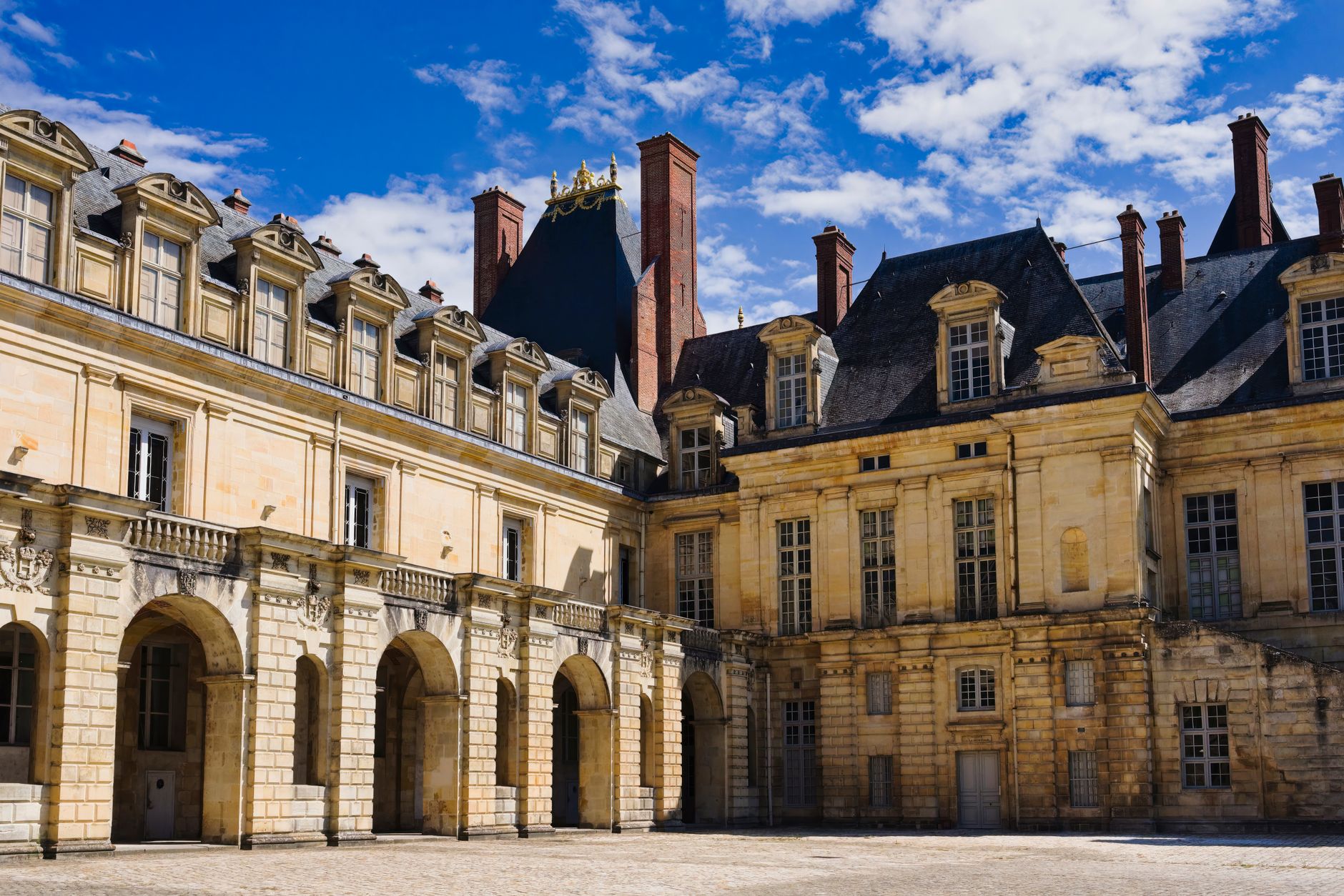


Yes, especially if Versailles feels overrun and over-rehearsed to you. Fontainebleau has 800 years of royal history, a UNESCO-listed palace, and a forest with sandstone chaos that changes the whole mood of the trip. You get Renaissance art, Napoleon's last walk as emperor, and hiking paths in the same day.
One full day works for the château and town center, but two to three days makes more sense if you want the forest as well. The palace alone has around 1,500 rooms and 130 hectares of grounds, and the best forest spots are not a quick lap around a pond.
Take the Transilien Ligne R from Gare de Lyon to Fontainebleau-Avon, then bus line 1 to the château. The rail trip usually takes 40 to 60 minutes, and the flat rail fare is €2.50 under the post-2025 Île-de-France pricing system.
Yes, easily. Leave Paris early, take Ligne R, and focus on the château plus one short forest walk such as Tour Denecourt or Mare aux Fées; trying to cram the palace, deep forest, and nearby villages into one day turns the trip into a checklist.
Yes, Fontainebleau is generally a calm place for visitors. The real safety issue is the forest, where people get turned around on the trails and underestimate ticks, so pay more attention to footwear and route-finding than to pickpockets.
No, not by Paris day-trip standards. The €2.50 train fare changed the math, and you can keep costs down by using the public bus, walking the gardens, and saving meals for simple town cafés rather than formal palace-adjacent restaurants.
Mostly yes in the center, but not seamlessly from the station. The town core, palace, gardens, and main streets are easy on foot; the awkward gap is Fontainebleau-Avon station, which is why bus line 1 matters.
If you care about history, start with the château; if you need air and silence, the forest wins. The real point of Fontainebleau is that you don't have to choose between a throne room and a sandstone ridge, which is rare in France.
Saved and recently read places — kept on this device only.
Photos may have been resized or cropped.