Introduction to Èze: The "Eagle’s Nest" of the French Riviera
Perched atop a dramatic 427-meter cliff with sweeping views of the Mediterranean, Èze is a gem of the French Riviera. Known as the “Eagle’s Nest,” this medieval village is celebrated for its ancient roots, vibrant cultural heritage, and breathtaking vistas. With origins tracing back to the Celtic-Ligurian tribes around 2000 BC, Èze has witnessed centuries of strategic importance—its fortified walls and castle ruins bear silent testimony to a turbulent past marked by shifting powers among Romans, Moors, Savoyards, and the French (French Moments; Wikipedia). Today, Èze enchants visitors with winding cobblestone streets, artisan boutiques, and the botanical marvel of Jardin Exotique d’Èze, all set against a stunning coastal panorama.
This guide is designed to provide a detailed overview of Èze’s historical significance, practical travel information, key attractions, nearby highlights, and tips for a seamless visit. Whether you’re a history buff, an art lover, or a traveler seeking the best visiting hours and ticket options, you’ll find everything you need to plan your trip to this extraordinary hilltop village.
Prehistoric and Ancient Origins
Evidence suggests that Èze’s hills were inhabited as early as 2000 BC by Celtic-Ligurian tribes. Greek and Roman influences followed, with the discovery of ancient silver phialae and Roman roadways underscoring Èze’s longstanding role as a Mediterranean crossroads (Spotting History; French Moments). Its clifftop position made it a natural lookout and defensive stronghold.
Medieval Era: Fortifications and Power Shifts
During the Middle Ages, Èze’s inhabitants fortified the rocky summit to escape coastal raids. The Moors occupied the site for nearly a century before being expelled in the 10th century. In 1388, Èze passed to the House of Savoy, who constructed the iconic double-gated entrance “La Poterne” and strengthened the walls (French Moments). The village endured sieges and destruction, most notably in 1706 when Louis XIV ordered its fortress dismantled. The ruins now crown the village, offering panoramic views.
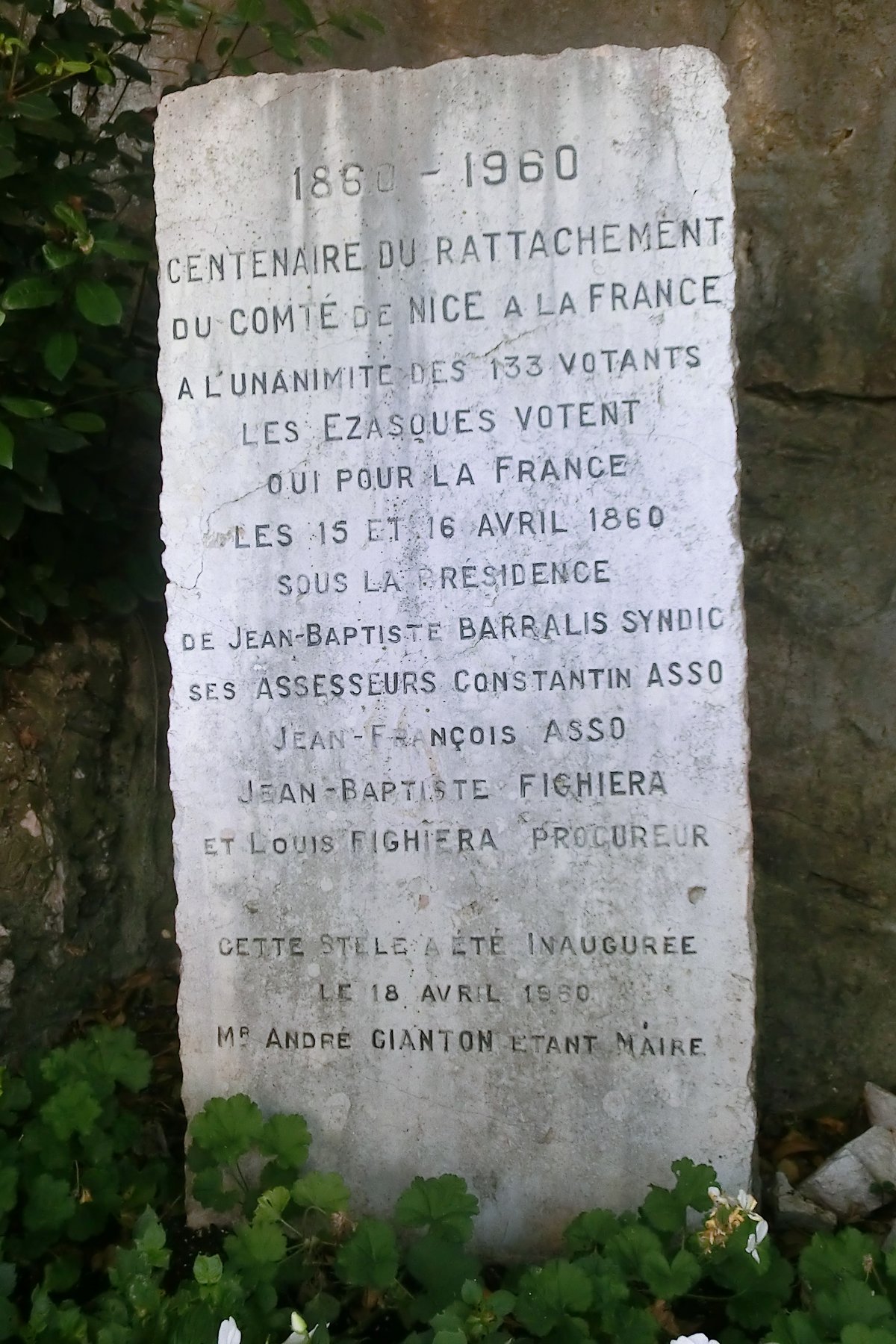
Èze’s subsequent history reflects the ebb and flow of European politics: after periods under Savoyard and Sardinian rule, Èze was annexed to France in 1860. The arrival of the railway in the late 19th century opened the village to tourism, transforming it into a “museum village” and magnet for artists and intellectuals such as Friedrich Nietzsche and Walt Disney (Wikipedia; The Good Life France).
Modern Transformation
Today, Èze’s population is a blend of locals and cosmopolitan residents, drawn by its beauty and history. Its medieval core is beautifully preserved, with landmarks like Chapelle de la Sainte Croix (1306), the 18th-century church of Notre Dame de l’Assomption, and narrow lanes adorned with flowers and artisan shops (France.fr; Spotting History). The village’s emblem—a phoenix rising from a bone—and its motto, “Isis Moriendo Renascor” (“In death I am reborn”), evoke its spirit of resilience (French Moments).
Visitor Information
Getting to Èze
By Bus
- From Nice: Bus #82 (“Èze Village”) departs from Vauban bus station, taking 30–40 minutes along the scenic Moyenne Corniche (Travel France Bucket List).
- From Monaco: Bus LR112 connects Monaco (Crémaillère) to Èze Village in 20–25 minutes.
By Train
- Èze-sur-Mer station is at sea level. From there, hike the Nietzsche Path (1.5 km uphill, 45–60 minutes), or take a taxi/local bus to the village (Travel France Bucket List).
By Car
- Èze is on the Moyenne Corniche (D6007) between Nice and Monaco. Parking is limited; arrive early for a space (Wanderers Compass).
Guided Tours
- Many operators offer day tours from Nice, Monaco, or Cannes, often combining Èze with nearby highlights (France Adventurer).
Village Navigation and Accessibility
- The village is pedestrian-only. Prepare for steep, cobbled paths—comfortable shoes are essential.
- Èze is not wheelchair accessible due to its medieval layout and uneven terrain (Bon Traveler).
- Allow 1–3 hours to explore key sights, shops, and viewpoints.
Visiting Hours and Tickets
| Attraction | Visiting Hours (Typical) | Ticket Info |
|---|---|---|
| Èze Village | Year-round, all day | Free |
| Jardin Exotique d’Èze | 9:30 am–6:00 pm (Apr–Oct); 10:00 am–5:00 pm (Nov–Mar) | €6 adults; discounts for students/children (Office du Tourisme d’Èze) |
| Fragonard Perfume Factory | 9:00 am–6:00 pm, Mon–Sat | Free guided tours |
| Notre Dame de l’Assomption | 9:00 am–5:00 pm | Free, donations welcome |
Always check official tourism sites for up-to-date schedules.
Guided Tours and Events
- Walking tours are available, focusing on Èze’s history, architecture, and legends. Book via the tourist office or online.
- Special events such as art exhibits and concerts are held in the summer—consult the Èze Tourist Office for event calendars.
Main Attractions
Jardin Exotique d’Èze
Set atop the village in the ruins of the medieval castle, the garden boasts an impressive array of succulents and Mediterranean plants. Sculptures by Jean-Philippe Richard and panoramic terraces provide unmatched photo opportunities (Office du Tourisme d’Èze). Open daily; tickets required.
Fragonard Perfume Factory
Learn the secrets of traditional perfume-making with free guided tours in multiple languages. Shop for authentic fragrances and soaps at the end of your visit. Tours run Monday to Saturday; no booking required for individuals (Wandering Carol).
Nietzsche Path (Chemin de Nietzsche)
A scenic and challenging trail linking Èze Village to Èze-sur-Mer. Named after Friedrich Nietzsche, the path offers spectacular views and takes about 45–60 minutes downhill (longer uphill). Bring water and sturdy shoes (Happily Ever Travels).
Religious Sites
- Notre Dame de l’Assomption: An 18th-century ochre church with beautiful frescoes and a landmark bell tower (Travel France Bucket List).
- Chapelle de la Sainte Croix: The oldest building in Èze, dating to 1306, historically used by the White Penitents (Wanderers Compass).
Dining, Shopping, and Accommodation
- Restaurants: From casual cafés to Michelin-starred destinations like La Chèvre d’Or and Château Eza, dining in Èze often comes with stellar views (Travel France Bucket List).
- Shops: Artisan boutiques, perfume shops, and galleries line the village’s narrow streets.
- Hotels: Stay overnight at La Chèvre d’Or, Château Eza, or Eza Vista for a tranquil, exclusive experience.
Nearby Attractions
- Villefranche-sur-Mer: A colorful harbor town nearby.
- Monaco: Casinos, museums, and the Prince’s Palace.
- Beaulieu-sur-Mer: Visit Villa Kérylos and scenic beaches. All are accessible by car, bus, or train from Èze.
Practical Tips and FAQ
When is the best time to visit Èze?
Spring (April–June) and early autumn (September–October) offer pleasant weather and fewer crowds.
Are the village streets accessible for wheelchairs?
No, the steep, cobbled terrain is not suitable for wheelchairs or those with significant mobility limitations.
How can I reach Èze from Nice?
Bus #82 from Nice’s Vauban station is the most direct public transport. Alternatively, take the train to Èze-sur-Mer and hike or taxi up to the village.
Are guided tours available?
Yes, guided walking tours are offered in several languages and can be booked at the tourist office.
Where can I buy tickets for main attractions?
Jardin Exotique tickets are available onsite or online. Fragonard Perfume Factory tours are free; no reservation needed for individuals.
What should I bring?
Wear comfortable walking shoes, bring water (especially in summer), carry some cash, and have your camera ready for stunning vistas.
Is parking available?
Limited paid parking is available at the village entrance. Arrive early, especially in summer.
Listen to the full story in the app
Your Personal Curator, in Your Pocket.
Audio guides for 1,100+ cities across 96 countries. History, stories, and local insight — offline ready.
Audiala App
Available on iOS & Android
Join 50k+ Curators
Sources
- verified
- verified
- verified
- verified
- verified
- verified
- verified
Last reviewed: