
Notre-Dame De Chartres
ChartresFrance 48° N · 1° E Updated Jul 2026
France crowned one king here instead of Reims; inside, Chartres still glows with medieval blue glass and the hush of a living pilgrimage church.
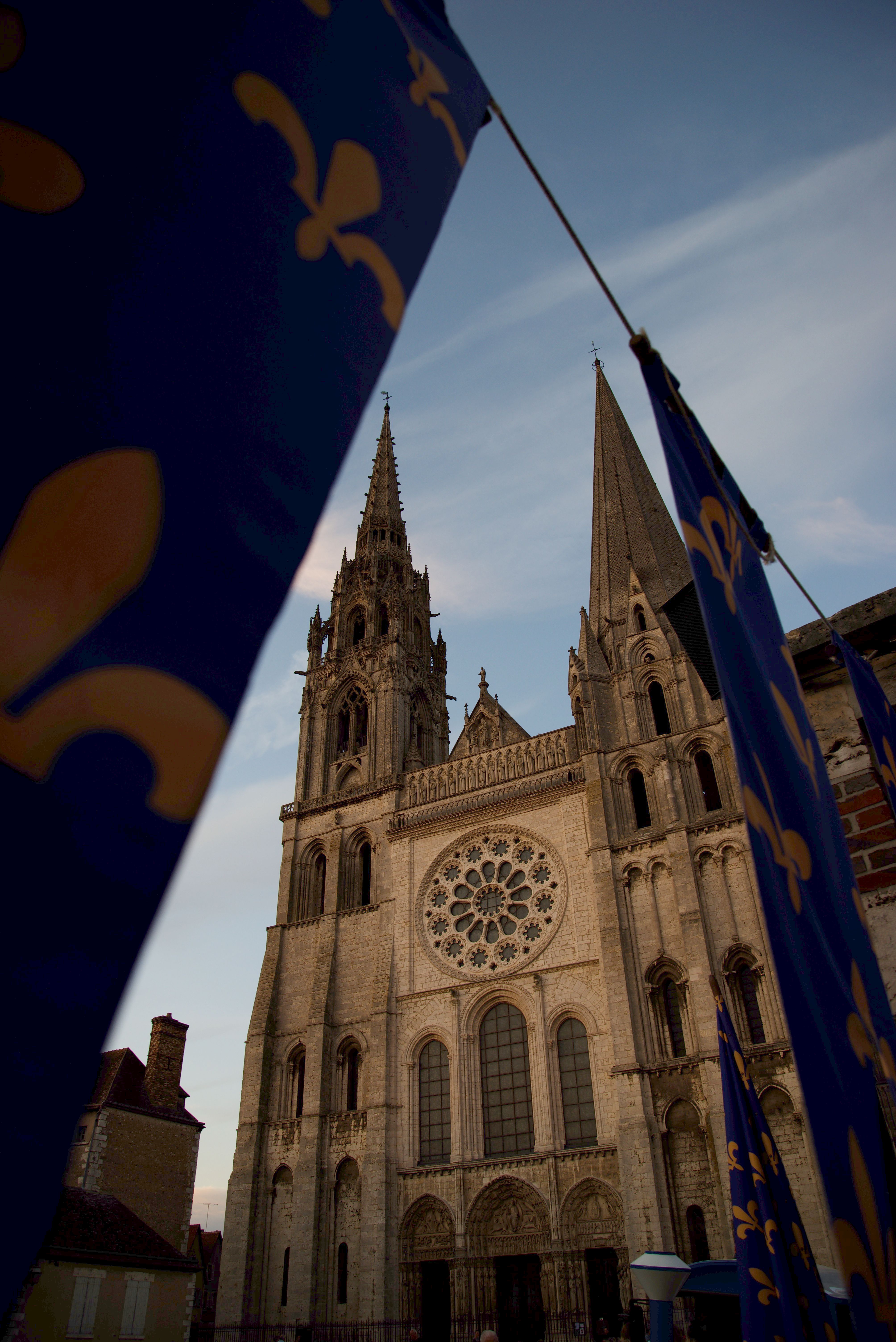 Photo: Eduardo Reiser / Pexels
How does a cathedral famous for fire feel so uncannily like a survivor rather than a ruin? Notre-Dame de Chartres in Chartres, France, answers that question the moment you step onto the parvis: two mismatched spires cut the sky, blue glass darkens the nave like deep water, and the stone still seems to remember smoke. You come here because few places in Europe hold together faith, political drama, and sheer artistic nerve with this much force still intact.
Most first-time visitors expect perfection. What they find instead is something better: a building shaped by accident, panic, stubborn money, and a sequence of near-losses that somehow produced one of the clearest statements of Gothic ambition anywhere in France.
Light does half the talking. Morning slides through the 13th-century glass in pools of cobalt so dense they feel almost material, while footsteps ring across paving worn smooth by pilgrims who came for a relic, a coronation, a prayer, or simply the need to stand inside something larger than themselves.
And Chartres still works on you as a place before it works on you as a monument. The hilltop setting above the Beauce plain, the smell of cool stone in the crypt, the sudden lift of the vaults overhead: all of it makes the cathedral feel less like a frozen masterpiece than a living argument against disappearance.
What to see
-
The West Front and Royal Portal
Chartres announces itself from absurdly far away: UNESCO notes the cathedral can be seen more than 25 kilometers across the Beauce plain, and when you reach the west front the two spires finally stop being a skyline and turn into stone argument. Pause before you go in. The Royal Portal, carved around 1145 and spared by the fire of 1194, still holds those tall, grave figures against the doors like witnesses from another century, their faces worn by weather, their calm somehow stronger for it. -
The Nave, Labyrinth, and Blue Glass
Inside, the surprise is light. Restored walls glow a warm ochre-beige rather than the gray gloom people expect, so the famous 12th- and 13th-century glass reads less like decoration than weather made visible, especially near the Belle Verriere where that deep Chartres blue seems to cool the air by a few degrees. Then your feet notice the building: the nave rises nearly 37 meters, about the height of a 12-storey apartment block, and the labyrinth set into the floor turns the whole space from something you admire into something you physically cross. -
A Slow Circuit: North Ambulatory to the Crypt
Skip the urge to rush for the postcard view and make a slow loop behind the choir instead, where the 16th- to 18th-century choir screen unfolds in carved stone scenes as detailed as an ivory cabinet stretched to architectural scale. Then go down if the crypt visit is running: the largest crypt in France feels less like a basement than a second church under the first, cooler, dimmer, and quieter, with the smell of old stone and candle wax replacing the grand rhetoric upstairs. That descent changes the cathedral completely.
Plan your visit
- Getting There
- The address is 16 Cloitre Notre-Dame, 28000 Chartres. By train, take a direct service from Paris Gare Montparnasse to Chartres, then walk about 10 minutes uphill to the cathedral; by car, come via the A11 from Paris (exit 2, then N10), the A11 from Le Mans (exit 3, then N10), or the N154 from Rouen or Orleans, and use the Chartres Cathedrale or Chartres Coeur de Ville car parks.
- Opening Hours
- As of 2026, the cathedral itself is open every day from 8:30 am to 7:30 pm, with last access at 7:15 pm, and the nave or transepts can be restricted during Masses and celebrations. The paid monument areas have separate seasonal hours: 10:00 am to 12:45 pm and 2:00 pm to 5:00 pm from 5 September to 30 April, then until 6:00 pm from 2 May to 4 September; they are closed Sunday mornings, 1 January, 1 May, 25 May, and 25 December, with extra closures possible for ceremonies, bad weather, or heat alerts.
- Time Needed
- Give it 30 to 45 minutes if you only want the nave, the great west portals, and a first look at that stained glass glow, blue as deep river water. A more honest visit takes 60 to 90 minutes, and 2 to 3 hours if you add the treasury or upper parts, linger through service interruptions, and spend time outside watching the mismatched spires sort themselves out in your head.
- Cost & Tickets
- As of 2026, entry to the cathedral itself is free, which is one of the better bargains in French religious art. The paid monument visit is listed at 7 euros full price and 5.50 euros reduced, with group and combined-ticket offers also shown at 5.50 euros; e-tickets bought through the Centre des monuments nationaux are refunded automatically if a special closure cancels access.
History
The Cathedral That Refused To Be Lost
Chartres did not rise once. Records and archaeology point to a stack of sanctuaries on this hill, with earlier churches destroyed by raid, war, or fire before the present cathedral emerged after the blaze of 10 June 1194.
That matters when you look up at the nave today. The building is celebrated for its unusual completeness, yet its real story is one of interruption: a relic nearly believed lost, a coronation held off-script, a roof burned by carelessness, and a monument spared in 1944 because one man refused to trust rumor.
The turning point
The Fire That Made Chartres
At first glance, Chartres looks like the triumphant expression of a single medieval plan, as if the cathedral had always been destined to stand exactly as you see it now. Tourists often absorb the neat version: a great Gothic church rose here, pilgrims came, and history politely stepped aside.
But the turning point came in terror on 10 June 1194, when fire tore through the Romanesque cathedral. Bishop Renaud de Mousson had every reason to fear disaster beyond the flames themselves: if the Marian relic known today as the Voile de la Vierge had been destroyed, Chartres could have lost the devotion, prestige, and income that kept the shrine central to both town and kingdom.
Then came the reversal. According to cathedral tradition, clergy who had taken refuge in Fulbert's crypt emerged alive with the relic, and its survival was read as a command to rebuild on a scale grander than before; UNESCO and the cathedral's own history confirm that the present structure rose with exceptional speed after 1194. Once you know that, the west front and crypt stop looking like leftovers and start reading as survivors folded into a new cathedral, a building literally composed around what the fire could not take.
A Coronation Out of Place
Chartres entered French political history on 27 February 1594, when Henry IV was crowned here instead of at Reims. Records show Reims was held by the Catholic League, so the most traditional ritual of French monarchy had to be improvised in a cathedral better known for Mary than for kings. Look at the choir with that in mind and the place shifts: this was not only a pilgrimage church but an emergency stage for royal legitimacy at the raw end of the Wars of Religion.
The Day An American Officer Saved The Towers
On 16 August 1944, Allied commanders suspected German observers were using the cathedral's towers and prepared to shell them. Colonel Welborn Barton Griffith Jr. chose to check for himself, climbed the cathedral, found it empty, and helped stop the strike; local memory and U.S. historical sources agree on the rescue, and he was killed later that same day in fighting at Leves. The plaque honoring him is easy to pass without a second glance. You shouldn't.
Tips for visitors
Check Worship Times
This is still a working cathedral, not a stone museum with better lighting. Check the daily calendar before you go, because Masses and celebrations can block circulation in the nave and transepts just when you thought you had the place to yourself.Climb Early
If you want the upper parts, go in the morning. Heat-wave rules can shut them in the afternoon on orange alerts and all day on red alerts, while the treasury may be cut back to a morning-only visit.Use Free Entry
Skip the paid add-ons unless you genuinely want the treasury or upper sections. The free cathedral visit already gives you the main event: the vast interior, the portals, and stained glass that still changes the air even on a grey day.Pack Light
Do not arrive with a suitcase and do not assume storage exists nearby. The monument bans suitcases, dogs, smoking, and vaping, and pushchairs are not allowed on the upper level.Train Beats Driving
From Paris, the direct train plus the 10-minute walk is usually the cleaner move than threading a car into the old center. You step out of the station, climb toward the high town, and the cathedral starts doing what it has done for centuries: pulling the whole city into alignment.Groups Need Video
Traveling in a group of 10 or more changes the logistics. The cathedral requires mandatory videoguides for groups, rented in the store inside the main entrance, and guided tours must be booked in advance through the Cathedral Rectory.
Watch & Explore Notre-Dame De Chartres.


Frequently asked
Is Notre-Dame de Chartres worth visiting?
Yes, absolutely: Chartres is one of those rare cathedrals that still feels like a whole world, not a monument with a ticket desk attached. About 80% of its stained glass is original, the two spires are really two different centuries standing shoulder to shoulder, and the building rises over the Beauce plain so clearly that UNESCO says you can spot it from more than 25 km away, about the length of a half-marathon. Go for the glass, stay for the hush under the vaults and the strange warmth of the restored stone.
How long do you need at Notre-Dame de Chartres?
Plan on 60 to 90 minutes for a solid first visit, and 2 to 3 hours if you want the crypt, treasury, and time to sit with the windows. The nave alone is quick to cross and slow to absorb, especially once your eyes adjust and the blue of the Belle Verriere starts doing its work. Fridays in labyrinth season can stretch the visit because the floor stops being something you look at and becomes something you walk.
How do I get to Notre-Dame de Chartres from Chartres?
From Chartres train station, it is a 10-minute walk to the cathedral. The official address is 16 Cloitre Notre-Dame, and the approach is part of the pleasure: you move through ordinary streets, then the west front suddenly takes over the sky. If you are driving, the official nearby parking options are Chartres Cathedrale and Chartres Coeur de Ville.
What is the best time to visit Notre-Dame de Chartres?
Early morning or late afternoon is best if you want fewer people and better light. The cathedral is open daily from 8:30 am to 7:30 pm, and the stained glass changes character through the day, from cool morning color to a softer, honeyed glow later on. If you want a more unusual visit, Fridays from Lent to late October are the days when the labyrinth is uncovered, and summer evenings can bring later openings for special programs.
Can you visit Notre-Dame de Chartres for free?
Yes, the cathedral itself is free to enter every day. Paid access applies to the monument route such as the treasury and upper parts, where the official full-price ticket is €7. That split matters: the great interior, the smell of wax, the long run of stone and glass all cost nothing, but the more tucked-away layers do not.
What should I not miss at Notre-Dame de Chartres?
Do not miss the Royal Portal, the labyrinth, the Belle Verriere window, and the crypt. The west portal survived the 1194 fire, so you are looking at sculpture older than much of the church around it, while the crypt below feels like the building's memory still breathing under your feet. Also look up at the mismatched spires outside: one is 12th century, the other early 16th, which means the skyline is really a timeline.
When was Notre-Dame de Chartres built?
The present cathedral was rebuilt after the fire of 10 June 1194, with the main campaign completed in roughly 26 years and the church consecrated in 1260. That speed is astonishing for a structure on this scale: a Gothic vessel of stone and glass assembled in little more than a generation. Older layers still survive beneath it, especially in the crypt, so the site is much older than the building most people mean when they say "Chartres Cathedral."
Sources & attribution 10
- UNESCO World Heritage Centre — Used for UNESCO status, visibility across the Beauce plain, reconstruction after the 1194 fire, and the importance of the stained-glass ensemble.
- Cathedrale Notre-Dame de Chartres - Opening Hours — Used for daily cathedral opening hours, free entry, and access limits during services.
- Chartres Cathedral Monument - Practical Information — Used for the 10-minute walk from Chartres station, official address, parking, paid monument hours, and ticket prices.
- Cathedrale Notre-Dame de Chartres - A Unique Place — Used for the claim that about 80% of the stained glass is original and for the sensory character of the restored interior.
- Cathedrale Notre-Dame de Chartres - The Crypt — Used for the importance of the crypt as one of the cathedral's oldest surviving layers and a major part of the visit.
- Cathedrale Notre-Dame de Chartres - The Labyrinth — Used for the labyrinth's importance and its seasonal opening for walking.
- Cathedrale Notre-Dame de Chartres - Great Dates — Used for the 10 June 1194 fire, the broad construction chronology of the present cathedral, and the 1260 consecration.
- Chartres Tourism - History of Chartres Cathedral — Used to support the rebuilding story after 1194 and practical historical framing for visitors.
- Chartres Tourism - Jehan de Beauce and the Spires — Used for the explanation of the cathedral's two unequal spires and their different dates.
- Cathedrale Notre-Dame de Chartres - The Treasury — Used to identify the treasury as a separate visit component beyond the free main cathedral entry.
Built from cited sources · see the method · How we make our guides →
Pick up where you left off
Saved and recently read places — kept on this device only.
Photo credits (1)
- Eduardo Reiser — Pexels License (https://www.pexels.com/license/) — Source: https://www.pexels.com/photo/33697005/
Photos may have been resized or cropped.