
Place
France Updated Jul 2026
Cold stone, candle wax, and a blue so saturated it seems to light the air from inside: Chartres, France, announces itself through the cathedral before you have time to pretend you came for anything else. Then the city pulls a quieter trick. A few streets downhill, the Eure slides past wash houses, footbridges, and old mills, and Chartres stops feeling like a monument stop and starts feeling lived in.
 Photo: Yves B. / Pexels
Built from cited sources · see the method · How we make our guides →
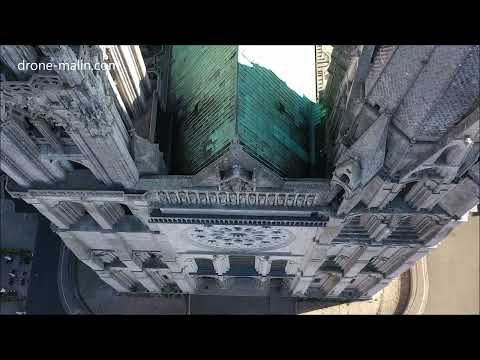
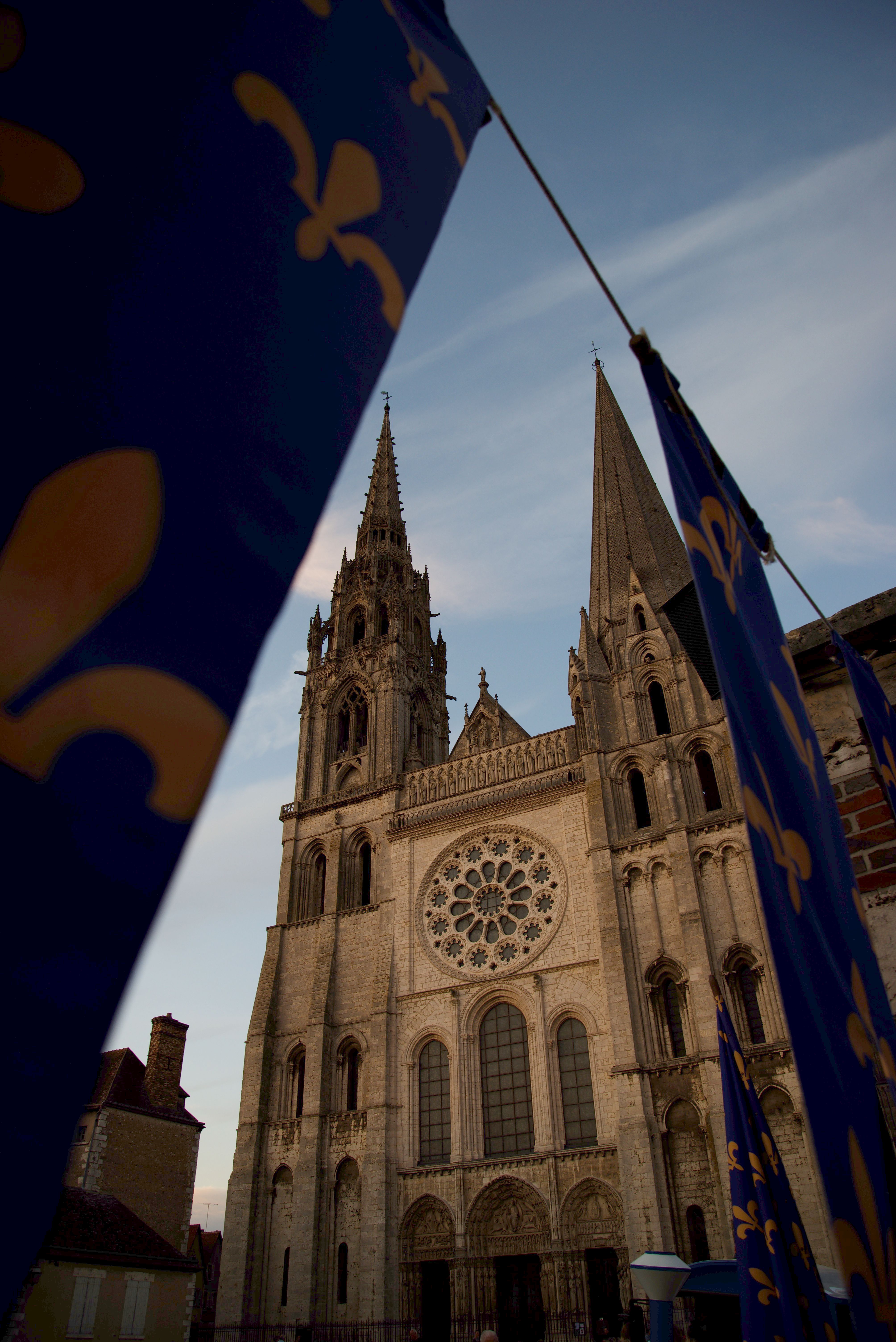
Most visitors come for Notre-Dame de Chartres, and fair enough. The Gothic bulk is overwhelming up close, with one spire plain, the other extravagantly late-Gothic, a floor labyrinth that still draws walkers on Fridays, and stained glass whose famous Chartres blue has launched more adjectives than it deserves. Go anyway. Then look harder: the Romanesque crypt, the iron roof structure above, the way afternoon light turns the nave from gray to ember.
Chartres gets more interesting when you stop treating the lower town as scenery. The steep tertres and 155-step Tertre Saint-Nicolas once linked river work to the high religious city, and you can still feel that old split in your legs. Down by the water, lavoirs, stone bridges, and the Collégiale Saint-André give the place a working texture that the cathedral square, for all its grandeur, can't supply.
This is still a stained-glass city, not a fossil. The Centre International du Vitrail explains the windows without draining the mystery from them, the Lorin workshops carry a craft line back to 1863, and Maison Picassiette proves Chartres has room for obsession of a stranger kind: an entire house crusted in broken crockery and glass. That's the shift the city makes on a good visit. You arrive expecting a single masterpiece and leave with a whole topography of light, labor, and eccentric faith.
Not every monument, just the ones we'd walk you past ourselves.
Where to wander, by quarter — each with its own rhythm.
Before you go
From the Carnutes' hilltop stronghold to a cathedral city that kept remaking itself
Before Chartres was Chartres, the Carnutes made this height above the Eure one of their strongholds. Roman writers remembered the tribe as powerful and devout, the kind of people who turned a place into a meeting ground as much as a settlement. The city's first role was already clear: a place where power and belief met on the same ground.
Under Rome, Autricum grew into a proper provincial town, with roads, trade, and stone in place of timber. By the 4th century, Christianity had taken root here, and the first bishopric tradition begins to surface through fragmentary records and later memory. You can feel the shift in the city's bones: the old civic town starting to bend toward the cathedral city it would become.
After Clovis consolidated much of Gaul, Chartres passed into Frankish rule. Rome's civic order did not vanish in a day, but the language of power changed, and bishops began to matter as much as counts. Late antique Autricum was fading. Medieval Chartres was beginning.
Repeated Viking attacks in the 9th century left the region raw, and the settlement of 911 turned Chartres into a border city facing the new Duchy of Normandy. Frontier towns learn caution fast. Markets reopen, churches repair their walls, and everybody keeps one eye on the horizon.
Fulbert of Chartres became the city's defining bishop, teacher, and builder, even if his exact birth year stays hazy. From Chartres he helped turn the cathedral school into one of western Europe's sharpest intellectual circles, where theology sat beside grammar, music, and natural philosophy. He gave the city a mind as well as a shrine.
A cathedral fire tore through Chartres in 1020, leaving smoke, rubble, and a city forced to rebuild around loss. Fulbert seized the disaster and answered with ambition, commissioning the vast Romanesque crypt that still lies beneath the present church like a buried first draft. Chartres learned one of its oldest habits here: when burned, build larger.
Work on the west front and Royal Portal pushed Chartres into the new Gothic language while that language was still being invented. The sculpture does not whisper. Kings, queens, and prophets stand in stone with the long vertical calm that would shape half of northern Europe's cathedral art.
When John of Salisbury became bishop of Chartres, one of the 12th century's most alert minds ended his career in this city. He had studied in the orbit of the Chartres schools and came back to govern a place where argument, manuscript, and liturgy still lived close together. Chartres was not only building in stone. It was thinking in public.
On 10 July 1194, fire destroyed most of the cathedral above the crypt and west towers. The shock must have been physical: hot ash in the air, bells silenced, the town's spiritual center suddenly split open. The rebuilding began almost at once, and the result is the cathedral people travel for today.
Around 1215, masons set the famous labyrinth into the nave floor, a patterned path nearly 13 meters across. It turned walking into prayer, not metaphorically but literally, with pilgrims tracing loops under filtered blue light and the sound of shoes on stone. Medieval Chartres understood that belief should be felt in the body.
The rebuilt cathedral was consecrated in 1260, astonishingly fast for a structure of this scale. Its stained glass, much of it still in place, filled the interior with deep cobalt and wine-dark reds that change by the hour and never quite look modern. This was Chartres at full voltage.
The Treaty of Chartres, signed on 1 April 1360, helped seal the terms of the larger settlement between England and France during the Hundred Years' War. Diplomacy sounds bloodless on paper. In reality, it came after raids, ransom, and towns learning how expensive a crown dispute could become.
Anglo-Burgundian forces took Chartres during the long fracture of the Hundred Years' War. Occupation changes ordinary things first: who pays tax, who holds the keys, whose language carries authority in the square. Cathedrals remain standing. Daily life bends around them.
Lightning set the old north spire ablaze in 1506, and the damage was severe enough to demand a new design. The cathedral's famous asymmetry dates from this blow of weather and bad luck. One tower remains severe and earlier. The other rises in late Gothic lacework, as if stone had learned impatience.
Master mason Jehan de Beauce took charge of rebuilding the north spire after the fire and gave Chartres one of its most memorable silhouettes. His work is why the façade never resolves into neat symmetry, and the city is better for it. Perfect balance would have been dull.
From late February to mid-March 1568, Protestant forces under Condé and Coligny besieged Chartres during the Wars of Religion. The city held, though not gracefully and not cheaply, with artillery fire battering defenses and fear running through every parish. Religious conviction had become urban warfare.
Chartres gave France one of its sharpest satirical poets in Mathurin Regnier. He carried some of the city's old skeptical intelligence into verse, writing with a bite that feels worldly rather than courtly. Cathedral towns produce mystics. Now and then they produce skeptics with excellent ears.
On 27 February 1594, Henry IV was crowned in Chartres Cathedral because Reims was out of reach. That single ceremony pushed Chartres into the center of French royal legitimacy for a day that still feels improbable. A city better known for glass and pilgrimage briefly carried the weight of a kingdom.
The French Revolution swept away the old county and bishopric order, and Chartres became prefecture of the new department of Eure-et-Loir. Titles vanished faster than habits, but the administrative role stuck. The city stopped being a feudal seat and became a machine of the modern state.
During the radical phase of the Revolution, the cathedral was stripped, repurposed, and threatened, as churches across France were. Statues suffered and worship stopped, yet demolition never happened. Chartres came close to losing its heart by ideology rather than fire.
In the 1830s and 1840s, restorers fitted the cathedral with an iron roof structure instead of another vast timber frame. It was an industrial answer to medieval fire risk, practical and slightly audacious. Above the stone vaults, 19th-century engineering quietly joined 13th-century ambition.
The arrival of the railway tied Chartres more tightly to Paris and changed the city's tempo. Grain, paper, people, and ideas moved faster, and a cathedral town that had once lived by pilgrimage found itself living by timetables too. Steam does not erase the Middle Ages. It simply arrives beside them.
Raymond Isidore, later called Picassiette, was born into the working life of Chartres and spent years as a municipal employee before covering his house in broken crockery, bottle glass, and shards of whatever he could carry home. His great work rose not from patronage but obsession. A city of stained glass eventually made room for one man with plates.
When Jean Moulin arrived as prefect of Eure-et-Loir, Chartres became one of the first stages in his Resistance story. In June 1940, after the German invasion, he refused to sign a false statement blaming African French soldiers for atrocities, even under torture. The administrative city found its moral spine in an office.
In August 1944, Allied forces liberated Chartres after four years of occupation. The relief was political, military, and deeply local: flags out of windows, church bells back in the air, a prefecture reclaimed from fear. De Gaulle came days later. Memory never really left.
UNESCO inscribed Chartres Cathedral as a World Heritage Site in 1979, acknowledging what builders, pilgrims, and art historians had known for centuries. The designation mattered because it pushed preservation into the international realm. The building stopped belonging only to France, if it ever had.
Chartres en Lumières began turning façades, bridges, churches, and civic buildings into a citywide light trail. Done badly, projection mapping feels like a screensaver on old stone. Here it works because Chartres already understands illumination, from stained glass to river reflections, and the modern spectacle speaks to the older one.
Bishop and scholar · c.960–1028
Led the cathedral school here
Fulbert turned Chartres into one of the sharpest intellectual centers in early medieval Europe, long before the Gothic cathedral took its present form. He'd probably recognize the city's old habit of teaching through light: first in manuscripts and sermons, now in stained glass that still pulls people into silence.
Resistance leader and prefect · 1899–1943
Served as prefect of Eure-et-Loir in Chartres in 1939-1940
Jean Moulin was prefect in Chartres when German forces arrived in June 1940, and he refused to sign a false document blaming French colonial troops for atrocities. The city keeps his memory in public space now; he might approve that Chartres remembers courage alongside cathedrals.
Outsider artist · 1900–1964
Lived and worked here; created Maison Picassiette
Raymond Isidore spent decades covering his house, courtyard, and chapel-like corners with broken plates, bottles, and shards scavenged from around Chartres. What looks eccentric at first becomes strangely devout, as if the city taught him that light belongs in fragments as much as in stained glass.
Stained-glass artist · 1904–1996
Worked in Chartres
Gabriel Loire made Chartres a living stained-glass city rather than a museum piece, creating modern windows that traveled far beyond Eure-et-Loir. He worked in the long shadow of the cathedral, though shadow is the wrong word when the whole point was color.
Where locals actually book dinner — not the tourist menus.
This is the local brag in pastry form: game meat and foie gras wrapped in a burnished crust, built more like a ceremonial pie than a snack. Order a slice with a sharp green salad and a glass of Loire white, not because tradition demands it, but because the richness needs cutting.
Chartres has its own sweet tooth, and the Mentchikoff is the proof: a small chocolate coated in meringue flakes, invented in the late 19th century. It sounds eccentric. It works.
The covered market at Place Billard is the right place to assemble lunch: cheeses from the region, charcuterie, fruit, and bread still warm enough to fog the paper bag. Go on Wednesday or Saturday morning, then eat by the Eure or in the Jardins de l'Eveche.
Chartres sits in the Beauce, one of France's great cereal plains, so bread and pastry here have more local logic than menu poetry often admits. Watch for bakeries treating flour seriously, with crusts that crackle and simple tarts that taste of butter first, fruit second.
La Petite Venise, the seasonal guinguette on the river, matters less for high gastronomy than for atmosphere: drinks, easy plates, and that faintly unruly summer energy France does so well. Come at the end of the day, when the water darkens and nobody is in a hurry.
Small things that change how the city treats you.
The city, as it actually looks.

Yes, easily. The cathedral alone justifies the train ride, but the surprise is the lower town along the Eure, with wash houses, old bridges, steep stair streets, and a calmer rhythm once the day-trippers leave.
One full day works for the cathedral, lower town, and Maison Picassiette. Give it two days if you want the stained-glass museum, smaller churches like Saint-Pierre and Saint-Aignan, and an evening walk during Chartres en Lumières.
Yes, and many people do. Direct trains from Paris Montparnasse take about an hour, and the station is roughly a 10-minute walk from the cathedral, so you can cover the highlights without a car.
Walk if you can; it's the simplest option. The route takes about 10 minutes uphill into the historic center, though the slope and cobbles make luggage and flimsy shoes a bad combination.
Yes, Chartres is generally a calm and safe city for visitors. The bigger risks are physical rather than criminal: uneven paving, steep steps, and slippery river paths after rain, especially in the lower town at night.
No, not by French cathedral-city standards. The cathedral floor is free, Chartres en Lumières is free, and a market picnic can keep costs low; the main paid extras are the towers, roof walk, Treasury, and museums.
Late spring through early autumn is the sweet spot. April to October gives you good walking weather and the evening light installations, while July and August add late cathedral openings on Tuesdays, Fridays, and Sundays.
Go on a Friday during the season from Lent to All Saints' Day. Current official guidance gives access around 10:30 to 16:45, but liturgical events take priority, so check the cathedral's latest notice before building your day around it.
No. The center is compact, the station is close to the old town, and local sights such as Maison Picassiette can be reached on foot, by bus line 4, or by taxi if you don't want the extra walk.
Saved and recently read places — kept on this device only.
Photos may have been resized or cropped.