Introduction
Welcome to the Cité de Carcassonne, a medieval citadel that stands as a testament to the rich and storied history of France. This comprehensive guide will take you through the historical overview, key architectural features, visitor information, travel tips, nearby attractions, and more to ensure you make the most of your visit to this UNESCO World Heritage site.
Early Beginnings and Roman Influence
The origins of Carcassonne can be traced back to the Bronze Age, when primitive communities recognized the strategic advantage of the hilltop upon which the Cité now stands. However, it was the Romans who truly recognized the potential of this location and laid the foundation for Carcassonne's enduring legacy. Around the 1st century BC, they fortified the hilltop, constructing the first walls that would evolve into the formidable battlements that define the city today (History Skills).
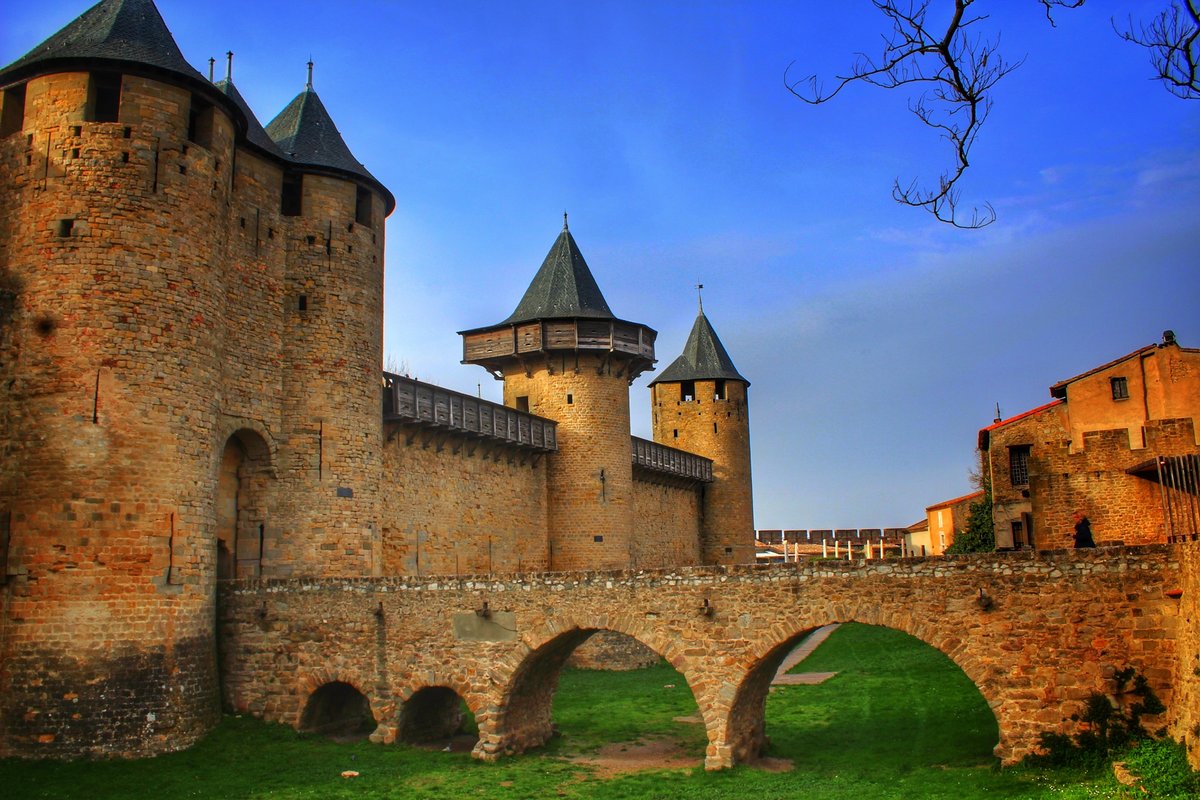
The Romans transformed Carcassonne into a fortified town known as a castellum. The original walls were supported by between 34 and 40 towers, spaced from 18 to 30 meters apart along the curtain wall. Each tower was semicircular in plan and about 14 meters tall. The Roman defenses were in place by 333 CE, when the town is described as a castellum (Wikipedia).
Visigothic and Saracen Occupation
By the 5th century AD, the Visigoths had firmly established their presence in the region, making Carcassonne one of their principal settlements. Under Visigothic rule, Carcassonne underwent significant transformations, with strengthened and expanded fortifications reflecting the Visigoths' keen understanding of military strategy (History Skills). In 725 AD, Carcassonne was captured by the Saracens, who held it until 759 AD when it was retaken by Pippin the Short, the King of the Franks (Britannica).
Medieval Expansion and the Cathar Crusade
The 11th century marked the beginning of significant expansion for Carcassonne. The Trencavel family, who ruled over the surrounding region, ordered the construction of a palatium, which became the seigneurial residence and later the Château Comtal (Life in Rural France). This period also saw the rise of the Cathar movement, a Christian sect deemed heretical by the Catholic Church. The Albigensian Crusade (1209-1229) was a pivotal event in Carcassonne's history. Led by Simon de Montfort, the crusade aimed to root out Catharism in southern France. In 1209, Carcassonne faced a significant siege and fell to the crusaders (History Skills).
Integration into the French Kingdom
By 1247, Carcassonne was firmly under the French crown, transitioning from a bastion of religious dissent to a symbol of royal power and authority in the Languedoc region. The city's defenses were further reinforced, and the Château Comtal underwent extensive modifications, turning it into a formidable stronghold befitting a royal fortress (History Skills).
Decline and Restoration
In 1659, the Treaty of the Pyrenees transferred the border province of Roussillon to France, reducing Carcassonne's military significance. Its fortifications were abandoned, and the city became mainly an economic center of the woolen textile industry (Wikipedia). By the dawn of the 19th century, the passage of time had taken its toll on Carcassonne. In 1849, the French government decided that the city fortifications should be demolished. However, this decision was strongly opposed by the local people. Jean-Pierre Cros-Mayrevieille and Prosper Mérimée, an eminent archaeologist and historian, led a campaign to preserve the fortress as a historical monument. The government later reversed its decision, and in 1853, restoration work began under the direction of architect Eugène Viollet-le-Duc (History Hit). Viollet-le-Duc's restoration, although criticized for being historically inaccurate, was instrumental in bringing Carcassonne back to its former glory (Medieval Historia).
Modern Significance
In 1997, the Cité de Carcassonne was added to the UNESCO World Heritage list due to its exceptional preservation and restoration of the medieval citadel (Wikipedia). Today, Carcassonne is one of France's most visited tourist destinations, attracting millions of visitors each year. The city's rich history, stunning architecture, and picturesque landscapes make it a must-visit destination for travelers from around the world (TripSavvy).
Key Architectural Features
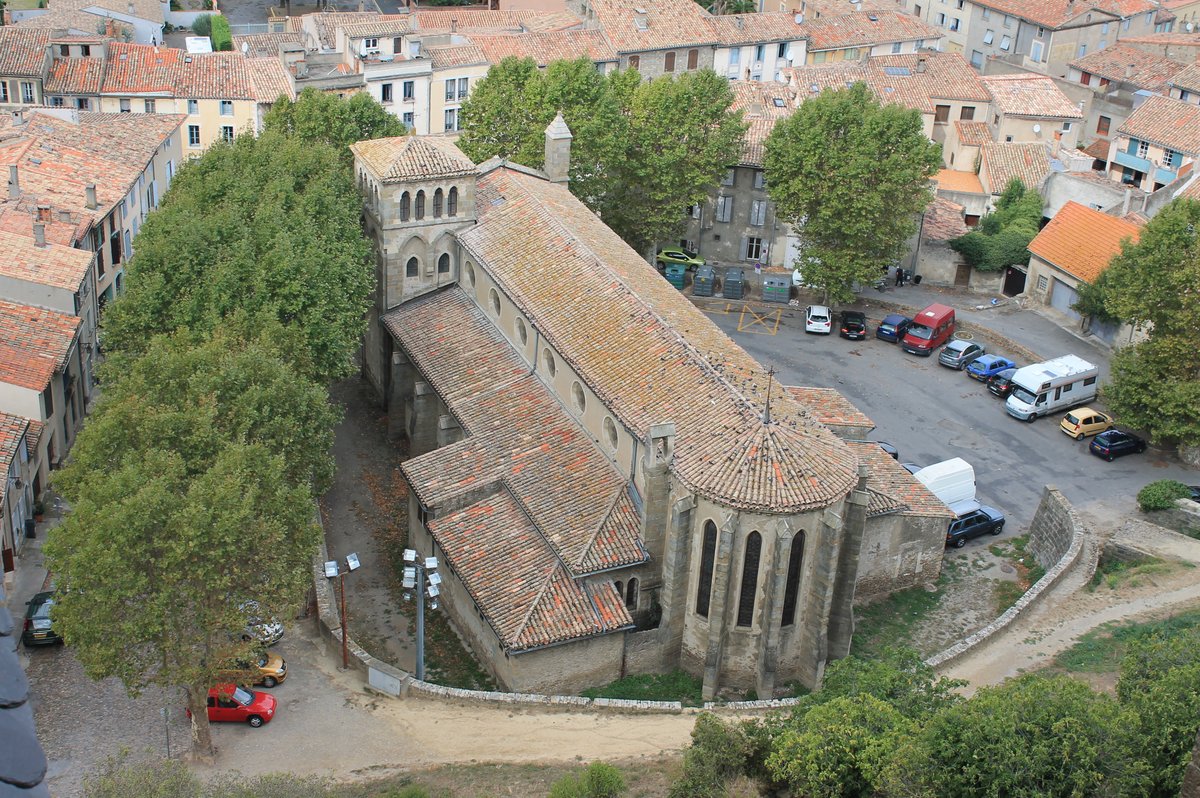
The Cité de Carcassonne is renowned for its double surrounding walls, which stretch for 3 kilometers and are interspersed with 52 towers (Wikipedia). The Château Comtal, located within the Cité, is a prime example of medieval military architecture. Visitors can explore its rooms, ramparts, and the museum displaying artifacts from the castle's history (Life in Rural France). The Basilica of Saint-Nazaire, another significant landmark within the Cité, showcases stunning Gothic architecture and intricate stained glass windows that depict scenes from the Bible (Over Your Place).
Tickets and Opening Hours
The Cité de Carcassonne is open year-round, but hours may vary depending on the season. It's advisable to check the official website for the most up-to-date information. Tickets can be purchased online or at the entrance. Prices vary for adults, children, and groups, with discounts available for seniors and students (Official Site).
Guided Tours and Special Events
Guided tours are available and highly recommended to fully appreciate the historical and architectural significance of the Cité. Special events, such as medieval reenactments and festivals, are held throughout the year, offering a unique experience for visitors (Carcassonne Events).
Travel Tips
- Best Times to Visit Spring and autumn offer pleasant weather and fewer crowds. Summers can be busy, but the vibrant atmosphere and events make up for it.
- Photographic Spots Don't miss the panoramic views from the ramparts and the picturesque streets within the Cité for capturing stunning photos.
- Accessibility The Cité has cobblestone streets and some steep areas, which may be challenging for those with mobility issues. However, some parts are accessible and provide beautiful views.
Nearby Attractions
- Pont Vieux An ancient bridge offering stunning views of the Cité and the surrounding landscape.
- Musée des Beaux-Arts Located in the lower town, this museum features an impressive collection of paintings and artifacts.
FAQ Section
What are the Cité de Carcassonne visiting hours?
Visiting hours vary by season. It's best to check the official website for the most current information.
Where can I buy tickets for the Cité de Carcassonne?
Tickets can be purchased online through the official website or at the entrance of the Cité.
Are guided tours available?
Yes, guided tours are available and highly recommended to fully appreciate the historical and architectural significance of the Cité.
Discover More
Planning your visit to the Cité de Carcassonne? Download our mobile app Audiala for more travel tips, check out related posts on our blog, and follow us on social media for updates and special offers!