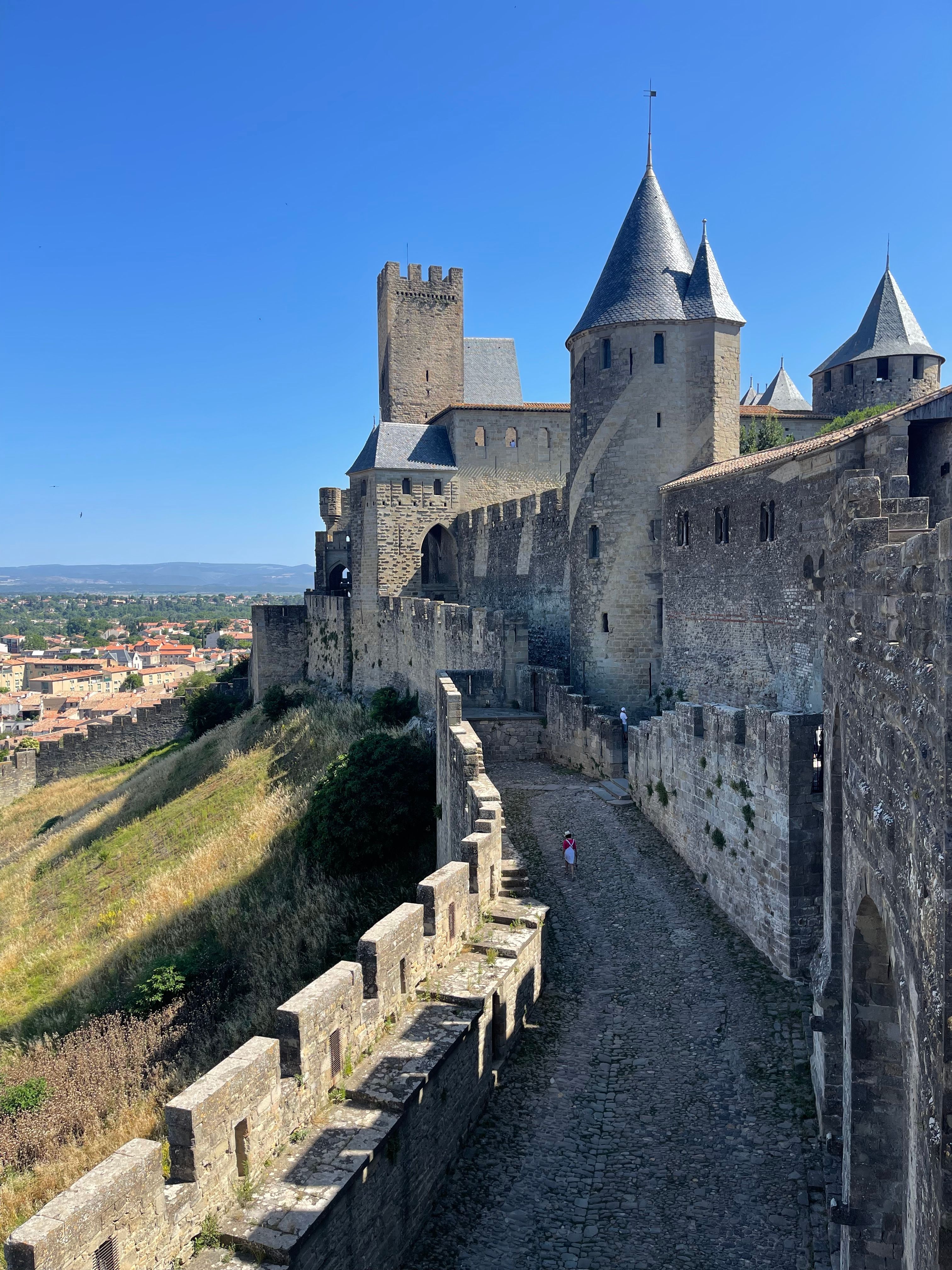
Plan and listen to Cité De Carcassonne with Audiala.
Audio guide in your pocket, itinerary in your browser. Built for the way you actually visit.
Introduction
The Cité de Carcassonne, nestled in southern France’s Occitanie region, is an awe-inspiring example of a medieval fortified city and stands as a UNESCO World Heritage Site. Renowned for its double-walled ramparts, imposing towers, and centuries-old legends, Carcassonne invites visitors to step back in time and immerse themselves in a living tapestry of European history, military architecture, and vibrant cultural traditions. This guide offers all the practical information you need—visiting hours, tickets, accessibility, and travel tips—plus highlights of the city’s historical significance and major annual events, ensuring you make the most of your visit (remparts-carcassonne.fr; carcassonnecastle.com; whc.unesco.org).
Ancient Origins and Roman Foundations
Carcassonne’s history stretches back to at least 800 BCE, with early settlements at Carsac. The Romans recognized its strategic position and, by the 3rd–4th centuries CE, constructed massive defensive walls and towers, some of which still stand today. After the fall of the Roman Empire, the Visigoths further strengthened the fortifications, making Carcassonne a key center in the Kingdom of Aquitaine (remparts-carcassonne.fr; worldatlas.com).
Medieval Expansion and Royal Rule
The city’s medieval golden age began under the Trencavel dynasty in the 11th–12th centuries, with the construction of the Château Comtal and major expansion of the walls. Carcassonne was a stronghold during the Albigensian Crusade—a campaign to suppress the Cathar heresy. After a dramatic siege in 1209, the city fell into royal hands, and kings Louis IX and Philip III further reinforced its defenses, creating the iconic double-walled system and formidable gates such as the Porte Narbonnaise (tourisme-carcassonne.fr; whc.unesco.org).
Decline and Restoration
After the Treaty of the Pyrenees in 1659, Carcassonne lost military importance and fell into neglect. In the 19th century, restoration visionary Eugène Viollet-le-Duc spearheaded a campaign to save the fortress, restoring walls, towers, and gates—sometimes with romantic flourishes. This work set global standards for heritage preservation and led to Carcassonne’s UNESCO inscription in 1997 (carcassonnecastle.com; whc.unesco.org; worldatlas.com).
Visiting Carcassonne: Practical Information
Visiting Hours
- April to September: 9:00 or 9:30 AM – 6:00 or 7:00 PM
- October to March: 9:30 or 10:00 AM – 5:00 or 5:30 PM
Hours may vary by attraction, season, and during special events or holidays. Always check the official tourism website before visiting.
Tickets and Admission
- Cité de Carcassonne: Free to enter the walled city.
- Château Comtal (Count’s Castle) & Ramparts:
- Adults: €9.50–€10
- Reduced (students, seniors, EU citizens 18–25): €7
- Free for children under 18 and disabled visitors
Tickets can be purchased on-site or online, with skip-the-line options recommended during peak periods.
Accessibility
While the medieval streets and ramparts feature cobblestones and steep sections, some main attractions are accessible. Ramps and adapted facilities are available in parts of the Château Comtal and museums. Visitors with mobility needs should check with the visitor center in advance.
Best Times to Visit
- Spring (April–June) and Autumn (September–October): Mild weather, fewer crowds, and plenty of events
- Summer (July–August): Lively festival season, but busiest and warmest
Arriving at Cité de Carcassonne
Location
Carcassonne sits between Toulouse and Narbonne in southern France. It is easily reached by:
- Train: TGV line from Toulouse (50 minutes; approx. €10) or Narbonne (France Travel Guide)
- Car: Well-connected highways, ample parking outside the fortified walls
- On Foot/Bike: From Carcassonne’s modern train station, walk (30 minutes) or rent a bike through CYCLOlibre (Plan a Trip to France)
Exploring the Cité: Gates, Layout, and Accessibility
Gates and First Impressions
- Porte Narbonnaise: Main entrance, flanked by imposing towers and a statue of the legendary Lady Carcas (Grand Carcassonne Tourism)
- Aude Gate: Secondary access with panoramic views
Urban Layout
The labyrinthine streets radiate from the central Château Comtal, with medieval houses, artisan shops, and atmospheric squares. A city map or Google Maps is helpful, though signage and friendly locals can guide you (Sacred Wanderings).
Accessibility
Some main sites and guided tours cater to visitors with mobility needs, but cobblestones and gradients are common. Wear comfortable shoes.
Top Historical Sites
Château Comtal (Count’s Castle)
A fortress within the fortress, the Château Comtal dates to the 12th century and features restored rooms, ramparts, and museum exhibits on Carcassonne’s history (Travel France Bucket List).
Ramparts and Towers
The double ring of walls stretches nearly 3 km and is punctuated by 52–53 towers. Walking the ramparts offers magnificent views and insight into the evolution of military architecture (overyourplace.com).
Basilica of Saint-Nazaire
A blend of Romanesque and Gothic, the basilica is renowned for its 13th-century stained glass and ornate stonework. Concerts and choral performances often take place here (carcassonnecastle.com).
The Legend of Dame Carcas
A sculpture at the Porte Narbonnaise honors Lady Carcas, said to have saved the city from Charlemagne’s siege through cunning and courage (Grand Carcassonne Tourism).
Museums and Exhibitions
Small museums within the Cité showcase medieval weaponry, art, and archaeological finds. Entry is often included with your Château Comtal ticket.
Guided Tours & Special Events
Guided Tours
In-depth tours cover the Cathars, the Albigensian Crusade, restoration history, and medieval daily life. Guided experiences are available in multiple languages and can be booked online or at the entrance (Travel France Bucket List).
Special Events
- Festival de la Cité: Major performing arts festival each July (festivaldecarcassonne.fr)
- Bastille Day Fireworks: July 14, spectacular “Burning of the City” show
- Fête de la Musique: June 21, citywide free music festival
- Medieval Shows & Reenactments: Summer weekends feature jousting, falconry, and living history camps
Practical Tips for Visitors
- Duration: Allow at least half a day, ideally a full day, to explore both the Cité and the lower Bastide Saint-Louis.
- Dining: Enjoy regional specialties such as cassoulet in local restaurants. Sample wines from Corbières and Minervois.
- Shopping: Artisan shops within the Cité offer crafts, medieval souvenirs, and local food products.
- Accommodation: Most hotels are in Ville Basse (lower town), offering a range of options (France Travel Guide).
- Nearby Attractions: The Canal du Midi (UNESCO), Bastide Saint-Louis’s markets, and the climbable Saint Vincent Church tower (Plan a Trip to France).
Major Annual Events & Festivals
Festival de Carcassonne
A leading European summer festival, this event features opera, classical, rock, jazz, and theatre, with performances in the medieval Théâtre Jean-Deschamps and city squares. 2025’s lineup includes international headliners and diverse genres. Advance ticket booking is essential (festival program).
Bastille Day Fireworks (14 July)
Known for the dramatic “Embrasement de la Cité,” Bastille Day brings up to 700,000 visitors for one of France’s most impressive fireworks displays. The best views are from the River Aude, Pont Vieux, and Bastide Saint-Louis (tourism office).
Fête de la Musique (21 June)
Free concerts in streets, squares, and on the ramparts celebrate music of all genres, bringing a festive, spontaneous energy to the city (allevents.in).
Medieval Reenactments
During summer, visit for medieval camps, jousting, and hands-on workshops—ideal for families (tourism office events).
Contemporary Art and Exhibitions
In 2025, monumental sculptures by Richard Orlinski will be displayed throughout the Cité (tourism office).
Markets and Local Fairs
Regular farmers’ and artisan markets in Bastide Saint-Louis offer regional produce, crafts, and a chance to mingle with locals (local agenda).
Sporting Events
Carcassonne is occasionally a stage for the Tour de France, attracting cycling fans.
Summary & Key Tips
Carcassonne is more than a monument—it’s a living city that celebrates its Occitan roots, legendary tales, and vibrant festivals. To make the most of your visit:
- Check seasonal opening hours and book tickets online when possible
- Arrive early or visit in spring/autumn for fewer crowds
- Allow time for both the Cité and Ville Basse
- Download the Audiala app for audio guides and real-time event updates
- Explore both history and local culture—sample the cuisine, stroll the markets, and join guided tours
For up-to-date information on hours, events, and accessibility, consult the official tourism site or festival program.
Tickets & tours.
These are guided options from our partners — same price as booking direct.
Prices are indicative — final pricing and availability are confirmed at checkout. Audiala may earn a commission from bookings made through these links.
Listen to the full story in the app
The whole Cité De Carcassonne,
told well.
Audio guides for 1,100+ cities across 96 countries. History, stories, and local insight — offline ready.

Verified, and shown.
Researched and written by the Audiala editorial team from historical records, architectural archives, and local expertise.
Last reviewed
Researched from Wikidata, Wikipedia & official sources · fact-checked · How we make our guides →