Prehistoric Ridge
castle
c. 3500 BCE
First Fires on the Hill
Polished stone axes ring against limestone. Farmers clear the ridge above the Aude, building timber palisades that will later become the core of the Cité. Charred emmer wheat seeds, carbon-dated in 1998, prove people have been climbing this rock for five millennia.
castle
c. 525 BCE
Carsac of the Volcae
Celtic metalworkers raise an oppidum they call Carsac. They mint silver coins stamped with a horse and wheel, spent later in Marseille for Greek wine. The name sticks; even the Romans will keep it.
Roman Province
castle
122 BCE
Rome Plants a Flag
Consul Domitius Ahenobarbarus arrives with two legions. He rebuilds the Gallic rampart in dressed stone, adds a 700-meter circuit wall, and founds Julia Carsaco. The first Roman tiles, still visible in the Château Comtal basement, are stamped IMP CAESAR.
Early Medieval
castle
453 CE
Visigoths Paint the Walls
King Theodoric II moves in, frescoing the Roman towers with hunting scenes in ochre and lapis. His craftsmen carve Latin graffiti that reads ‘Gothia victrix’—a boast that survives behind a later medieval latrine.
swords
725
Saracen Occupation
A Berber cavalry unit rides up the Aude valley, plants a green banner on the keep, and stores dates and sesame in the granary for three winters. They leave behind a broken ivory chess piece found in 1894—proof the garrison got bored.
swords
759
Pepin’s Siege
Frankish catapults hurl limestone blocks stripped from Roman graves. After a six-week blockade the Saracens slip away at night, torching the wooden gate behind them. Charlemagne’s father rides in at dawn, ending 34 years of Muslim hold on the city.
Trencavel Court
gavel
1067
Trencavel Dynasty Begins
Viscount Bernard Aton hands the keys to his son-in-law Raymond. The family will rule for 142 years, turning the fortress into a court of troubadours and Cathar sympathizers. Their seal shows a cat perched on a wall—locals still call it the chat de Carcassonne.
church
1096
Pope Blesses the Cathedral
Urban II lays twelve foundation stones for Saint-Nazaire while preaching the First Crusade. Crowds kneel on straw mats; the smell of hot wax and horses drifts uphill. The first bay collapses in 1117—builders learn the ground is softer than faith.
person
1185
Raymond-Roger, the Last Viscount
Born inside the Narbonnaise tower, the boy who will lose everything plays dice with future Cathar perfecti. By 25 he commands 400 knights and writes Occitan poetry judged ‘too sensual’ by the bishop. His fate will mark the city forever.
swords
1209
Crusaders at the Gate
Simon de Montfort’s army camps where the golf course is today. After a fifteen-day siege Raymond-Roger is lured out under truce, thrown into his own dungeon, and dies of dysentery aged 24. The town’s wells run red; 450 Cathars are burned on a pyre outside the walls.
Capetian Fortress
castle
1248
Saint Louis Resettles the Town
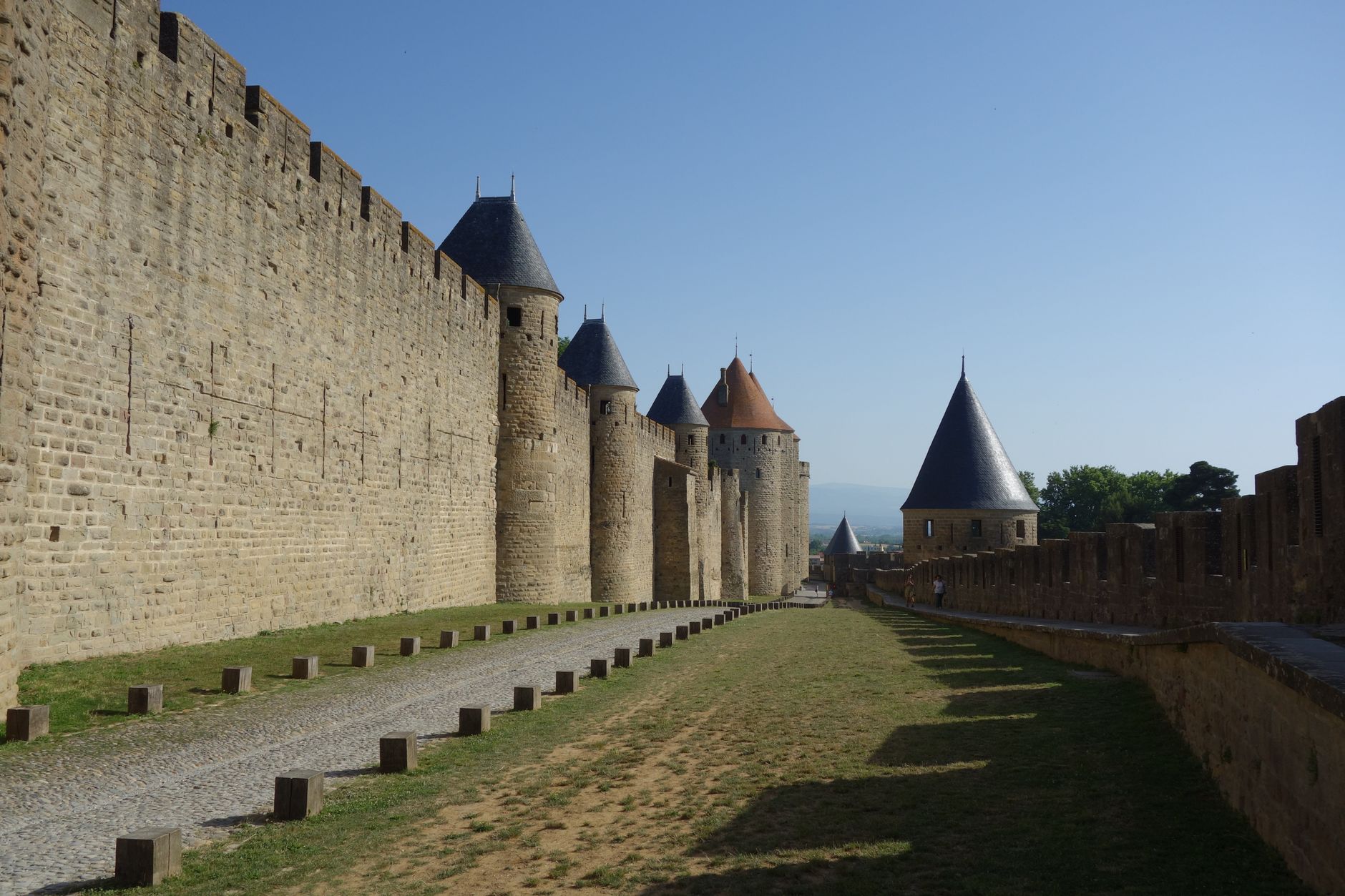
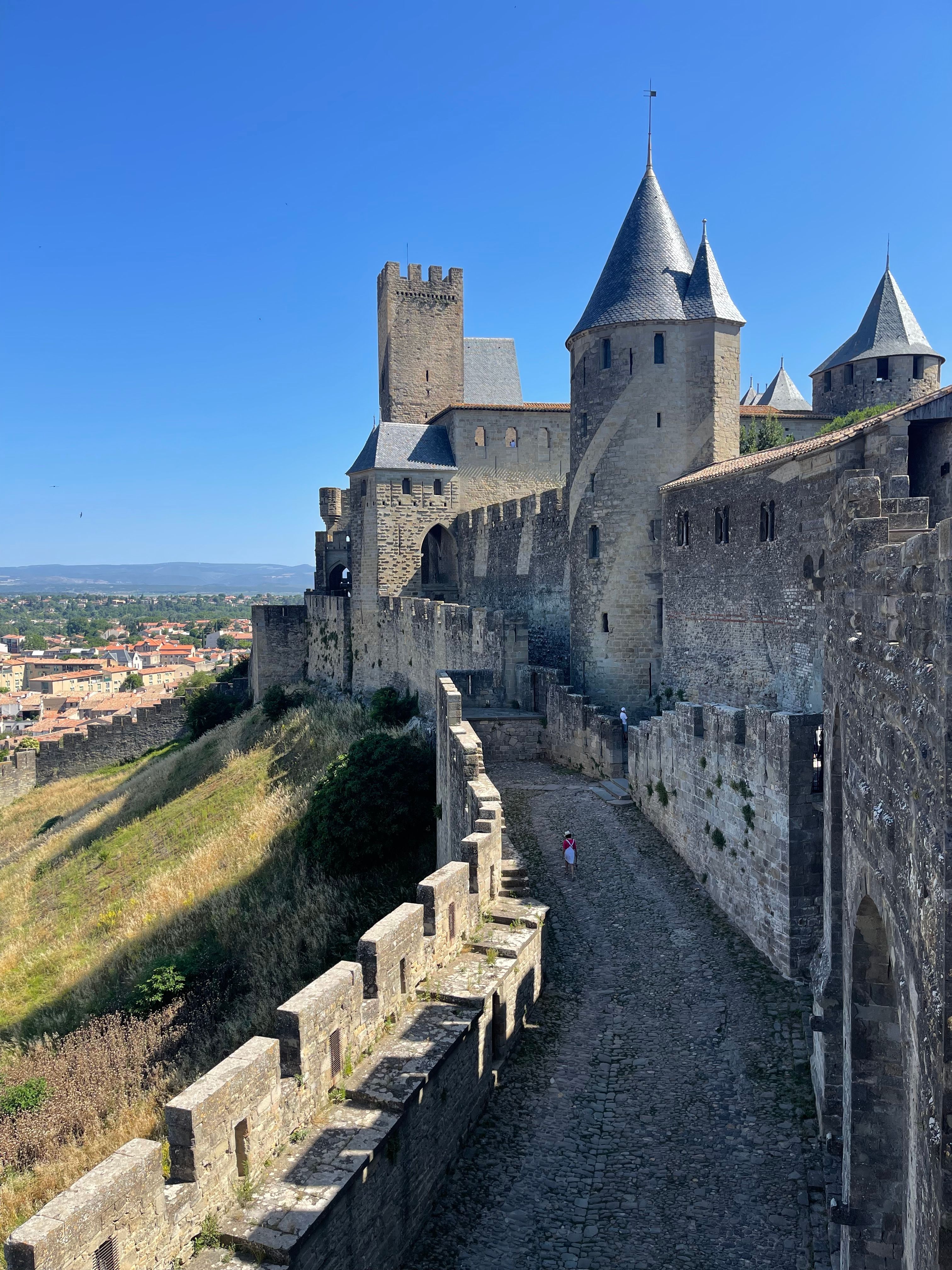
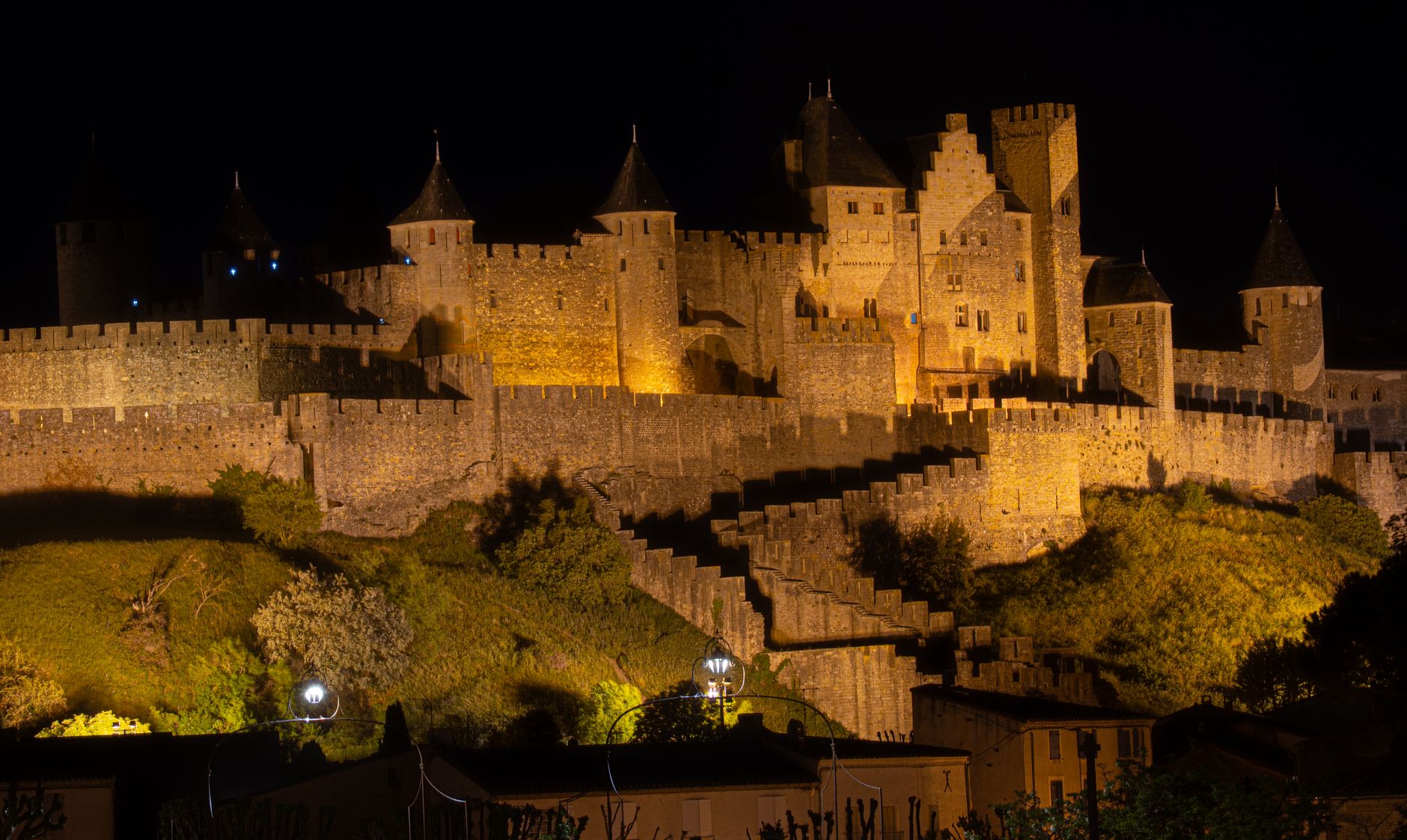
Louis IX orders 700 displaced carpenters and weavers back inside the walls, granting tax-free wine for five years. Master builder Jean de Meung adds the second rampart—3 km long, 26 towers, arrow loops angled for crossbows still warm from Toulouse foundries.
person
1261
Inquisitor Bernard Gui Arrives
The Dominican who will later inspire Umberto Eco sets up court in the Trencavel palace. He keeps meticulous registers: 930 heretics questioned, 45 relapsed, 6 handed to the stake. His inkwell, cracked by over-use, is displayed in the Inquisition museum.
gavel
1659
The Border Moves South
The Treaty of the Pyrenees shifts France’s frontier to the Pyrenees. Overnight Carcassonne becomes a backwater; soldiers sell armor to scrap dealers. Stones from the ramparts are carted away to build barns—gaps you can still spot on the western wall.
Modern Rescue
person
1810
Jean-Pierre Cros-Mayrevieille Born
The future savior of the Cité enters the world in a house on Rue Voltaire, 200 m from where stones are being quarried for the rampart road. As mayor he will stand in front of a demolition crew, arms spread, shouting ‘Over my dead body!’
castle
1853
Viollet-le-Duc Begins Restoration
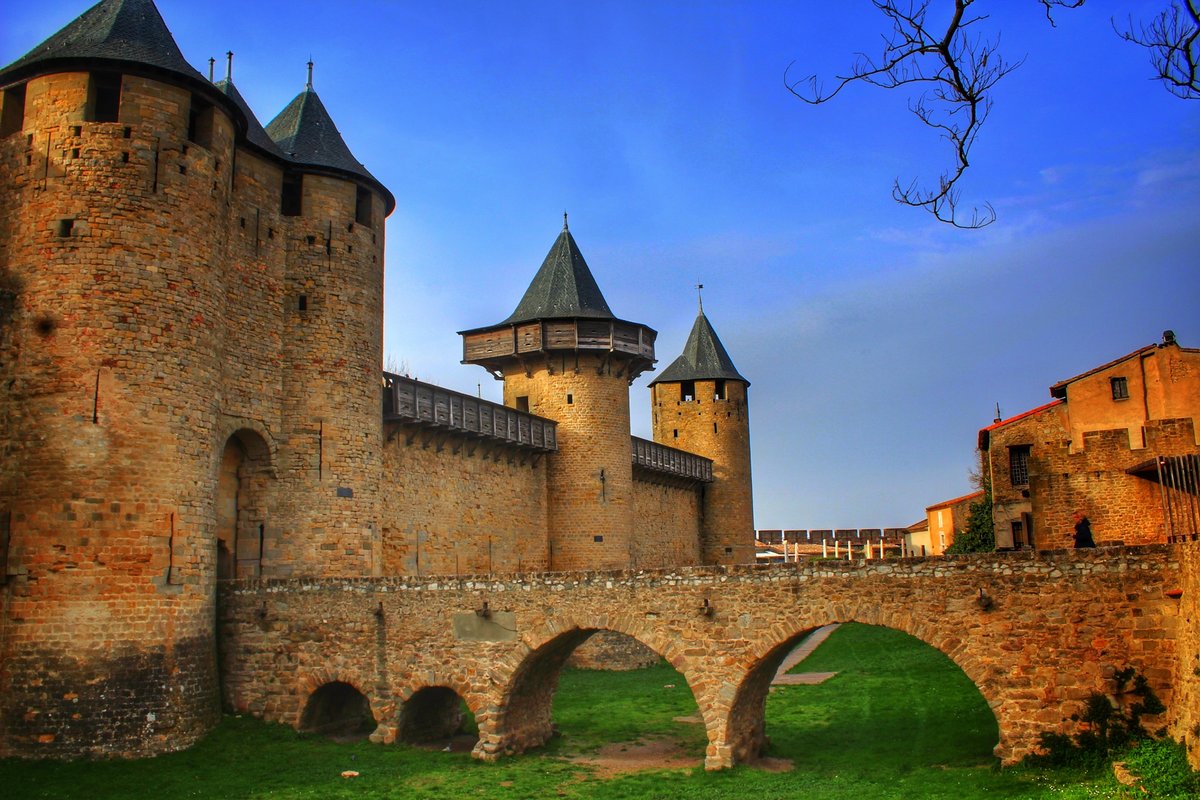
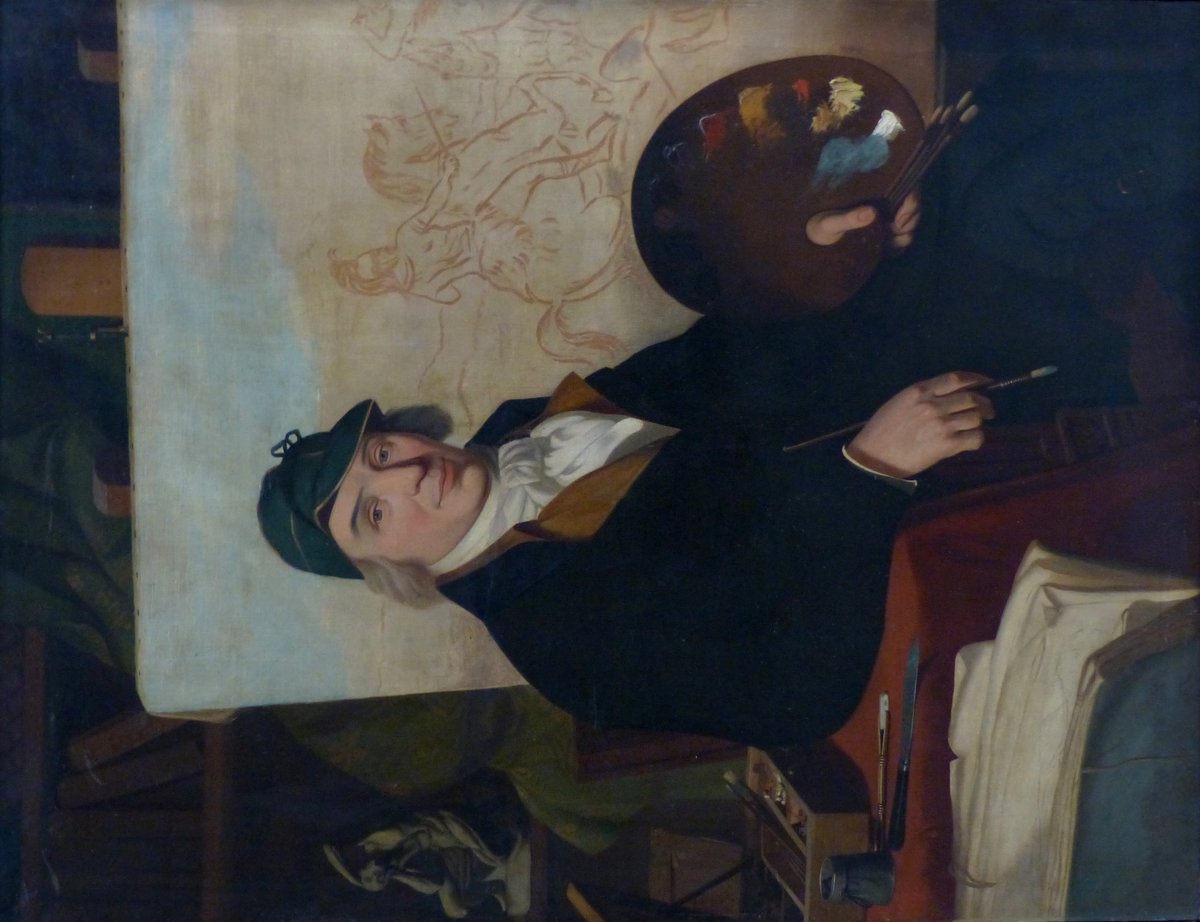
The Gothic revivalist arrives with 600 workers, 4 km of scaffolding, and a sketchbook full of conical roofs that never existed. He replaces timber hoardings with slate, adds fairy-tale turrets, and signs his name on a merlon like a medieval mason. Controversial? Absolutely. But without him only rubble would remain.
person
1865
Prosper Montagné, Chef with a Ladle
Born above the butcher shop in Les Halles, the boy who will codify French cuisine smells pork fat before he can walk. His 1938 Larousse Gastronomique still lists cassoulet as ‘Languedoc, Carcassonne style’—the city’s most edible legacy.
palette
1897
Joë Bousquet, the Wounded Poet
A bullet in the spine on the Chemin des Dames leaves him bedridden at 21. He turns his Rue de l’Aigle d’Or bedroom into a salon—André Gide, Max Ernst, and René Char smoke by his bedside while he writes ‘The sky is a wound that never scabs.’
palette
August 1931
Ch Churchill Paints the Cité
The future British prime minister sets up his easel at dawn, capturing the east tower in rose light before the tourists wake. He mails the canvas to Clementine with a note: ‘A fortress that has learned to keep silence more eloquently than any speech.’
public
1997
UNESCO Adds Its Own Seal
The World Heritage committee cites ‘an exceptional example of a medieval fortified town whose restoration itself became historic.’ Locals shrug; they’ve been living inside a monument since Viollet-le-Duc. The plaque goes up on the Narbonnaise gate—next to a postcard rack.
castle
13 Sept 2024
Full Rampart Circuit Opens
After 800 years only half the walls were walkable. A €7 million lift and steel walkway now lets you circle the entire 3 km parapet. From the western tower you can see the Pyrenees wearing snow like a borrowed coat—exactly the view that made Raymond-Roger homesick.