Introduction
The first thing that hits you in Carcassonne, France, isn't the sight of those honey-colored ramparts—it's the smell. Woodsmoke drifts from unseen chimneys, mingling with the yeasty perfume of duck fat crisping in a cast-iron pot somewhere below the walls. A city that looks like a storybook actually smells like dinner.
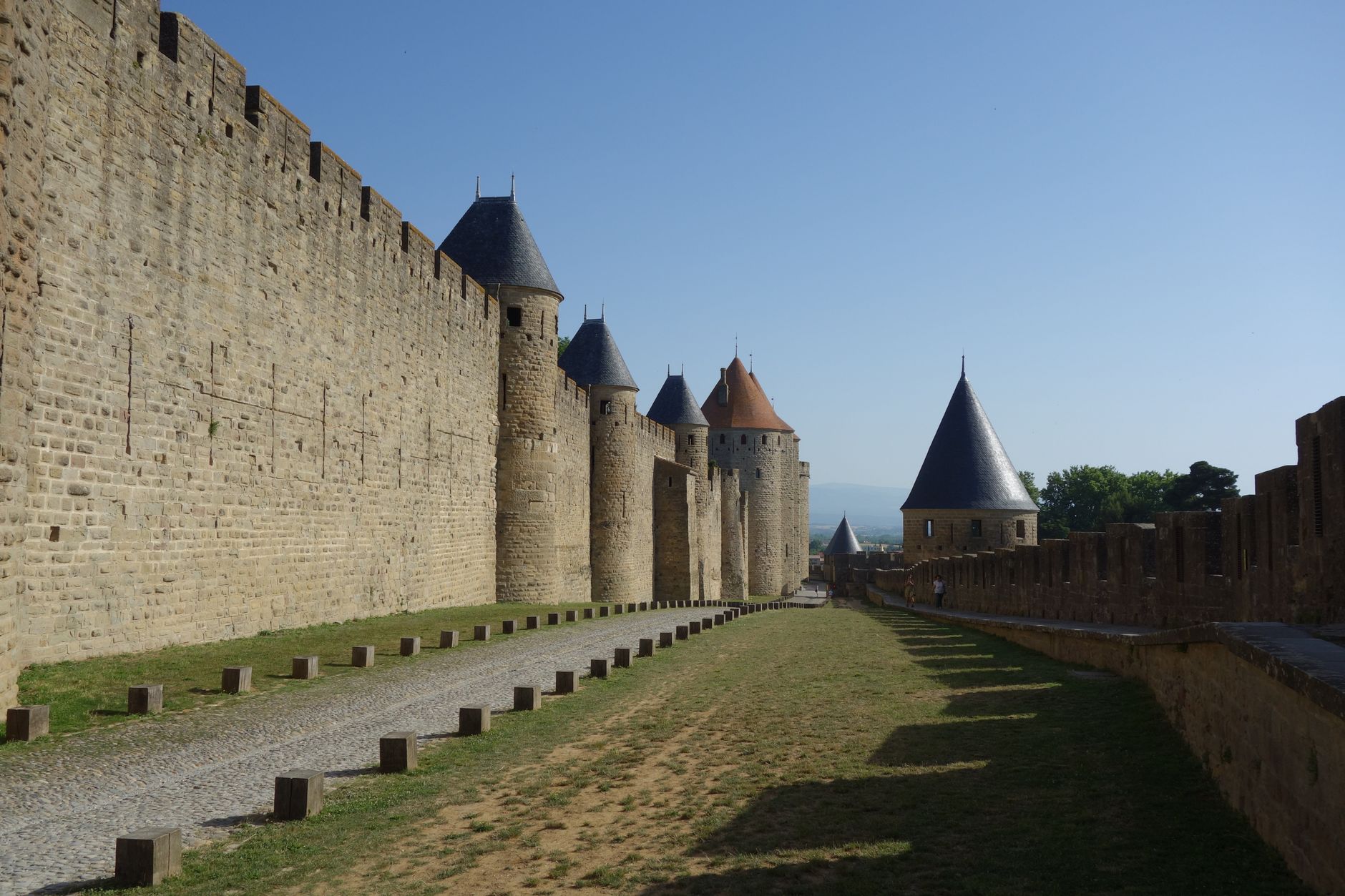
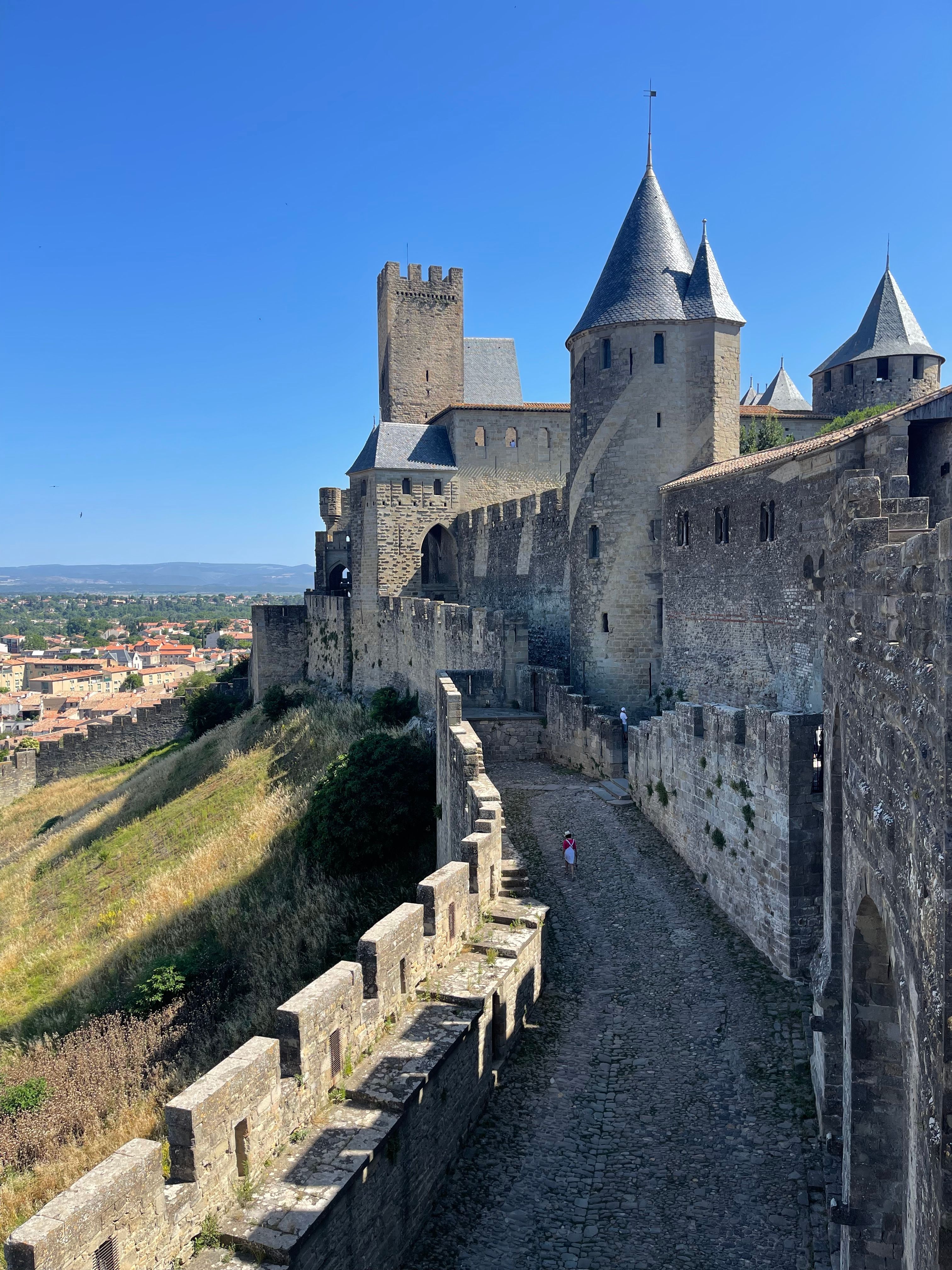
Up on the hill, La Cité's 52 towers and double curtain wall were pieced together by Romans, Visigoths, and a 19th-century restoration architect who wasn't shy about adding fairy-tale turrets. Down in the grid-planned Bastide Saint-Louis, locals argue over pétanque balls outside cafés where a glass of Minervois costs half what you'd pay inside the fortress. The same stones, two economies.
Between the halves runs the Aude River and a quiet civic tension: the Cité earns UNESCO status and 4 million snapshots a year; the Bastide earns the weekly grocery money. Spend dusk on the Pont-Vieux and you can watch both worlds glow—one floodlit for spectacle, the other for people who live here.
Places to Visit
The Most Interesting Places in Carcassonne
Carcassonne
Carcassonne, located in the Aude department of the Occitanie region in southern France, is an extraordinary fortified city that offers a captivating journey…
Cité De Carcassonne
Nestled in the heart of southern France, the Cité de Carcassonne stands as one of Europe’s most breathtaking and best-preserved medieval fortified cities.
Château Comtal De Carcassonne
Nestled within the remarkable fortified city of Carcassonne, the Château Comtal stands as a testament to medieval military architecture and rich historical…
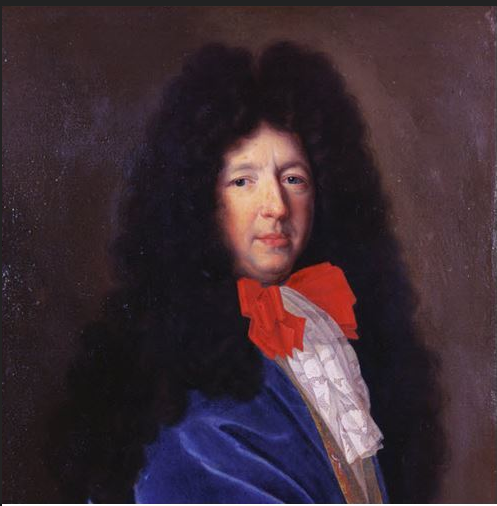
Canal Du Midi
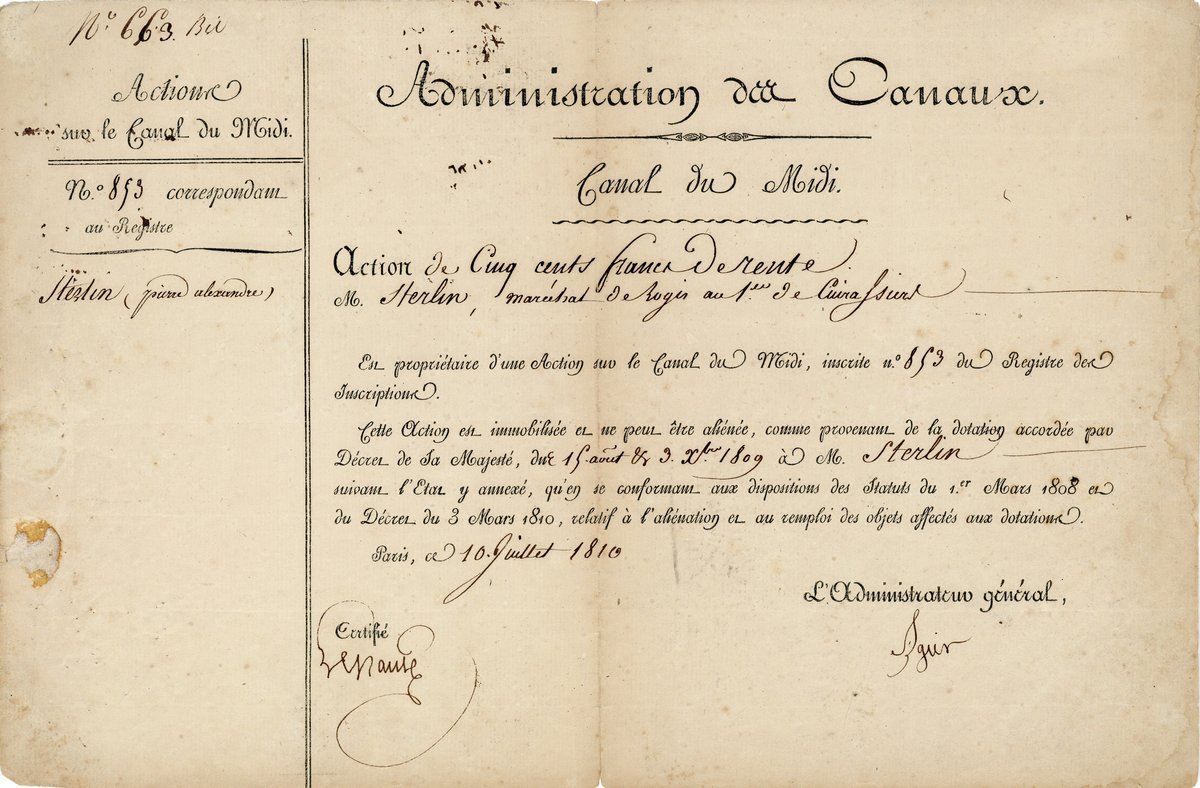
The Canal du Midi stands as one of France’s most celebrated historic waterways, weaving together an extraordinary blend of 17th-century engineering…
Palaja
The Autoroute des Deux Mers, a vital transportation corridor in France, weaves a path through the nation's rich history, from ancient Roman roads to…
Carcassonne Cathedral
Cathédrale Saint-Michel in Carcassonne, France, is a must-visit destination for history enthusiasts and travelers alike.
Basilica of St. Nazaire and St. Celse
Nestled within the fortified walls of the medieval Cité de Carcassonne, the Basilica of Saint-Nazaire and Saint-Celse stands as a magnificent testament to…
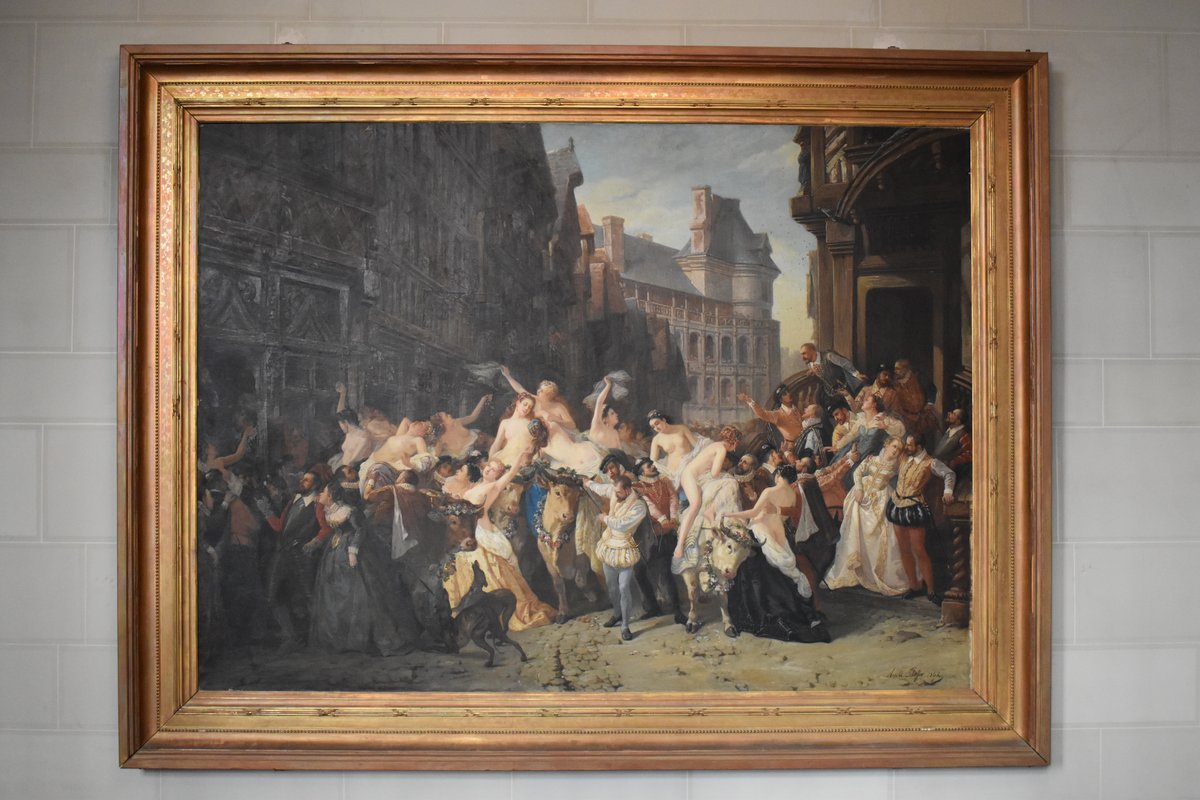
Musée Des Beaux-Arts De Carcassonne
The Musée des Beaux-Arts de Carcassonne, nestled within the fortified city of Carcassonne, offers a captivating journey through centuries of artistic…
Temple De Carcassonne
Nestled in the heart of southern France, the Cité de Carcassonne stands as a majestic emblem of medieval military architecture and rich Occitan heritage.
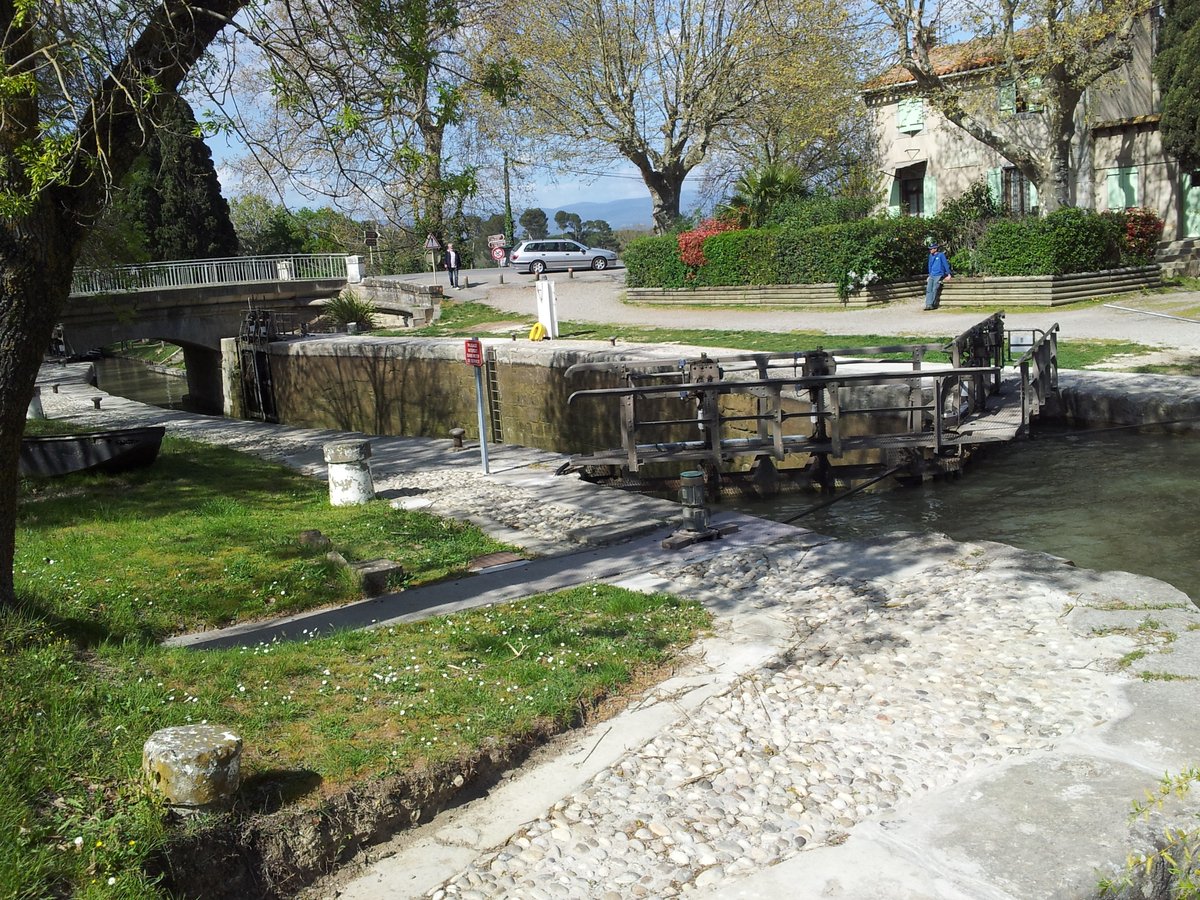
Écluse De Saint-Jean
Explore the Écluse de Saint-Jean, a hidden gem nestled on the Canal du Midi in Carcassonne, France.
Château De Pennautier
Nestled just 5 kilometers from Carcassonne in the Aude department of Occitanie, France, the Château de Pennautier stands as a magnificent testament to the…
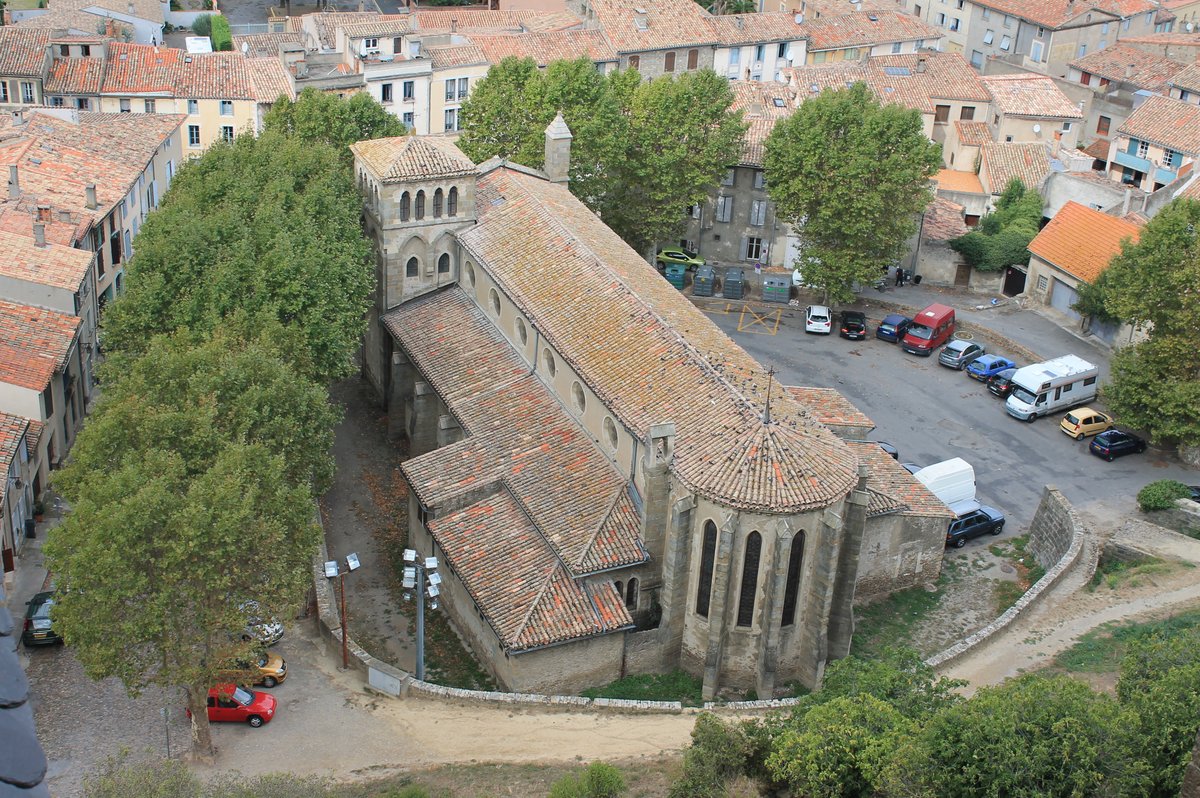
Église Saint-Vincent De Carcassonne
Located in the heart of Carcassonne, France, Église Saint-Vincent de Carcassonne is a remarkable example of Gothic architecture with a rich historical backdrop.
What Makes This City Special
Two Towns, One Ticket
The Cité’s 52 towers rise like a stone mirage, but the real pulse beats in Bastide Saint-Louis where 13th-century grid streets hide Art Deco cafés and a Saturday market that smells of rosemary and just-ground spices. Walk the ramparts at dusk, then descend for a €3.50 pichet of Minervois wine while locals argue over rugby.
Stained Glass You Can Time-Travel Through
Basilique Saint-Nazaire holds the world’s only «Arbre de Vie» window (1315): 8 m of glass where emerald leaves still flare when the sun swings west. The north rose throws cobalt petals across the nave at exactly 17:40 in May—stand by the fourth pier for the full halo.
Canal du Midi’s Plane-Tree Cathedral
Rent a bike at Port de Carcassonne and glide 6 km south; the water mirrors 200-year-old plane trees arching overhead like green flying buttresses. In October the towpath smells of crushed grapes from nearby vineyards and the only sound is your tyre crunching fallen leaves.
Historical Timeline
Walls That Learned to Speak
From Iron-Age hillfort to board-game icon, Carcassonne keeps rewriting its own legend
First Fires on the Hill
Polished stone axes ring against limestone. Farmers clear the ridge above the Aude, building timber palisades that will later become the core of the Cité. Charred emmer wheat seeds, carbon-dated in 1998, prove people have been climbing this rock for five millennia.
Carsac of the Volcae
Celtic metalworkers raise an oppidum they call Carsac. They mint silver coins stamped with a horse and wheel, spent later in Marseille for Greek wine. The name sticks; even the Romans will keep it.
Rome Plants a Flag
Consul Domitius Ahenobarbarus arrives with two legions. He rebuilds the Gallic rampart in dressed stone, adds a 700-meter circuit wall, and founds Julia Carsaco. The first Roman tiles, still visible in the Château Comtal basement, are stamped IMP CAESAR.
Visigoths Paint the Walls
King Theodoric II moves in, frescoing the Roman towers with hunting scenes in ochre and lapis. His craftsmen carve Latin graffiti that reads ‘Gothia victrix’—a boast that survives behind a later medieval latrine.
Saracen Occupation
A Berber cavalry unit rides up the Aude valley, plants a green banner on the keep, and stores dates and sesame in the granary for three winters. They leave behind a broken ivory chess piece found in 1894—proof the garrison got bored.
Pepin’s Siege
Frankish catapults hurl limestone blocks stripped from Roman graves. After a six-week blockade the Saracens slip away at night, torching the wooden gate behind them. Charlemagne’s father rides in at dawn, ending 34 years of Muslim hold on the city.
Trencavel Dynasty Begins
Viscount Bernard Aton hands the keys to his son-in-law Raymond. The family will rule for 142 years, turning the fortress into a court of troubadours and Cathar sympathizers. Their seal shows a cat perched on a wall—locals still call it the chat de Carcassonne.
Pope Blesses the Cathedral
Urban II lays twelve foundation stones for Saint-Nazaire while preaching the First Crusade. Crowds kneel on straw mats; the smell of hot wax and horses drifts uphill. The first bay collapses in 1117—builders learn the ground is softer than faith.
Raymond-Roger, the Last Viscount
Born inside the Narbonnaise tower, the boy who will lose everything plays dice with future Cathar perfecti. By 25 he commands 400 knights and writes Occitan poetry judged ‘too sensual’ by the bishop. His fate will mark the city forever.
Crusaders at the Gate
Simon de Montfort’s army camps where the golf course is today. After a fifteen-day siege Raymond-Roger is lured out under truce, thrown into his own dungeon, and dies of dysentery aged 24. The town’s wells run red; 450 Cathars are burned on a pyre outside the walls.
Saint Louis Resettles the Town
Louis IX orders 700 displaced carpenters and weavers back inside the walls, granting tax-free wine for five years. Master builder Jean de Meung adds the second rampart—3 km long, 26 towers, arrow loops angled for crossbows still warm from Toulouse foundries.
Inquisitor Bernard Gui Arrives
The Dominican who will later inspire Umberto Eco sets up court in the Trencavel palace. He keeps meticulous registers: 930 heretics questioned, 45 relapsed, 6 handed to the stake. His inkwell, cracked by over-use, is displayed in the Inquisition museum.
The Border Moves South
The Treaty of the Pyrenees shifts France’s frontier to the Pyrenees. Overnight Carcassonne becomes a backwater; soldiers sell armor to scrap dealers. Stones from the ramparts are carted away to build barns—gaps you can still spot on the western wall.
Jean-Pierre Cros-Mayrevieille Born
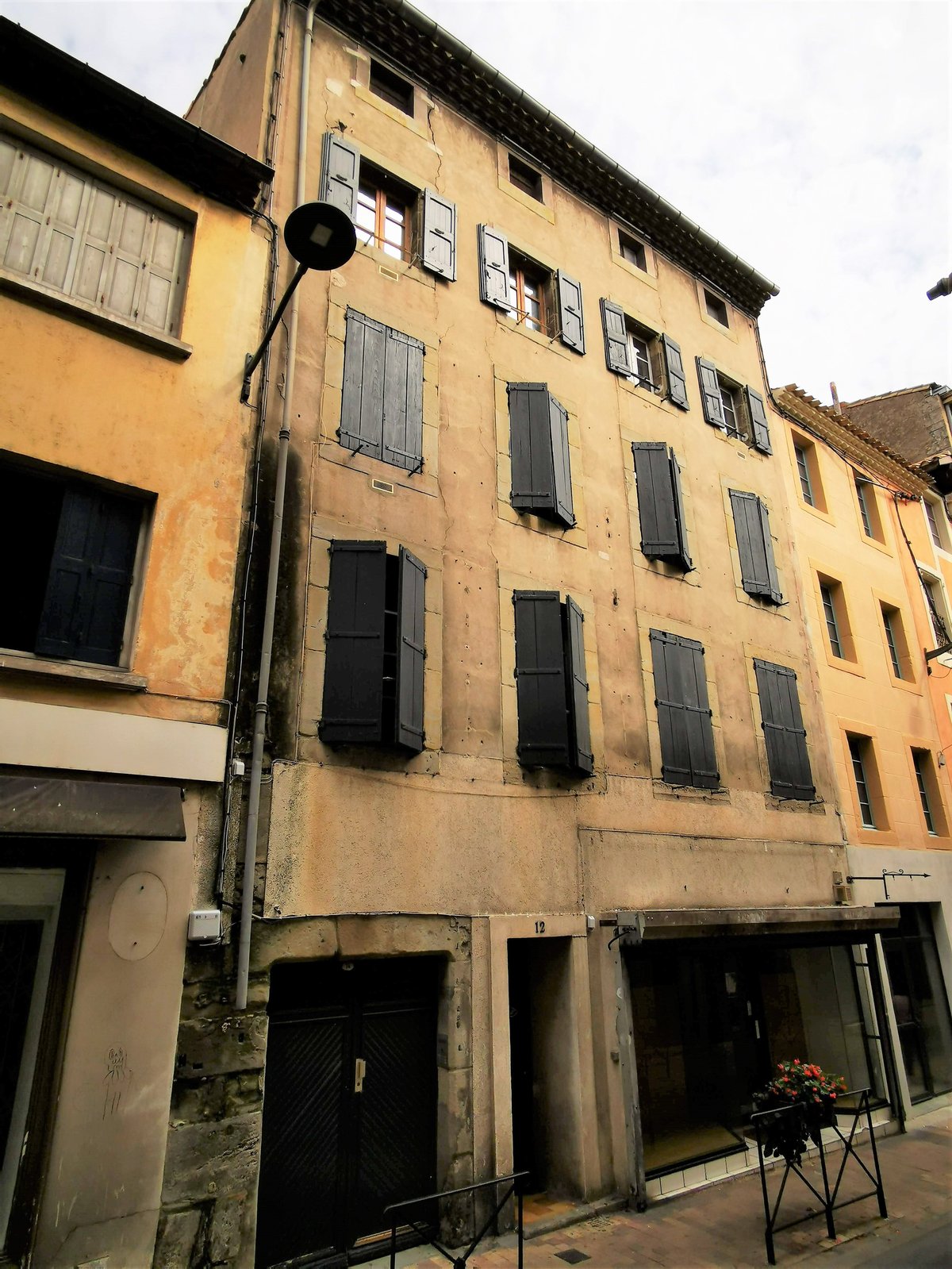
The future savior of the Cité enters the world in a house on Rue Voltaire, 200 m from where stones are being quarried for the rampart road. As mayor he will stand in front of a demolition crew, arms spread, shouting ‘Over my dead body!’
Viollet-le-Duc Begins Restoration
The Gothic revivalist arrives with 600 workers, 4 km of scaffolding, and a sketchbook full of conical roofs that never existed. He replaces timber hoardings with slate, adds fairy-tale turrets, and signs his name on a merlon like a medieval mason. Controversial? Absolutely. But without him only rubble would remain.
Prosper Montagné, Chef with a Ladle
Born above the butcher shop in Les Halles, the boy who will codify French cuisine smells pork fat before he can walk. His 1938 Larousse Gastronomique still lists cassoulet as ‘Languedoc, Carcassonne style’—the city’s most edible legacy.
Joë Bousquet, the Wounded Poet
A bullet in the spine on the Chemin des Dames leaves him bedridden at 21. He turns his Rue de l’Aigle d’Or bedroom into a salon—André Gide, Max Ernst, and René Char smoke by his bedside while he writes ‘The sky is a wound that never scabs.’
Ch Churchill Paints the Cité
The future British prime minister sets up his easel at dawn, capturing the east tower in rose light before the tourists wake. He mails the canvas to Clementine with a note: ‘A fortress that has learned to keep silence more eloquently than any speech.’
UNESCO Adds Its Own Seal
The World Heritage committee cites ‘an exceptional example of a medieval fortified town whose restoration itself became historic.’ Locals shrug; they’ve been living inside a monument since Viollet-le-Duc. The plaque goes up on the Narbonnaise gate—next to a postcard rack.
Full Rampart Circuit Opens
After 800 years only half the walls were walkable. A €7 million lift and steel walkway now lets you circle the entire 3 km parapet. From the western tower you can see the Pyrenees wearing snow like a borrowed coat—exactly the view that made Raymond-Roger homesick.
Notable Figures
Jean-Pierre Cros-Mayrevieille
1810–1887 · Historian & PoliticianIn 1844 he stood in front of a wrecking ball and told the army they’d have to bulldoze him first. His campaign kept the walls standing long enough for Viollet-le-Duc to rebuild them. Today his bust glares at tourists who complain the place looks ‘too perfect’.
Prosper Montagné
1865–1948 · Chef & GastronomeHe wrote the first Larousse Gastronomique and never let Paris forget cassoulet came from the Aude. Visit Les Halles at 8 a.m. and you’ll see butchers still using his 1929 diagram for tying saucisse de foie.
Joë Bousquet
1897–1950 · PoetA bullet in the spine kept him in one room for 30 years, so he turned the city into a boarding house for the surrealist avant-garde. Max Ernst left a doodle on the wall; you can still see the charcoal ghost if you ask the curator nicely.
Eugène Poubelle
1831–1907 · Prefect & Waste-Reform PioneerHe ordered every Parisian to sort their trash in 1884 and gave the French language the word poubelle. His grave in Carcassonne is surprisingly modest – just a stone bin of wilting flowers left by sanitation workers on strike days.
Photo Gallery
Explore Carcassonne in Pictures
A detailed view of the iconic medieval stone towers and crenelated walls of the historic Cité de Carcassonne in France.
Edouard CHASSAIGNE on Pexels · Pexels License
The historic towers of the medieval citadel of Carcassonne, France, emerge through a thick, moody morning fog above traditional terracotta rooftops.
Tim Diercks on Pexels · Pexels License
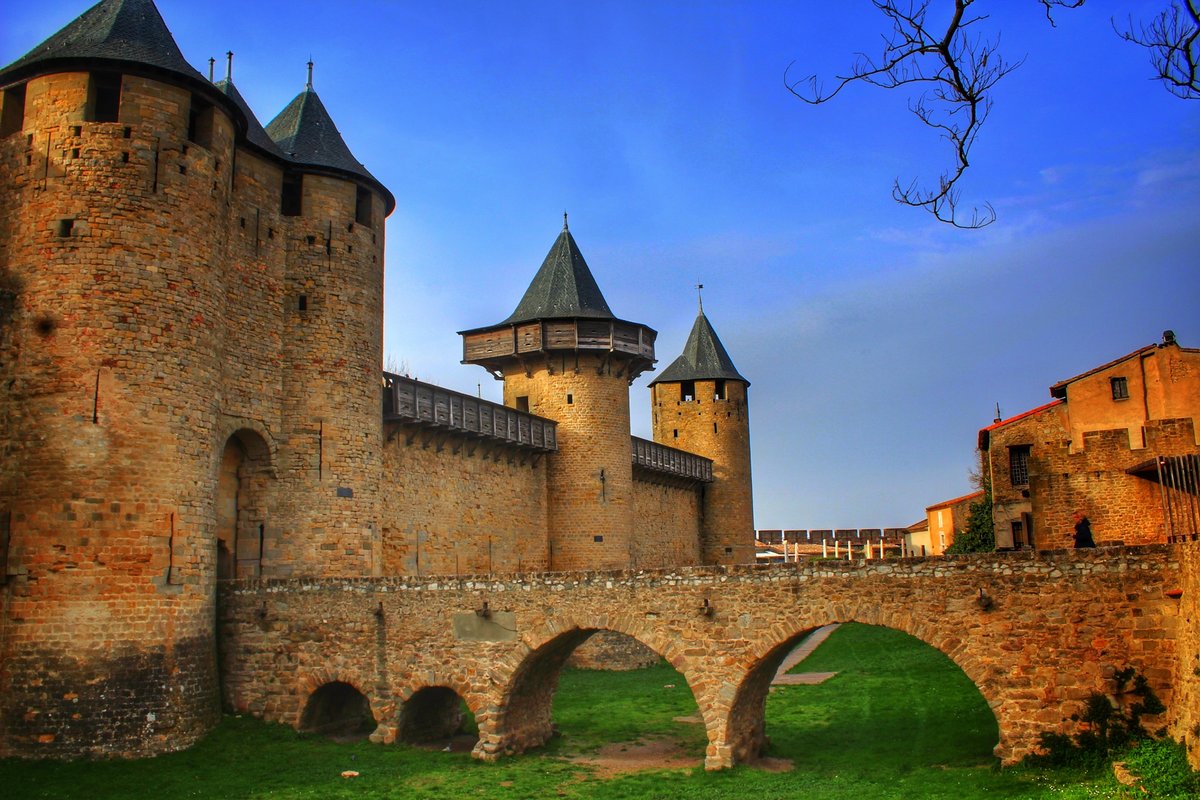
The imposing stone towers and arched bridge of the historic Cité de Carcassonne stand against a dramatic, overcast sky in southern France.
jordan besson on Pexels · Pexels License
A charming, narrow alleyway in the historic city of Carcassonne, France, showcasing traditional stone architecture and a striking pink house.
La Ville Nouvelle on Pexels · Pexels License
The historic stone fortifications and iconic towers of the medieval city of Carcassonne, France, seen on a bright day.
Ivan Dražić on Pexels · Pexels License
The imposing stone fortifications and arched bridge of the medieval Cité de Carcassonne stand against a dramatic, overcast sky in southern France.
Clément Proust on Pexels · Pexels License
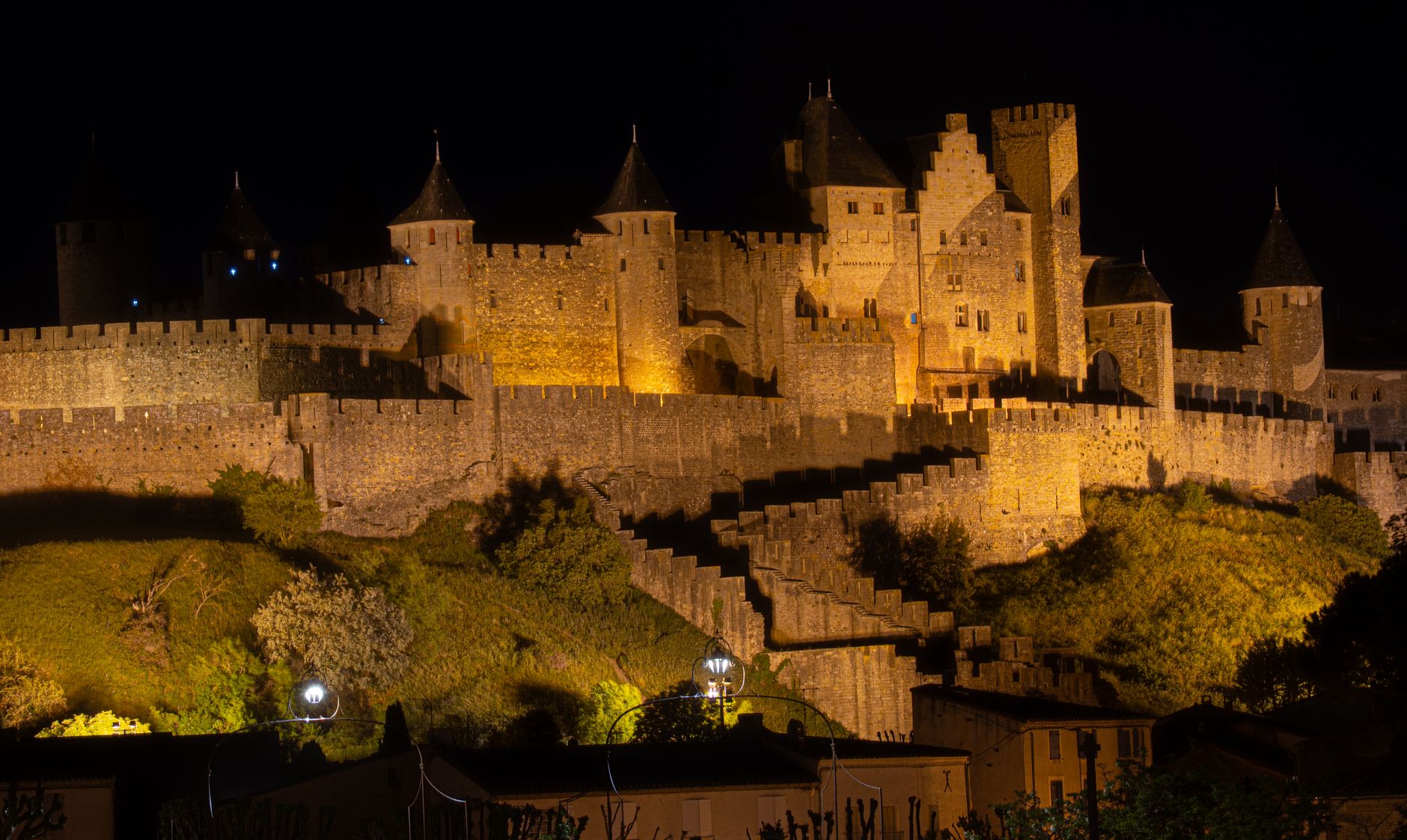
The historic fortified city of Carcassonne, France, glows beautifully under night lighting, showcasing its impressive medieval stone walls and towers.
Carlo Giovanni Ghiardelli on Pexels · Pexels License
The stunning Gothic architecture of the Basilica of Saints Nazarius and Celsus rises above the misty ramparts of the medieval city of Carcassonne, France.
Tim Diercks on Pexels · Pexels License
Practical Information
Getting There
Carcassonne Salvaza Airport (CCF) sits 5 km west; the RTCA shuttle runs every 30 min to Square Gambetta for €6 (valid all day on city buses). High-speed TGV from Paris Gare de Lyon to Carcassonne station takes 5 h 18 min; the station is an 8-minute walk to Bastide Saint-Louis. A61 autoroute exit 23 «Carcassonne-Ouest» feeds directly into the boulevard peripherique.
Getting Around
No metro—this is a 45 000-resident town you cross on foot in 20 min. RTCA runs 11 urban bus lines, 6.30 AM–9 PM Monday–Saturday; the €6 airport ticket doubles as a 24-hour pass. CycloLib’ stations offer 24-hour bike hire for €1.50; Canal du Midi towpaths are flat asphalt all the way to Trèbes.
Climate & Best Time
Summer 27–37 °C, dry but crowded; spring and September hover 18–25 °C with lavender-light evenings and half the visitors. January dips to 3–10 °C and hotel prices fall 40 %. Rain peaks October–November (70 mm/month); bring a light shell even in May when the Aude valley can funnel sudden wind.
Language & Currency
French only in bakeries; a crisp «Bonjour, merci» flips moods. Cards accepted everywhere except market stalls under €5—carry coins for an espresso (€1.20). Tipping is included; leave the 5-centime change on the saucer if service made you smile.
Where to Eat
Don't Leave Without Trying
Restaurant La Marquière
local favoriteOrder: The cassoulet — this is where locals go for the real deal, a slow-cooked masterpiece of white beans, duck confit, and sausage that defines the region.
La Marquière is a beloved neighborhood institution with over 1,100 reviews, serving authentic Occitan cuisine in an unpretentious setting where both tourists and locals actually eat. This is the kind of place that gets it right without the fuss.
Comptoir Ludique
quick biteOrder: Light lunch plates and coffee — this is a casual spot perfect for a quick, quality bite without pretension or tourist markup.
Comptoir Ludique sits in the heart of the Bastide Saint-Louis where locals actually congregate, offering an affordable, convivial atmosphere away from the fortress crowds. The budget-friendly price point and strong ratings make it a genuine neighborhood favorite.
Les Pâtisseries d'Elona
quick biteOrder: The daily pastries and croissants — with 277 five-star reviews, this is where you start your morning like a local, not a tourist.
Perfect 5.0 rating with nearly 300 reviews makes this the gold standard for pastries in Carcassonne. This is serious, artisan work—the kind of place that makes you understand why the French care so much about breakfast.
Amorino Gelato - Carcassonne
quick biteOrder: The gelato — premium Italian gelato that's a cut above the typical tourist trap ice cream. Nearly 2,000 reviews speak for themselves.
Located near the château with nearly 2,000 reviews, Amorino delivers genuine quality gelato and stays open late, making it perfect for an evening treat after exploring the medieval streets.
Katia.N Pâtisserie
quick biteOrder: The specialty cakes and tarts — this is where locals buy their desserts for dinner, a sign of true quality.
With nearly 160 five-star reviews, Katia.N represents the serious, no-nonsense patisserie tradition. You won't find the Instagram-bait here—just excellent, honest pastry work.
Studio Linéa
quick biteOrder: The fresh bread and morning pastries — though reviews are limited, the perfect 5.0 rating suggests this is a hidden gem worth discovering.
A small, perfectionist bakery with a perfect rating on Place Victor Basch. This feels like the kind of place locals keep to themselves—quality-focused and unpretentious.
L'ACCOLADE - Café Associatif - Circuits Courts - Restaurant Inclusif - CARCASSONNE
local favoriteOrder: Lunch specials featuring local, short-circuit ingredients — this is community-focused eating at its best.
L'ACCOLADE is an associative cafe committed to local sourcing and inclusivity, perfect for travelers wanting an authentic, values-driven lunch experience away from the tourist circuit.
Les Arches de la cité
cafeOrder: Coffee and a pastry in a quiet corner — this small cafe is perfect for escaping the fortress crowds.
A perfect 5.0-rated neighborhood cafe with a loyal local following, offering respite from the tourist-heavy areas. This is where you actually sit and breathe.
Dining Tips
- check Lunch is served between 12:00 PM and 2:00 PM; dinner begins at 7:30 PM or 8:00 PM. Many kitchens close by 9:30 or 10:00 PM.
- check Service is included in the price (service compris). Tipping is not mandatory, though leaving small change or rounding up is appreciated for good service.
- check Cards are widely accepted in the city center, but carrying cash is recommended for small cafes and market vendors.
- check Reservations are highly recommended for dinner, especially at popular restaurants like La Marquière.
- check Many establishments in the Bastide Saint-Louis close on Sundays or Mondays—always verify opening hours before visiting.
- check Breakfast is typically light: coffee and a pastry from a local bakery, enjoyed early in the morning.
Restaurant data powered by Google
Tips for Visitors
Eat in Bastide
Skip the Cité’s €28 tourist cassoulet. Walk ten minutes to Bastide Saint-Louis where locals pay €14 for the real thing at Le 37.
Beat the Buses
Be inside the Cité gates before 09:30. After that three coach parties arrive and the narrow lanes echo like a school corridor.
Airport Hack
Buy the €6 airport shuttle ticket – it doubles as a 24 h city bus pass. Show the same ticket to the driver all day.
Moonlight Walls
From June–August the ramparts stay open until 23:00 on Fridays. You’ll have the torch-lit towers almost to yourself.
Explore the city with a personal guide in your pocket
Your Personal Curator, in Your Pocket.
Audio guides for 1,100+ cities across 96 countries. History, stories, and local insight — offline ready.
Audiala App
Available on iOS & Android
Join 50k+ Curators
Frequently Asked
Is Carcassonne worth visiting? add
Yes, but treat it as two towns. The fairy-tale Cité is a film set you walk through in half a day; the grid-planned Bastide Saint-Louis is where people actually live, eat and drink. Do both and you’ll understand why locals roll their eyes at visitors who never leave the walls.
How many days in Carcassonne? add
Two full days is the sweet spot. Day one for the Cité, the count’s castle and the basilica; day two for Bastide markets, Canal du Midi cycling and a vineyard in Minervois. Add a third if you want Cathar castles or the book village of Montolieu.
What does the Carcassonne Pass include? add
There isn’t a city-wide museum pass. You buy the Château Comtal ticket (€9.50) to walk the inner ramparts; everything else – basilica, School Museum, fine-arts museum – is pay-as-you-go. The €6 airport shuttle ticket is the only real money-saver, doubling as a 24 h bus pass.
Can you walk from the station to the Cité? add
Yes, it’s 1.6 km and takes 20 minutes on foot. Exit the station, cross the Pont Marengo, keep straight on Rue Trivalle and you’re at the Narbonnaise Gate. Flat the whole way, but there’s also a city bus (line 1) every 15 minutes if you’re loaded with bags.
Is Carcassonne safe at night? add
The Cité is quiet after 22:00 but safe – the only risk is tripping on uneven cobbles. Locals advise avoiding the modern housing estates north-east of the Bastide (La Conte, Le Viguier) after dark; stick to the grid of Bastide Saint-Louis and you’ll be fine.
Sources
- verified Grand Carcassonne Tourisme — Official tourist board data on restaurants, markets, bus fares and neighbourhood safety.
- verified Carcassonne Airport Shuttle Site — Confirmed the €6 ticket doubles as a 24 h RTCA network pass and lists current timetables.
- verified France Today – Ramparts Night Opening — Verified Friday late-night summer access to the ramparts until 23:00, introduced 2024 season.
Last reviewed: