An introduction.
Researched by the Audiala editorial team from historical records, architectural archives, and local expertise.
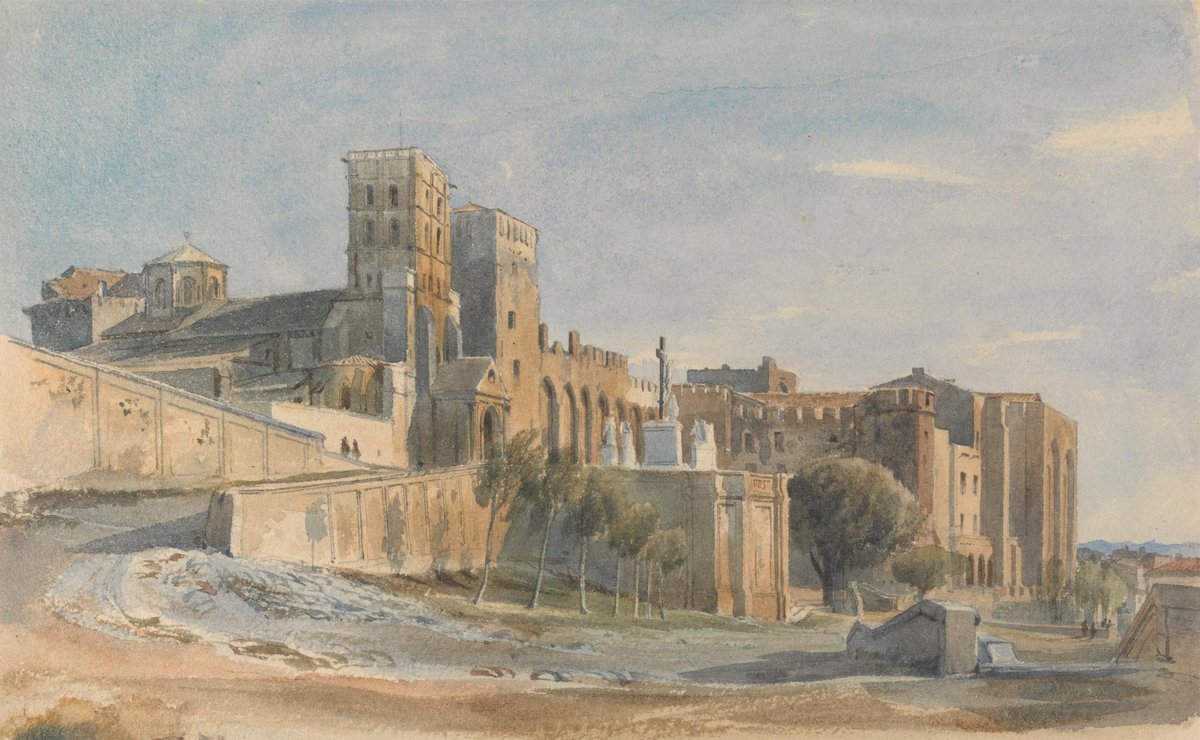
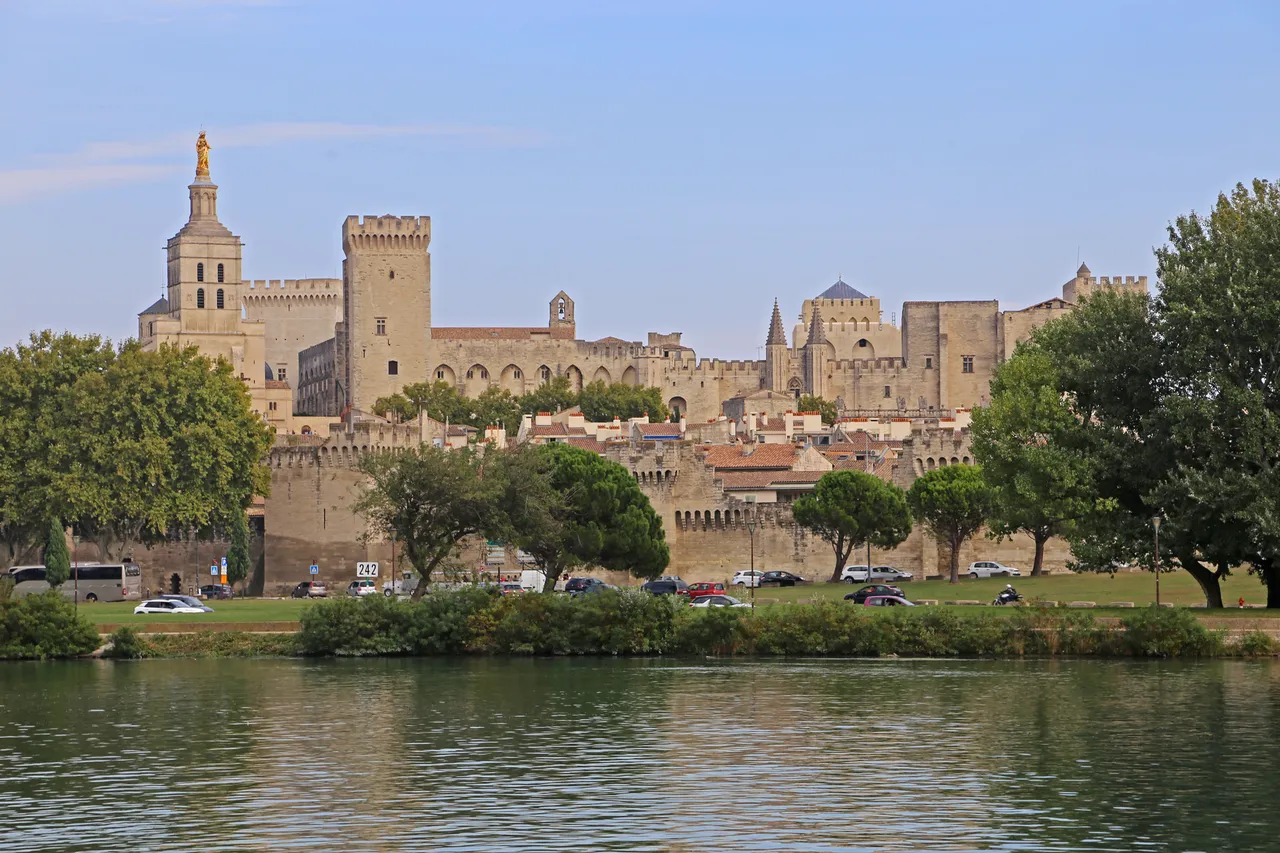
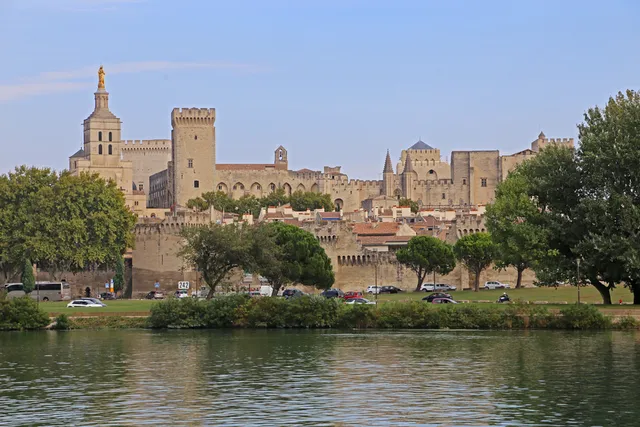
WWhy does a palace need walls this thick? Palais des Papes squats above the Rhône in Avignon, southern France — 15,000 square metres of cream limestone that reads more like a fortified hill than a residence. Seven popes governed Latin Christendom from inside these stones without ever once setting foot in Rome. Come for that contradiction; stay for the cour d'honneur, where every July since 1947 the world's largest theatre festival reoccupies the courtyard the popes built to receive kings.
First impression is scale and silence. The Palais Vieux and Palais Neuf — two joined builds finished in under twenty years (1335–1352) — present a flat west façade roughly the volume of four Gothic cathedrals stacked together. Footsteps echo on stone scrubbed bare. The frescoes that once covered every interior wall were chiselled off by soldiers during the barracks years and sold to antique dealers; what survives looks like a body stripped to bone.
Two architects did almost all of it. Pierre Poisson de Mirepoix raised the austere northern half for the Cistercian Benedict XII. Jean de Louvres built the lavish southern half a decade later for Clement VI, the Limousin aesthete who bought the city outright from the queen of Naples in 1348 for 80,000 florins. Records show the second pope spent on tapestries what the first had spent on walls.
Avignon was sovereign papal territory for 445 years and never quite got over the popes leaving. The palace ran as prison, art depot, then army barracks until 1906. The festival arrived in 1947 and gave the courtyard a function again. The building still gathers crowds for high-stakes performance — only the script changed.
01 What to see.
Chambre du Cerf
Chambre du Pape and its empty birdcages
Grande Audience: 20 prophets and a ghost crucifixion
The Cour d'Honneur and the rooftop café
02 In pictures.


Plan and listen to Palais des Papes with Audiala.
Audio guide in your pocket, itinerary in your browser. Built for the way you actually visit.
Tickets & tours.
These are guided options from our partners — same price as booking direct.
Prices are indicative — final pricing and availability are confirmed at checkout. Audiala may earn a commission from bookings made through these links.
Also on GetYourGuide
More tours for Palais des Papes
Curated from GetYourGuide. Same price as official, free cancellation on most.
 GetYourGuide
From Avignon: Châteauneuf du Pape Half-Day Wine Tour
from
€99
 GetYourGuide
Avignon: History and Legend Walking Tour
from
€20
 GetYourGuide
Avignon: Around The Palace Tour
from
€28
 GetYourGuide
Avignon: All About Avignon Tour
from
€22
Prices shown are indicative — final pricing and availability are confirmed at checkout. Audiala may receive a commission from bookings made via these links.
03 Visitor logistics.
The practical scaffolding for a good visit — kept short.
Getting There
Inside the walls, everything is ≤20 minutes on foot — the Palace anchors Place du Palais at the north end of the old town. From Avignon TGV (4 km south), take an Orizo shuttle bus to the centre, or skip driving entirely and use one of the five park-and-ride sites ringing the ramparts. Cyclists arrive via the ViaRhôna; the Palace holds the Accueil Vélo label.
Opening Hours
Open every day in 2026, year-round. Peak season March 1 to November 1 runs 9h–19h; winter shoulder months drop to 10h–17h or 10h–18h depending on school holidays. Last ticket sells one hour before closing, gardens 30 minutes before.
Time Needed
Budget 1h30–2h for the standard Histopad route through the painted chambers, Grand Tinel and kitchen tower. Add the Pont Saint-Bénézet and Pontifical Gardens and you're at 3h–3h30. The Comfort Route (accessibility) runs a fixed 2h.
Accessibility
Standard route has many steps and uneven medieval stone — not wheelchair-accessible. Book the Parcours Confort (Tue/Fri/Sun, 14:30–16:30) up to 24h ahead via 04 32 74 32 74; entry is at Cour Maria Casarès, 4 rue des Escaliers Saint Anne, with elevators reaching the Consistory, Grand Tinel and gardens. Histopad includes a blind-waypoint button; videos are subtitled.
Cost & Tickets
As of 2026, Palace alone is €12 (reduced €10, child 8–17 €6.50, under 8 free); €14.50 combined with Pont d'Avignon, €17 with gardens added. The Avignon City Pass at €24/24h or €32/48h pays back fast if you also do Villeneuve-lès-Avignon. Festival d'Avignon period uses a higher tier (€14.50 Palace alone) — check at booking.
04 Tips for visitors.
Small things that change the day.
Camera down here
Photography is allowed almost everywhere except the painted rooms — Chambre du Pape, Chambre du Cerf, and the Saint-Jean chapel — where Matteo Giovanetti's 14th-century frescoes need darkness. These are the visit's payoff; put the phone away and look up.
July is theatre, not tourism
Festival d'Avignon turns the Cour d'Honneur into Jean Vilar's open-air stage every July (2026 is the 80th edition). Prices shift up, the courtyard is dressed for performance, and rooms close around rehearsals — go in June or September if you want the building, July if you want the ritual.
Where to eat nearby
Skip the Place de l'Horloge brasseries — convenient but mediocre at premium prices. La Sou' Pape (budget-mid, French) and Le 46 (mid) sit close to the Palace; Hiely Lucullus on rue de la République is the classic splurge for old-school French gastronomy.
Drop the bag, take the tablet
Free monitored lockers at the entrance — strollers must go in (no exceptions), free baby carriers loaned in exchange. The Histopad AR tablet is included in your ticket in 7 languages and given to kids 8+; without it the stripped-bare rooms read as empty stone.
Construction through spring 2027
From May 1, 2026 a new visitor route opens previously-closed rooms with interactive models and films, plus a free WebApp ‘Les Clefs du Palais’ on WiFi LESCLEFSDUPALAIS (6 languages). Works continue until spring 2027 — expect partial closures and detours.
Climb the Rocher after
Save the Rocher des Doms park for right after the visit — it's a 5-minute uphill from the Palace square and gives you the Rhône, the broken Pont Saint-Bénézet and Mont Ventoux in one panorama. Late afternoon light hits the Palace's south façade best.
Bag check is mandatory
Skip-the-line tickets exist, but every visitor passes Vigipirate baggage screening at entry. Travel light, leave large packs at your hotel or in the on-site lockers.
Drink the popes' wine
Châteauneuf-du-Pape sits 15 km north — the vineyard the Avignon popes planted. Order a glass at Le Carré du Palais (the wine bar inside the Palace complex) or pair it with a papeton d'aubergine, the eggplant flan whose name nods to a pope's mitre.
Where to Eat
Don't Leave Without Trying
Restaurant Fou de Fafa
local favoriteOrder: The duck main course — it is frequently cited as one of the best iterations of the dish.
An intimate, homey venue where the owners provide genuinely warm service. It is essential to book ahead as this small spot is a local favorite that fills up incredibly fast.
Restaurant AIMÉ
fine diningOrder: The mousse for dessert, which diners describe as the lightest and most incredible version they have ever tasted.
The chef’s Japanese background brings a delicate, refined sensitivity to traditional ingredients. It offers a sophisticated, balanced dining experience in a cozy setting.
Restaurant Le Coin Caché
local favoriteOrder: The razor clams, which are prepared with parsley and garlic, or the tender veal with mushrooms.
Tucked away in a beautiful square, this restaurant feels like a hidden jewel. The menu changes regularly, emphasizing fresh, local ingredients with impeccable presentation.
Restaurant L'Épicerie
local favoriteOrder: The L'Épicerie plate, a generous salad sampler, or the steak with potato gratin.
A charming, unpretentious bistro located on a quiet square near the Pope's Palace. It is the perfect spot for a classic, high-quality French meal without the tourist-trap feel.
Dining Tips
- check Service is legally included in the bill; tipping is not required, though rounding up or leaving a few euros for exceptional service is appreciated.
- check Always carry cash for markets and small establishments, as card minimums often apply.
- check Reservations are highly recommended for dinner, especially at popular local bistros.
- check Les Halles market is closed on Mondays.
- check Avoid flashy displays of tipping; it is often seen as gauche in France.
- check Most restaurants strictly observe lunch (12h–14h) and dinner (19h30–22h) service hours.
Restaurant data powered by Google
05 The House That Keeps Its Audience
The Palais was designed for one job: to gather the powerful inside a single courtyard and stage something that the rest of Europe would have to acknowledge. Six papal conclaves were held here between 1334 and 1394. Coronations, consistories, embassies from Byzantium and Aragón, the trial briefs of the Templars — all crossed the cour d'honneur on their way in.
That gathering function never broke. After the popes left for Rome in 1377 and the antipopes departed in 1403, the palace cycled through legates, prisoners, paintings, and soldiers. Then in 1947 a theatre director walked into the empty courtyard and started the meeting up again. The faces changed. The ritual of assembling under these walls did not.
Pedro de Luna's Five-Year Siege
The official story of the Avignon papacy ends tidily in 1377 with Gregory XI's return to Rome. The schism that followed and the antipopes who lingered on the Rhône are usually filed as a postscript — minor figures in a finished chapter.
But Pedro Martínez de Luna, elected Benedict XIII inside this palace on 28 September 1394, had publicly sworn before the conclave that he would abdicate if the cardinals asked him to. When France withdrew obedience on 28 July 1398 and demanded he step down, he refused. Papal authority, he announced, could not be given back.
Marshal Geoffroy Boucicaut arrived with royal troops that September. Benedict barricaded himself inside with around 150 defenders. Records show he said mass in the Grand Chapel each morning while crossbow bolts struck the upper windows; miners worked the base of the Tour de Trouillas; cardinals fled across the river to their livrées at Villeneuve. The siege held for nearly five years. In March 1403 he escaped in disguise down the Rhône, retreated to Peñíscola on the Valencian coast, and died there in 1423 still claiming the keys of Peter — excommunicated by the Council of Constance in 1417, never recanting.
Walk the merlons and the chapel now and you are not in a residence. You are inside the only palace in Christendom that ever functioned as a real fortress against a Christian army, defended by a Spanish canon lawyer whose stubbornness forced Europe to invent the conciliar movement to remove him — a tremor that fed directly into the Reformation a century later.
What Changed
What Endured
Listen to the full story in the app
The whole Palais des Papes,
told well.
Audio guides for 1,100+ cities across 96 countries. History, stories, and local insight — offline ready.
06 Frequently asked.
The questions travellers send us most about Palais des Papes.
Is Palais des Papes worth visiting?
Yes, but know what you're walking into. The interior is a stripped stone shell — Napoleonic barracks scraped most frescoes off the walls between 1810 and 1906 — so the payoff is the surviving painted rooms (Chambre du Cerf, Chapelle Saint-Martial) and the sheer scale of 15,000 m² of Gothic fortress-palace, not gilded papal grandeur. The free Histopad tablet rebuilds the lost decoration in AR, which transforms the visit.
How long do you need at Palais des Papes?
Budget 1h30 to 2h for the standard Histopad route. Add the Pont Saint-Bénézet and the Pontifical Gardens and you're at 3 to 3h30. The Comfort Route (accessibility-friendly, by reservation) runs a fixed 2 hours.
How much does it cost to visit Palais des Papes?
Standard ticket is €12 adult, €10 reduced, €6.50 for ages 8 to 17, free under 8. Combined Palace + Pont d'Avignon is €14.50. The Avignon City Pass (€24 for 24h, €32 for 48h) covers the Palace, the Pont, and Villeneuve-lès-Avignon sites, and pays off if you're seeing more than two.
What is the best time to visit Palais des Papes?
Weekday mornings in shoulder season (March, April, October) — the palace opens at 9h from March 1 to November 1, and arriving at opening avoids both the cruise-coach surge and the July festival crush. July is unique but chaotic: the Cour d'Honneur becomes the Festival d'Avignon's main stage, so daytime visits compete with stage rigging. Winter is cold-stone atmospheric and nearly empty.
Can you visit Palais des Papes for free?
Only if you're an Avignon resident — entry is free every Sunday with proof of address under 3 months and ID. Children under 8 are always free. The Pontifical Gardens are free daily for residents. Everyone else pays the standard ticket.
How do I get to Palais des Papes from Avignon TGV station?
Avignon TGV sits about 4 km south of the old town; take the navette shuttle bus or an Orizo local bus into the centre, then walk. From anywhere inside the city walls the Palace is 20 minutes on foot — it's the giant landmark on Place du Palais. Driving in is a bad idea: use one of the five park-and-ride sites and bus in.
Is Palais des Papes wheelchair accessible?
The standard route isn't — too many steps and uneven medieval floors. The Parcours Confort is a separate accessible route via elevator, bookable by reservation up to 24h ahead, running Tuesday, Friday, Sunday from 14h30 to 16h30, with a different entrance at Cour Maria Casarès, 4 rue des Escaliers Saint Anne. Book on 04 32 74 32 74.
What should I not miss at Palais des Papes?
The Chambre du Cerf — Clement VI's private study, painted with secular hunting and fishing scenes, the rarest survival of 14th-century profane painting in Europe. Then the empty trompe-l'œil birdcages painted into the window embrasures of the Chambre du Pape (look up into the reveal, not at the main wall), and the flying buttress that vaults across Rue Peyrolerie outside, holding up the Grand Chapel above your head.
Verified, and shown.
Researched and written by the Audiala editorial team from historical records, architectural archives, and local expertise.
Opening hours, on-site services, Histopad, 2026 transformation notice, photo rules
2026 ticket prices, combined tickets, family rates, free-entry conditions
Accessibility route details, reservation, alternate entrance, sensory support
AR tablet, 9 reconstructed rooms, 7 languages, included with ticket
Chambre du Pape birdcages, Chambre du Cerf hunt scenes, Giovannetti chapels
1995 inscription, Palais Vieux/Neuf split, dimensions, Froissart epithet, dates
Park-and-ride sites, Orizo network, TGV connection, ViaRhôna cycling
24h/48h pass pricing, included sites including Villeneuve-lès-Avignon
Cour d'Honneur as main festival stage since Jean Vilar 1947, 2,000 seats
4,000 m² surviving frescoes, conservation campaign, visitor pressure on painted rooms
Building scale comparison, fortress-palace character, 15,000 m² floor area
Adjacent active cathedral, liturgical continuity next to the secularised Palais
Visitor sentiment on bare walls, off-season atmosphere, pacing of visit
Researched from Wikidata, Wikipedia & official sources · fact-checked · How we make our guides →