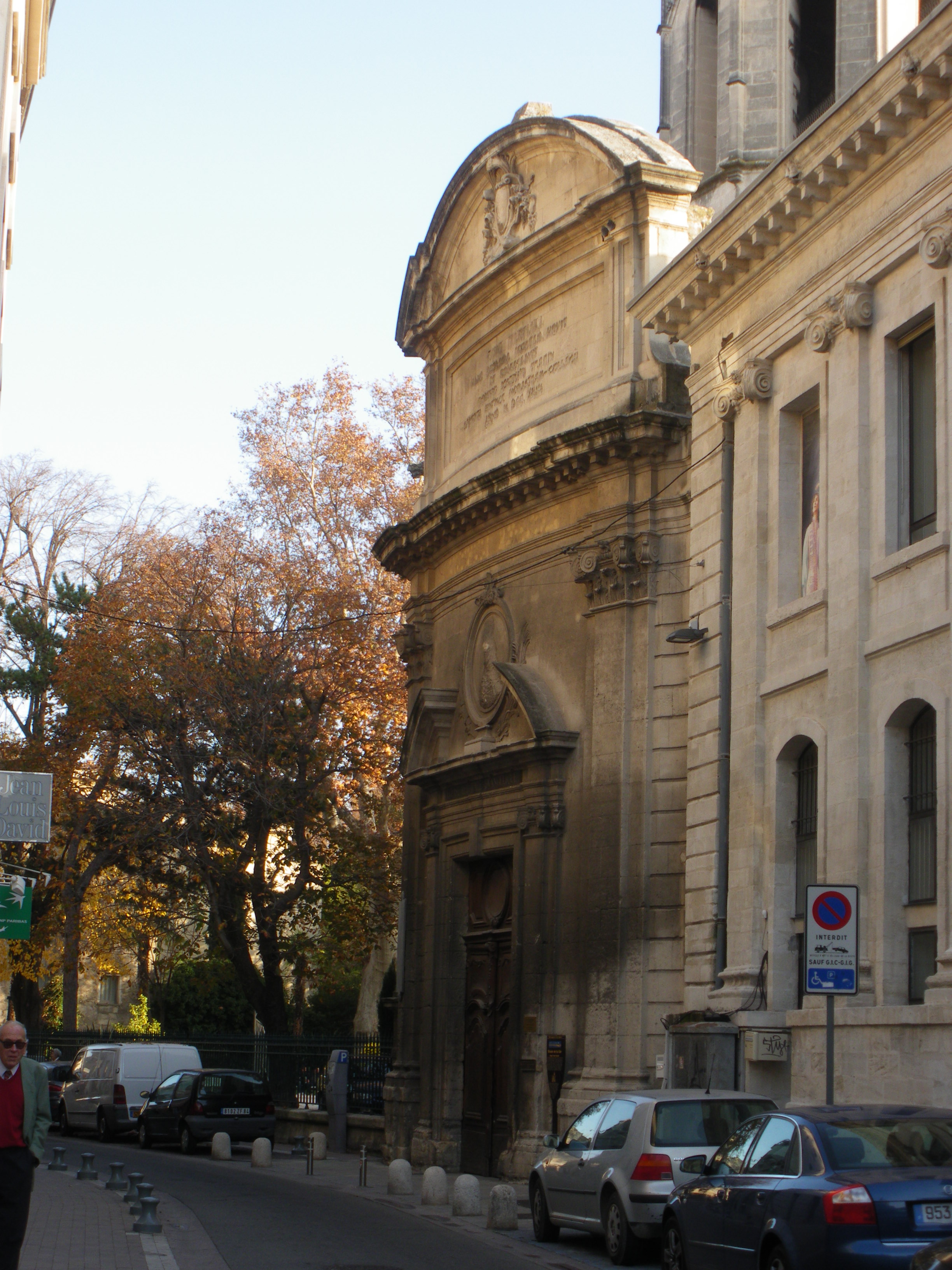
Plan and listen to Avignon Cathedral with Audiala.
Audio guide in your pocket, itinerary in your browser. Built for the way you actually visit.
Introduction
Avignon Cathedral, officially known as Cathédrale Notre-Dame des Doms d’Avignon, is an iconic religious and architectural landmark perched atop the Rocher des Doms, overlooking the Rhône River. Its storied past spans the Romanesque, Gothic, and Baroque periods, bearing witness to Avignon’s evolution from a strategic medieval city to a pivotal seat of the Catholic Church during the Avignon Papacy. Renowned for its soaring bell tower crowned by a gilded statue of the Virgin Mary, the cathedral draws visitors eager to explore its rich artistic treasures, papal history, and panoramic city views. This guide provides comprehensive information on Avignon Cathedral visiting hours, ticketing, accessibility, historical significance, and expert tips for an enriching experience in the heart of Provence (travelfranceblog.com; spottinghistory.com; exploreyourbucketlist.com).
Origins and Early Construction
Constructed in the 12th century, Avignon Cathedral was strategically built atop the Rocher des Doms to serve both symbolic and defensive purposes. Its Romanesque design—characterized by thick stone walls, rounded arches, and a fortress-like silhouette—established it as Avignon’s ecclesiastical heart and seat of the local bishop (travelfranceblog.com; journey-fun.com).
Architectural Evolution
Over the centuries, the cathedral has undergone significant transformations:
- Romanesque Foundations: The original structure features a single nave with a barrel-vaulted ceiling and limited ornamentation, reflecting Provençal traditions (spottinghistory.com).
- Gothic and Baroque Enhancements: The 14th-century Avignon Papacy led to the expansion of the choir and apse with Gothic elements to accommodate papal ceremonies. In the 17th century, Baroque additions enriched the interior. The 19th-century installation of the gilded Virgin Mary statue atop the bell tower further elevated the cathedral’s profile (wikipedia.org).
- Bell Tower and Exterior Features: The bell tower, rebuilt and heightened over time, houses historic bells and is topped by the striking gilded statue visible across Avignon (travelfrancebucketlist.com).
Religious and Cultural Significance
The cathedral’s prominence peaked during the Avignon Papacy (1309–1377), when it served as the principal site for papal masses and ceremonies. Inside, visitors can admire the Gothic mausoleum of Pope John XXII, 13th-century frescoes, Baroque galleries, and stained glass windows. Today, it remains an active place of worship and a central venue for cultural events, including the Festival d’Avignon (journey-fun.com; radicalstorage.com).
Visiting Information
Visiting Hours
- Monday to Saturday: 9:00 AM – 12:00 PM and 2:00 PM – 6:00 PM
- Sunday: 2:00 PM – 6:00 PM
- Note: Hours may vary on public holidays and during special events—always consult the official Avignon tourism website for the latest updates.
Tickets and Admission
- General Admission: Free of charge.
- Special Events & Guided Tours: Some concerts, exhibitions, or guided tours may require tickets, especially during major festivals. Tickets can be booked in advance through official festival or local tourism websites (radicalstorage.com).
Accessibility
- Wheelchair Access: The main entrance is wheelchair accessible via ramps.
- Interior Access: Some areas may have steps or uneven floors due to the cathedral’s age. Assistance is available upon request.
Tips for Visitors
- Dress Code: Modest attire is expected (shoulders and knees covered).
- Photography: Permitted without flash, except during services or special events.
- Best Times to Visit: Early mornings or late afternoons for a quieter experience and optimal lighting for photography.
- Amenities: Public restrooms and cafés are available nearby; parking is limited in the city center—consider public transport or parking lots outside the medieval walls.
- Guided Tours: Available in multiple languages. Audio guides may be rented onsite or accessed via the official app.
Nearby Attractions
- Palais des Papes: The grand papal palace adjacent to the cathedral—often included in combined tours.
- Rocher des Doms: Scenic gardens offering panoramic views.
- Pont Saint-Bénézet: The legendary medieval bridge.
- Musée du Petit Palais: Home to medieval and Renaissance art.
Frequently Asked Questions (FAQ)
Q: What are Avignon Cathedral’s visiting hours?
A: Monday to Saturday: 9:00 AM–12:00 PM and 2:00 PM–6:00 PM; Sunday: 2:00 PM–6:00 PM. Confirm seasonal changes online.
Q: Is there an entrance fee?
A: General entry is free; tickets are required for special events or guided tours.
Q: Is the cathedral wheelchair accessible?
A: The main entrance is accessible; some interior areas may present challenges.
Q: Can I take photographs inside?
A: Non-flash photography is permitted except during services.
Q: Are guided tours available?
A: Yes, guided and audio tours are offered—booking ahead is recommended during busy periods.
Visuals and Media
Visual suggestions:
- High-resolution images of the cathedral’s exterior (with the gilded Virgin Mary statue) and interior (Pope John XXII’s mausoleum, stained glass windows).
- An interactive map highlighting Avignon Cathedral’s location and nearby attractions.
- Links to virtual tours, if available, from the official Avignon tourism website.
Listen to the full story in the app
The whole Avignon Cathedral,
told well.
Audio guides for 1,100+ cities across 96 countries. History, stories, and local insight — offline ready.

Verified, and shown.
Researched and written by the Audiala editorial team from historical records, architectural archives, and local expertise.
Last reviewed
Researched from Wikidata, Wikipedia & official sources · fact-checked · How we make our guides →